Documenting America's young, lost and hiding
- Text by Biju Belinky
- Photography by Florian Geiss

We’re all looking for a sense of purpose to get us through life. It doesn’t really matter what it is – it can come in the shape of a loving person, an occupation you can pour your heart and soul into, or even just a sense of freedom, of never having to settle down and lower your head.
And it’s that search, and the melancholy of not having found a solution yet, that photographer Florian Geiss explores in his new book, Gimme Shelter. Shot all over the world, from Los Angeles to Africa’s Western Cape, his images mix the very human yearning for purpose with the sense of unfathomable loss that comes with modernity. His subjects pose carefully between expansive landscapes, both natural and man-made, making them look small, human – alone.
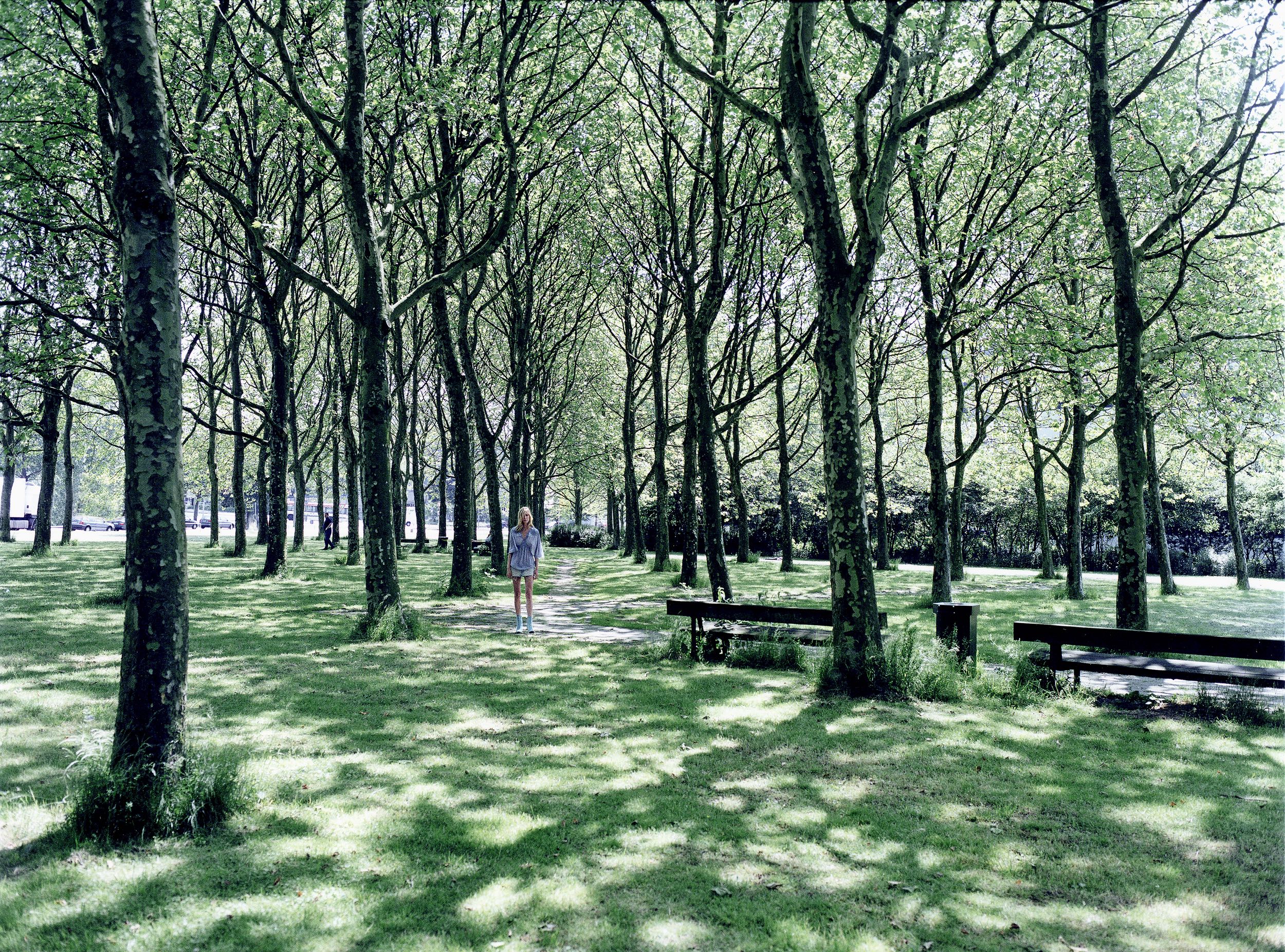
 It makes sense to be asking for somewhere safe to be. Although the title, Gimme Shelter, makes reference to the iconic Rolling Stones track about the Vietnam War, the book takes that necessity of physical protection from the very real threat of violence, and applies it into modernity and being young, needing emotional protection and from living without a purpose.
Each image carefully staged and with a hint of cinematography, Florian explores what’s it like to exist outside of the guidelines that dictated the lives of previous generations. Because although young people are still pressured by the old American image of what “success” means, we no longer live in times where those measures of happiness are universally applicable.
He also explores gender stereotypes, still perpetuated even within this generational hopelessness. In these images, masculine subjects show an undoubtedly rough exterior, but are still frail, still struggling to find purpose outside of discipline. Women are shown as delicate, but also challenging and sexual. Florian’s subjects are multifaceted, just as all people are.
The protection they are asking for is from a storm that is both physical, shown in threatening stormy grey skies above the cities the photographer visited, and metaphorical, in the heart of young people without a carved way life, a clear future or a compass – a guide for the so-called “path towards success”. So, where do we go from here?


 Gimme Shelter by Florian Geiss is out now, published by Hatje Cantz.
Enjoyed this article? Like Huck on Facebook or follow us on Twitter.
You might like

Jesse Glazzard’s messy portrait of queer friends, lovers and chosen family
The Sound of Dirt and Beauty — The photographer’s debut monograph explores tender, unpolished moments shaped by the people who he surrounds himself with, while offering a window into the UK’s working-class LGBTQ+ community.
Written by: Sunny Sunday

Behind the curtain at Alternative Miss World 1981
Olympia glamour — Running a subversive take on the traditional beauty pageant, the Andrew Logan organised event prioritised underground creativity and invention. Photographer David Corio went behind the scenes at its biggest edition.
Written by: Miss Rosen

New exhibition highlights British radical living over 200 years
Earthly Paradise — Taking place at the William Morris Gallery, it explores the homes and lives of artists, writers, musicians and more, as well as the conditions that allowed them to thrive.
Written by: Isaac Muk

What life on the Strait of Hormuz is really like
Southern Winds — Bandar Abbas based photographer Morteza Niknahad has been capturing the diverse communities and stories of his local region since he first picked up a camera. His new series highlights the human impact of war.
Written by: Isaac Muk

Nick Haymes’s intimate portrait of his family’s life
Chronograph — Over 25 years, the photographer documented his son’s lives as they grew into adults. The resulting photobook is an exploration of the passage of time, as well as the optimism of youth.
Written by: Miss Rosen

Kristina Rozhkova’s scatty, confronting portrait of captivity
Gut Feeling — The Russian artist’s 2024 arrest and subsequent detention opened her eye towards the omnipresent dynamics of power and control. Her new photobook is a stark exploration of being trapped.
Written by: Isaac Muk


