Inside the London rollerskating scene’s fight for space
- Text by Sunny Sunday
- Photography by Sunny Sunday

Chop & shuffle — A new, young generation is skating with a style unique to the UK’s capital, but they’re up against security guards, dog units, and padlocks. Sunny Sunday reports on the community’s search for a home.
It’s a Sunday night in South London’s Vauxhall Sainsbury’s, or “VS”, as local rollerskaters call it. At the back corner of its massive covered car park, young people – mostly Black teenagers – loop around on rollerskates in a tight circuit. There are close to 100 of them scattered throughout the car park, but it’s surprisingly quiet. There’s no music playing. The muggy soundtrack of the space is the occasional echoey shout or muffled whoop, and a constant swish of skates. Teenagers wear headphones as they wordlessly careen backwards, coming to a stop like whips snapping, their feet tight and parallel, or out wide in turning splits. Like a school of minnows, they switch between clockwise and anti-clockwise laps with no discernible acknowledgement, sliding with controlled ferocity.
There’s a muted electricity, and a group of young girls pass around a Morley’s box of chicken wings, giggling with excitement when they see a new friend approach. One kid, who looks too small for his skates, sweeps backwards past teenagers twice his size, chopping his legs wildly as he peeks behind his shoulder. Another teenager holds a broom, swiping at the concrete floor in an attempt to brush away the sand scattered by hired security guards – a measure to prevent rollerskate wheels from turning.
The next generation of London rollerskaters is fighting for space. While there are 12 BMX tracks and 100 active skateboarding parks throughout London, there is not one designated free space for rollerskating in the city. They seek spaces that are smooth, flat, and expansive enough to facilitate traditional London-style skating: a unique subgenre on its own, characterised by chopping and shuffling fast, hard, and backwards. However, young skaters are often looked down upon by mainstream society, and throughout the city, councils are implementing anti-skating outdoor infrastructure – car park levels are gated up and locked off, and supermarkets such as Sainsbury’s are hiring security to keep skaters off the premises. Sainsbury’s has declined to comment at this time.


In recent years, it’s become increasingly difficult to find locations that facilitate London-style skating, especially sheltered indoor spaces. London now has one indoor rollerskating rink, Roller Nation in Tottenham, after West London rink Flippers permanently shut down in October 2024. However, the space doesn’t cater to the mass of teenagers driving this London subculture, enforcing strict 18+ evening events and ruling out nighttime attendance for teenagers, their preferred practice hours. Instead, under-18s are invited to join the Family Jam or Open Age skate days on the weekends, where they can skate with children as young as five.
Street skating is an option, but it comes with its challenges. There’s the risk of skating near traffic, coupled with the difficulty of uneven and bumpy ground. It leaves skaters in search of smooth surfaces, like an area coined “riverside” by skaters. It’s a stretch of concrete sandwiched between the River Thames and a golf driving range in a secluded area near the O2 in Greenwich. At one point, it was a hot spot. Now, it’s less popular due to the grid of concrete blocks introduced by the council a few months ago, the large blockades arranged throughout the area to divide the large pavement into much smaller, enclosed areas, making the area less skateable.
Covered, multistorey car parks have now become the go-to for many skaters, especially in the winter months with their warmth, shelter, and smooth open ground. However, popular car park levels only remain popular for a certain amount of time before skaters are pushed, or locked, out. They are met with padlocks, German Shepherd dog units, increased car park security, and other measures to deter them.

It’s a cat-and-mouse game that has been going on for a few years now. In the middle of lockdown, skater Amir Bacchus-Marquis explains that he was threatened with a £10,000 fine and potential jail time – all for organising a roller skating night in the car park of his local Sainsbury’s in North London. Every Friday, once the Sainsbury’s had shut down for the night, the 30-year-old Tottenham local brought people together to skate at the empty end of the car park. In the uncertain tail end of the pandemic, music was played, skates were laced up, and dozens of people convened to move their bodies and hone their skating skills. He wanted to share the one activity that helped him through loss, after his sister passed away and his mother fell into a deep depression.
One night in 2021, around 200 people showed up to skate with Bacchus-Marquis, not knowing it would be their last night at the car park. After the supermarket closed, management confronted him and told the group to leave. When they continued skating, the lights were shut off, and the police were called. “I just remember saying in front of everyone that I was really sorry that it’s come to an end, and we’ll maybe try and find another space to go,” Bacchus-Marquis recalls. “But the energy was there, and that’s what skating is about. It’s raw. That day is burned into my brain.”
Now a rollerskating teacher, Bacchus-Marquis still lives around the corner from the same Sainsbury’s. Each time he shops for groceries, he passes by the car park and the security guards who were introduced not long after that night. “They’re literally paying for security just to keep people out, which is insane,” he says.
“We don’t have a place that we can all go to. And that is the thing that’s always broken up communities.” Amir Bacchus-Marquis, rollerskater

When Bacchus-Marquis started properly skating around 14 years ago, the scene was completely different. “You knew everyone’s name. You knew where everyone lived. It was easy to identify people.” Now the community is larger, younger, and more divided due to the absence of safe, central, and accessible spaces. “We don’t have a place that we can all go to,” he says. “And that is the thing that’s always broken up communities.”
Johan Zambrano used to go to VS every Friday night. “That was the main spot,” he says with a warm confidence that ages him beyond his years. At 21 years old, he’s considered an elder in the skating community. Besides VS, Zambrano used to frequent the riverside location as well as Flippers, where he worked as a marshal, ensuring that skaters were safe and enjoying themselves. These days, Zambrano mostly skates alone, occasionally providing a guest appearance at meets, like tonight, where I find him outside the UCL East Marshgate campus – a fallback spot when security pushes people out of the Westfield Stratford City car park.
Ultimately, he’s jaded by the changes he’s seen over his four years of skating – both internal and external. “Today I was going up the car park, and there was a young kid skating,” he says. “He was talking to a security guard. He was like: “Fuck you this, fuck you that.” This is why we get a bad rep.”
In Zambrano’s eyes, the younger generation of skaters often lacks etiquette, brings beef, and decreases the credibility of the skating community as a whole. He sees littering, fighting, and the TikToks of skaters rushing dangerously through crowded shopping centres, roads, or train cars. “It gives us a bad name, and those are the videos that go the most viral, unfortunately,” he says.


In one TikTok video, a skater weaves backwards through the crowded underground commuter corridors in Stratford. He narrowly misses person after person, brushing past pedestrians and somehow avoiding collision. The video has 5.4 million views, and the comment section is a mixed bag. Some users lament the skater’s irresponsibility. Most praise his skill, one person commenting, “So dangerous lol. What a rush.”
Kali E.H. has only been skating for two years, and already he can skate backwards with incredible speed and control, switching easily to glance over his left shoulder and then his right, roller skates turning smoothly with each push. The 17-year-old lives in Abbey Wood and travels an hour to get to VS on Sunday nights, which, for him, isn’t anything.
“I feel like there’s a lot of people who are against skaters right now because of a few individuals,” he tells me. “When a small group does something bad, it paints the whole image of the skate scene negatively. There are good skaters – respectful skaters. It’s like we’re fighting a battle, but we don’t know about the battle.”
“When a small group does something bad, it paints the whole image of the skate scene negatively. There are good skaters – respectful skaters. It's like we’re fighting a battle, but we don't know about the battle.” Kali E.H., rollerskater
Currently, a petition with fewer than 1,500 signatures is making its rounds, campaigning for a designated roller skating space within Stratford. The petition was started eight months ago by Charli-Mae Ellett, a 16-year-old who is currently in conversation with Rokhsana Fiaz, the mayor of the London borough of Newham. The pair have hopes to eventually build a free and indoor skating space in London. However, the uptake on the petition, as well as the line of communication between the two, has been less progressive than initially planned. Ellett finds herself as the spokesperson for her community; however, she has struggled with the lone responsibility attached to the movement.
“I can’t do this by myself anymore,” Ellett says in a recent TikTok as she tries to amass signatures for the petition. “I’m tired. I’m drained. I have other things to do, but I’m still doing this.” She goes on to call for help in sharing the petition in preparation for a presentation to the council, which was originally planned to take place in December 2025, but never occurred. Currently, she’s waiting on an update from the mayor, but ultimately, she feels hopeful.
In the petition, Ellett emphasises the importance of young people having access to a safe space, writing, “Rollerskating is not just a hobby, it’s a thriving culture and community for many.” She goes on to highlight the impacts it can have on the lives of young people, not just in terms of physical health, but also their mental well-being.


“Skating is good for my mental health,” 16-year-old Tom Cogan tells me above the din of the VS car park. He is slight and young in the face, but like many of his peers, when he speaks, he seems older than he is. “I have ADHD, and this helps a lot. Skating is a way for me to clear my head, and just be in my own space – just have my headphones, my skates, and have a good time.”
Kali chimes in: “This is what I do. I love it. Without skating, I don’t know what I’d be doing.”
The young people skating in spaces like VS, Stratford, and other areas are just that – young people. The car parks that they occupy become alive with energy as they switch between the uninhibited silliness and refrained coolness that teenagers so expertly straddle. Within this subculture, 20-year-olds are considered elders and teenagers grow up quickly, learning how to navigate the security guards and homeless people they encounter in car parks, as well as the disgruntled pedestrians who have been known to physically trip them up.


Now, as winter in London fully lands and outdoor spots become less tolerable in the wind, rain, and snow, young rollerskaters are expressing the need for accessible indoor spaces where they can gather, without pushback from security or restrictions related to their age or finances. “We don’t choose to go to these public spots because we want to or we want to be unruly. It’s because it’s smooth ground, it’s inside, it’s warm, and it’s where we can skate,” says Zion S., a 20-year-old local who started skating within the last year. “We just want to skate. We’re just young people that really want a place to enjoy our hobbies.”
Zion didn’t know anyone when she began skating alone in a corner of the VS car park. Now, she’s shrouded by a posse of friends who lean against one another, passing compliments as they apply their makeup before lacing up their skates. “It’s brought me community. It’s brought me friends. It’s brought me joy,” she says. “Every day skating is a great day.”
Sunny Sunday is a freelance culture journalist. Follow her on Instagram.
Buy your copy of Huck 82 here.
Enjoyed this article? Follow Huck on Instagram and sign up to our newsletter for more from the cutting edge of sport, music and counterculture.
Support stories like this by becoming a member of Club Huck.
You might like

Photos capturing the rise of South London‘s dubstep scene
Drumz of the South — A new photo book traces the birth of dubstep in its early years between 2004 and 2007, and the pioneers who helped make the sound a global phenomenon.
Written by: Vuyokazi Mtukela

London’s O2 Arena will donate ‘significant’ funds to grassroots music venues
Investing in the pipeline — The 20,000 capacity arena will provide funding to the Music Venue Trust every time it hosts a new headliner, on top of a ‘six-figure upfront donation’ under the new scheme.
Written by: Isabelle Blakeney
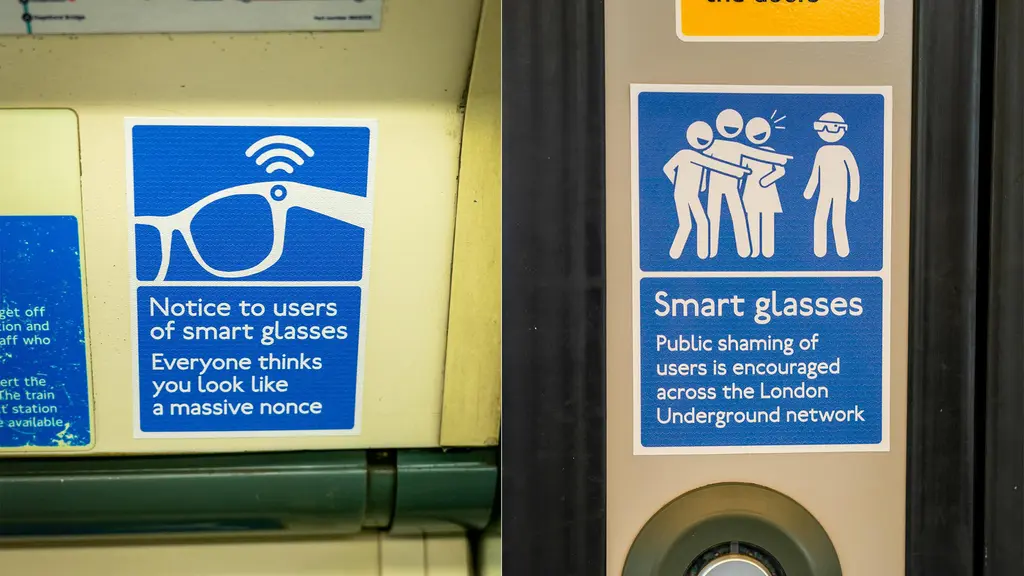
Activists slam “pervert glasses” in new guerrilla campaign
Everyone Hates Elon — Stickers have appeared on the London Underground network, criticising the wearable technology’s covert filming capabilities.
Written by: Isaac Muk

Behind the curtain at Alternative Miss World 1981
Olympia glamour — Running a subversive take on the traditional beauty pageant, the Andrew Logan organised event prioritised underground creativity and invention. Photographer David Corio went behind the scenes at its biggest edition.
Written by: Miss Rosen

Dan Lacey: “BMX is forever evolving”
Overground — Steph Pomphrey caught up with the two-wheel legend after his latest meet in east London, chatting about fatherhood, music and action sports within the outdoor industry.
Written by: Steph Pomphrey

The battle for the soul of lockpicking
Under locksport and key — In recent years, breaking locks for fun has grown from a niche hobby into an activity followed by millions of people. As it has matured, so have tensions over who sets the rules.
Written by: Jack Dennison-Thompson


