Jake Hanrahan: “Boys can cry, but we don’t all fucking want to”
- Text by Robert Kazandjian
- Photography by Jake Hanrahan (courtesy of)

Hard Feelings — In the latest edition of our column on masculinity and fatherhood, Rob Kazandjian speaks to the conflict filmmaker-journalist and Popular Front founder about his childhood, the found family and community at his Muay Thai gym, and the “complete counterculture” of ‘no rules’ fighting.
“I always wanted to be outside of society, to a degree,” journalist and documentary filmmaker Jake Hanrahan tells me. “War is that place. It shatters everything. It shatters the social contract. It shatters decorum. It shatters any ideology. It’s just everything and nothing at the same time. It’s complete madness.”
The 35 year-old from Kettering in England’s East Midlands has spent a decade reporting on conflict and war, first with VICE and then via Popular Front – a grassroots, independent media platform he founded in 2018. Popular Front is disinterested in political talking heads and lofty theoretics; instead, their journalism centres the people – not exclusively, but primarily young men – who are fighting and dying on the frontlines, from Kurdish youth engaging in pitched battles against Turkish armed forces in Cizre, to Armenians fathers and sons defending Artsakh, and anti-fascist football hooligans taking up arms to resist Russian invaders in Ukraine.
Jake’s new platform, Away Days is a documentary series that “reports from the global underground” and focuses on countercultures. The first film sees Jake embedded with Brazil’s oldest and most powerful gang – Red Command – in a Rio favela. An upcoming episode focuses on the blood-soaked world of ‘no rules’ fighting. “In a roundabout way, these are a series of films for my mates,” he explains. These lifelong friendships were forged at Ricochet Gym, a Muay Thai gym in his hometown where he found belonging as a teenager full of rage. The threads of violence and brotherhood that run through his work feel like a way of honouring those friends, and young men just like them.


What’s your earliest memory of your dad?
Do you know what, it’s actually being in the pub. I would go with him after school. Back then, I just thought it was an adventure! We’d sit there in the pub and I remember I could do a really good Bart Simpson impression. My dad was like: “Do your Bart Simpson impression.” So I did it and this bloke bought me a packet of crisps because he said it was good [laughs].
But my grandad, in a way, was more of a dad to me than my dad, to be honest, due to various addiction issues that my dad has. My grandad had a pond. We were feeding the fish and I remember him explaining that you have to look after the fish, you can’t just have them. Quite early, he was teaching me how to care for something else. I thought that was pretty cool. He was very protective. But also, he let me do my thing as well. And if you had a sensible question, he’d give you a sensible answer, no matter what age you were. He died two years ago, God rest his soul.
Sounds like it was a real blessing that he was there for you as a kid.
It saved my life, without a doubt. The whole trajectory of my life would’ve been very different had my grandad not being around. When I was with my dad we were pretty impoverished. My dad didn’t work. I remember going to cash the giro with him at the post office. We were on a bit of a downward trajectory. But my grandad kept me on the straight and narrow in terms of, like: “this is right, this is wrong. And that never changes. You don’t bend.”
He also just encouraged me a lot. I remember once saying to him: “I want to be a carpenter like you,” because my grandad was a joiner. And he was like: “Don’t do that!” From very young, I was doing media and art and drawing. He was like: “Stick with this stuff, you’ll get somewhere with it.” That was a very unusual thing for me to hear.
I think a lot of people, especially what I call “podcast leftists”, have this idea that the working class are sitting around eating coal for breakfast and smashing bottles over our kids’ heads. Don’t get me wrong, my dad had his issues. It was a poor state of affairs at times. We lived in hostels at one point. But my dad was dead good too because he was my grandad’s son. He’d be reading all the time. He was a painter. He appreciated art. My grandad probably instilled that in him and then he did the same with me.
My grandad on my mum’s side was a coal miner from Barnsley. So he was a grafter, he worked every hour he could possibly work and then he let off steam in the pub. When he died, I discovered he’d handwritten out his favourite poems he’d read and kept them in a little box. That’s not a stereotype a lot of people probably have of men like him.
Amazing. Beautiful, that. And I think a lot of that has been stolen away from us. I have a feeling it’s what’s turning the working class into this circus, that’s either used for JD Sports adverts when necessary, or by some fucking internet communist to decide they want to help us with things we never asked for. It’s a big issue for me. I’ve seen it my whole career, man.
“I think a lot of people, especially what I call ‘podcast leftists’, have this idea that the working class are sitting around eating coal for breakfast and smashing bottles over our kids’ heads.” Jake Hanrahan
Last winter I moved my missus and daughter into my mum’s, because we couldn’t afford to rent our flat. I really struggle with the idea I’m not providing for them. Has your dad ever spoken to you about how the period you spent living in a hostel made him feel?
To be honest my dad turned it into a bit of an adventure really. I was aware, because we were sharing a bathroom and a kitchen [with other people]. I remember coming home from school once and there was a bloke just asleep on the stairs. I hate to even talk about it because it sounds so “poor me”, but I remember my dad sleeping in a chair, and I’d be on the bed. He pinned this blanket to the ceiling like a curtain to try and make the one room feel like two. And I’ll never forget this, man. I remember when Tony Blair got in and we had this tiny telly. I could hear it. My dad was checking if I was awake. He was like: “We’ve won!” What a funny fucking anecdote that is, considering the absolute shit Tony Blair brought on the working class.
But to answer your question, my dad was a bit of a “poor me” type. He was like: “It’s the fucking rich people, it’s this, it’s that.” To be honest, looking back, I think it was really his fault. We’re from a good family. There’s no reason we should’ve ended up like this. I feel like there was a lot of resentment, he was very bitter. Looking back I think he used politics as a kind of excuse, so it was never his fault.
Like he never took any accountability for the situation?
Exactly. And I think that’s made me a bit cynical. Sometimes the very basis of it is actually the father’s problem, you know? You’re saying you worry you can’t provide. You are providing because you’re there and you’ve said you need to go and live with your daughter’s nan. To me, that’s providing. I feel like some fathers will want the excuse of it not being their fault. Even if it’s not, it kind of doesn’t matter. It’s your job. I really believe it’s your duty as a father to provide for your children. It’s not political, that. It’s in you. You should be providing. Not to say mothers shouldn’t. But the father absolutely must, as well.
It’s not about money either. If you’re showing your kid the correct love, the correct way of living and the correct way of doing things, your kid will learn from that, no matter what you’ve got at home. I do feel like I almost had to re-educate myself a little bit as I grew up. I started to realise, actually, that [Jake’s living situation] was my dad’s fault [laughs]. It wasn’t just the government or the “system”. It was kind of his fault.
Muay Thai is a big part of your life. When did that start? And what has it given you?
I was in secondary school, and for various reasons, just full of rage – full of anger. I wanted to be a big lad and I wasn’t. Where I live, you hit an age as a lad and you just get into fighting or you don’t. It’s not good, but it is that way. You start fighting. I don’t mean training. I mean street fighting. I got in a few scraps and I was just getting leathered, kicking off with older lads, getting jumped. Your confidence goes a bit. A mate of mine at school, Shane, was like: “My dad owns a Thai boxing gym. Come up.” I went there and instantly I loved it. Just sitting on the side and watching the class, realising I didn’t know how they were doing this sort of stuff. It looked like a very connected group.
I loved it, and I got humbled very quickly. You realise you’re just an absolute wally, you know? If you think you’re tough on road, the second you step into any combat sports gym you’ll be immediately humbled, because you’re not that guy. There is no match for proper training. I was happy to get smashed up and just go through it to try and get a bit better. I realised: “This is actually healthy. This isn’t about getting tough to fight on the streets. It’s about camaraderie.” Ray, our head coach, became a father figure for me at the time. I would’ve been about 14. I really gelled with the group. They were my kind of people. Our gym is a mix of all different people, races, religions, beliefs. I like that vibe. Our differences are just differences. We don’t give a fuck about them. That gave me this solid ground I really liked. I drifted away from everything else really and got into training. I would compete and stuff, and I didn’t really care that I wasn’t that good. I’m not naturally competitive, like I couldn’t give a fuck. Just stepping in, knowing that most people wouldn’t, and enjoying it was enough. The feeling is just unbelievable. If you wanted to get yourself out of a bad situation and find good people, our gym was the place. It really changed my whole life. It’s been 22 years I’ve been going to that place, and I still go every week. It’s still the same boys. I’ve moved home 20 times but that gym has always been there. It’s like a linchpin.


In what way was your coach, Ray, different from the other father figures you had in your life?
Ray was very, very hard on us, in a good way. I think it taught us that someone who is not your family can still tell us things. He’d tell us things and I’d listen, whereas before I’d thought: “Ain’t no-one telling me nothing.” I realised that there are people who aren’t related to you who will do more for you than a family member would. So, that is family. That’s probably the first time I ever really clocked that. It’s the first time I felt it. There was this bloke who doesn’t have anything to do with me outside of this thing, who cares about my wellbeing outside of the gym.
In my experience, there’s a tenderness to combat sports gyms which people outside of them probably don’t realise. Things like your coach pouring water on your back between tough rounds in a fight, or a hug with a sparring partner who’s just battered you, they’re all quite tender gestures.
But they’re tender in a way that can be acceptable. Because of course boys can cry too, but we don’t all fucking want to. Just because some daft cunt put it on a PR campaigns that are linked to some people who couldn’t give a fuck whether you die or not, doesn’t mean you have to listen to it. I didn’t want to cry but I needed something. It’s a tenderness that tells you: “I care about you.” I don’t need to hear that. I just need to know it. The examples you gave are things that say: “There’s something connecting us.” Even if it’s a small thing, that’s fine. That can be all you need. It’s a place, as well, where lads can touch each other. You can embrace each other. I’ll leave training and my mate Shane will be like: “Alright, love you,” to wind us up. But he actually really means it and so do we.
I do think the younger gen, more generally, look out for each other more. They ask: “How’s your mental health doing?” Which is definitely good. But I do feel like there are some lads that maybe don’t want that level of questioning. I never did. And I’ve lost people to suicide that I care about and I miss, and I do take it seriously. But it’s not one brush that covers all. There are different ways of looking out for each other. I wouldn’t be able to open up if my mate was like: “Let’s talk.” I just couldn’t. It’s not me, and I don’t think it’s a lot of people. But if you’re in an environment where you can let it out another way, the openness ends up creeping out without being so direct.
An upcoming Away Days documentary is about underground ‘no rules’ fighting. Are there differences between the people scrapping under that banner, and people like us who train and compete in a more organised context?
I know lads that are very good fighters, that’d never do ‘no rules’. It’s a very different world. It’s more for people who want to be outside of society for a bit. It’s actually like Fight Club the film. We met a fucking primary school teacher who’s a football hooligan while we were filming. He said: “There’s nothing wrong with me. I had a great upbringing with a loving family. But for whatever reason I’ve got this in me and I want to do it in a different way.” If you step into a fight where you can get your ear bitten off or your eye gouged out and it’s all on concrete, win or lose, fair fucking play. I got a lot of flak for this, but I quite like the whole thing. People say it’s brutal. But if you’ve ever cheered on a politician, you’ve cheered on something a hundred times more violent than anything you will ever see on King of the Streets. Two men privately having a fight that’s consensual and not out in public is a lot less violent than dropping bombs on the heads of children. Everybody is slyly involved in violence, whether they wanna admit it or not. ‘No rules’ is probably one of the most honest outpourings of violence – especially King of the Streets, who are the creators of it. It’s an outside of society attitude, which is unnatural to a lot of people. It’s underground in method, ethos and practicality. It does not fit into a box. It’s as raw as possible. Some people really want that. And I think that’s the difference. I think it’s one of the last truly honest countercultures to arise in Europe in the last 10 years. I didn’t think that at the start, but after two years being involved in it, I felt like this is complete counterculture.
“Borders don't matter. Young lads are young lads everywhere. And that is something I’ve really found so fascinating in my work, whether you're in the Donbas or Kurdistan or Brazil, young lads end up footing the bill somewhere.” Jake Hanrahan
Do you see any connections between the men involved in consensual, organised violence, and the young men you met from Red Command in Rio, having shoot outs with the police, or the Hoods Hoods Klan who went from fighting fascists on the terraces to defending Ukraine against Russian invaders?
Definitely. Especially with rebel groups. You realise that a couple of weeks back they were playing football or training in a gym and now they’re defending their homeland. Take hooligans, for example. Every civil war in the last 10 years, hooligans have joined it and have been a huge benefit. In peace time, they’re monsters, they’re thugs. In wartime, they’re heroes. Like, don’t think you’re better than these people.
I saw it with Hoods Hoods Klan [Ukrainian anti-fascist hooligans]. People were saying they’re bad because they had to fight alongside a far right unit against the Russians. They were like, “Should we let our country fall to ruin?” They don’t care about who’s slagging them off. Nor should they. Like: “Someone on Twitter’s not happy? I’ll go home then!” I saw it with the Kurds too when these online communists said the Kurds were bad because they accepted help from America. Some wally on the internet is saying that using whatever tools were available to them is bad, so they should just pack up and let their people die. It’s the most condescending thing ever. Luckily, these lads don’t give a fuck because the discourse doesn’t exist in a war zone. These young lads just want to save their communities. And in my opinion, these are the forgotten heroes. They’re the ones that save the day, man. The countless graves that I’ve seen in Kurdistan, or Ukraine, or the young men murdered in Palestine, that’s what matters to me. That’s why on Popular Front we never go and find out what a politician says. The authority of voice is the people we’re speaking to, on the front.
I remember when I first went to Rojava. We got to Dêrik, this little enclave where it was relatively safe. You could see, like, the battles going on in the distance, to be fair, but it was relatively safe there. We just pulled in. I get out of the car, and there’s a big dick sprayed on a wall. And I just was like: “Boys are boys, everywhere.” You know it was just some idiot, young lad that has gone “haha” and done it. That’s the same lad that I know back home, the same lad that I have been. Borders don’t matter. Young lads are young lads everywhere. And that is something I’ve really found so fascinating in my work, whether you’re in the Donbas or Kurdistan or Brazil, young lads end up footing the bill somewhere.
I’d imagine in a war zone any ideas around masculinity, be it “toxic” masculinity or the idea of Andrew Tate style “Alphas” just totally collapse.
As much as I think “toxic” masculinity has gone too far, in terms of people condemning anything remotely manly, men like Andrew Tate I absolutely despise. I think he’s one of the weakest men on the planet. He’s a little bitch, man. Any men that think like him are a scourge. If you think being a man is disrespecting your sisters, your mother, and our fellow women, you’re less than nothing to me. And I think that is really good to bring up because you don’t see those cunts on the front line, bro. Because they don’t fight for their mothers, their sisters, because by default they think women don’t matter. And if you think that, you’re a coward. You don’t fight. You run away.
Follow Jake Hanrahan on Instagram, and Popular Front on Instagram and YouTube.
Robert Kazandjian is Huck’s Hard Feeling columnist and a freelance writer. Follow him on Instagram.
Buy your copy of Huck 81 here.
Enjoyed this article? Follow Huck on Instagram and sign up to our newsletter for more from the cutting edge of sport, music and counterculture.
Support stories like this by becoming a member of Club Huck.
You might like
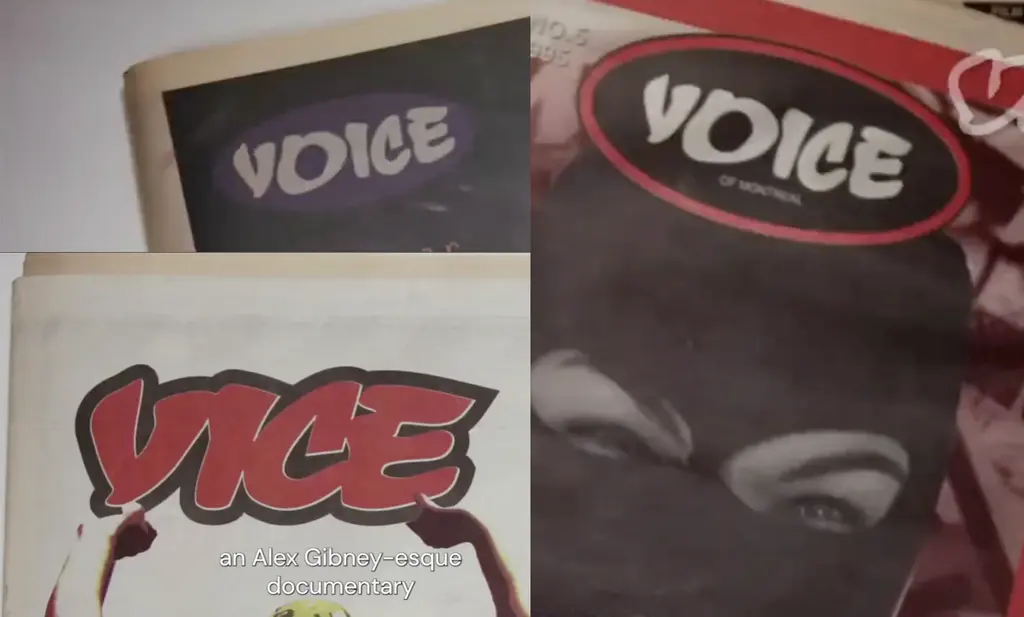
A new documentary traces the rise, fall and cratering of VICE
VICE is broke — Streaming on MUBI, it’s presented by chef and filmmaker Eddie Huang, who previously hosted travel and food show Huang’s World for the millennial media giant.
Written by: Ella Glossop

On the sidelines with football's favourite anti-fascists
Clapton CFC — In a corner of East London, a grassroots movement is helping football rediscover its soul. But the fight to maintain one team's tradition of togetherness has forced fans into a move they never imagined: forming a new club of their own.
Written by: Alex King

Tender, carefree portraits of young Ukrainians before the war
Diary of a Stolen Youth — On the day that a temporary ceasefire is announced, a new series from photographer Nastya Platinova looks back at Kyiv’s bubbling youth culture before Russia’s February 2022 full-scale invasion. It presents a visual window for young people into a possible future, as well as the past.
Written by: Hannah Bentley

Favela ballet: inside a dance school unlike any other
En pointe — In one of Rio’s toughest neighbourhoods, a makeshift academy is offering young women the opportunity to escape the struggles of life – even if just for a day.
Written by: Fabian Federl

How local campaigners won the battle to stop coal
September 2024 is the month that the UK’s addiction to coal finally ends. Coal Action Network campaigner Anne Harris explains how people power ended the dirtiest of all fossil fuels.
Written by: Anne Harris

It is time for Tony Blair to stop talking and go away
Read the room Tony — The former Prime Minister is a haunted relic who continues to plea for attention and relevance. It’s not helping anyone.
Written by: Dawn Foster


