There have never been only two sexes — intersex people exist
- Text by Juliana Gleeson
- Photography by Juliana Gleeson (courtesy of)

Hemaphrodite Logic — Juliana Gleeson’s new book explores the intersex movement from 1990-2025. In this exclusive extract, the author outlines intersex liberation as an “unlikely offspring” of feminist and gay/lesbian struggles.
What is revealed when we unveil lifelong acts of concealment? How can we shed a disguise that was never our own?
These questions — among others — were cast up by a political movement’s unlikely birth in 1990.
In the 1990s, a small circle of intersex people came to know one another. They met face-to-face and connected over the internet (then a novelty). As they shared life experiences, medical records, and perspectives on the injuries and neglect they endured, a consensus quickly arose. They found shared struggles, caused not solely by widespread ignorance of ordinary human variance in reproductive development, but also by the ways they were known over.
At worst, this knowing over meant surgeries and other treatments carried out with little regard for their consent, then usually concealed from them. Medical jargon and vague euphemism had been layered along with scar tissue. The truth of their treatments was left impossible for intersex people to reach individually — but was easily recognised when they gathered. Then, they could intuitively grasp the shared wounding and neglect that previously isolated intersex people (that had caused them to know themselves only as medical freaks — best off corrected and hidden away — and not as their own category of human, who might understand themselves).
Intersex advocates first focused on dialogue, both internal and external, by raising consciousness at small community meetings and on purpose-made web forums and developing connections with allies in feminist scholarship and the LGBTQ+ movement. Intersex advocacy of this era had an unmistakable imprint of both the feminist and lesbian and gay movements. Intersex people drew slogans, strategies, insights, and approaches from earlier twentieth-century counterculture – and merging with the prevailing provocative style of ’90s queer campaigners.
After just three years of underground consciousness-raising organisation, intersex advocacy took to the streets (first in Boston in 1996, then quickly worldwide). Their first protest featured signs reading “SILENCE = DEATH”. Just two intersex demonstrators were flanked by transsexuals, holding a flamboyant picket to confront doctors with “feedback” from those who they’d harmed. From 1996 to today, advocates began confronting the professionals responsible for the harms done to intersex children, with the hope that future generations could be spared the developmental injuries that so many in the movement had endured.

This new vision of intersex variations would come to upset the history of sex. The perceived neutrality of clinical wisdom and guidance would be suddenly put into sharp dispute. As the
new century began — facing down protests and satirical ribbing from their intersex patients — doctors struggled to reassert their claim to predict the likely lives of intersex youth. The intersex movement’s agitation and self-advocacy had unsettled conventional models of clinical care for those born with irregular sex (previously governed by an eccentric and sinister research field — “sexology”).
The first move the clinic took to strike back was the burial of the so-called “pseudo-hermaphrodite”. Since the 19th century, intersex anatomies had been split between those exhibiting ‘spurious hermaphroditism’ and ‘true hermaphroditism’. By the 20th century, breakthroughs in understanding of gonadal tissue meant that most intersex people were declared ‘pseudo-hermaphrodites’. Causing ramifications for both legal verdicts and clinical treatment (or mistreatment), doctors held that skilled examination by trained professionals could offer a final verdict of each anatomy. Apparent ambiguity would yield to designations of either male or female.
While these doctors had styled themselves as the managers of sex, by the 21st century their efforts were subverted and sabotaged by their patients. Before the 1990s, an overbearing imperative guided clinicians in their attempt to draw sharp dividing lines between male and female. They followed the belief that causing confusion to either parents or children would disrupt a delicate developmental sense of ‘psychosexual identity’. This orthodoxy peaked in 2000, when the American Association of Pediatricians claimed each obviously intersex infant posed a ‘social emergency’. But under close examination, this crisis seemed more often triggered by (mis)treatment, than by quirk of birth.
Through the rise of the intersex movement, a set of resistant communities drew together an understanding that rivalled this pathologising outlook. While focused on the lifelong harms to intersex children done by clinicians, these circles of intersex advocacy also posed a new ethical challenge: they pushed against reducing the whole life and experience of intersex people to clinical terminology. They introduced arguments and appeals to life experience that would never have been gathered by conventional clinical researchers. By the end of the ’90s, groups opposing this medical violence were founded in North America, South Africa, Germany, and Uganda. A global movement to confront harms that played out across every nation.
These challenges focused on prevailing conceptions of intersex variations, and the mistreatment of those with them. Thanks to the limiting imperative that sex be differentiated (by whatever means seemed necessary), harm had become just as standardised as neglect was widespread. Prior to their protests, intersex people had appeared in medical literature from a remove: while reports from physicians examining them would occasionally feature a quote from their testimony, physician reports were more likely to include photographs (often taken without clear consent from the person being recorded). These clinical photographs were used for professional training, and often displayed anonymised subjects with blanked-out eyes – reminiscent of classical depictions, where hermaphrodites were portrayed as sleeping.
But in the 1990s, an awakening took place. The world was forced to come to terms with intersex people not only as flesh to be managed, but as humans: those who offer reasons, and respond to them. As one early movement video’s title had it: ‘Hermaphrodites Speak!’ Now the medical profession was forced to encounter intersex people not simply as an educational resource, or patients to manage, but people – who argued with them openly. Sex assignment had previously been a process filled with conceit and secrecy. Now it was dragged into public debate. Many in the medical profession found this development upsetting.
“Borne from the Hermes of feminism theory and the Aphrodite of gay street struggle—bearing the marks of earlier 20th century counterculture—intersex liberation emerged entangled into the world.” Juliana Gleeson

Medics had previously taken themselves to be in the business of ‘managing’ intersex people: they performed surgeries and issued scripts to parents, guiding how disclosure might be tastefully attempted with curious relatives. The birth of intersex advocacy unsettled this management process, calling into question whether it was the business of parents and medical professionals to express their unease through ‘correcting’ intersex children. In response, the medical professions projected their disturbed emotional state back onto intersex people. Terminology reducing human variation that had once been dubbed ‘hermaphroditism’ now came to reduce intersex to a set of ‘disorders’. From this point on, the acceptable sexes were: male, female, and chaos.
The intersex liberation movement’s character was set by its moment in history. Intersex consciousness emerged at a moment uniquely hostile towards internationalist politics (the 1990s). Borne from the Hermes of feminism theory and the Aphrodite of gay street struggle — bearing the marks of earlier 20th century counterculture — intersex liberation emerged entangled into the world. Nevertheless, by the 2020s the movement had expanded, with worldwide campaigns against the harms done to intersex people (chiefly focusing on abolishing routine clinical violence). After this reset, sex as we know it for the rest of this century will dance to the intersex movement’s rhythm. Pathologisation of irregular sex is no longer a given. Each “corrective” must now be argued out.
While focused on the needs of a small minority, the intersex movement has presented a range of arguments of universal concern. Anyone fighting for liberation can learn from both the campaign’s victories, and the limits of the approach taken by the intersex movement. Some hostile clinicians have been quick to cast the intersex movement as a group of excessively passionate and extreme-driven zealots, or single-minded activists. But this book will show a movement that shows a sardonic and conciliatory face. Intersex liberation writings include everything from gallows-humour cartoons, to exhaustive reports to NGOs, or the UN. Both registers strive for a kind of coldness that belies the passionate involvement of these advocates. Instead of relying on pathos, intersex movement writings have tended towards quieting obvious reactions and sublimating traumas into displays of wit, meticulousness, and sangfroid. Instead of the cheap shot or shock tactic, they’ve favoured turning clinical terms-of-art against their clinicians.
In this way, the intersex movement is a child of its time: by the end of the 20th century, bodies of knowledge that were once firmly professionalised became distributed in new and unlikely ways by the boom of information technology. Encyclopaedias dissolved into memes, and autodidacts on a mission came to challenge the claims of authorities who had once buttressed the medical profession (using their own terms). The intersex movement rode the wave of the tech boom, and pressed home the challenges of information technology. Who could claim to be an expert on intersex matters shifted from a foregone conclusion to an open question. Who was knowing over whom became suddenly unclear. This book follows what the intersex movement made of this opportunity.
Making sense of the intersex movement’s political history requires an expanded vision. Understanding a political challenge to the clinical sciences compels us to move far beyond the training offered by med school, or reductions to genetics. The movement has cast up material across forms, from medical journals to memoirs, archived websites to philosophical essays, and scans from VHS tapes to repurposed medical records, pastiches, poems, and polemics. From isolated entries in a rare diseases e‑catalogue, to sculptures found lounging in galleries, to the medical humanities and its fifty shades of Foucault. All this and more allows the full shape of sex to come into view. None can be overlooked, if we want to understand what sex has become today.
In other words, today the history of sex is as much as anything a movement history, one that demands taking the intellectual breakthroughs of intersex people themselves just as seriously as any concept devised to manage them. As quickly as the harms done to intersex people were shared between them, whether this really was their inevitable fate became unclear. Organisation between intersex people and the feminist movement not only upset the order of sex, but allowed us to picture another world, and a new science. The harms done to intersex people are not akin to polishing a mirror (to see the true, twofold reflection of sex), but rather an active expression of prejudices that cannot be justified.
Hermaphrodite Logic is a book about how these professionalised prejudices first came to be challenged, and the shape of sex took in the wake of the intersex movement. While this story can be a harrowing one, it’s also shot through with humour (of the gallows) and hope (of a new natural order). If distinguishing sex is a process, it’s one we can set into a new form. If sex is expressive, we can choose new songs to sing. While the harms of normalising intersex people have been made routine, they are the work of history: they can be known in turn, rewritten, and ended forever.
Hermaphrodite Logic by Juliana Gleeson, is out now with Verso Books. Hermaphrodite Logic is available at all good bookstores worldwide (and some evil ones). This extract was edited for clarity—and to add spice.
Buy your copy of Huck 81 here.
Enjoyed this article? Follow Huck on Instagram and sign up to our newsletter for more from the cutting edge of sport, music and counterculture.
Support stories like this by becoming a member of Club Huck.

You might like

The reggae singer taking on Uganda’s strongman president
‘We can change our destiny’ — Bobi Wine spent more than a decade singing about social justice issues in his native Uganda. This year, the ‘Ghetto President’ was elected to parliament, and now he’s trying to change the system from the inside.
Written by: Julian Hattem

Jesse Glazzard’s messy portrait of queer friends, lovers and chosen family
The Sound of Dirt and Beauty — The photographer’s debut monograph explores tender, unpolished moments shaped by the people who he surrounds himself with, while offering a window into the UK’s working-class LGBTQ+ community.
Written by: Sunny Sunday
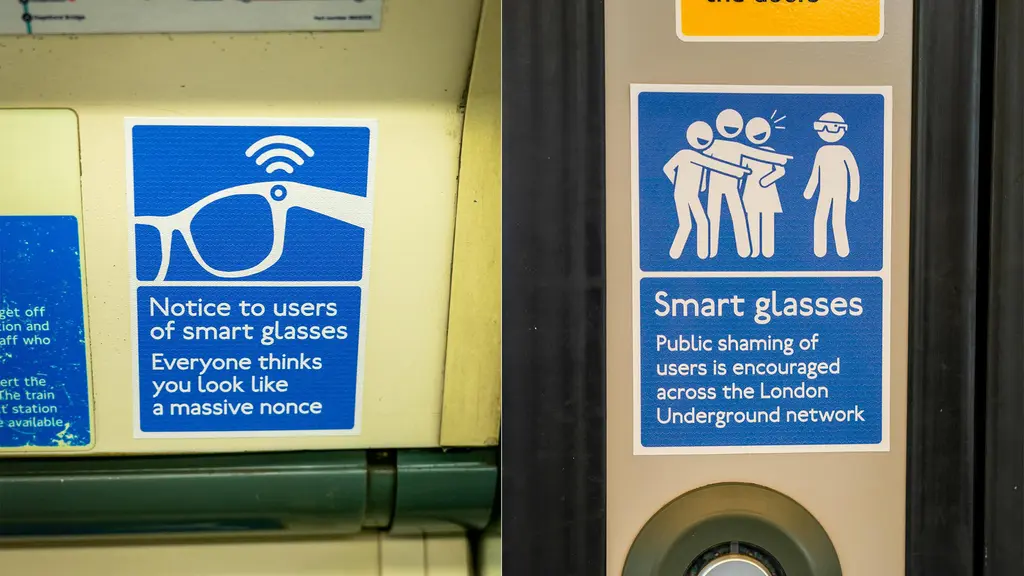
Activists slam “pervert glasses” in new guerrilla campaign
Everyone Hates Elon — Stickers have appeared on the London Underground network, criticising the wearable technology’s covert filming capabilities.
Written by: Isaac Muk

New exhibition highlights British radical living over 200 years
Earthly Paradise — Taking place at the William Morris Gallery, it explores the homes and lives of artists, writers, musicians and more, as well as the conditions that allowed them to thrive.
Written by: Isaac Muk

Pink Floyd’s Roger Waters joins team of new Palestinian resistance documentary
Freedom Theatre — Directed by Rishi Pelham, the film spotlights a theatre operating in the Jenin refugee camp.
Written by: Ella Glossop

Just Stop Oil holds first protest in 17 months
No new drilling — Having previously said that it was “hanging up the hi-vis”, the climate activist group has blocked a road outside Parliament to protest Andy Burnham opening the door for new oil and gas extraction licenses in the North Sea.
Written by: Ella Glossop


