The lawyer who fled the rat race to live in the Russian wilderness
- Text by Niall Flynn
- Photography by Pavel Volkov

Five years ago, Yuri Alekseyev – a lawyer living and working in Moscow – decided it was time to escape.
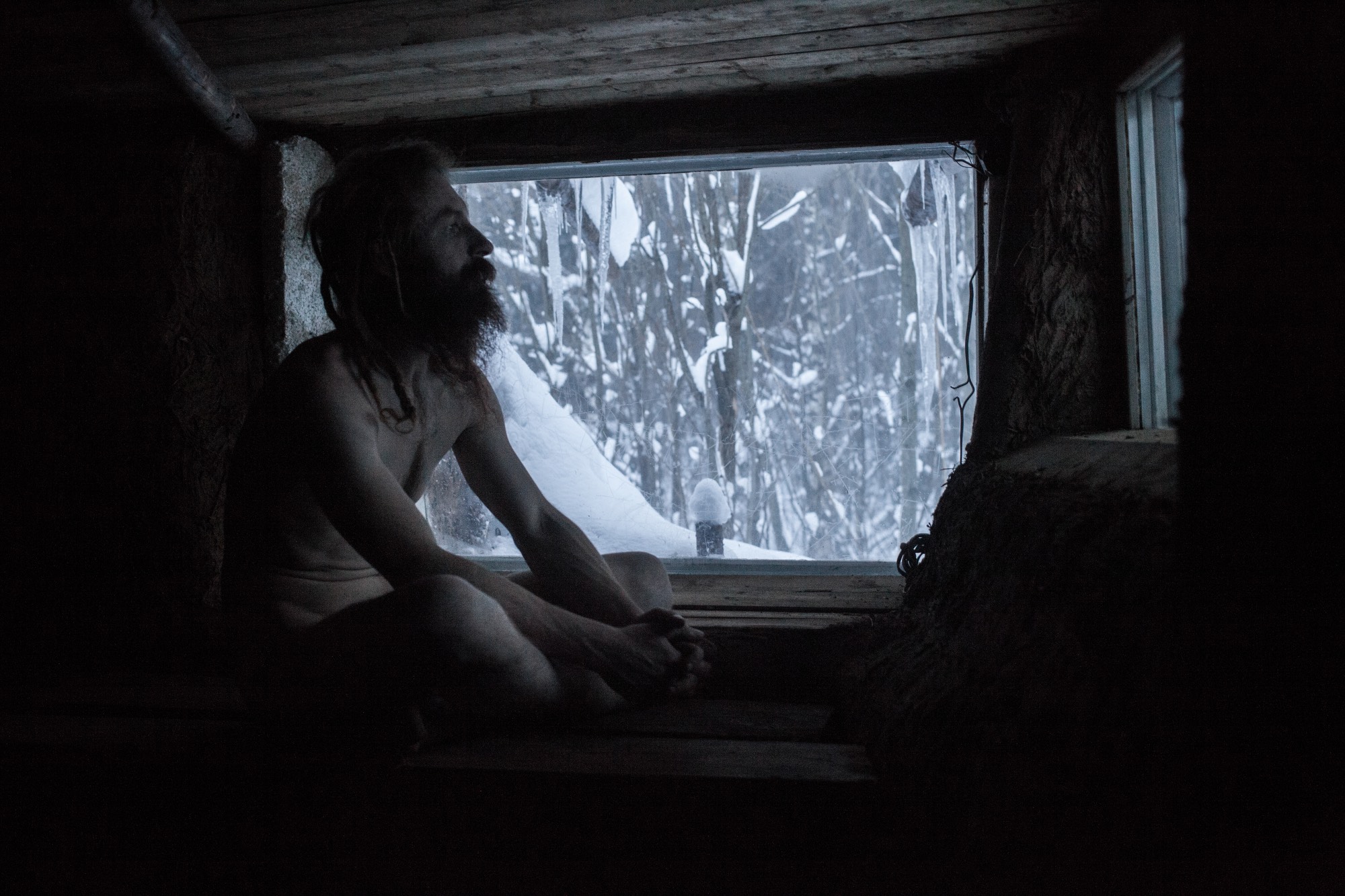
So, along with his pet rabbit Petrushka, he packed up and left for a new home: a small, underground hut situated in uninhabited woodland, around 100km or so from the Russian capital.
Soon, tales began to circulate about the real-life “hobbit” living alone in the forest. Type Yuri’s name into Google and you’re met with a handful of different articles about the ‘Russian lawyer who gave up city life’, painting him as a happy-go-lucky (if somewhat eccentric) figure, cheerfully going about his business in the snow.


When photographer Pavel Volkov eventually stumbled upon Yuri’s story, he was hooked. After a journalist invited him on a visit to the famed woodland home to take pictures of Yuri as part of a short piece for a local Moscow newspaper, Volkov – always on the hunt for interesting stories about interesting people – struck up a friendship with the former lawyer.
“As far as I understand Yuri escaped from our world to create his own,” Volkov explains. “His world is small but magic – without the noise of big cities. But, there is a hut, a pet rabbit, a forest and a huge library.”
The library is certainly the most interesting feature in Yuri’s woodland home (saying something, given that he recently installed a totally self-sufficient sauna), with visitors to the hut able to borrow from and donate to as they wish. He regular welcomes visitors from the city, most of whom come with a handful of books.


While it’s tempting to frame the story as that of an unconventional recluse, Volkov instead uses his lens to shine a light on an individual who chose to create his own world. Though Yuri is isolated in the geographical sense, through his library and a working internet connection, he remains as connected as ever.
“I think that the whole situation is a kind of mystic: in a big city with millions of people, cars, houses, around 100 kilometers away, somewhere in the forests, stands a small hut, lit with moonlight, and Yura sits there near the fire with his rabbit.
“I think that some people want to change their lives. Some people go to foreign countries, some change their work – and some may become modern hermits, just like Yuri.”

See more of Pavel Volkov’s work on his official website.
Enjoyed this article? Like Huck on Facebook or follow us on Twitter.
You might like

Portraits of gay bears through a rooftop hatch
Big Boys On My Roof™ — Growing up, Anthony Stockdale struggled with his love for bigger men. His new photo series celebrates the bear community.
Written by: Anthony Stockdale

In photos: Lives of solitude at the world’s edge
Coirón — Pie Aerts’s new photobook documents years spent in close quarters with puesteros in Patagonia – a group of aging gauchos who live almost completely isolated existences.
Written by: Isaac Muk

The raw, fledgling intimacy of Peter Hujar’s contact sheets
Hujar:Contact — A new photobook highlights the process of the legendary queer photographer, and his process of growing into the artist he ultimately became.
Written by: Miss Rosen

Jesse Glazzard’s messy portrait of queer friends, lovers and chosen family
The Sound of Dirt and Beauty — The photographer’s debut monograph explores tender, unpolished moments shaped by the people who he surrounds himself with, while offering a window into the UK’s working-class LGBTQ+ community.
Written by: Sunny Sunday

Behind the curtain at Alternative Miss World 1981
Olympia glamour — Running a subversive take on the traditional beauty pageant, the Andrew Logan organised event prioritised underground creativity and invention. Photographer David Corio went behind the scenes at its biggest edition.
Written by: Miss Rosen

New exhibition highlights British radical living over 200 years
Earthly Paradise — Taking place at the William Morris Gallery, it explores the homes and lives of artists, writers, musicians and more, as well as the conditions that allowed them to thrive.
Written by: Isaac Muk


