Lee Quiñones: “We need privacy again”
- Text by Isaac Muk
- Photography by Various, see captions.
- Illustrations by Lee Quiñones

Outside Is America — For Huck’s final newsletter interview of 2025, the New York graffiti legend reflects on arts from the fringes, his city’s crossroads moment, and the importance of community in a digital age.
This Q&A was first featured in Huck’s culture newsletter. Sign up to the mailing list here for more exclusive interviews, cultural dispatches and monthly recommendations.
For over five decades now, Lee Quiñones has been one of New York’s most assured voices in amplifying life on the margins of the city. Ever since 1974, when as a 13-year-old boy from Puerto Rico living on the Lower East Side, he took paint to a train yard and sprayed “LEE” onto his first subway car, he’s been a key proponent in graffiti’s acceptance as art in the modern day, while consistently advocating for outsider culture and music.
To this day, some of his subway art remains among the most intricate, striking and powerful pieces of graffiti that has ever been sprayed. Trains became canvases for experimentation and play, as well as to interrogate political and cultural issues, and his 1979 piece ‘Stop The Bomb’ – painted from top to bottom across a whole car, advocating for peace in the midst of the Cold War – remains particularly poignant today.
It’s a key thread that has tied his work together throughout the decades, as he’s moved from train yards to studios, and metal to canvas. Following the recent publication of his landmark book Lee Quiñones; Fifty Years of Graffiti Art and Beyond, and his recent London exhibition at Woodbury House Outside Is America, we caught up with him to reflect on the year that’s been, New York’s crossroads moment, and how surveillance disproportionately impacts people on the fringes of society.


It’s the last interview of the year. How has 2025 been for you?
I’m still alive, still healthy. I’m looking forward to lots of change in the new year.
What kind of change?
Political, personal, moral… not necessarily in that order. Every year should bring some kind of change; that’s how the chapters of life keep on exciting us.
Of course, Mamdani is the new Mayor of New York. What’s the mood in the city?
Optimistic on some fronts, pessimistic on others. I think he represents not just young New Yorkers, but people of any age, He has these new outlooks on things to change within the city government, and he’s very optimistic in his words – he’s a man of colour, young at heart, and a man of different faith. He’s good looking, and he can dance, which is very rare in politics. I’m in support of him – I won’t say whether I was on the ballot – but I’m in support of him to come through with some ways to create change.
You recently published a book that celebrated 50 years since you first started spraying graffiti, and your art since then. How do you reflect on your younger days compared to where you are now, and how New York has changed over those years?
The key word in the title of my book Lee Quiñones: 50 Years of New York Graffiti Art and Beyond, is ‘Beyond’. It means that I’m not painting trains in a New York that is so different now, from what it was back then. There are some things that rhyme with each other [in my art] but not necessarily repeating each other. New York has always been in a state of flux; people moving in and out, investment and disinvestment, politics being shuffled and hustled around. I think it was much more challenging back then – it was in your face, and now it’s a bit more subliminal. There’s still a lot of struggle, and people are still being marginalised, but New York is fine. New York will always be fine.


Do you think people on the fringes of New York are more marginalised now?
Yeah, I think people are more marginalised now. With the introduction of social media and technology, things are coming to the surface more than ever before. Social media puts us in front row seats to everything that’s going on in real time, so it’s taken away the ability for people to work in their own shadow economies.
We need privacy again. We don’t need to be handled like we’re going through a Geiger counter all the time. We need to have our own privacy, and I don’t think technology should have an open cheque about how it manages its privacy laws and practices. People that used to be able to operate on the fringes of society cannot anymore, and that brings a lot of stress.
Do you think New York in its current state could breed something as revolutionary as hip-hop, graffiti, breakdancing, and all those things back then?
It already is. It’s called the maturation of the hip-hop and graffiti movement. Right now is the second phase of being in the public space, if you ask me. You’re going to see it more than ever in the visual arts, the poetry, acting, directing – all these channels of creative expression are going to crest higher.
You know, a lot of cats were first baptised by the fires of the 1960s, ’70s and ’80s, right? By the Civil Rights Movement, the Women’s Liberation Movement, and now we’re actually a galvanised, very democratic art movement that’s now worldwide and catering to the voice of the ghetto. To quote [legendary graffiti artist] Stay High 149: “The voice of the ghetto always has the last laugh.”
I appreciate that – it’s easy to overlook what’s right under our noses.
You’ve got to remember that there were a lot of naysayers who discounted what they didn’t understand. That’s happened across generations. People not knowing that there is a natural ability to rebel through expression, through the arts – the most humble way of being political and rebellious at the same time is by creating art. That’s why we have great music nowadays, and great writers and poets. You can name hundreds of people who have come from difficult places and spaces to create a dialogue.
“There’s still a lot of struggle, and people are still being marginalised, but New York is fine. New York will always be fine.” Lee Quiñones

You had your exhibition in London recently, Outside Is America at Woodbury House. What was the thinking behind it?
It’s really a show that was serendipitously put together by the times, by forces outside of myself. I’m just a guy that traces over the outlines of society. It’s sort of a mini-retrospective – old works that are speaking to and informing new works and vice versa, that are all coming together in the inflection moment of where we are now. Outside Is America was a phrase that was tooling around in my head, and I kept asking myself: “Where’s that coming from?” Turns out, it was coming from one of my favourite bands, U2. But it stood out in my mind and made sense for the show – we’re in the UK and I’m proclaiming that Outside Is America. I’m trying to ask: “Outside of America, what is America? What does it stand for?” So, with all the pieces that I put into the show, it was a way of finding an inflection point through my work.
Over the decades graffiti has gone from an underground, illegal, subversive activity into a global phenomenon, which has ultimately been commercialised – now big brands commission street art murals to advertise products. How do you look at this development?
It’s an inevitable part of popular culture. Wanting to latch onto that caboose that has been on the tracks for a long time, right? They’re all latching on, and in some good ways. I think ultimately, the artist or creator needs to have their moral compass in the right place. When you’re going to endorse a product, make sure that your message keeps you sleeping at night. I’m very religious about reading the fine print, and considering whether it’s something I’m going to sleep comfortably with and if it’s something that I’m going to be proud of, or am I going to turn in something that could be on the fringes of exploitation? So, I really consider: Do I really want to be in bed with this?
Obviously, going into 2026, the world is in an uncertain place. What one piece of advice would you give a young person who might be feeling anxious about the future?
Find the community inside yourself, and that will open the doors to a community outside of yourself. Artists know a lot about community – they have a gravitational, magnetic pull to each other. And fear the power of the people, not the people in power.


Lee Quiñones: Fifty Years of Graffiti Art and Beyond is published by Damiani. See some of his work from Outside Is America, his recent show at Woodbury House, here.
Isaac Muk is Huck’s digital editor. Follow him on Bluesky.
Buy your copy of Huck 82 here.
Enjoyed this article? Follow Huck on Instagram and sign up to our newsletter for more from the cutting edge of sport, music and counterculture.
Support stories like this by becoming a member of Club Huck.
You might like

Graffiti pioneer Lee Quiñones has kept on painting through street art's ebb and flow
Things I Learned Along the Way — Huck’s Fiftieth Anniversary Special collects lessons learned and creative advice from fifty of the most inspiring people we know. Each day we’ll be sharing a new excerpt from the magazine. Today, graffiti pioneer Lee Quiñones shares how, through all the art world's changes, he's found new ways to keep on keeping on.
Written by: Tom Fenwick

An unflinching portrait of the women’s liberation movement
Truth to power — For the past half-century, photographer Donna Ferrato has been on the frontlines of women’s rights protests, documenting fierce political battles and the hidden world of domestic abuse.
Written by: Miss Rosen

The raw, fledgling intimacy of Peter Hujar’s contact sheets
Hujar:Contact — A new photobook highlights the process of the legendary queer photographer, and his process of growing into the artist he ultimately became.
Written by: Miss Rosen

Is Field Maneuvers the most fun time ever? Yes probably
Collective joy — Huck’s art director Samuel White went to the 2026 edition, braving a wet start and interviewing FLINTA* collective and arm wrestling legends Uhaul Dyke Rescue in the process.
Written by: Samuel White

Jesse Glazzard’s messy portrait of queer friends, lovers and chosen family
The Sound of Dirt and Beauty — The photographer’s debut monograph explores tender, unpolished moments shaped by the people who he surrounds himself with, while offering a window into the UK’s working-class LGBTQ+ community.
Written by: Sunny Sunday
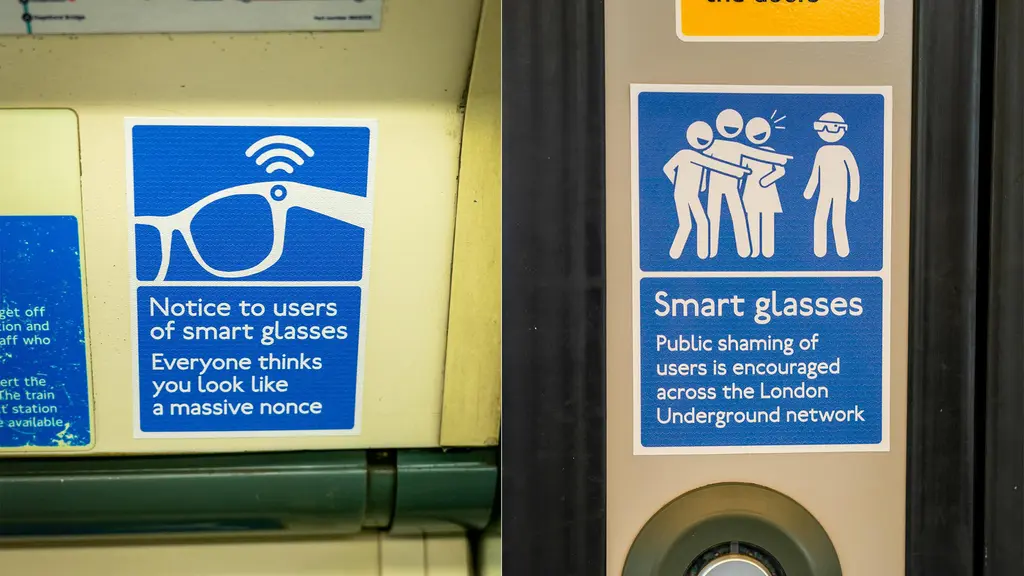
Activists slam “pervert glasses” in new guerrilla campaign
Everyone Hates Elon — Stickers have appeared on the London Underground network, criticising the wearable technology’s covert filming capabilities.
Written by: Isaac Muk


