The legend of the East Village’s greatest photographer

Peter Hujar (1934–1987) is your favourite photographer’s photographer – a man who lived independently, crafting a life in downtown Manhattan that flourished between the Stonewall uprising of 1969 and the AIDS crisis of the 1980s.
Inside his East Village loft, Hujar mastered his craft, pursuing the art without the burdens of commerce. Liberated from the strictures of the market, Hujar created a body of work that is as broad in subject matter as it is refined in technique and as original in perspective.
A new exhibition, Peter Hujar: Speed of Life, looks at the work the legend left behind, three decades after his death. The show presents 140 photographs drawn from the Morgan Library & Museum, New York, the most comprehensive public collection of the artist’s work. Curated by Joel Smith, the exhibition adopts the traditional retrospective format while staying true to Hujar’s vision.
![Self-Portrait Jumping (1) [photograph], 1974](https://www.tcocdn.com/wp-content/uploads/2018/01/self-portrait.jpg)
Self-Portrait Jumping, 1974
“Hujar was a fully rounded artist for whom a portrait was the model for what art could be,” Smith reveals. “He wanted to deliver an empathetic, living image of his subject: intensely clear, but respectful of mysteries behind the surface. His landscapes, waterscapes, night views, still lifes, skyscrapers, interiors of ruins, are spellbinding, gorgeously printed — and interrelated. Hujar knew it all added up; whenever he could, he showed the most diverse facets of his work side by side. But not only did his career end far too soon; he never had the chance, or instinct, to spell out what held his art together, or to broadcast it to the world.”
In his lifetime, Hujar avoided the path taken by his contemporaries, such as Robert Mapplethorpe, which helped to transform the market for art photography during the 1970s and 80s. “What’s challenging, or tortuous, for one artist is a pleasure for another,” Smith explains. “Hujar’s art is full of vulnerability, self-questioning, complexity, and fatalistic humour. To go from that sensibility to the mindset of self-promotion was poison, to him; all he could do was hope his work would make its own case.”

Susan Sontag, 1975
Speed of Life does precisely this, giving us a look inside the archive that is as authentic to the artist’s vision as possible. According to the 30 people that Smith has spoken with, Hujar as not easy to know closely, but worth knowing. “In the last years of his life, the 1980s, Hujar was, at age 50, a senior figure on the art scene in the East Village,” Smith reveals.
“He maintained both a forbidding exterior — think of the nighttime images, the cruising pictures, the haunted ruins and broken-into cars- — and a profoundly sensitive psyche, the kid who had never processed all his traumas. I put my finger on these paradoxes as someone reading his art. That, to me, is what Hujar’s art is about: looking straight into the eye of a hard world, and not for a second losing sight of his own self-knowledge, humour, yearning.”

Sheryl Sutton, 1977

Gay Liberation Front poster image, 1969

Steel Ruins (13), 1978

Candy Darling on Her Deathbed, 1973. Collection of Ronay and Richard Menschel

Public Garden, Taormina, Sicily, 1959
![Christopher Street Pier (2) [photograph], 1976](https://www.tcocdn.com/wp-content/uploads/2018/01/christopher-st-pier.jpg)
Christopher Street Pier, 1976

Boy on Raft, 1978

Dog, Westtown, New York, 1978
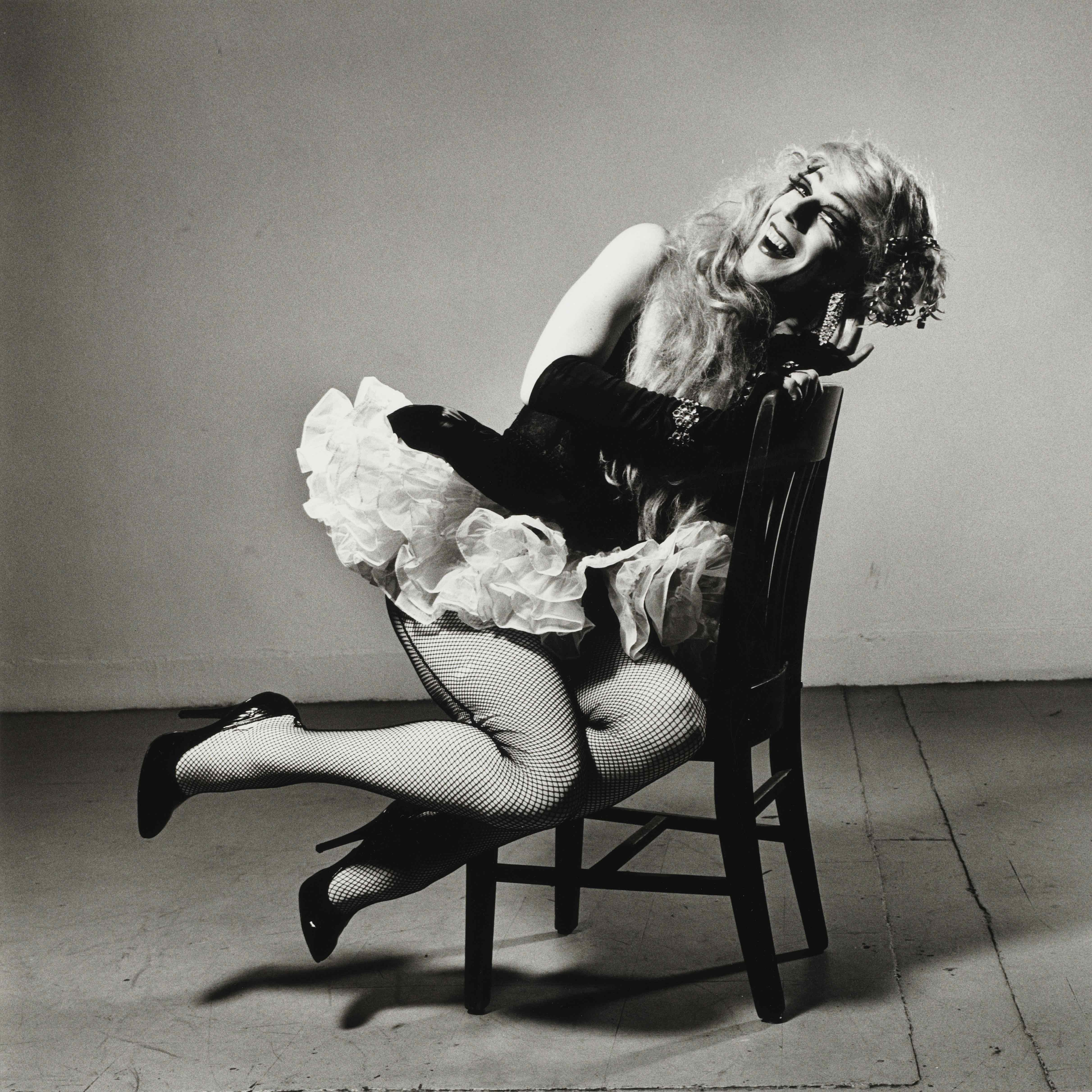
Ethyl Eichelberger as Minnie the Maid, 1981
Peter Hujar: Speed of Life is on view at the Morgan Library & Museum, New York (January 26 – May 20, 2018). A catalogue of the same name is available from Aperture.
Follow Miss Rosen on Twitter.
Enjoyed this article? Like Huck on Facebook or follow us on Twitter.
You might like

In photos: Black Texas life since emancipation
Kinship & Community — A new photobook and exhibition showcases the rich culture, history and community of African American folks in the Lone Star State, whose existence in the region predates colonial Britain.
Written by: Miss Rosen

Youthful joy & end-of-era poignancy at a London school prom
Leavers — For several years, Lewis Khan documented young people as they celebrated the last of their school days and the completion of their exams. The series is now collated in a new self-published photobook and short film.
Written by: Zoe Whitfield

Harry Gruyaert’s vintage, kaleidoscopic scenes of New York
A Sense of Place — For 50 years, the Belgian photographer and Magnum Photos member has been capturing NYC’s colourful chaos. A new photobook and exhibition showcase his unique, technicolour view of the city.
Written by: Miss Rosen

In the pit at one of the UK’s last stock car & banger speedways
Stock Car Racing Isn’t Dead — Photographer Liam McCarthy spent time in and around the Arlington Raceway’s circuit, capturing the diehard community that keeps the sport alive.
Written by: Isaac Muk

Inside Lower Duck Pond, the nicest town on the internet
/r/HaveWeMet — With a population of 2,500 and no fixed location, the subreddit is a space for roleplaying citizens to solve mysteries, host fictional events and ultimately connect. In an internet that’s often divided and toxic, Vicky Jessop hangs out in one of its most wholesome corners.
Written by: Vicky Jessop

A major Nan Goldin exhibition is coming to London
You Never Did Anything Wrong — Opening at the Hayward Gallery in November, the show will debut a new film from the artist and activist, alongside a slate of recent work.
Written by: Jack Dennison-Thompson


