Five things we learnt from Patagonia founder on running a successful eco business
- Text by Shelley Jones

In 2005 Patagonia founder Yvon Chouinard wrote a book Let My People Go Surfing that was intended to be a philosophical manual for the employees of Patagonia.
He had no idea then that the book would become an important tool – translated into ten languages, used as educational material in schools and colleges – in challenging the entire culture of capitalist consumption.
Here are some of the best lessons.
Collaborate With Your Friends
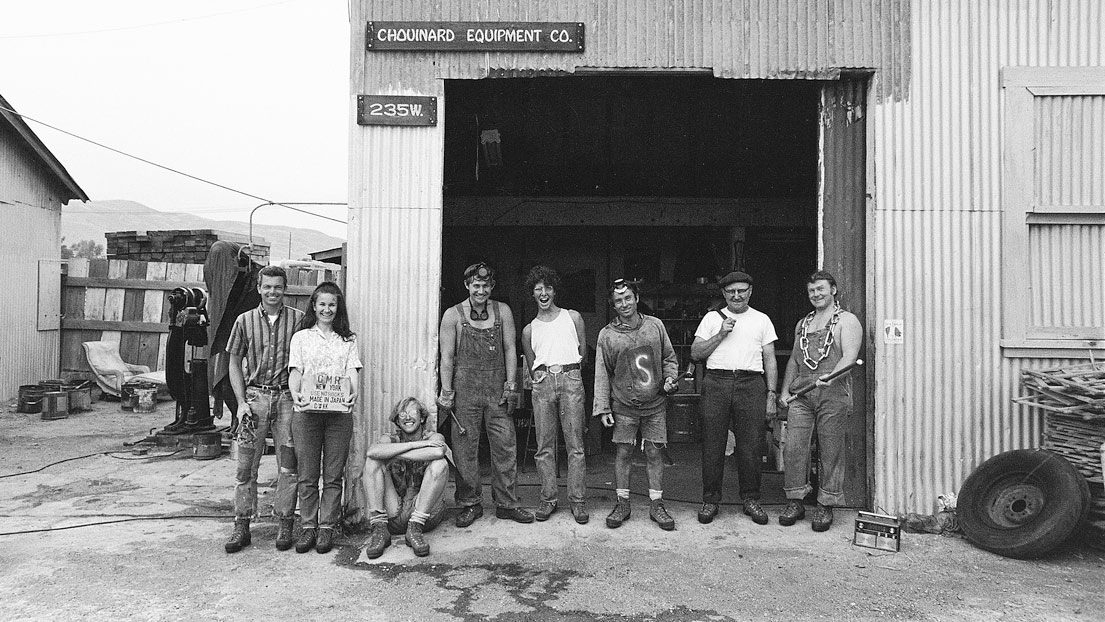
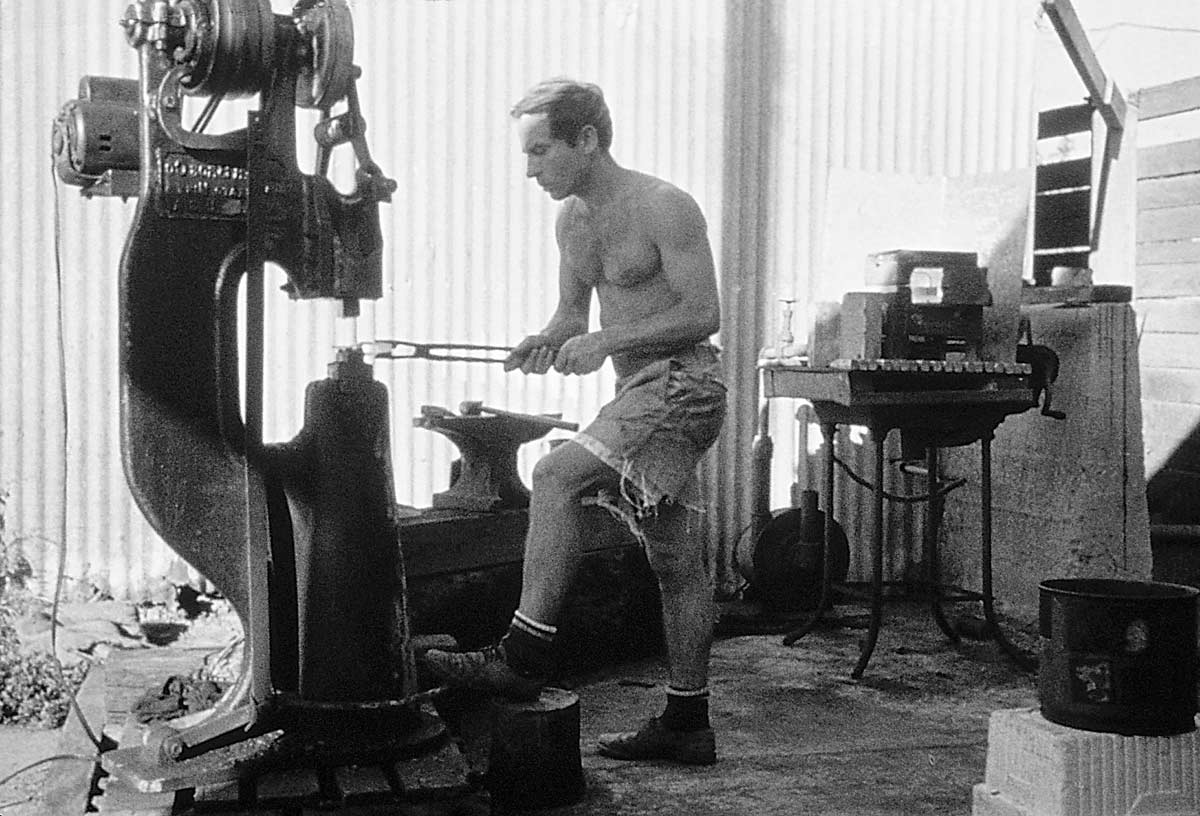
In 1957 aged just nineteen and a train-hopper with no money in the bank, Yvon Chouinard bought himself a coal-fired forge and some tools and made his first climbing pitons, strong and stiff designed specifically to be reused in Yosemite rock. He made them for himself and his friends, and then for friends of friends. And in 1964 after being honorably discharged from the army Yvon returned to California and hired a bunch of these friends – like Layton Kor, Gary Hemming, Tony Jessen and Dennis Hennek – and made much more.
As the company grew and Yvon needed to make more hires he looked down the road to his surfing neighbours Roger and Kris McDivitt and collaborated with the likes of his climber and surfer friend Doug Tompkins, who later launched the world’s other leading outdoors company North Face. Collaborating with people he cares about and respects and who have the same values as him means that it’s impossible to treat those people as expendable or boss them around. Everyone brings something to the table and all ideas are valued.
This makes it harder, Yvon says, to engage in bad practice: “We don’t want drones who will simply follow directions. We want the kind of employees who will question the wisdom of something they regard as a bad decision… A familial company like ours runs on trust rather than on authoritarian rule.”
Act Like A Juvenile Delinquent
Yvon has always been keen to distance himself from traditional business. The tagline of the whole book is: The Education of a Reluctant Businessman. Talking about embracing a new style of businessman he says:
“One of my favourite sayings about entrepreneurship is: If you want to understand the entrepreneur, study the juvenile delinquent. The delinquent is saying with his actions, ‘This sucks I’m going to do my own thing.’ Since I had never wanted to be a businessman, I needed a few good reasons to be one. One thing I did not want to change, even if it got serious: Work had to be enjoyable on a daily basis. We all had to come to work on the balls of our feet and go up the stairs two steps at a time. We needed to be surrounded by friends who could dress whatever way they wanted, even be barefoot. We all needed to have flexitime to surf the waves when they were good or ski the powder after a big snowstorm, or stay home and take care of a sick child. We needed to blur that distinction between work and play and family.
“Breaking the rules and making my own system work are the creative part of management that is particularly satisfying for me. But I don’t jump into things without doing my homework.”
Be True To Yourself
In 1991 after lots of growth and “trying to have it all” Yvon says that Patagonia hit a wall. They were in financial trouble, their primary lender stopped their cash flow, and the company was in a deep crisis. It had exceeded its resources and limitations. Yvon proceeded to reform the company. And at the heart of that reform was getting back to the roots of what he and Patagonia in general, was all about. “I had always tried to live my own life fairly simply, and by 1991, knowing what I knew about the state of the environment, I had begun to eat lower on the food chain and reduce my consumption of material goods. Doing risk sports had taught me another important lesson: Never exceed your limits. You push the envelope, and you live for those moments when you’re right on the edge, but you don’t go over. You have to be true to yourself, you have to know your strengths and limitations and live within your means. The same is true for business. The sooner a company tries to be what it is not, the sooner it tries to ‘have it all,’ the sooner it will die. It was time to apply a bit of zen philosophy to our business.”
Operate With A Sense of Urgency
“When I look at my business today I realise one of the biggest challenges I have is combating complacency. I always say we’re running Patagonia as if it’s going to be here 100 years from now but that doesn’t mean we have 100 years to get there. Our success and longevity lie in our ability to change quickly. Continuous change and innovation require maintaining a sense of urgency – a tall order, especially in Patagonia’s seemingly laid-back corporate culture… Only those businesses operating with a sense of urgency, dancing on the fringe, constantly evolving, open to diversity and new ways of doing things, are going to be here 100 years from now.”
Don’t Over Complicate Things
At the end of Let My People Go Surfing Yvon sums up his philosophies and approach and he hits upon a simple truth at the heart of his mission: “Just because society is hell-bent on becoming so complex it doesn’t mean we have to go there… It seems to me if there is an answer, it lies in these words: restraint, quality and simplicity. We have to get away from thinking that all growth is good. There’s a big difference between growing fatter and growing stronger… I believe the way toward master of any endeavour is to work toward simplicity; replace complex technology with knowledge. The more you know, the less you need… From my feeble attempts at simplifying my own life I’ve learned enough to know that should we have to, or choose to, live more simply, it won’t be an impoverished life but one richer in all the ways that really matter.”
You can buy Let My People Go Surfing from the Patagonia website.
You might like

New exhibition highlights British radical living over 200 years
Earthly Paradise — Taking place at the William Morris Gallery, it explores the homes and lives of artists, writers, musicians and more, as well as the conditions that allowed them to thrive.
Written by: Isaac Muk

Pink Floyd’s Roger Waters joins team of new Palestinian resistance documentary
Freedom Theatre — Directed by Rishi Pelham, the film spotlights a theatre operating in the Jenin refugee camp.
Written by: Ella Glossop

Just Stop Oil holds first protest in 17 months
No new drilling — Having previously said that it was “hanging up the hi-vis”, the climate activist group has blocked a road outside Parliament to protest Andy Burnham opening the door for new oil and gas extraction licenses in the North Sea.
Written by: Ella Glossop

In photos: The enduring resistance of Notting Hill Carnival
Carnival of Resistance — A new photobook by Wayne Campbell and Wayne Crichlow reflects on the protest beginnings of Europe’s biggest street festival, along with the traditions keeping its original spirit alive today.
Written by: Isaac Muk

Tens of thousands gather to remember Jason Arday at London vigil
Stand Up to Racism — It took place in Trafalgar Square, with speakers paying tribute to the former Cambridge professor’s life and achievements, while calling for accountability over the reporting he faced from the mainstream press.
Written by: Ella Glossop

Count Binface: “Nigel, who said he didn’t want to be humiliated, maybe has been”
“I’m just getting started” — The novelty political candidate, created by Jonathan David Harvey, came second in the Clacton by-election after winning 9,455 votes and more than a quarter of the votes.
Written by: Ella Glossop


