Intimate shots of the London Underground in the ’70s
- Text by Huck
- Photography by Mike Goldwater

As a young photographer in the ’70s still honing his craft, Mike Goldwater was fascinated by the London Underground. A “labyrinthine” system with limited lighting, he saw it as a technical challenge: how, despite the conditions, could he produce strong images there?
Back then, the Underground was a markedly different beast. Smoking was allowed, busking was strictly forbidden, while old ticket booths were an important fixture at every station. (Oyster cards were still decades away.) For Goldwater, it was a special place to document from the get-go.
“Almost everyone on the tube travels with a purpose and a destination,” he says. “On the days that I chose to photograph on the underground I would travel on a whim; jumping on and off trains, wandering a corridor here, taking an escalator there, lingering at places that felt that they might produce interesting images. This set me apart from everyone else. I felt in some way I could enter a different time, a sort of time in-between.”
 “Being in very close proximity to one another during rush hours people have to shrink their personal space, while at other times of the day, parts of the system could be almost deserted. How people responded to both situations had picture potential.”
He shot there on and off for a decade, shelving the project in 1980 when he co-founded the agency Network Photographers and began travelling extensively for work. In fact, it wasn’t until recently that he engaged with the work at all, finally deciding to go back through the old contact sheets on a quiet day. Upon doing so, he discovered a host of images he’d missed the first time round.
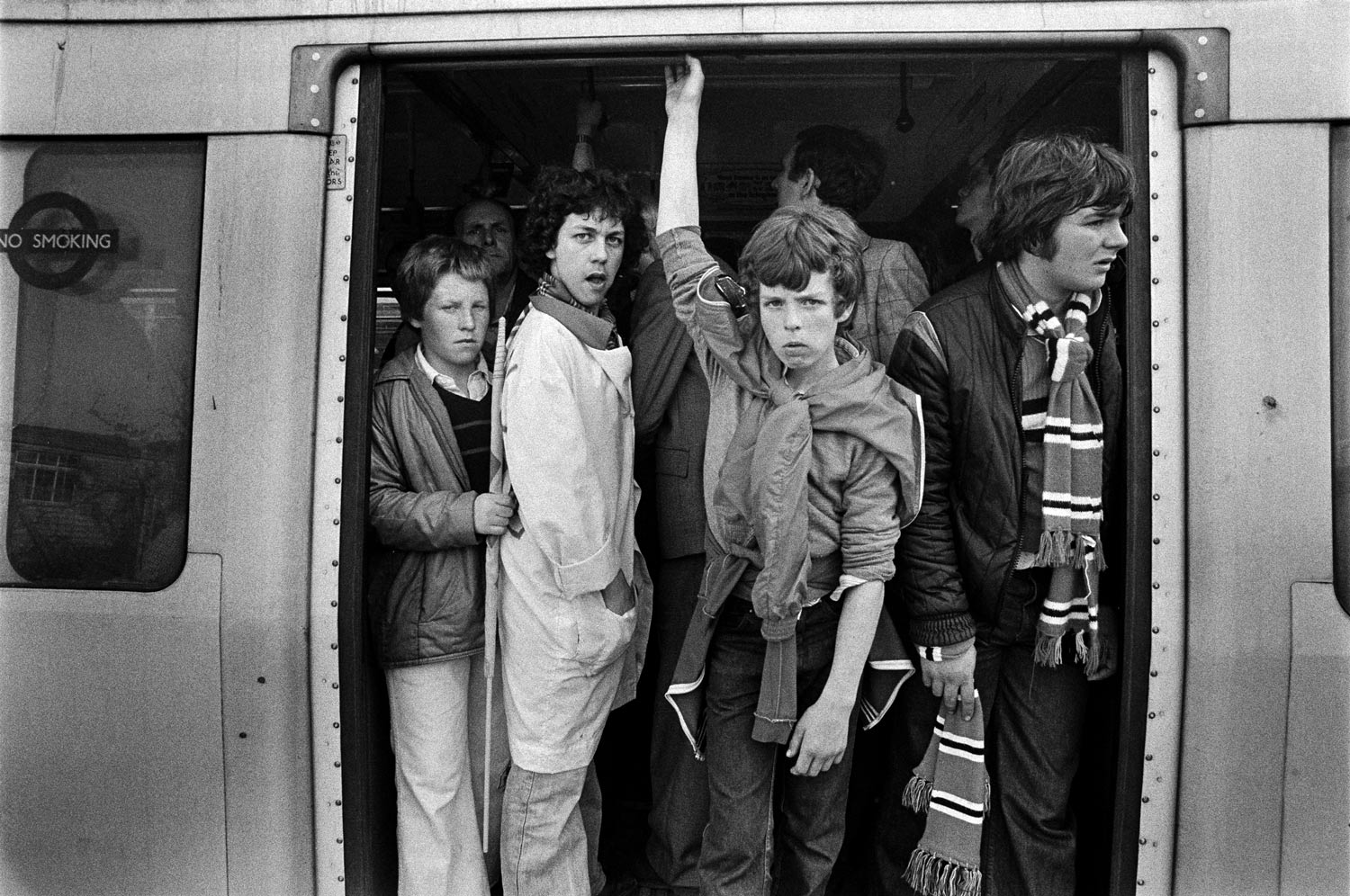
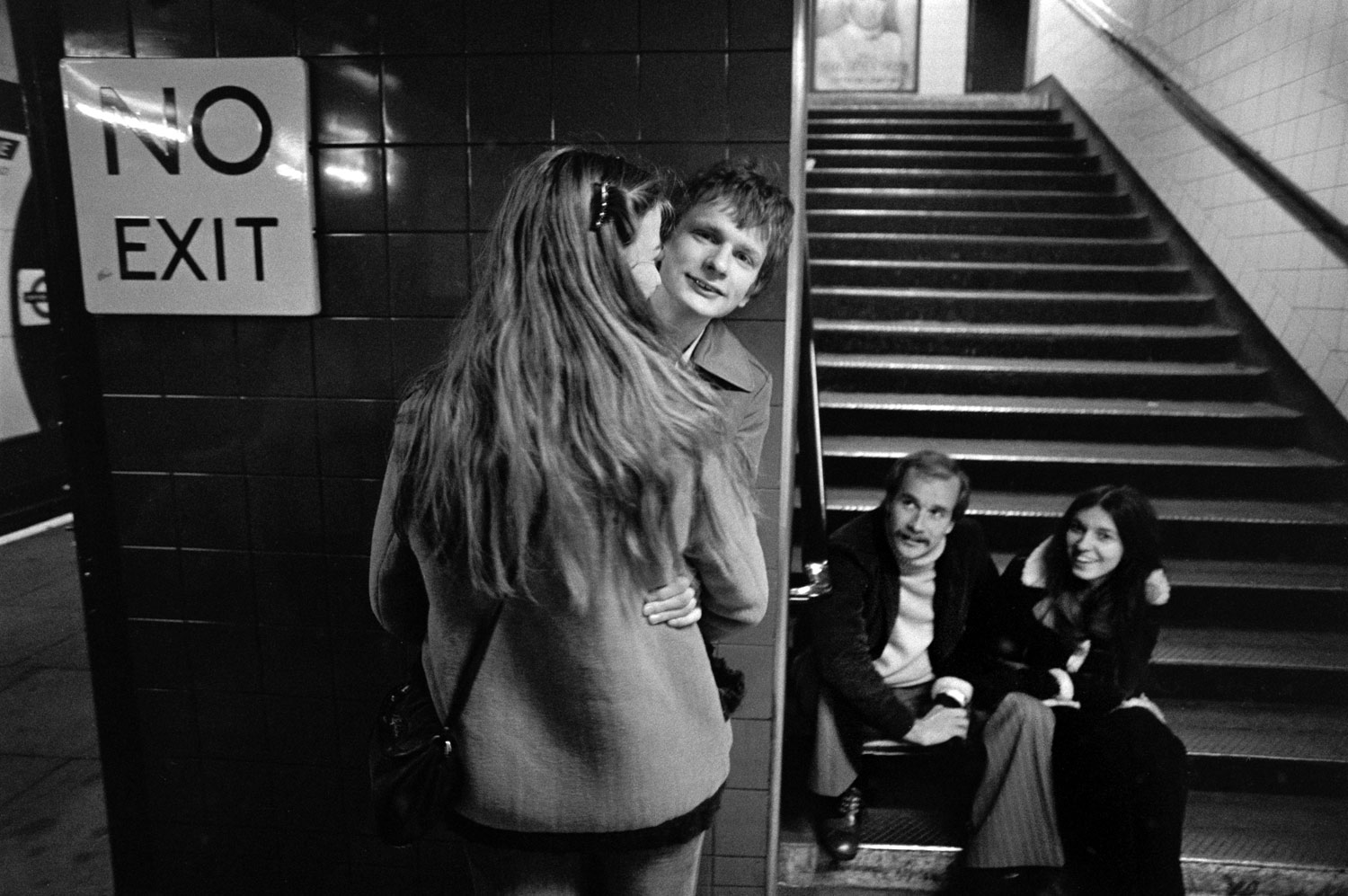
After deciding on a set of over 100 that he was happy with, he approached Hoxton Mini Press about making a book. Today, that takes the form of the aptly-titled London Underground 1970 – 1980 – a celebration of the eponymous network’s early days.
The work harks back to a much simpler time – where things were slower, and the space was much more intimate than it is today. For Goldwater, it’s a sentiment best expressed in the photo that appears on the book’s cover: of a couple, still among the moving bodies, leaning in for a kiss. “It is a moment of stillness and intimacy,” he says, “in a space often characterised by rush and anonymity.”


 London Underground 1970 – 1980 is out now on Hoxton Mini Press.
Enjoyed this article? Like Huck on Facebook or follow us on Twitter.
You might like

Landmark new exhibition is celebrating 50 years of female punk
God Save the Queens – The Museum of Youth Culture is bringing together rare photography, archive material and a one-night-only supergroup featuring members of X-Ray Spex, The Slits and The Raincoats.
Written by: Ella Glossop

Halcyon, end of summer days in ’80s Massachusetts
Bell Pond — Stephen DiRado’s new photobook is a nostalgic look at blissed out moments of young love, family and coming of age at a swimming pond in Worcester, Massachusetts.
Written by: Miss Rosen

Photographing America’s 20th century rebels
Rebels With a Cause — A new monograph looks back at Jean-Pierre Laffont’s extensive archive documenting counterculture, art, activism and more, shaping the country as it is today.
Written by: Isaac Muk

Hak Baker: “Being a lad is dreaming of a decent life”
Hard Feelings — The East London storyweaver joins our column on masculinity and fatherhood to chat about being raised by his mother, his family of friends, and the momentary bliss of the sesh.
Written by: Robert Kazandjian

The groundbreaking photography of Gordon Parks
Voices in the Mirror — A new exhibition dives deep into the legendary lensman’s archive, who captured the Civil Rights Movement and Black America like no other.
Written by: Miss Rosen

A chaotic portrait of an ’80s American farming family
Holy Cow! — Melonie Bennett grew up on a farm in Maine in the ’80s, and documented her family’s idiosyncratic daily life. She presents those humorous, everyday memories in a new exhibition and photobook.
Written by: Miss Rosen


