Intimate shots of the London Underground in the ’70s
- Text by Huck
- Photography by Mike Goldwater

As a young photographer in the ’70s still honing his craft, Mike Goldwater was fascinated by the London Underground. A “labyrinthine” system with limited lighting, he saw it as a technical challenge: how, despite the conditions, could he produce strong images there?
Back then, the Underground was a markedly different beast. Smoking was allowed, busking was strictly forbidden, while old ticket booths were an important fixture at every station. (Oyster cards were still decades away.) For Goldwater, it was a special place to document from the get-go.
“Almost everyone on the tube travels with a purpose and a destination,” he says. “On the days that I chose to photograph on the underground I would travel on a whim; jumping on and off trains, wandering a corridor here, taking an escalator there, lingering at places that felt that they might produce interesting images. This set me apart from everyone else. I felt in some way I could enter a different time, a sort of time in-between.”
 “Being in very close proximity to one another during rush hours people have to shrink their personal space, while at other times of the day, parts of the system could be almost deserted. How people responded to both situations had picture potential.”
He shot there on and off for a decade, shelving the project in 1980 when he co-founded the agency Network Photographers and began travelling extensively for work. In fact, it wasn’t until recently that he engaged with the work at all, finally deciding to go back through the old contact sheets on a quiet day. Upon doing so, he discovered a host of images he’d missed the first time round.
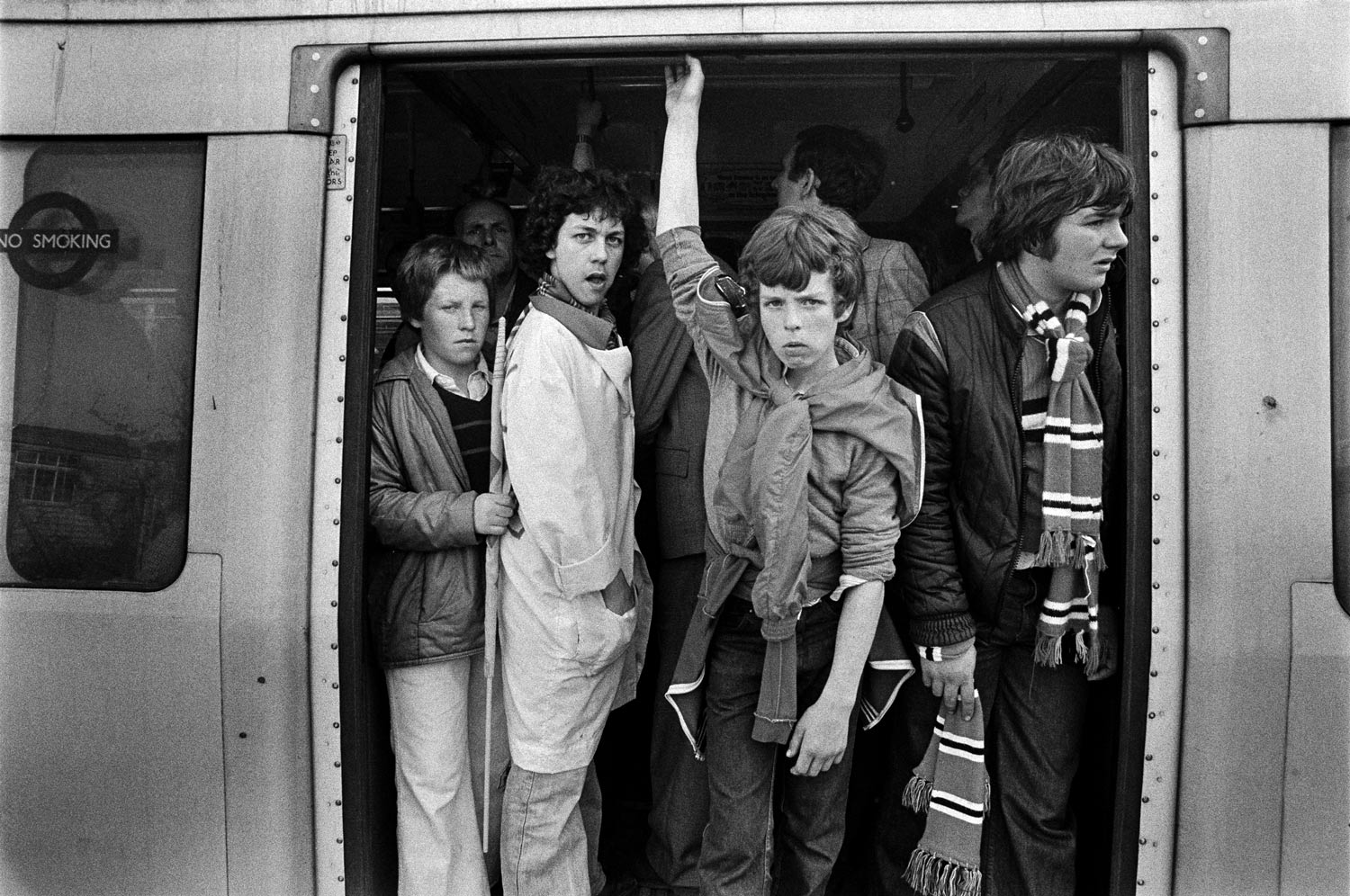
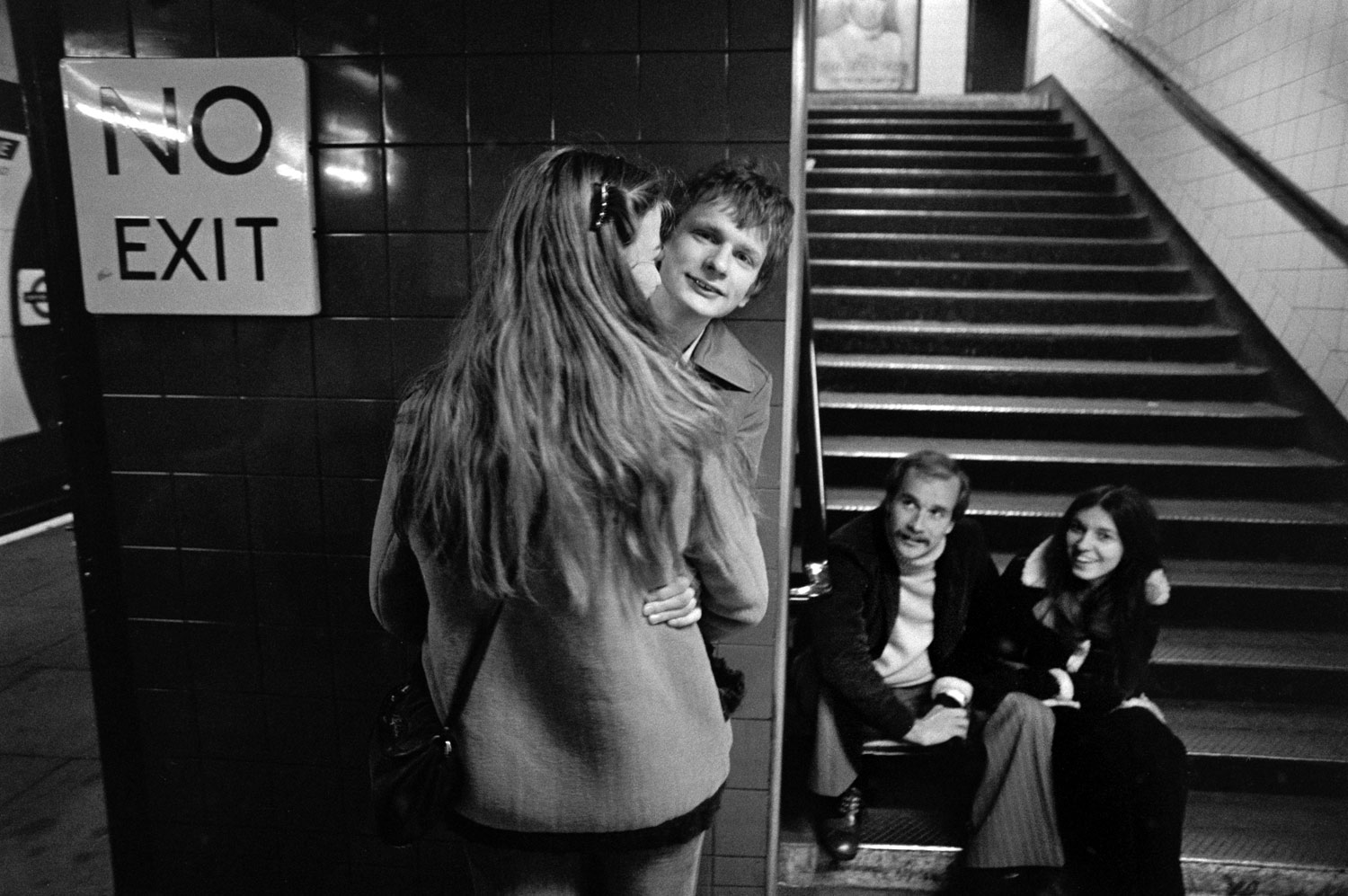
After deciding on a set of over 100 that he was happy with, he approached Hoxton Mini Press about making a book. Today, that takes the form of the aptly-titled London Underground 1970 – 1980 – a celebration of the eponymous network’s early days.
The work harks back to a much simpler time – where things were slower, and the space was much more intimate than it is today. For Goldwater, it’s a sentiment best expressed in the photo that appears on the book’s cover: of a couple, still among the moving bodies, leaning in for a kiss. “It is a moment of stillness and intimacy,” he says, “in a space often characterised by rush and anonymity.”


 London Underground 1970 – 1980 is out now on Hoxton Mini Press.
Enjoyed this article? Like Huck on Facebook or follow us on Twitter.
You might like

In photos: Black Texas life since emancipation
Kinship & Community — A new photobook and exhibition showcases the rich culture, history and community of African American folks in the Lone Star State, whose existence in the region predates colonial Britain.
Written by: Miss Rosen

London’s largest indoor skatepark to be demolished for padel courts
Better Extreme — The Barking skatepark’s fate follows that of similar indoor spaces in recent years, with operators GLL citing falling visitor numbers as the reason behind the decision.
Written by: Isaac Muk

Youthful joy & end-of-era poignancy at a London school prom
Leavers — For several years, Lewis Khan documented young people as they celebrated the last of their school days and the completion of their exams. The series is now collated in a new self-published photobook and short film.
Written by: Zoe Whitfield

Harry Gruyaert’s vintage, kaleidoscopic scenes of New York
A Sense of Place — For 50 years, the Belgian photographer and Magnum Photos member has been capturing NYC’s colourful chaos. A new photobook and exhibition showcase his unique, technicolour view of the city.
Written by: Miss Rosen

In the pit at one of the UK’s last stock car & banger speedways
Stock Car Racing Isn’t Dead — Photographer Liam McCarthy spent time in and around the Arlington Raceway’s circuit, capturing the diehard community that keeps the sport alive.
Written by: Isaac Muk

Inside Lower Duck Pond, the nicest town on the internet
/r/HaveWeMet — With a population of 2,500 and no fixed location, the subreddit is a space for roleplaying citizens to solve mysteries, host fictional events and ultimately connect. In an internet that’s often divided and toxic, Vicky Jessop hangs out in one of its most wholesome corners.
Written by: Vicky Jessop


