
Photos that capture Jewish life in ’70s New York

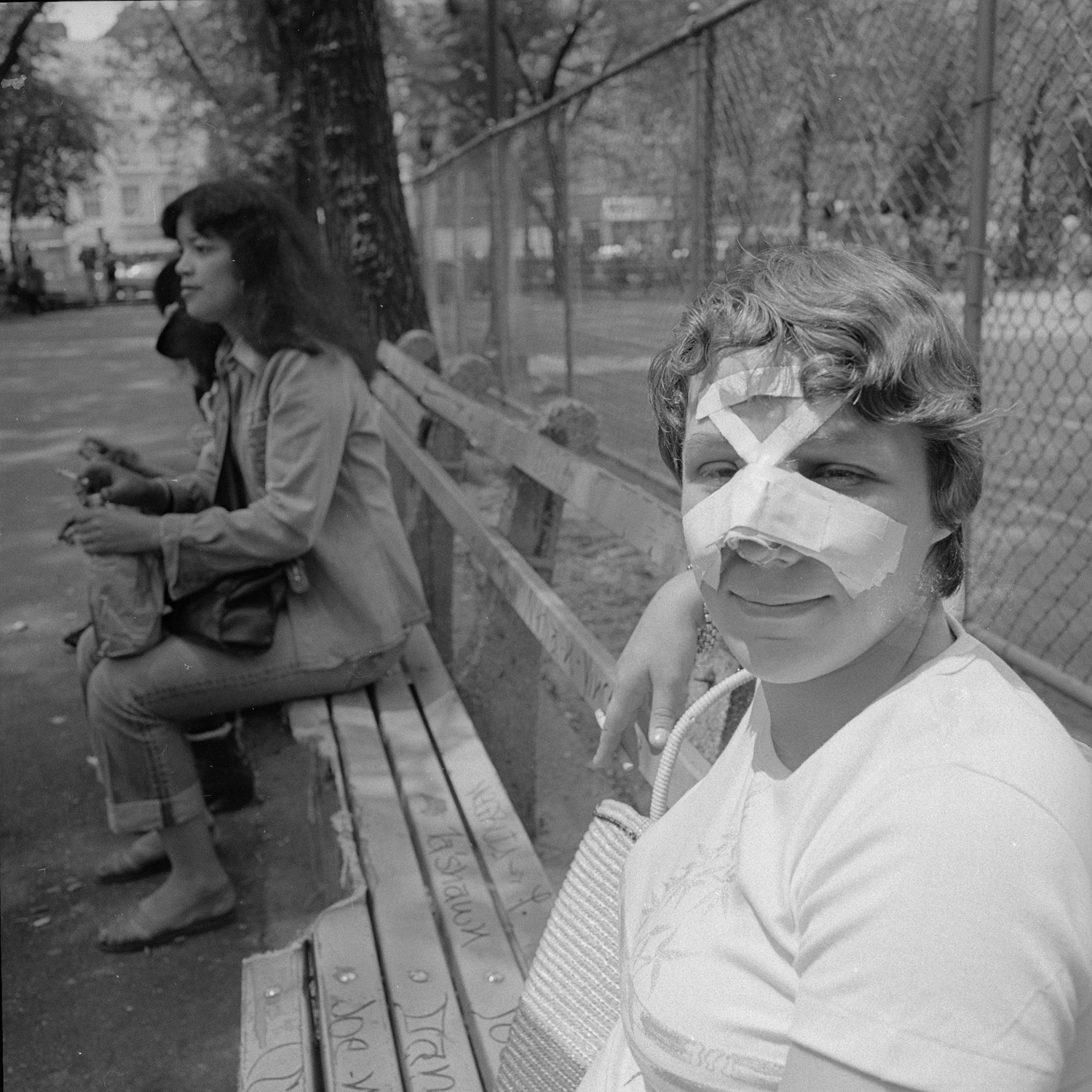
100 years ago, New York’s Lower East Side (LES) was the pre-eminent melting pot – a mixture of old and new immigrants leaving Europe en masse, creating a singular blend of Ashkenazi Jews, Germans, Italians, Greeks, Russians, Slovaks, Ukrainians, Hungarians, Poles, and Romanians. With some 400,000 Jews living in the hood, the Ashkenazi made up one of the largest groups in the LES, bringing their unique spin on old-world culture to the city that never sleeps.
A neighbourhood with a leaning towards radical politics, the LES helped foster a new culture rooted in housing reform following the publication of Jacob A. Riis’ 1890 book, How the Other Half Lives, which documented the horrors of people forced to live in slums. The New Law Tenements passed in 1901 resulted in the construction of settlement houses – such as the Henry Street Settlement on Grand Street – which transformed living conditions for the working class, and has continued to serve the community for generations.
In 1976, a young Jewish-American photographer named Meryl Meisler began frequenting art events at the Henry Street Settlement, where her cousin and roommate taught art. Here, she met Mr Morris Katz, the self-proclaimed Mayor of Grand Street. A retired widower who once worked at Coney Island guessing weights, Mr Katz cut a striking figure that could best be described as Yiddish chic. Donning a sports jacket over a zebra-patterned shirt, patterned bow tie and plaid pants, Mr Katz warmly greeted Meisler on the street corner and offered her a lollipop. She was instantly charmed.

Mr. Katz was mugged by two kids who found him dozing in front of his TV in his living room NY, NY 1978
A nonagenarian, Mr Katz stayed on the go, up early to make the rounds at the senior centres, synagogues, parks, police station, and playgrounds. Meisler began to accompany him on these trips, taking photographs and getting to know the community up close and personal.
Two years later, when Meisler was awarded a CETA Artist grant, she decided to hone in on the historic Jewish community of the LES. “Our notion of what is the Lower East Side is always changing,” Meisler explains. “I remember looking at the work of Lewis Hine and realising that by the ’70s, I was seeing the next generation of a lifestyle that seemed very modern. I wanted to show a thriving Jewish community mixed in Latinx and Chinese groups.”
It was to this body of work to which the photographer returned while recently revisiting her incredible archive of New York City life. Carefully curating a selection of vintage prints as well as never-before-seen work that she is printing in the darkroom herself, Meisler has compiled an extraordinary portrait of Jewish life in the LES for LES YES!: Meryl Meisler 1970s & 80s Lower East Side Photos, opening May 3 at The Storefront Project, New York.

Women with gift boxes NY, NY April 1978
“May is Lower East Side history month and I wanted to celebrate the neighbourhood I came to know through my cousin and Mr Katz,” she says. “When I think of the Lower East Side I think of going there with my mother or my aunt to try to find an outfit for a bar mitzvah or going to Sammy’s Romanian restaurant.”
Returning to her archive 40 years after these photographs were first taken, Meisler saw her work through fresh eyes and felt a renewed sense of connection to the community: “I didn’t realise how warm [these pictures] are or how you couldn’t replicate them. Some of them are timeless and some of them are so fleeting. Now, when I look at these pictures, they look very Jewish but then, they looked like the times.”
“Many of the senior centres I photographed [Mr Katz] in are still serving people in the community. The Educational Alliance, where I taught photography to children, still services immigrants and neighbourhood people. They kept to their mission, which is a beautiful thing. That’s what makes the neighbourhood wonderful and welcoming.”

Mom at Sammy’s Roumanian NY, NY July 1978

Baby carriages, children and adults at the Lower East Side Street Festival NY, NY June 1978

Love in Bloom God Bless America Henry Street Settlement Good Companions Senior Centre 1978

Four kids and a doll in front of a window NY, NY June 1978

White bearded man on park bench in dappled sunlight NY, NY May 1977

Photographing on the Bowery, NY, NY April 1977

Dancing at the Lower East Side Street Festival NY, NY June 1978
LES YES!: Meryl Meisler 1970s & 80s Lower East Side Photos opens May 3 at The Storefront Project, New York. Many of Mery Meisler’s LES photos are in her book SASSY ‘70s Suburbia & The City.
Follow Miss Rosen on Twitter.
Enjoyed this article? Like Huck on Facebook or follow us on Twitter.
You might like

The sharp rise of video game photography
Point, shoot — As the entertainment medium’s fidelity levels increase and developers build more powerful tools, a growing community of gamers are pushing the boundaries of image making in virtual worlds. Vicky Jessop meets people at the forefront of the emerging artform.

Joyous photos from the heart of the UK’s radical free festival movement
Common Grounds — The photographer has been capturing British counterculture for the past half century. A new exhibition looks at his archive sitting at the intersection of music, community and grassroots protest.

The lasting community legacy of a legendary Californian boxing gym
Moretón — Since opening in the ’80s, the Coachella Valley Boxing Club has trained multiple world champions, while providing a vital hub for local youth. In his new photobook, Darren Vargas documents its tight-knit, Chicano-led community, while also weaving a deeply personal story.

Inside the grunge golden age with Hole’s former bassist
My ’90s Rock Photographs — Melissa Auf der Maur’s new photobook is a sprawling visual memoir of her time at the heart of the US scene, from Tinker to The Smashing Pumpkins.

Introducing ‘The Chaos Isles’, a new photozine by Huck and Yushy
Normal Island — From unlicensed raves to the solstice at Stonehenge, furries to giant vegetable growers, Yushy is one of the UK’s best lensmen of its wild side. ‘The Chaos Isles’ will be sent out exclusively to Club Huck+ members.

Join Club Huck+ to get the most from Huck
Dispatches from the sharp edge of culture — Members get our print magazine, special photozines, The Huck Long Read newsletter, discounts from our friends and partners, digital versions of back issues and priority access to events.


