The adventure-seeker who found her purpose in the wild
- Text by Jessica Holland
- Photography by Ben Simms

When she first hears the gunfire, Megan Hine freezes. She’s in a remote part of Kenya, rigging a stunt for a celebrity survival TV show, attaching a rope bridge to one side of a gorge while the rest of her teammates are on the other side.
In between them is a river full of crocodiles, who are reported to have killed and eaten two locals a couple of days before.
As the silence is punctured by volleys of shots, with sand exploding near her feet, Hine’s adrenaline spikes. The only way to rejoin her team is to clamber down a rock face and through croc-infested waters.
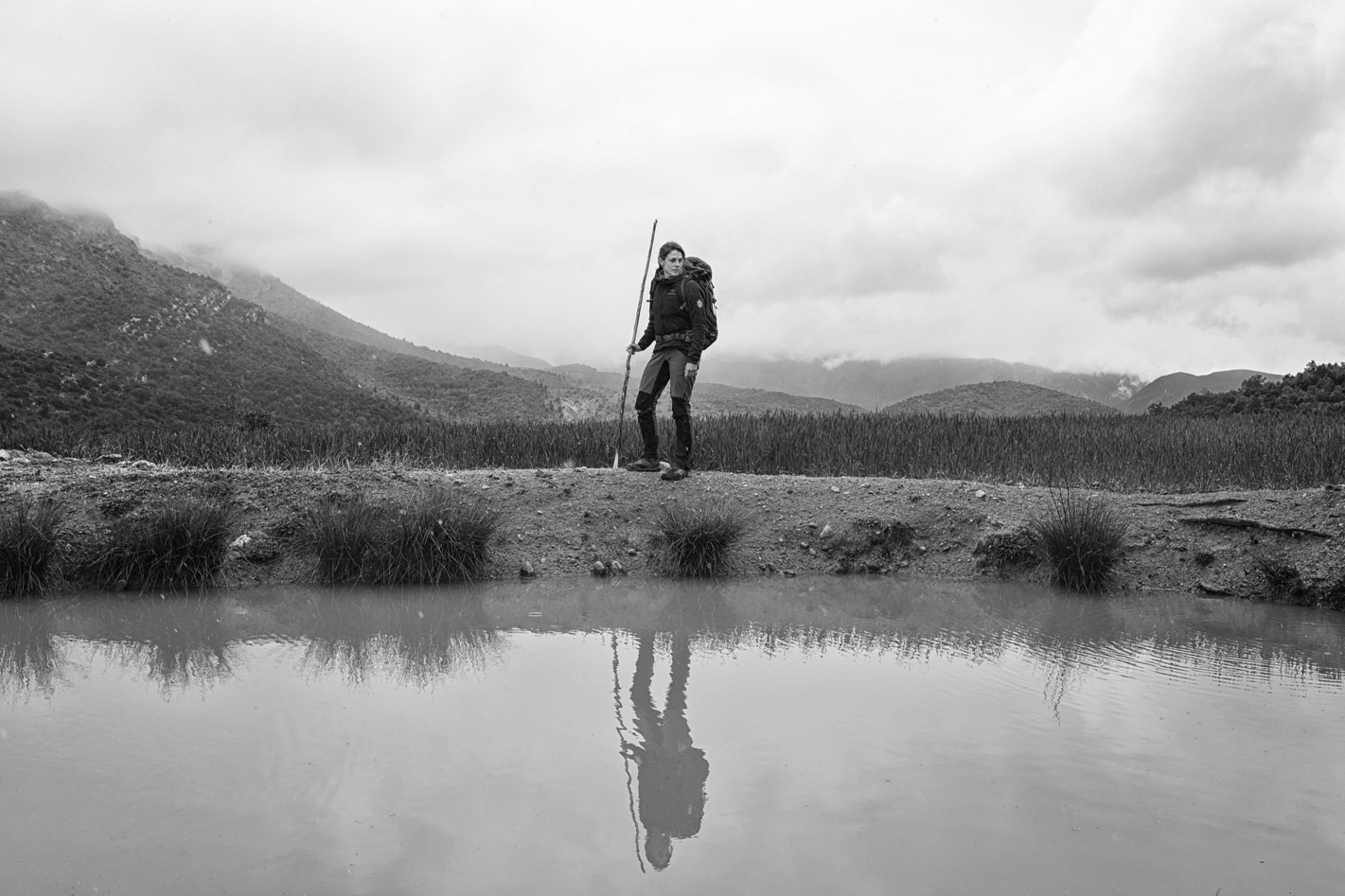
Life-or-death decisions like this require a cool head. Hine has faced plenty of them over the years as a survival expert who consults for TV, sometimes co-presenting shows with longtime friend Bear Grylls. She’s also a rafting guide, climbing instructor, bushcraft expert, off-road driving tutor as well as an expedition leader for groups of adults and children alike.
To get out of situations like this (an altercation between locals which she eventually escaped unscathed) she pictures a box in her mind — “a big wooden pirate chest with metal clasps” — and locks her fears inside.
The vision came to her spontaneously one day when she was blinded by fear during a climb. “Suddenly I was able to see again.”
It’s got her through many scary situations, including being stalked by lions in Namibia, getting caught in an Alpine avalanche, and having a drug cartel tracking her team in Mexico.
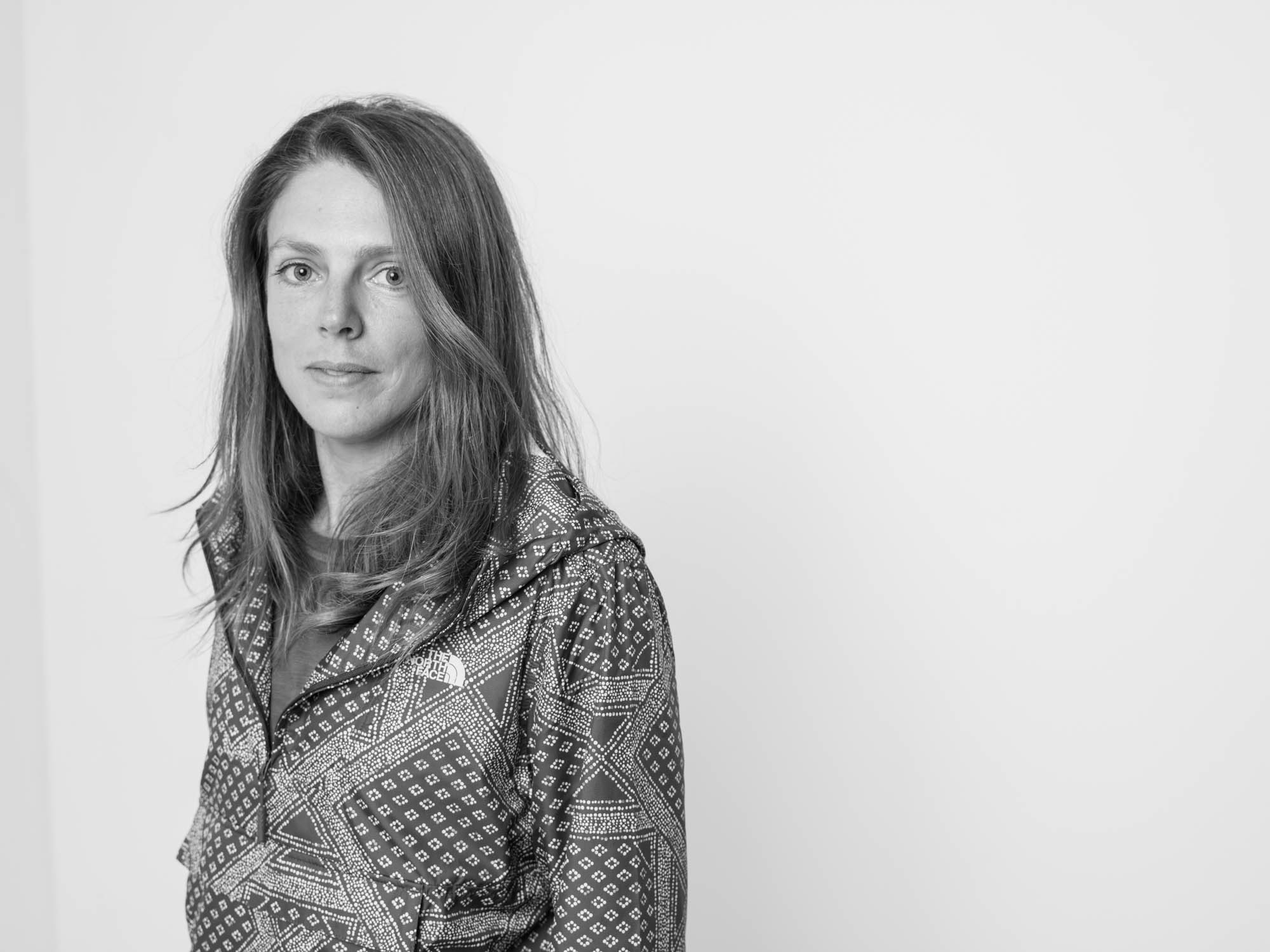
Since she was first headhunted as a safety consultant by Bear Grylls, for his show Man Vs Wild, she has worked with him regularly over 10 years, including on Running Wild, for which celebs like Channing Tatum, Kate Winslet and Barack Obama were brought out into the wilderness. (Grylls has described Hine as his “best friend” and says she’s “stronger than 99% of the men I know.”)
It’s led to some surreal experiences. Camping out with Julia Roberts in Kenya, having sprawling conversations, was “incredible,” she says. “You couldn’t pay for that experience.”
She’s quick to point out that whether someone is an Oscar winner or contestant on a survival show like The Island, there’s no special treatment or fakery for the cameras. If anything, she worries about pushing people too hard.
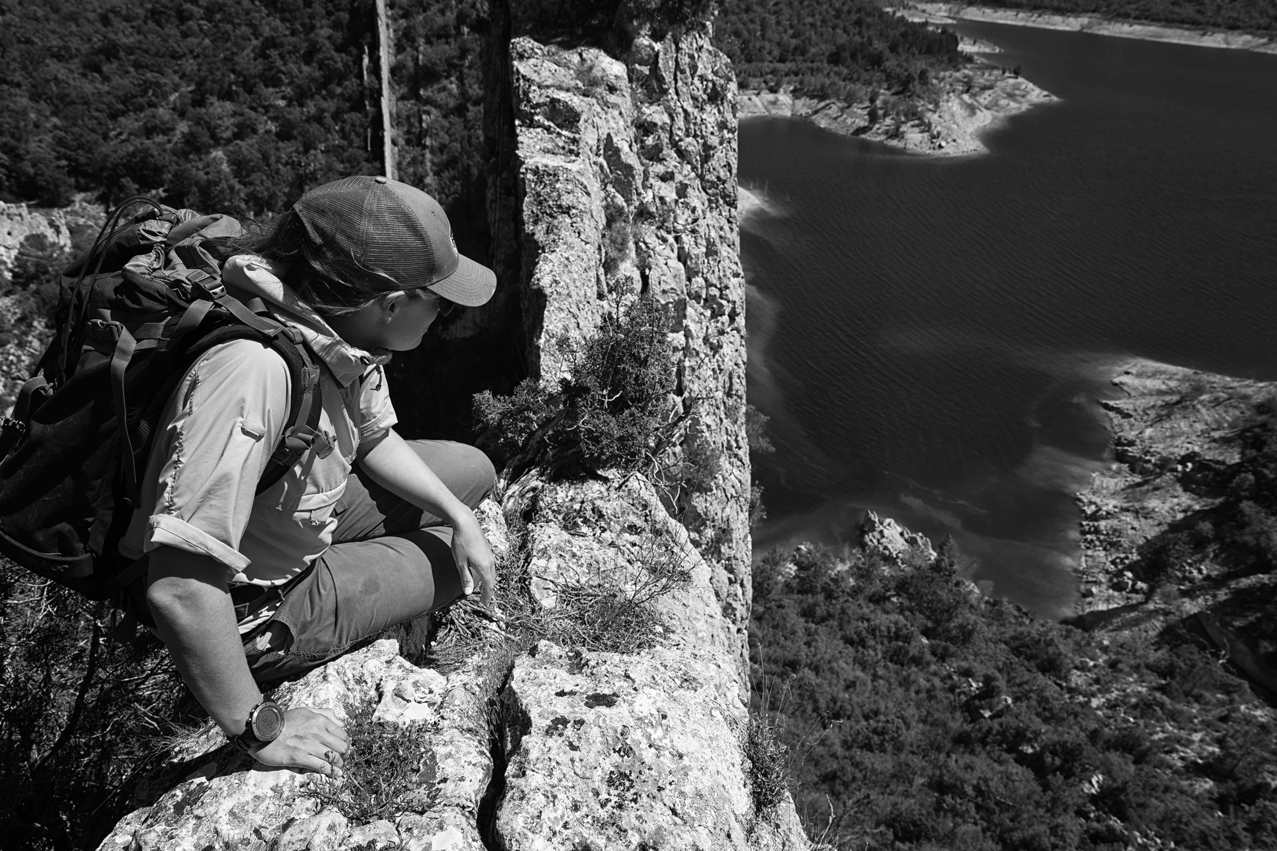
“We’re taking away their food, we’re depriving them of sleep, and that messes with people’s heads. When I’m guiding [usually], I wouldn’t let my clients get into the state when they’re an emotional wreck. But it would be boring TV if they didn’t have an emotional response that was visible enough for the viewer to see.
“You have to be very careful that you don’t get Stockholm Syndrome developing,” she adds. The condition, usually associated with kidnapping victims who bond with their captors as a survival strategy, can develop during a shoot. “If they have been out with us for long enough that they’ve lost their sense of being able to make choices for themselves.”
Hine is the only woman in a very small – very macho – group of survival experts working in TV. “I’ve spent most of my life being the only girl,” she says, going all the way back to her membership of the military cadets as a teen. “In all avenues of my career I’ve felt like I had to prove myself, or that guys didn’t treat me the same way. But I decided early on that I wasn’t going to let that bother me.”
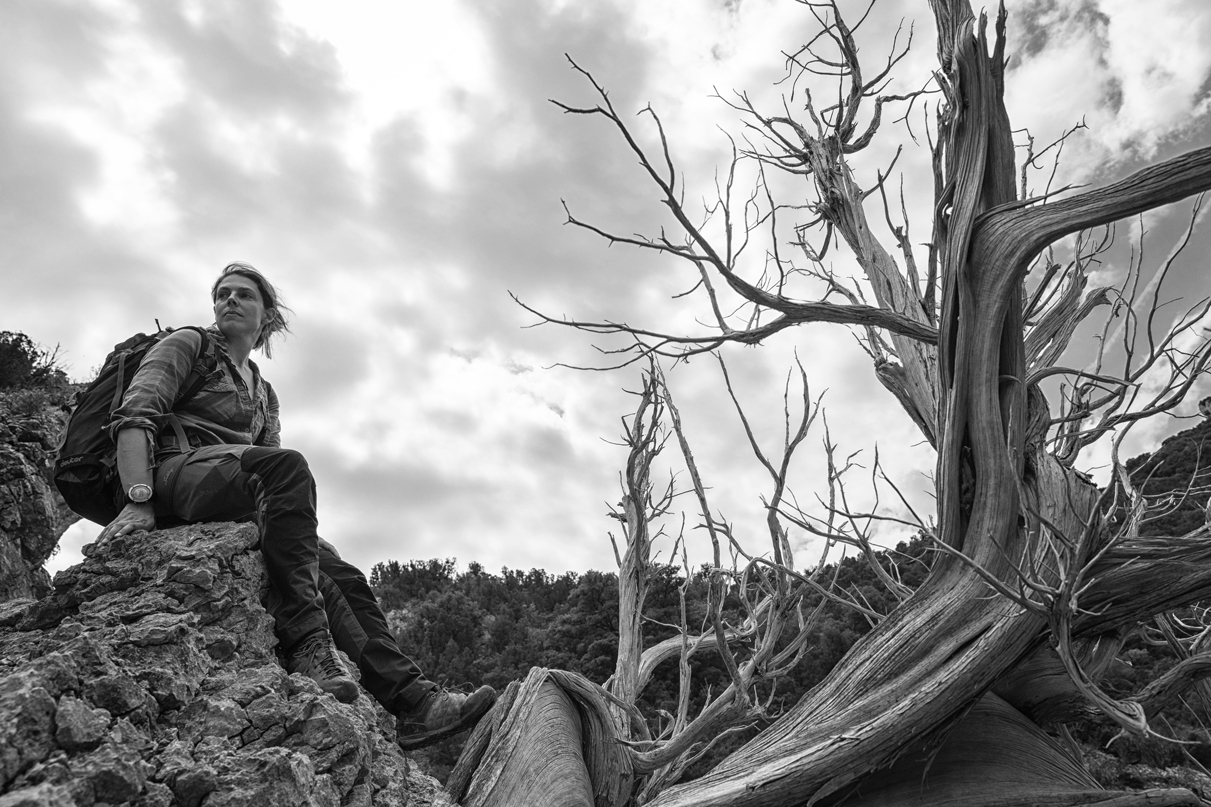
She recalls the days when she would take stag groups off-roading, and they would greet her with scepticism before bombing off. When they got stranded or stuck, as they inevitably did, it was Hine who came to the rescue. “Actions speak louder than words,” she says, with a smile. “By the end of the week, they had a huge amount of respect.”
As a teenager, she drew inspiration from books by pioneering mountain climbers Alison Hargreaves and Lynn Hill. But it’s her grandmother, who went snowshoeing with her in the Alps at 83 and earned a psychology degree a few years before her 90th birthday, that is role model number one.
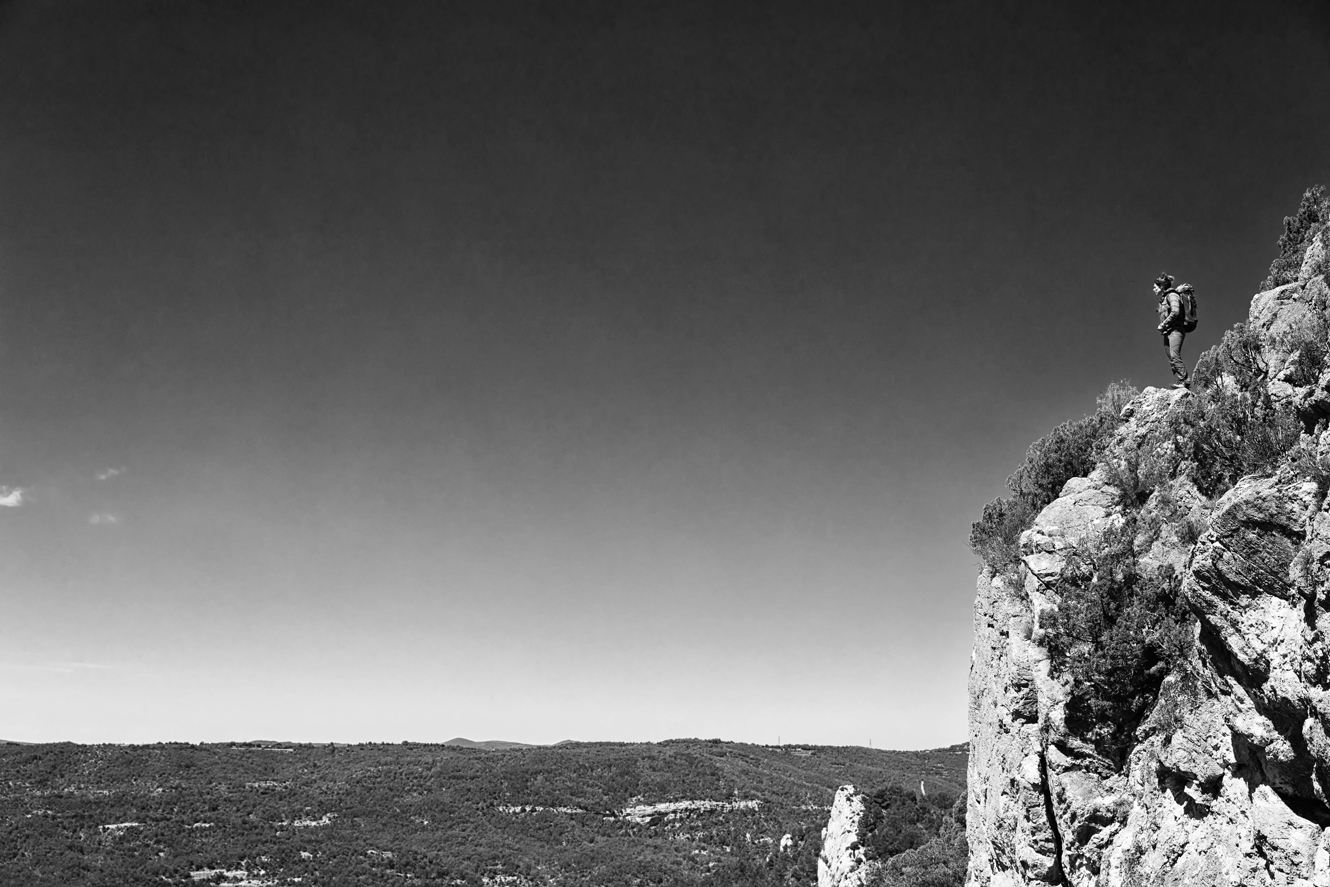
Hine is still adjusting to the idea of being a role model herself. “Growing up I was a bit of a rebel,” she says. “I didn’t really fit in. I’d be sent out of lessons, or skip school to go mountain biking, and would be drinking in the park at 14. Because I had all these restrictions around me, I felt so trapped. I’d be sitting in lessons, dreaming about the mountains.”
Today, Hine travels for up to 11 months a year, currently alternating between the landscapes of Panama and Nevada for an upcoming Netflix show. She’s passionate about sharing the therapeutic impact the wilderness can have, especially on people who suffer from stress and anxiety. “When they’re on an expedition, their symptoms seem to disappear and that happens far too many times for it to be a coincidence.”
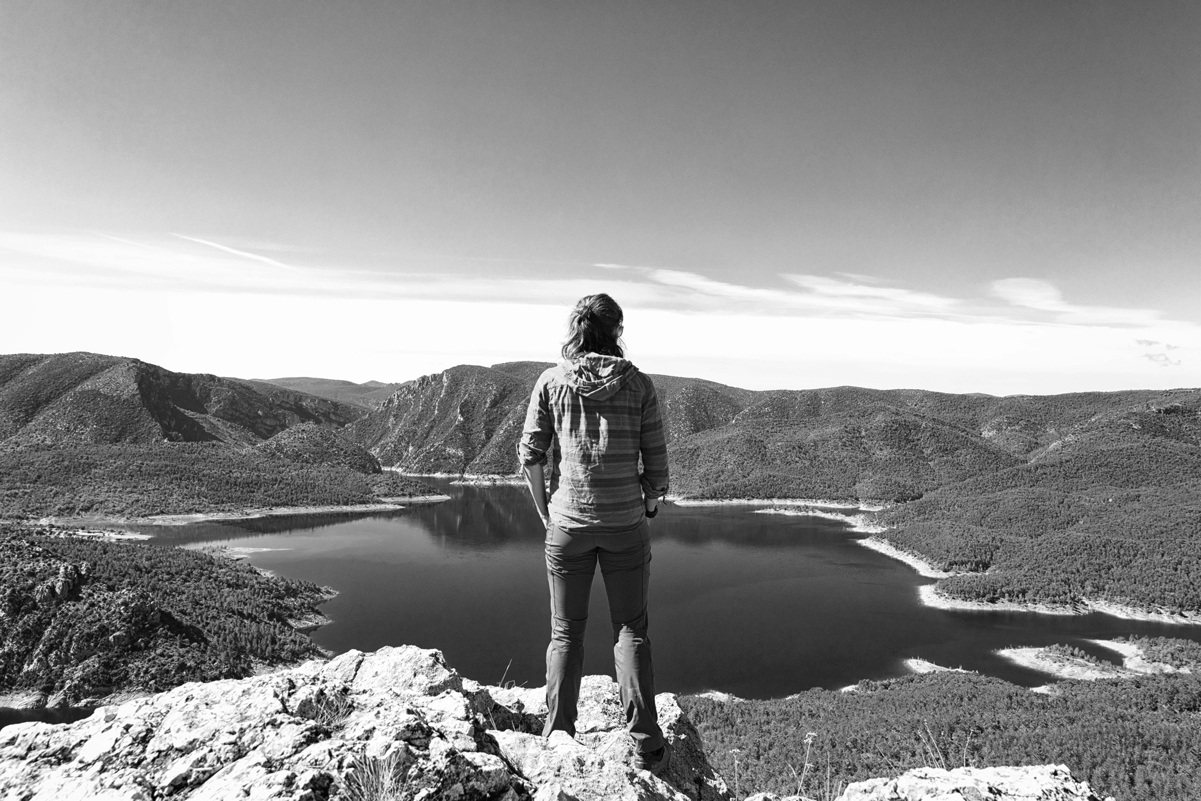
Being pushed to your limits out in the wild may not be everyone’s idea of therapy – but Hine wouldn’t call it ‘stress’. “It’s more a feeling of hyper-awareness,” she says. “You can almost see behind you. Your smell and hearing is heightened. You’re aware of any movement. It’s almost like a meditative state. Every cell in your body is fighting for survival.”
It’s this “primal calling” inside us all that makes survival shows so popular, she says. And the resilience and confidence that stems from overcoming challenges makes up for all the pain. “I find it fascinating to see what I’m capable of,” she says. “It’s the most incredible feeling to discover that you’re stronger than you ever imagined.”
She Moves Mountains, stories of women who make it happen, is produced in partnership with The North Face.
You might like

The rise of the outdoor’s punks
Future is unwritten — As demand for the outdoors has grown, so has the codification of its rules and styles. Phil Young searches for those adventuring against the mainstream and asks if the industry is about to get its own record label moment?
Written by: Phil Young

Danny León pulls huge aerial in line with the solar eclipse
Totality — Combined with a board grab, the Spanish skateboarder performed the trick just as the moon’s path had completely covered the sun.
Written by: Isaac Muk

The art of paying attention: How Austria’s Alps reward slowing down
Lebensgefühl — With a growing movement of art and music rooted in the area’s mountains, trees and waterfalls, the region is showcasing the importance of the human relationship to nature.
Written by: Sophie Lou Wilson

Rab’s adventures on film at Love Trails Festival
Adventure Film Night — Taking place between July 2-6, Rab are screening six documentaries at the festival that explore the remarkable world of the adventure sport community.
Written by: Roxana Diba

In Syria’s mountains, climbers are pitching new lines to a freer future
Vertical rebirth — Assad’s fall has opened up huge, previously untouched mountain areas for people to explore. Bushra Alzoubi meets a trio of sibling rock climbers who are building a scene from scratch.
Written by: Bushra Alzoubi

6 years on from George Floyd, how much more accessible is the outdoors for People of Colour?
Second Nature — A new report by The Mix Global highlights continued barriers that marginalised folks face when exploring nature, despite attempts at greater representation. Phil Young takes stock of how far we’ve come.
Written by: Phil Young


