A beautifully blunt interview with Omar Souleyman
- Text by Cian Traynor

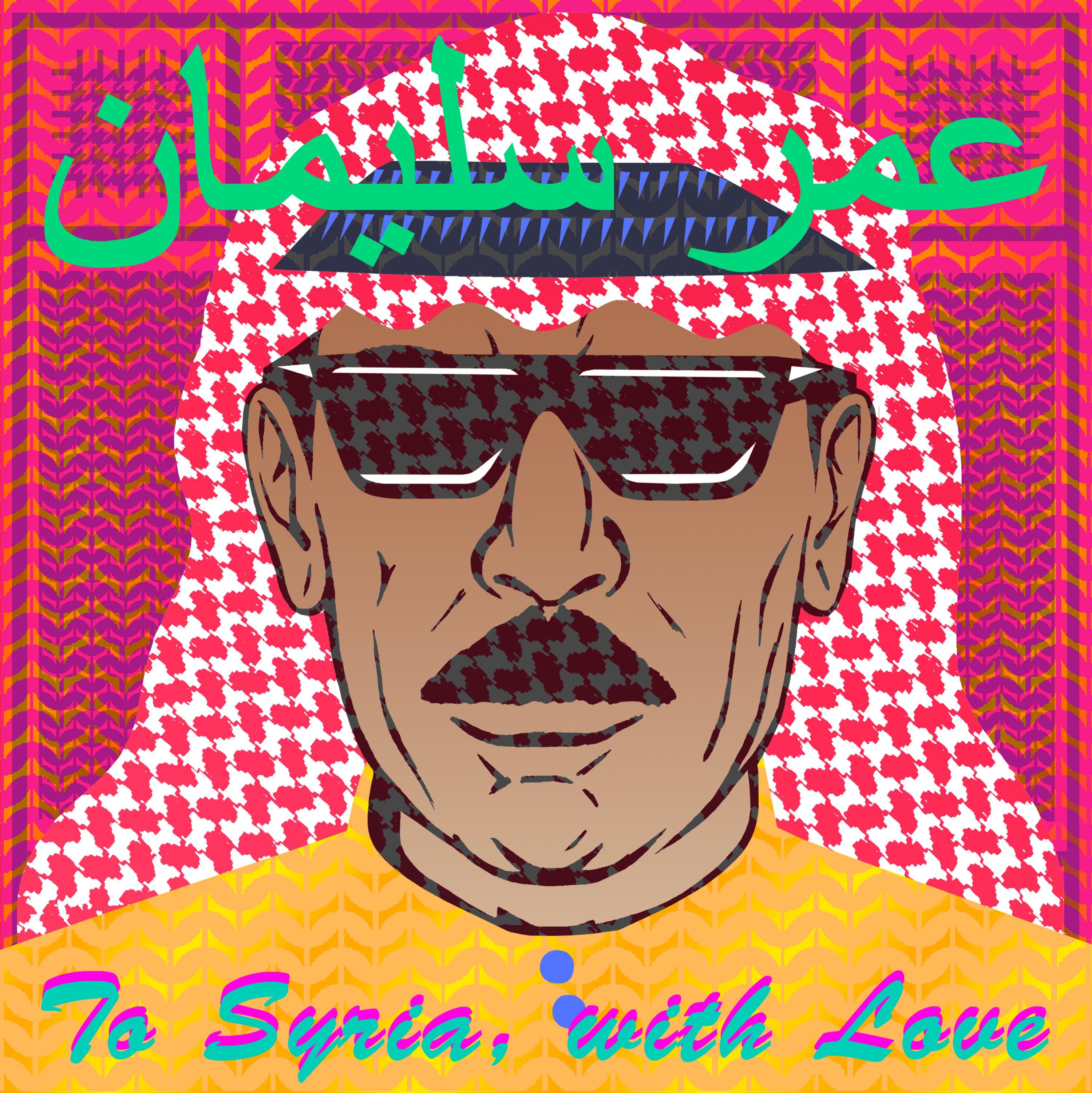
Omar Souleyman is a figure of few words. Always dressed in a robe-like djellaba, a red-and-white keffiyeh and some serious-looking shades, the 50-year-old exudes an enigmatic ‘I don’t give a shit’ aura that follows him on stage.
He started out as a prolific wedding singer who managed to recorded over 500 live albums (typically gifted to the bride and groom) before civil war broke out in his homeland of Syria back in 2011.
By then Omar was playing at Glastonbury and recording remixes for Björk – embraced by the West for his thumping dance songs about love.
His music mixes dabke and other Middle Eastern styles into something that eludes categories, but the one thing it doesn’t do is address the conflict in Syria. Until now.
Omar’s new album To Syria With Love – his first release on Diplo’s Mad Decent label – is an emotional tribute to the people of his country, expressing the heartache that its current state causes him. [The singer moved to Turkey in 2013 after his hometown – Tell Tamer in the Al-Hasakah region – became a war zone.]
But although its pumped-up production and emotional sensibility marks a new phase in the singer’s career, the no-nonsense approach is going nowhere.

Omar realises that he enjoys a platform few Arabic musicians ever reach – which he’s grateful for, if not a little bewildered. It’s just that interviews aren’t exactly his thing. The man has no time for pretence in any form.
That includes opening up in soul-baring interviews conveyed via a translator. Still, we’re happy to have a word with the chain-smoking legend all the same.
How do you think your sound has developed over your career?
Well, my music has not changed very much at all over the years. I stay true to my traditions. But some circumstances around my music have changed.
For example, when I started recording in professional studios and with professional producers in the West – the music received a really great sound, which I always dreamed to have.
It’s just that we never had these kind of capabilities [in Syria]. Also recently – about one year ago or more – I started working with a new keyboard player and he is really special. His name is Hasan Alo.
What do you think made you such a success at weddings? And how did that translate to the wider music world?
When it comes to weddings, my road was not so simple and quick. But as our region was very mixed with different sects, religions and customs – I adopted and tried to adapt to all of them. The Kurds, the Christians, Assyrians, Muslims – all. I sang for all of them and according to their preferences. I still, as often as I can, sing at weddings.
What is the most common misconception of you and your music?
Honestly, I do not know. Because I do not read the Western press – I don’t know what they are writing. Sometimes I get it translated – but there is so much – I don’t know what they end up writing after interviews.
I’d say for one that they always focus on dabke alone – even though we have so many other kinds of styles that we are always performing and recording.
Also, they always credit me for some reason with ‘modernising’ the style – it really isn’t me. The style has evolved like this on its own. This is the sound of our region and of our tradition.
What are the biggest challenges you’ve faced? And how did you overcome them?
I don’t have many challenges. I had a lot of help always from people who are with me.
How has the US travel ban affected your life and work?
Thank God, it hasn’t so far. I just was on a big tour of the US and it was wonderful to be there. I thought it might all have to be cancelled some months ago – but it did not happen. I am glad for that.
What keeps you positive?
I am happy and thankful that I can support my family and friends.
What is your biggest regret?
I don’t have any.
How would you like to be remembered?
I would say for the music only and the joy that it has brought.
How do you balance the part of this that’s expressing yourself with the part that is trying to maintain a job?
We do not see it really as art – it is just traditional music that many people love. In the Western world, maybe they call it art…
Do you feel like you have anything left to prove?
I don’t have to prove anything – I just will continue singing.
Omar Souleyman plays Field Day London on Saturday, 3 June. His new album To Syria With Love is out on Mad Decent.
Enjoyed this article? Like Huck on Facebook or follow us on Twitter.
You might like

American Football: The One With The Feelings
Many moons — The Midwest emo architects transformed a college experiment into a coming-of-age soundtrack. 25 years on, their latest iteration sees them bottle the same magic for the ups and downs of middle life.
Written by: Tracy Kawalik

Joe James: “I will never be absent in my children’s lives because I know it doesn’t feel nice”
Hard Feelings — As the silky MC prepares to release his debut album ‘The Ends Never Ends’, he joins our column on fatherhood and masculinity to discuss leaving his childhood home at 16, the manosphere and his risk-embracing approach to life.
Written by: Robert Kazandjian

Analogue Appreciation: mary in the junkyard
Role Model Hermit — In an ever more digital, online world, we ask our favourite artists about their most cherished pieces of physical culture. Today, it’s art rock fabulists mary in the junkyard.
Written by: mary in the junkyard

Kibo’s compendium of Kwengletarianism
Kwengletaria:Ragamyff — As UK rap’s latest prodigious MC announces his most ambitious project to date, Rob Kazandjian spends time with Kibo in a north London pub to chat about his rise, as well as the inspirations and ideologies underpinning his music.
Written by: Robert Kazandjian

Celebrating the art of making out on tour with Tove Lo
The Kiss Book — In the wake of the pandemic, photographer Kenny Laubbacher travelled around several countries with the Swedish pop star, capturing the joy and desire of kissing fans.
Written by: Zoe Whitfield

The dreamy, surfy sounds of Cactus for Breakfast
Vitamin B — The Berlin-based band blends eclectic lyrics and influences spanning The Ventures, King Gizzard & the Lizard Wizard and Fela Kuti into a swirl of garage psych. We caught up with them as they brought their jubilant live show to Huck’s showcase on the final night of SXSW London.
Written by: Roxana Diba


