Photographer Jackie Nickerson finds tradition in the historic Woolrich mill
- Text by Advertorial
- Photography by Jackie Nickerson
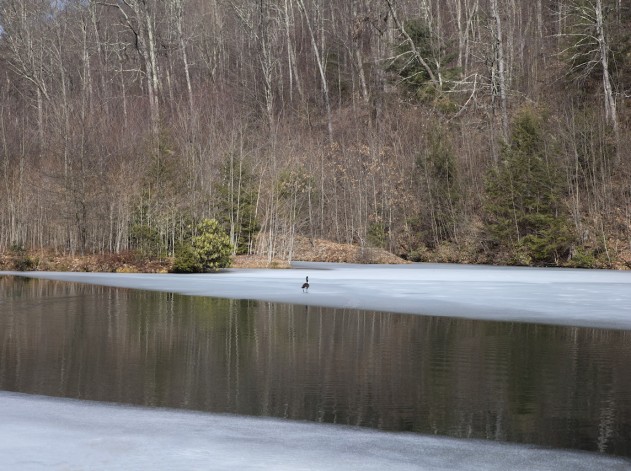
Plum Run is where the story of the oldest American outdoor clothing company began. John Rich, the son of an English wool carder, had set off to America from Liverpool to find his fortune. After saving up enough money from working in Philadelphia, he stumbled on the banks of Plum Run, a small brook in the Pennsylvania wilderness where he decided to build his woollen mill in 1830. The brook’s water – and his ambition — kept the mill running.
From the back of his mule cart, he sold his fabrics to loggers, miners, trappers, and rivermen. By 1845, he expanded the mill and moved it two miles east to found the community that bears his company’s name: Woolrich. Five years later, he started designing clothing too. Since then, eight generations of his family have lived and worked here surrounded by the same rural Pennsylvania landscape.
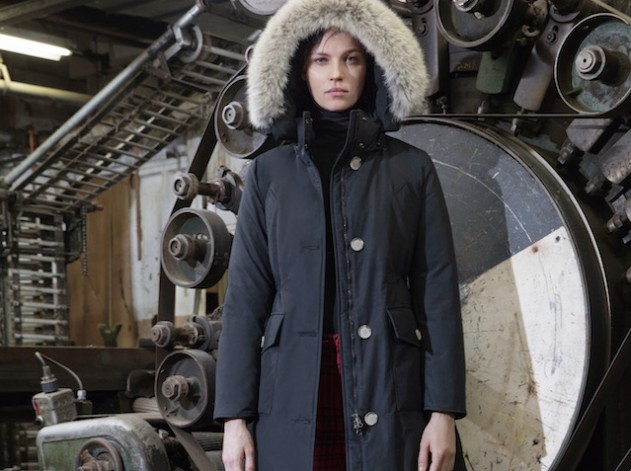
Documentary photographer, Jackie Nickerson, who is best known for her photos of farm labourers, recently captured the world of the historic Woolrich mill. As much American manufacturing moved overseas, the strength of tradition in Woolrich kept the community busy transforming bales of raw wool into premium flannel shirts, wool jumpers and arctic parkas.
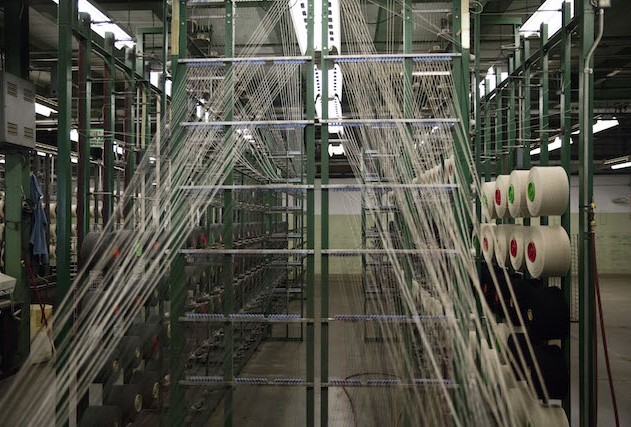
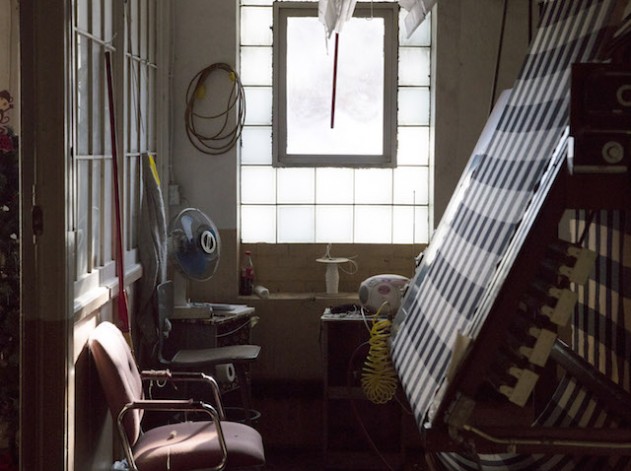
The film above captures some of what Nickerson found. The mill itself is a working museum with the 1950s carding machine, which spins like a watermill, preparing the wool to be transformed. The same weaving loom has been warping and weaving wool into trademark Woolrich designs since the 1970s, and others like the warper, twisting frame and warping creel continue to carry out their distinct functions.
Nature also still plays a role. The forest and water reservoir, which once powered the mill, also offer inspiration to people at the mill — just like they did for John Rich more than 180 years ago.
To see more of Jackie Nickerson’s photos and read more about the mill’s story, visit Woolrich’s Agenda site.
You might like

In photos: Black Texas life since emancipation
Kinship & Community — A new photobook and exhibition showcases the rich culture, history and community of African American folks in the Lone Star State, whose existence in the region predates colonial Britain.
Written by: Miss Rosen

Youthful joy & end-of-era poignancy at a London school prom
Leavers — For several years, Lewis Khan documented young people as they celebrated the last of their school days and the completion of their exams. The series is now collated in a new self-published photobook and short film.
Written by: Zoe Whitfield

Harry Gruyaert’s vintage, kaleidoscopic scenes of New York
A Sense of Place — For 50 years, the Belgian photographer and Magnum Photos member has been capturing NYC’s colourful chaos. A new photobook and exhibition showcase his unique, technicolour view of the city.
Written by: Miss Rosen

Inside Lower Duck Pond, the nicest town on the internet
/r/HaveWeMet — With a population of 2,500 and no fixed location, the subreddit is a space for roleplaying citizens to solve mysteries, host fictional events and ultimately connect. In an internet that’s often divided and toxic, Vicky Jessop hangs out in one of its most wholesome corners.
Written by: Vicky Jessop

A major Nan Goldin exhibition is coming to London
You Never Did Anything Wrong — Opening at the Hayward Gallery in November, the show will debut a new film from the artist and activist, alongside a slate of recent work.
Written by: Jack Dennison-Thompson

Sepia splashed memories of Britain’s ’90s squatting and free party scene
Bygones — Moving into a Hackney squat at the age of 19, Tom Hunter spent years living on London’s edges, while documenting the vibrant, creative community and culture that it enabled. Huck’s art director Sam White chats to him about the freedom that existed, the collectivism and what’s been lost over the decades since.
Written by: Samuel White


