Photos capturing the changing face of Northern England
- Text by Gilda Bruno
- Photography by Sirkka-Liisa Konttinen

Sirkka-Liisa Konttinen’s candid snapshots of life in Northern England are filled with emotion. Transporting viewers to an England that is no more, they serve both as historic documents and poetic meditations on the changing face of the North.
Born in Myllykoski, a paper mill town in Southern Finland, in 1948, Konttinen first came to Britain in the 1960s to study filmmaking at London’s Regent Street Polytechnic. In 1969, alongside fellow students, Konttinen cofounded the Amber Film & Photography Collective – a creative powerhouse with the goal of “living, working and documenting life in the North East of England across photographs and films”.
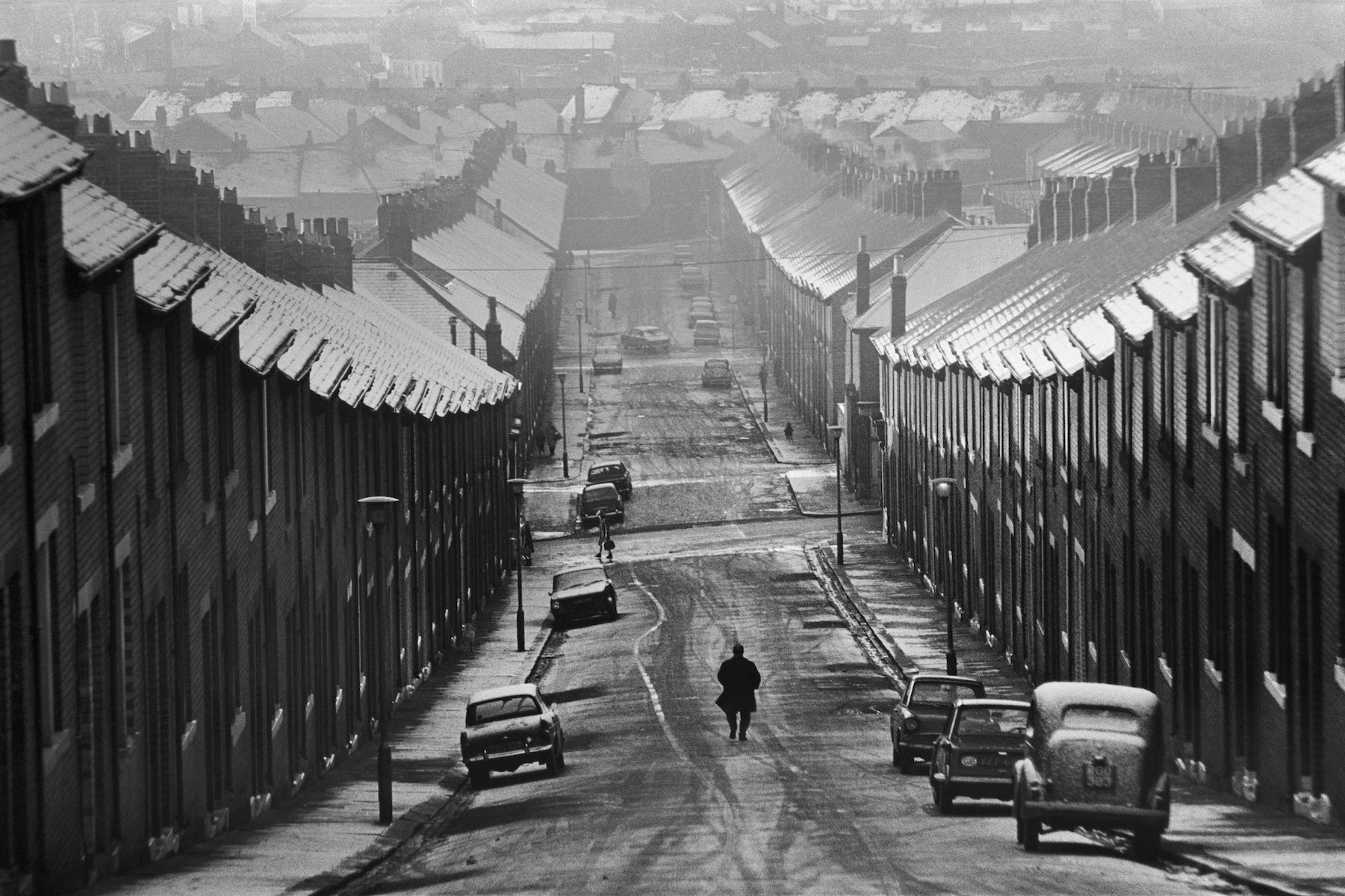
Based in Newcastle upon Tyne ever since, for more than half a century, Konttinen has dedicated herself to capturing the community around her – from the socially-disruptive redevelopment of Newcastle’s East End to the joyful, free-spirited atmosphere of the local coast – in collaboration with the collective. A selection of these photographs are brought together in Tate Photography: Sirkka-Liisa Konttinen – a new book reviving two of her most acclaimed photographic series, Byker (1969-1983) and Writing in the Sand (1978-1998).
Published by Tate Publishing, the volume juxtaposes Konttinen’s documentation of Byker’s evolution over 12 years with her moving portrayal of life and leisure on the North East Coast of England. Drawing on the differences between these two bodies of work, the book provides readers with a nuanced, compelling look at Northern England and the people that inhabited it.
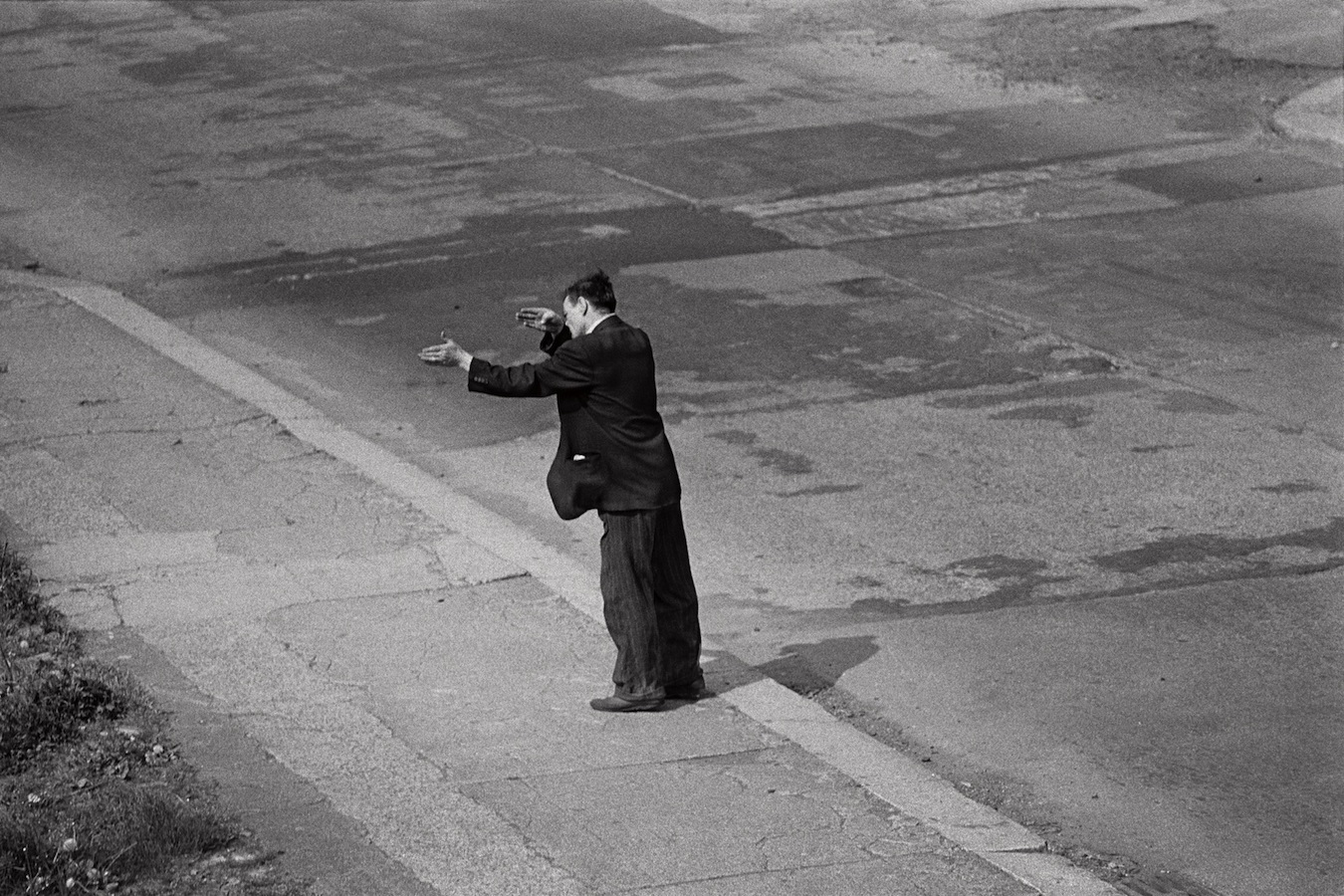
“Byker’s working-class community in Newcastle embraced me with such warmth and humour I knew immediately that this would be my home,” Konttinen says retracing her early memories of the industrial North. “It was the first place that welcomed me right after leaving London; my home for seven years till the whole neighbourhood of Victorian terraced streets was demolished to make way for the Byker Wall estate. People were being moved out and by 1976, when my street came down, all my neighbours had gone. It was the destruction of the local community.”
Condemned as unfit for human habitation in 1953, the original homes were replaced by a 620-maisonettes block designed by architect Ralph Erskine. Though initially intended to rehouse local residents, only 20 per cent of those who used to live in the area were housed by the new complex following its completion in 1982.
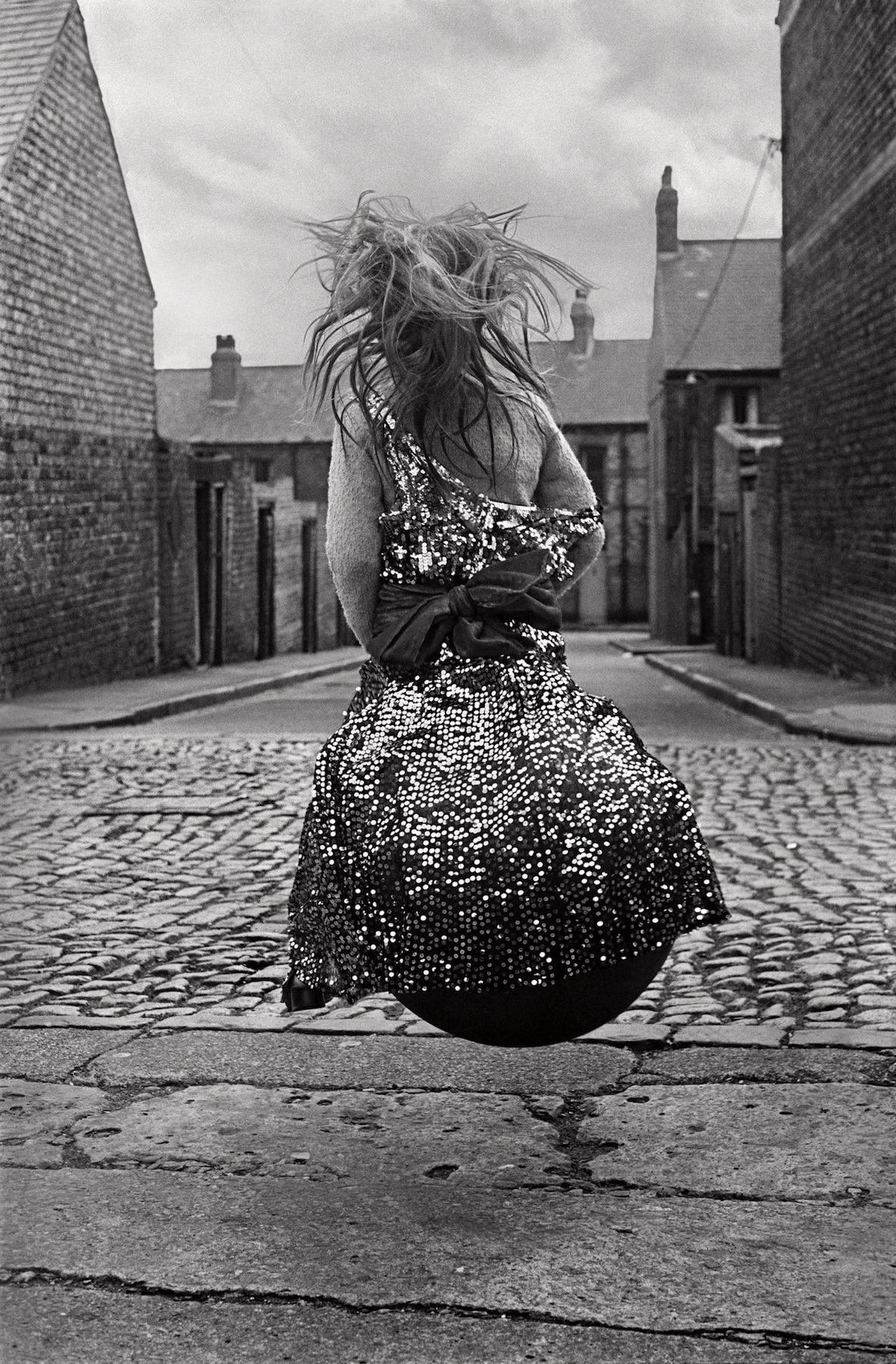
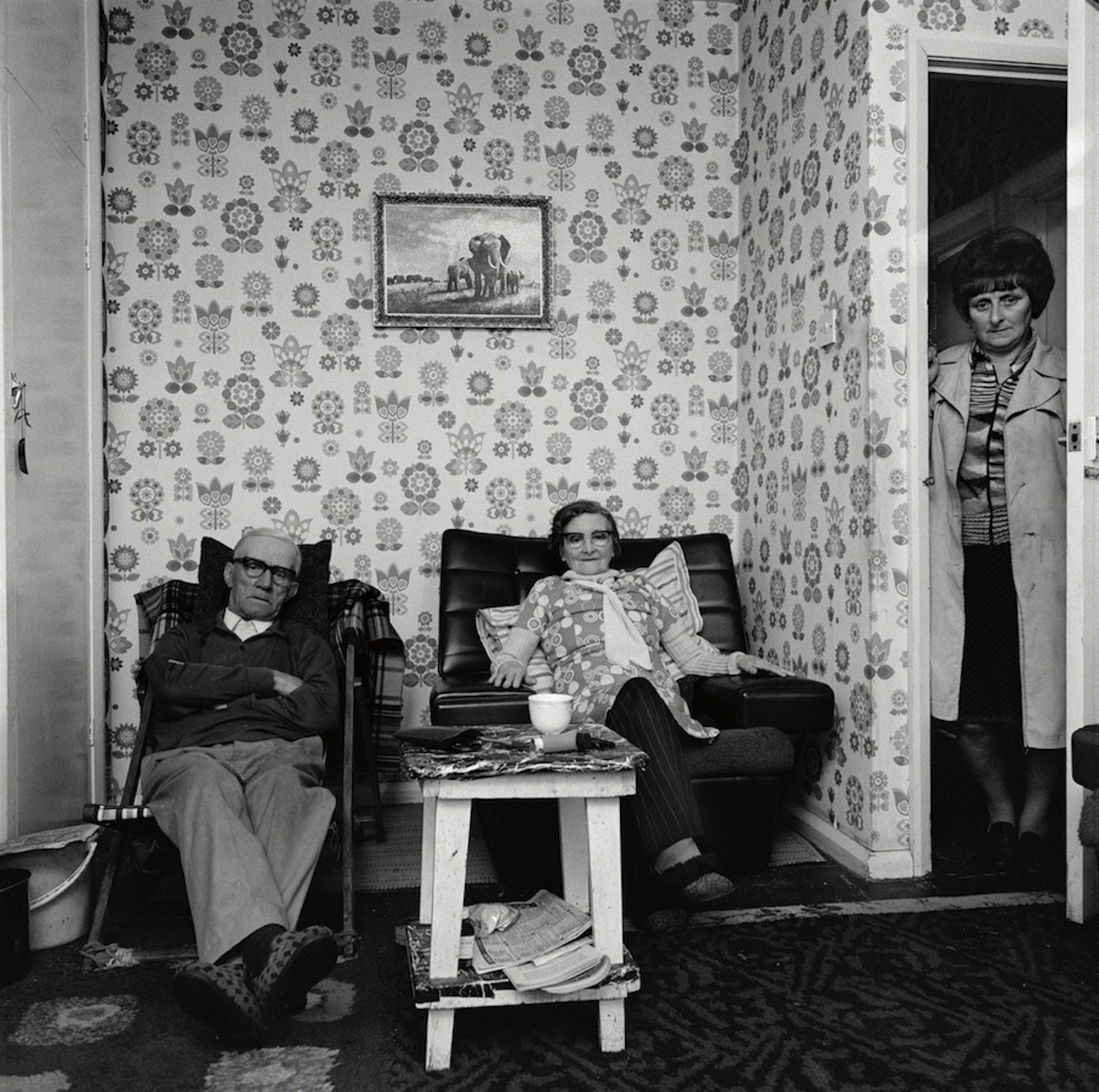
“It was the vibrant life of this neighbourhood that impelled me to return to photography, which had been my first love long before discovering filmmaking,” Konttinen says. She adds that the common thread in all her work is the resilience of communities.
“Writing in the Sand spanned several years, as the coast was where we went from Byker and surrounding areas for a good day out,” says Konttinen of the other series featured in the book. “The beaches are common ground, free for all kinds of spontaneous communality. A place for freedom and leisure, they awaken the child in the toughest of city dwellers.”
Photography, films and public initiatives that she created with the Amber Collective – including their 1977-launched Side Gallery – continuously allow her to engage with the North East communities, and the changing world around her. “Amber has made over 40 feature films and documentaries based in the North East of England, which together with my photography were inscribed in the UNESCO UK Memory of the World Register in 2011,” says Konttinen. “I am humbled by how the communities have taken ownership of my work and hope that people will treasure any aspect of it that is relevant to them today.”
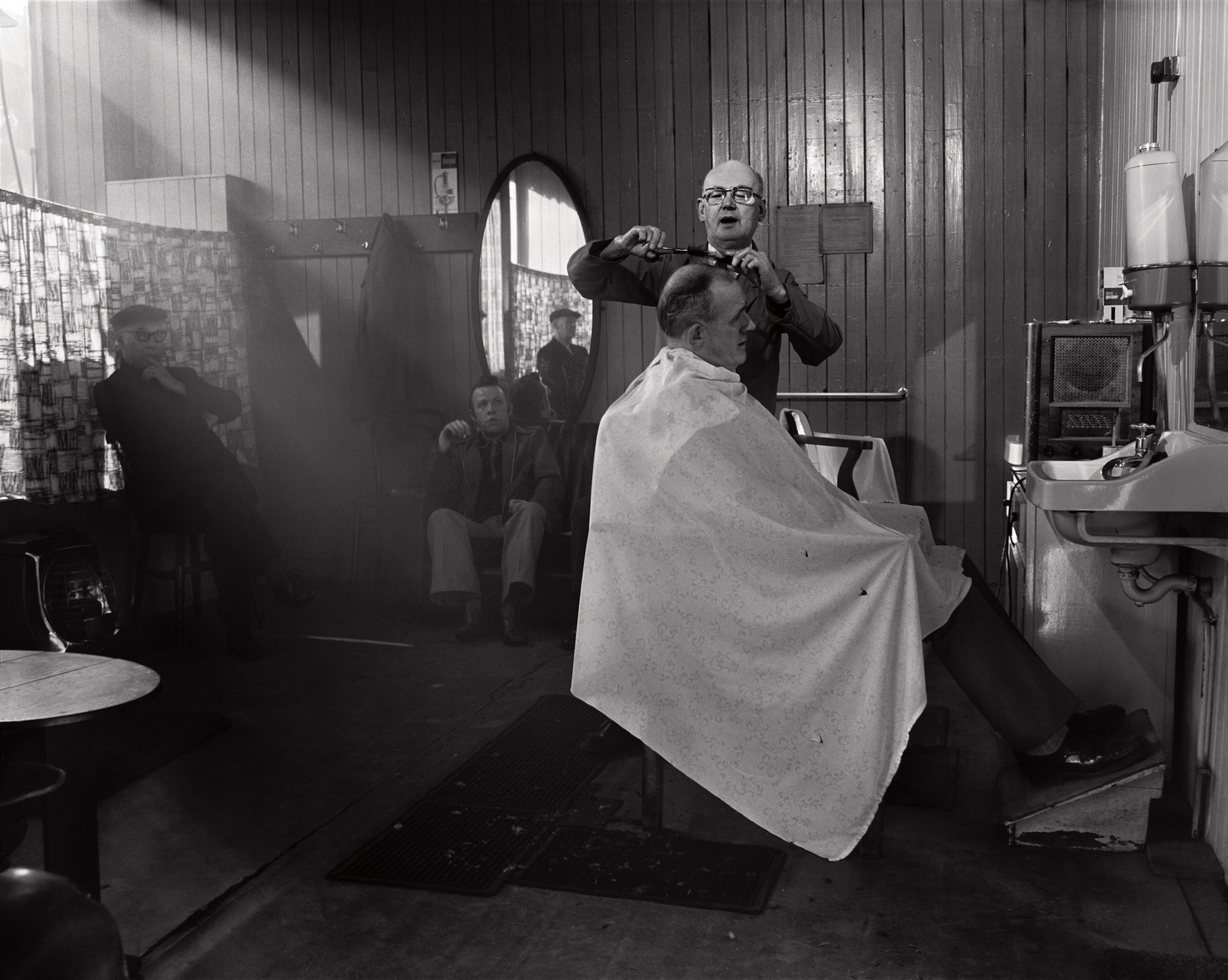
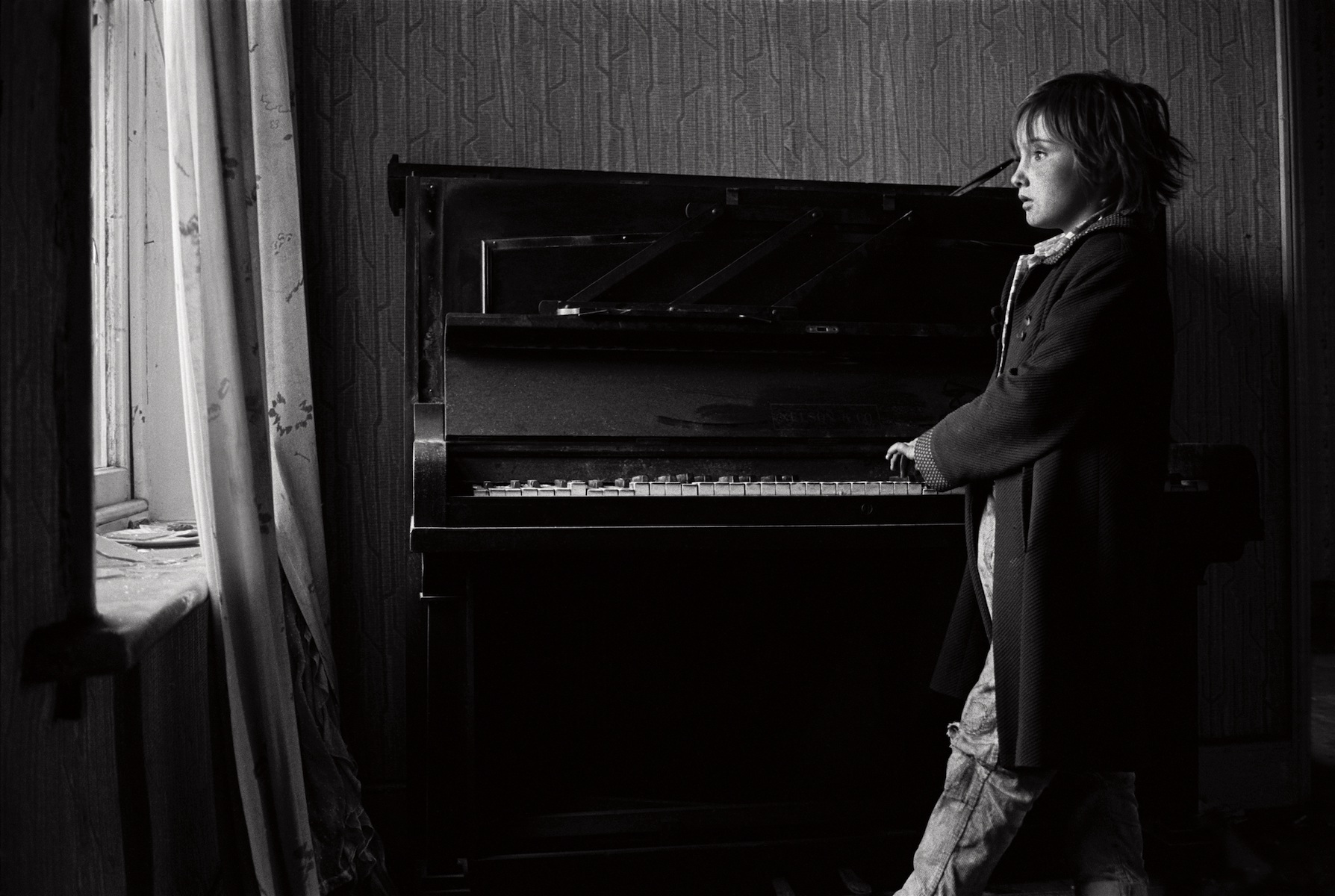
Tate Photography: Sirkka-Liisa Konttinen is available to purchase here.
Follow Gilda Bruno on Twitter.
Enjoyed this article? Like Huck on Facebook or follow us on Twitter.
You might like

Queer resistance & sun-soaked solidarity at the world’s largest trans pride march
Our Future, Our Fight — Over the weekend, over 150,000 people marched at the London Trans+ Pride, with the parade ending at Trafalgar Square for the first time in history.
Written by: Ella Glossop

In photos: Black Texas life since emancipation
Kinship & Community — A new photobook and exhibition showcases the rich culture, history and community of African American folks in the Lone Star State, whose existence in the region predates colonial Britain.
Written by: Miss Rosen

Youthful joy & end-of-era poignancy at a London school prom
Leavers — For several years, Lewis Khan documented young people as they celebrated the last of their school days and the completion of their exams. The series is now collated in a new self-published photobook and short film.
Written by: Zoe Whitfield

Harry Gruyaert’s vintage, kaleidoscopic scenes of New York
A Sense of Place — For 50 years, the Belgian photographer and Magnum Photos member has been capturing NYC’s colourful chaos. A new photobook and exhibition showcase his unique, technicolour view of the city.
Written by: Miss Rosen

In the pit at one of the UK’s last stock car & banger speedways
Stock Car Racing Isn’t Dead — Photographer Liam McCarthy spent time in and around the Arlington Raceway’s circuit, capturing the diehard community that keeps the sport alive.
Written by: Isaac Muk

Inside Lower Duck Pond, the nicest town on the internet
/r/HaveWeMet — With a population of 2,500 and no fixed location, the subreddit is a space for roleplaying citizens to solve mysteries, host fictional events and ultimately connect. In an internet that’s often divided and toxic, Vicky Jessop hangs out in one of its most wholesome corners.
Written by: Vicky Jessop


