In photos: The enduring resistance of Notting Hill Carnival
- Text by Isaac Muk
- Photography by Wayne Campbell, Wayne Crichlow

Carnival of Resistance — A new photobook by Wayne Campbell and Wayne Crichlow reflects on the protest beginnings of Europe’s biggest street festival, along with the traditions keeping its original spirit alive today.
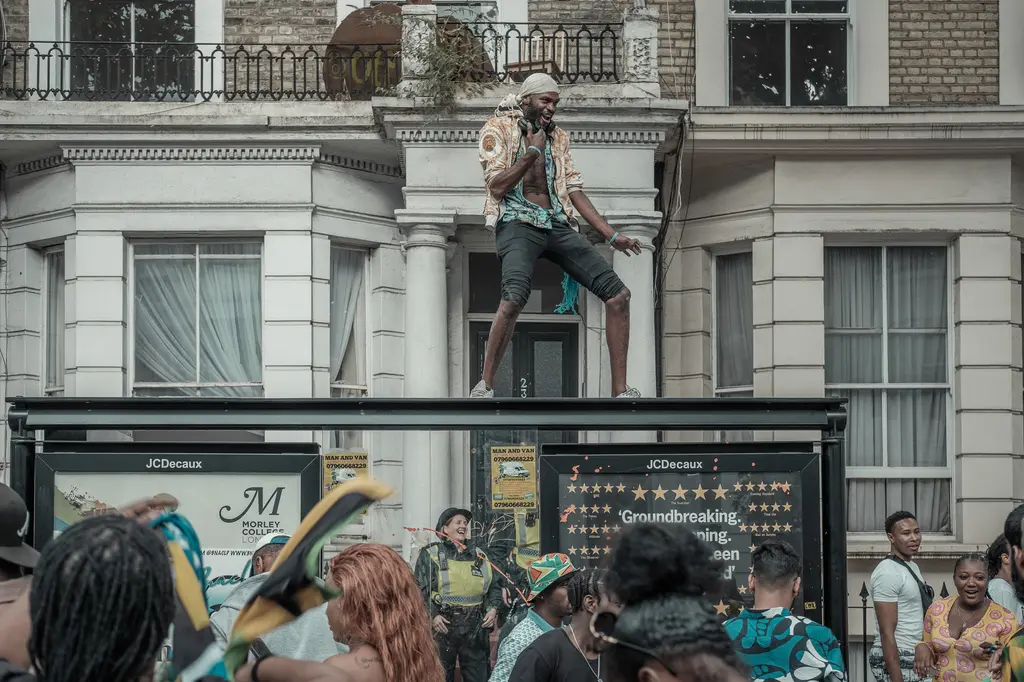
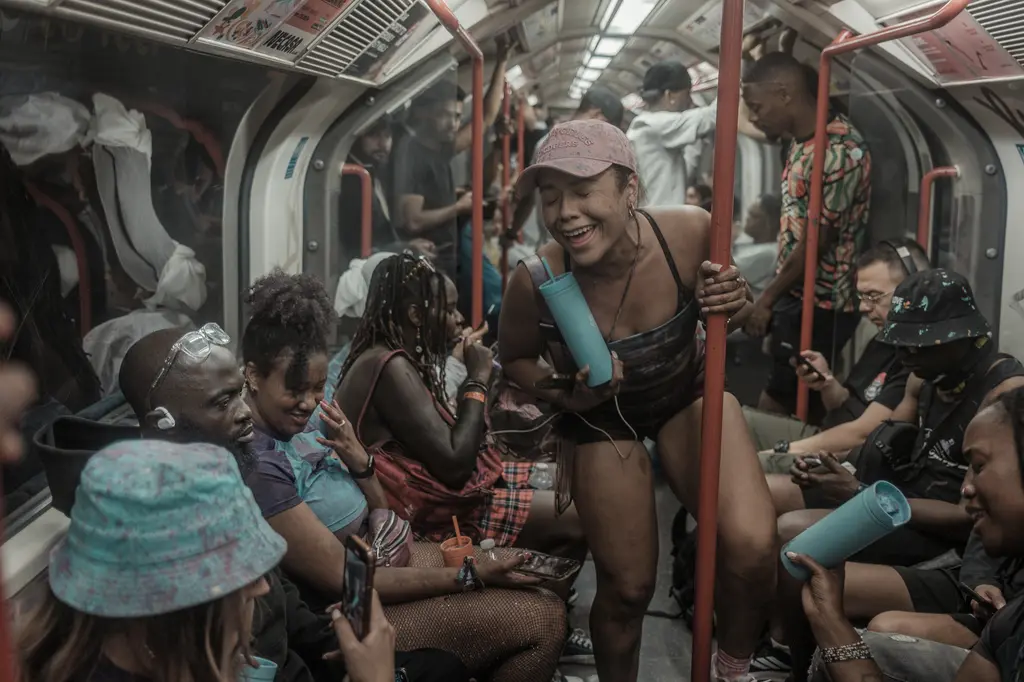
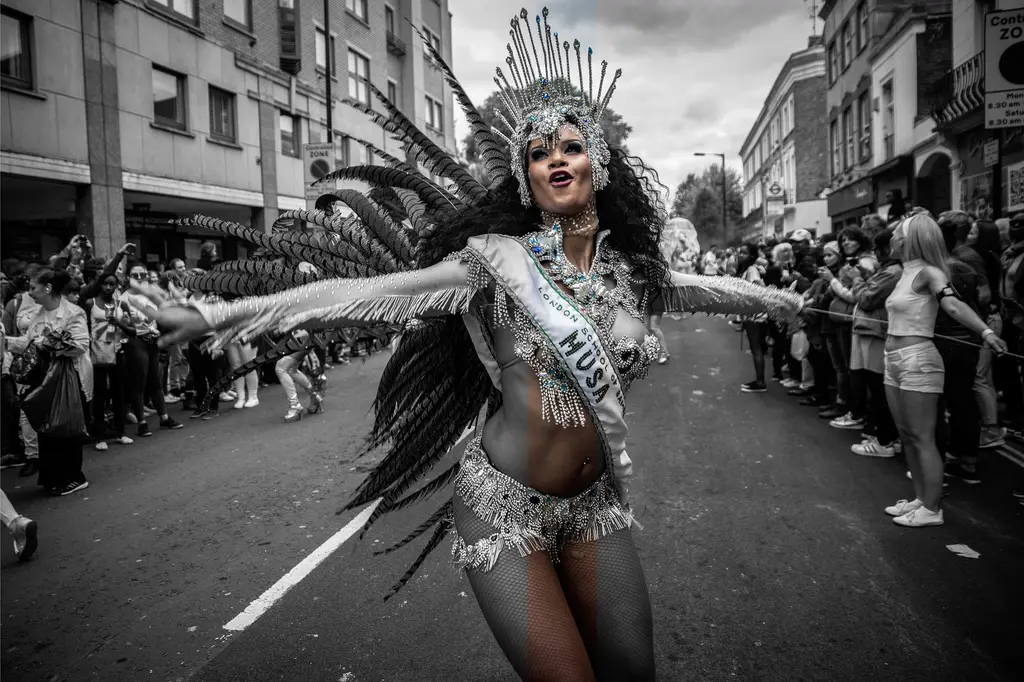
Notting Hill Carnival always evokes sharp visions in the imagination. Intricate floats. The technicolour, feathered outfits of mas bands. Eardrum bursting reggae, dub, jungle and UK garage of the soundsystems. Jerk chicken, curry goat and rice and peas. Huge, pulsing crowds that file through the area’s streets. Or for its critics, it represents disorder, noise, and unpoliceable chaos.
But lesser remembered is its place as a protest. In 1958, severe and violent race riots broke out in the West London neighbourhood, as mobs of white gangs armed with sticks, bottles, bricks and knives attacked homes and businesses of Black people. In response, a year later in 1959, journalist and activist Claudia Jones – who was born in Trinidad and Tobago and moved to the UK after being imprisoned in the US in the ‘Red Scare’ – organised a party at St Pancras Town Hall.
There were steel pan bands, singers and dancers, as the cultural celebration protested violence and racism with music and dancing. The event was an early blueprint for resistance through joy and celebration of culture, which eventually inspired the first official Notting Hill Carnival in 1966. “There was the murder of [Antiguan migrant] Kelso Cochrane that was dividing communities,” explains photographer Wayne Campbell, co-author of a new photobook Carnival of Resistance, which is published as the festival celebrates 60 years of existence.
“A lot of tension existed within the Afro-Caribbean community that had come over just after Windrush, and it felt like something needed to be done,” he continues. “Ironically, what happened came not with knives and sticks but with heritage and culture. And so was born the Notting Hill Carnival.”
Ever since, the August Bank Holiday celebration of the Afro-Caribbean diaspora, and its diverse cultures in the UK, has bloomed to become Europe’s largest street festival, growing and iterating across the decades. Yet underneath the noise, outfits and party façade, the original protest spirit remains alive through rituals and traditions.
These are the focus of Carnival of Resistance, which is made in conjunction with fellow photographer and Carnival regular Wayne Crichlow. Both photographers have been involved with Notting Hill Carnival since they were young. They’ve been photographing the event for years, with the pair also having performed there in their younger years. Campbell was part of a steel pan band, while Crichlow was in dance music group Closer Than Close.
“It was the main stage, typical bank holiday weekend – it was raining, and I was playing the synth,” Crichlow remembers. “I played this bassline, and I remember playing my first note and the sound engineer on the other side of the field was freaking out, because they weren’t expecting the levels. The particular track was very bass heavy, but it was just absolutely brilliant.”
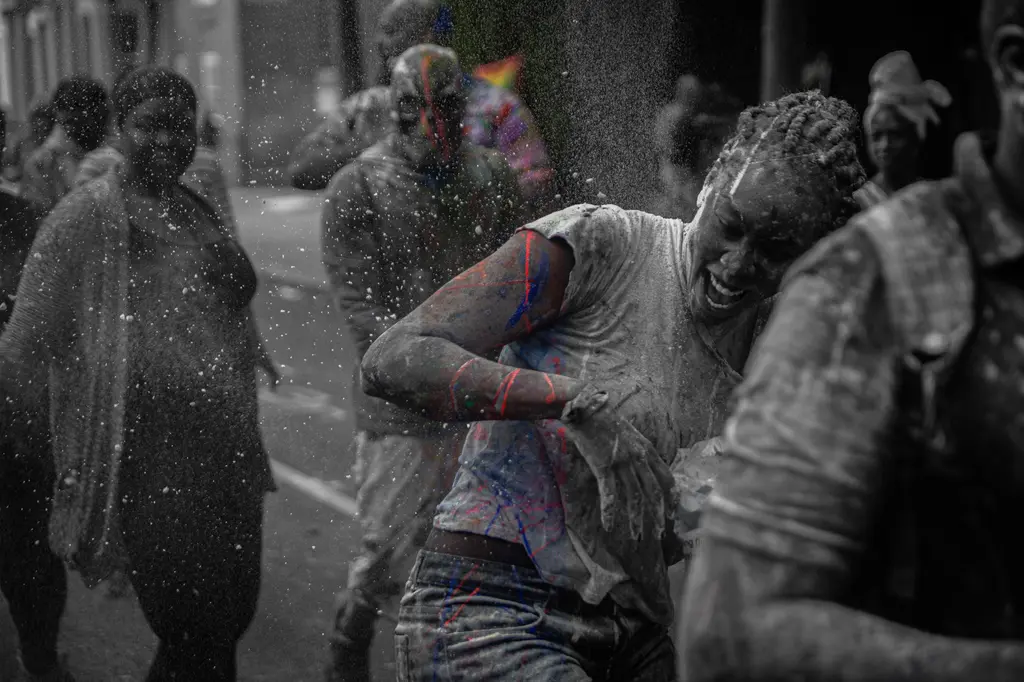
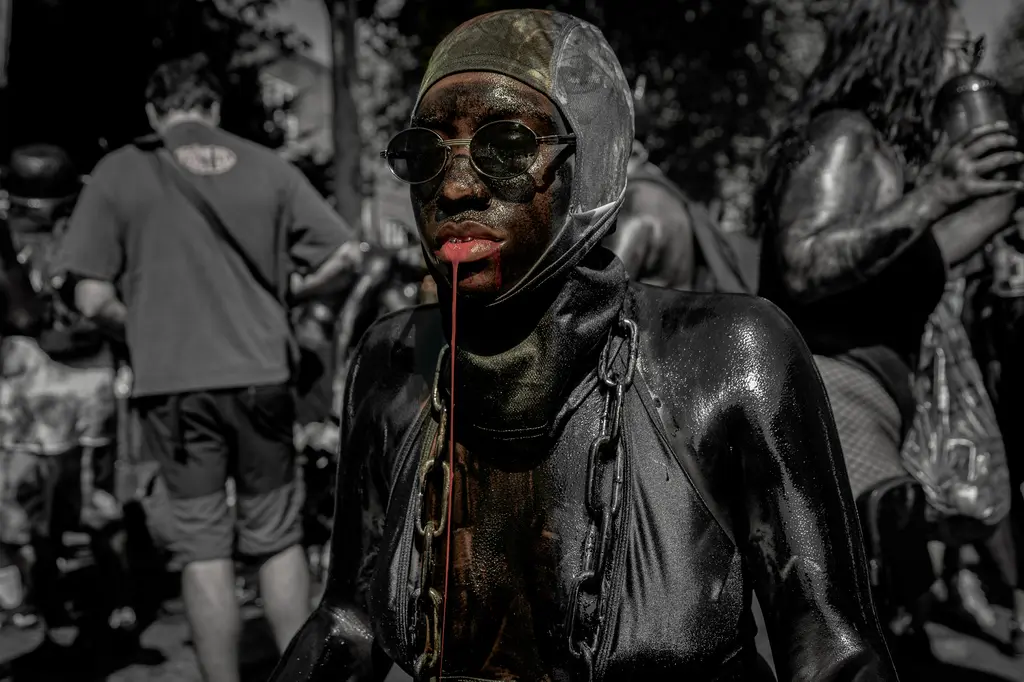
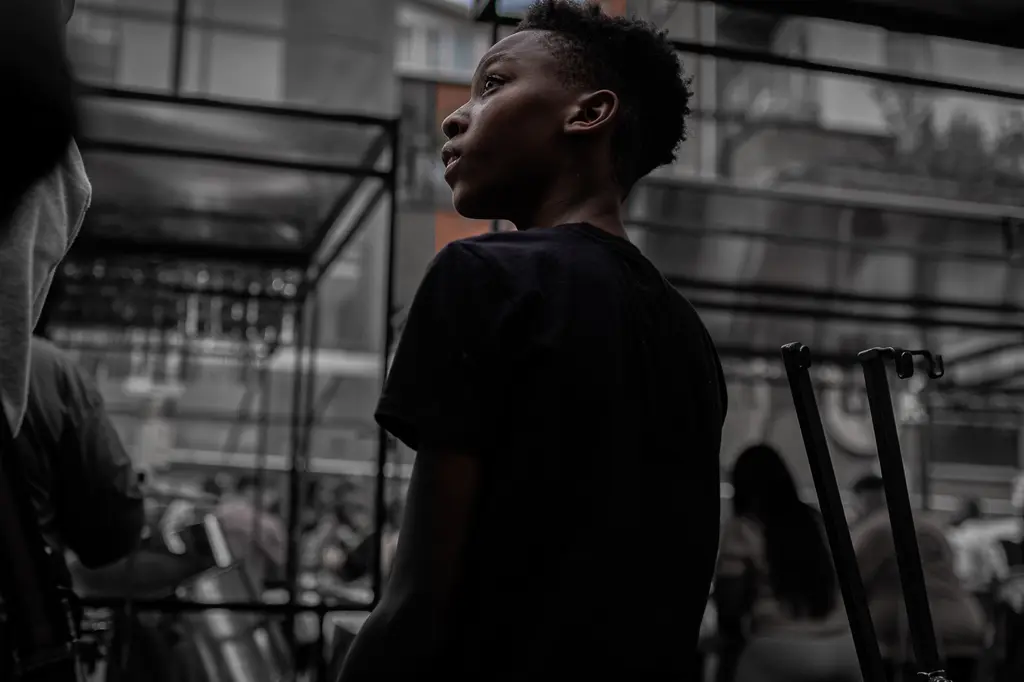
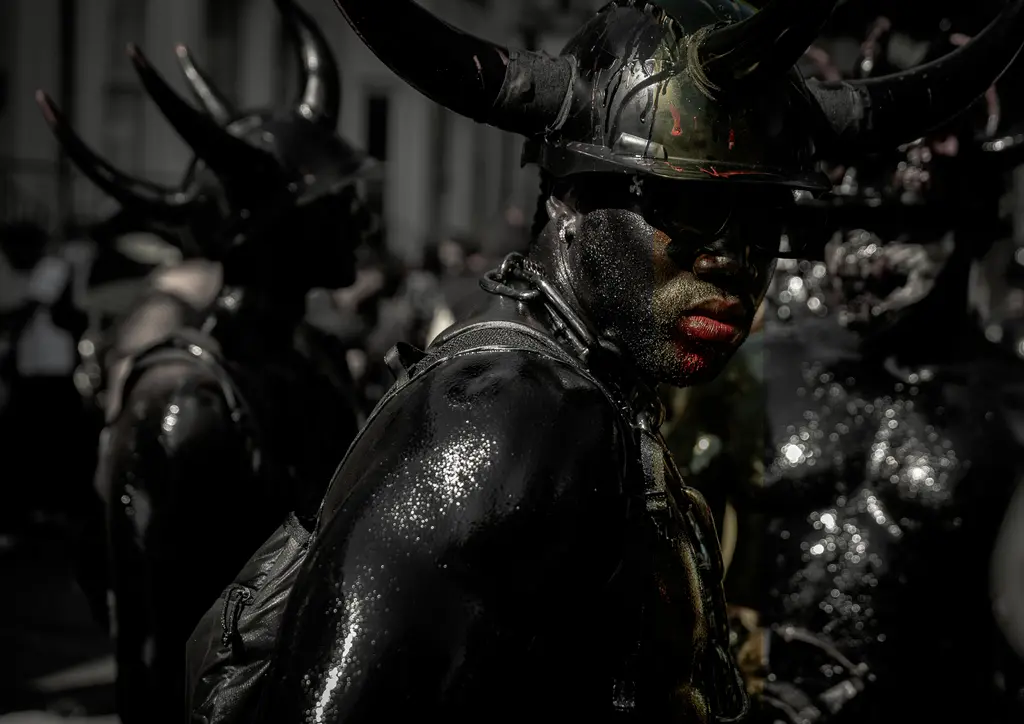
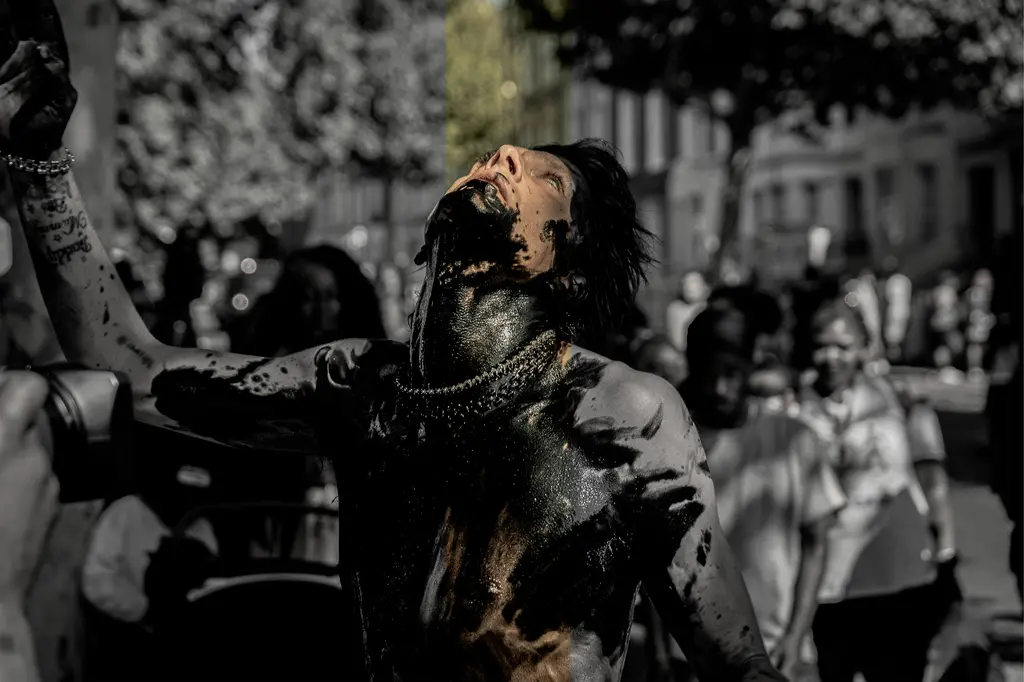
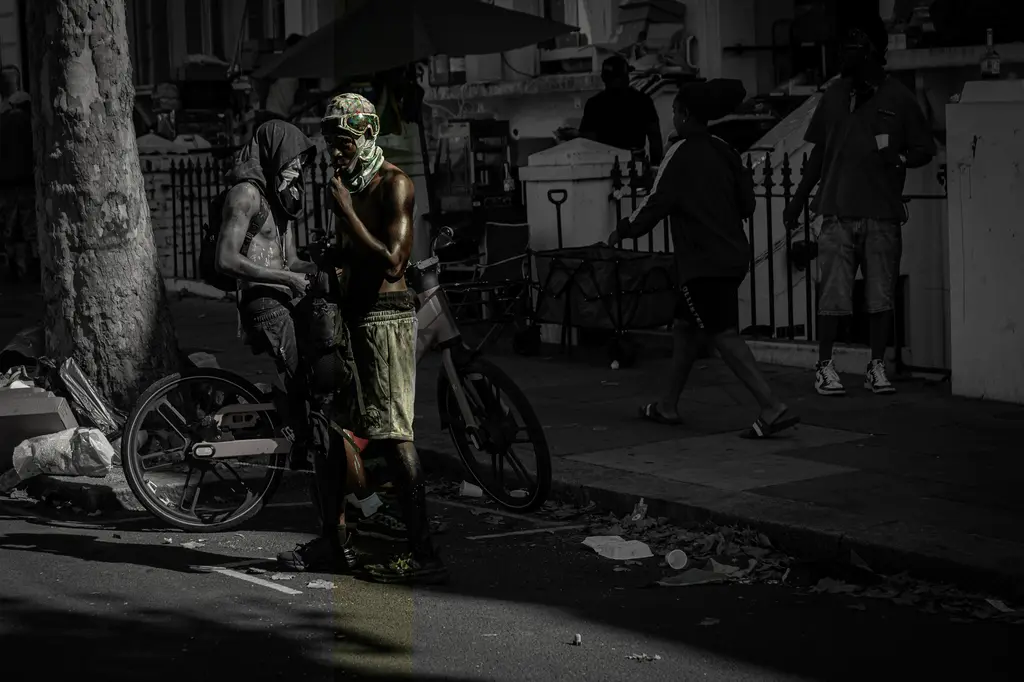
Carnival of Resistance collates photographs that the pair have taken over the past 15 years. Yet it shines a different light on the weekend’s proceedings to the usual maximalist, colour-forward images of Carnival, subverting stereotypical imagery through Campbell’s black-and-white photos featuring just a strip of colour, along with Crichlow’s street shots that embrace grit and reality.
“We wanted to remind people that Carnival was all about resistance,” Crichlow continues. “It was about the emancipation from slavery, pushing back against racism, and the community. Carnival is not just about getting drunk, eating your rice and peas and dancing very intimately with strangers – there’s an underlying seriousness.”
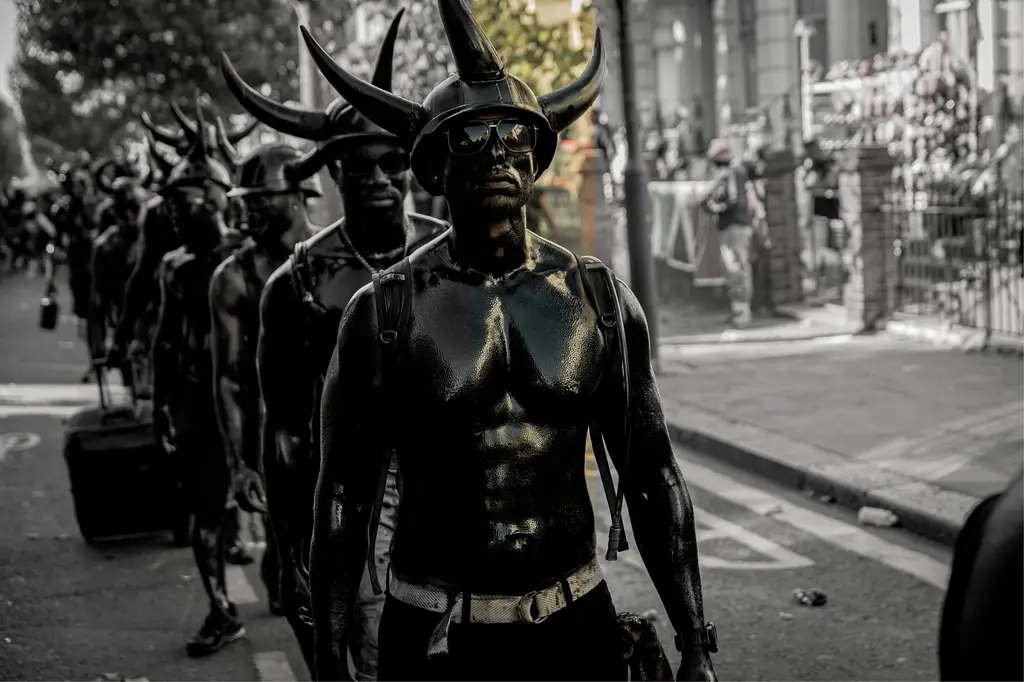
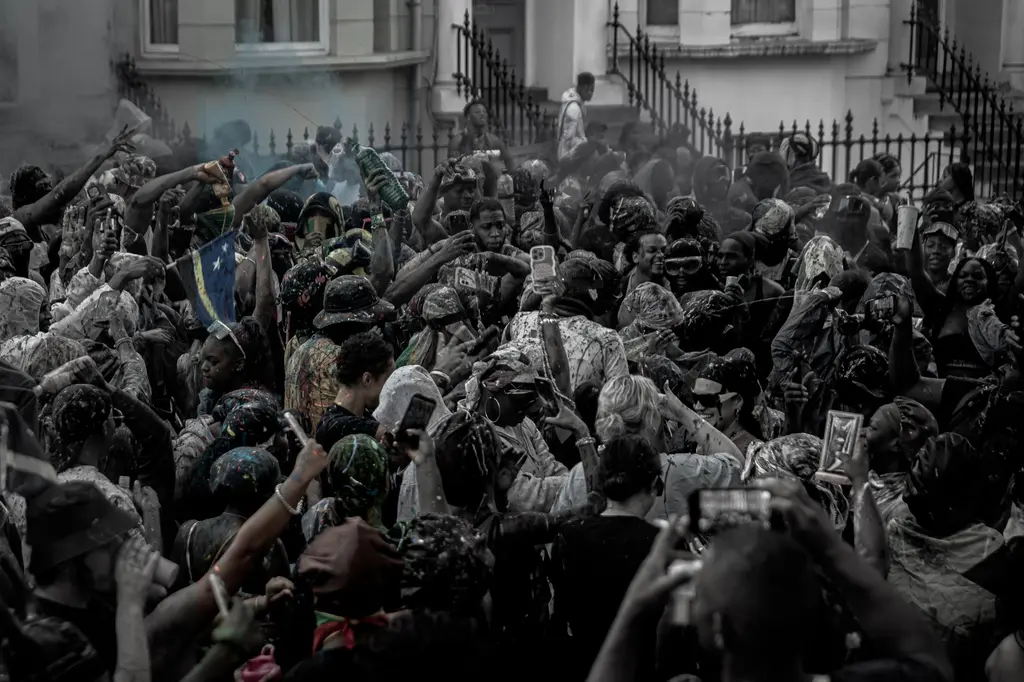
There’s a chapter on J’ouvert – the Trinidadian originating tradition where people gather before dawn to ring in the carnival with a huge splash of oil, chocolate, paint and more, with the ritual being derived from slaves who would burn sugarcane fields to resist against their slave masters. Elsewhere, there are photos of Jab Jab, where people cover themselves in black oil and charcoal, while wearing horns and chains as direct symbolic expression of emancipation from slavery.
One picture pays tribute to Grenfell Tower, which overlooks the celebrations and stands as a reminder of continued inequalities, while another photo shows a girl dancing on her own in the foreground while holding up a plastic bottle, with three Metropolitan Police officers on motorbikes stationary behind her. Despite existing now for 60 years, when Carnival rolls around each August it comes under scrutiny, often with op-ed attacks from the right wing press over its cost to the taxpayer, or complaints by the police about the strain the event puts on its officers. Occasionally, politicians raise the idea of moving the celebration to Hyde Park to make it easier to regulate.
Campbell explains that its critics are missing the bottom line. “For the Notting Hill area and that part of the community, Carnival makes hundreds of millions of pounds,” he says. According to research commissioned by The Voice, Carnival’s net economic impact is close to £400 million each year. “Local businesses and the extended area make so much money in a very short period of time. People come from abroad, and it boosts London’s economy, but there will always be a small percentage of people who are sure that it shouldn’t exist, or use it as a political football to say X or Y.”


Ultimately, as long as Carnival is treated politically by mainstream society, its presence will always be a protest. “In the ’60s, a lot of those houses in West London were squats, so a lot of people in the [Afro-Caribbean] community settled there,” Crichlow says. “So Carnival is not only keeping the original spirit alive, but it’s actually reclaiming our streets. You may want to pile in a load of money, bring in faceless investors and price us out, but even if it’s only three days a year, we’re going to take our streets back.”
Purchase Carnival of Resistance by Wayne Campbell and Wayne Crichlow here.
Isaac Muk is Huck’s digital editor. Follow him on Bluesky.
Buy your copy of Huck 83 here.
Enjoyed this article? Follow Huck on Instagram for more from the cutting edge of sport, music and counterculture.
Support stories like this by becoming a member of Club Huck.
You might like

Notting Hill Carnival 2023: an oral history of all-female sound systems
As the event marks its 50th anniversary, we speak to some of the pioneering DJs still working to make carnival an empowering and inclusive space.
Written by: Robert Kazandjian

A look down the side streets at Notting Hill Carnival
Away from the parade — As Notting Hill Carnival hits 50, crowds hit up the streets of West London for a weekend of celebrations. Take a look at the scene away from the parades, down the side streets of Notting Hill in 2016.
Written by: Michael Segalov

On the frontlines of Britain’s ’80s protest movements
Protest and Equality — Against a backdrop of Thatcherism, hospital closures and global conflict, photographer Sarah Saunders was a documentarian of the long decade’s effects on society, as well as the communities actively resisting it.
Written by: Miss Rosen

Why is the Met Police using EsDeeKid for ‘copaganda’?
Slop Enforcement — Among the AI slop and ragebait of late-stage social media, newsletter columnist Emma Garland has noticed a jarring trend – London’s police force appropriating criminalised subcultures for engagement purposes.
Written by: Emma Garland

Photos capturing the soul of Notting Hill in the ‘70s
Community spirit — A new book revisits Philip Wolmuth‘s photographs of West London during a turbulent decade for the area, relating a vision of community photography with social justice at its core.
Written by: Miss Rosen

Landmark new exhibition is celebrating 50 years of female punk
God Save the Queens – The Museum of Youth Culture is bringing together rare photography, archive material and a one-night-only supergroup featuring members of X-Ray Spex, The Slits and The Raincoats.
Written by: Ella Glossop


