Photos of Britain‘s slum housing crisis in the ‘60s
- Text by Chloé Meley
- Photography by Nick Hedges

In the aftermath of the Second World War, government neglect and unscrupulous landlords spawned a nationwide housing disaster that left families across the UK living in decaying, unsafe flats. In 1968, the homelessness charity Shelter asked photographer Nick Hedges, fresh out of the Birmingham College of Art, to document this slum housing crisis.
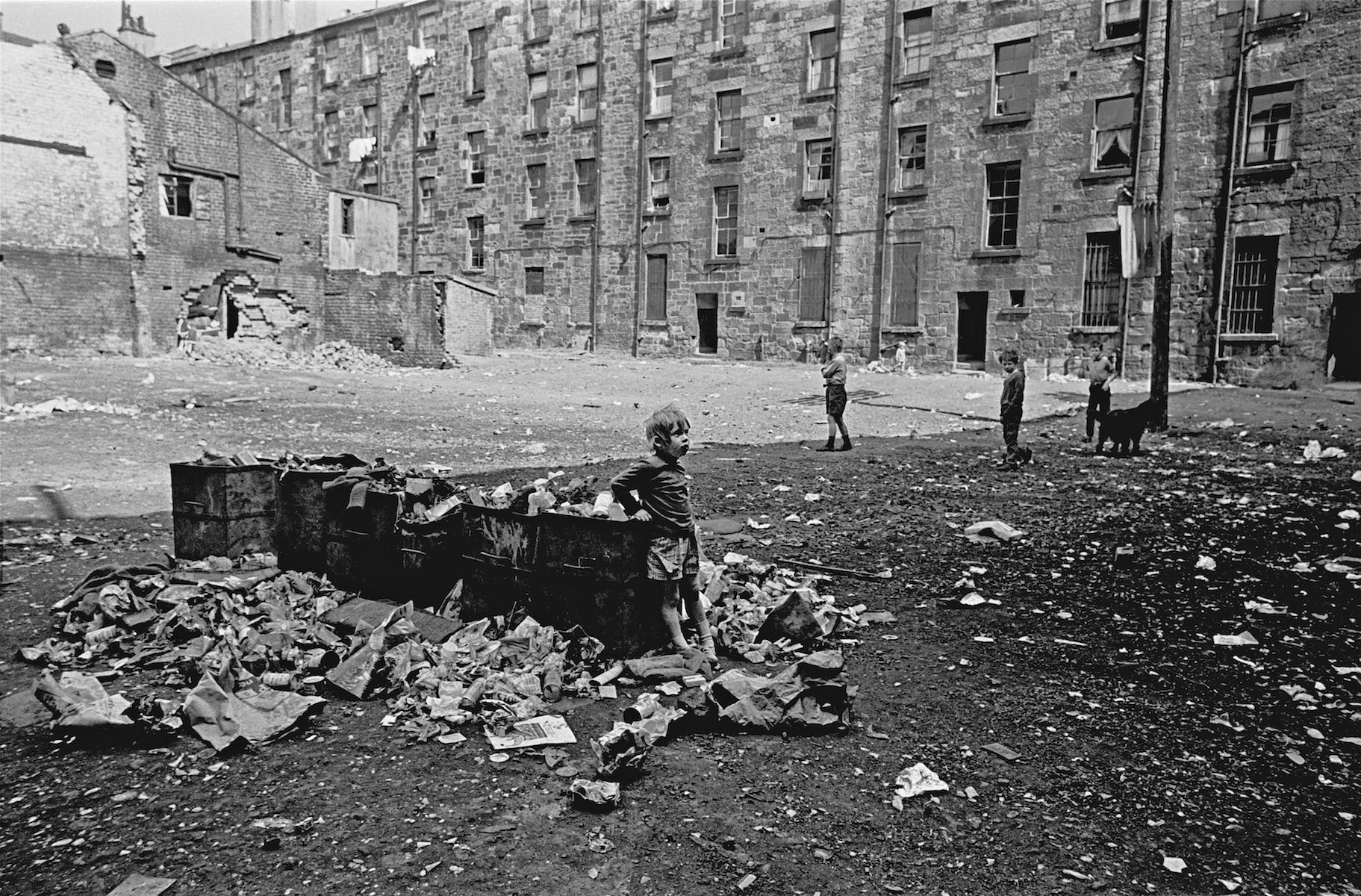
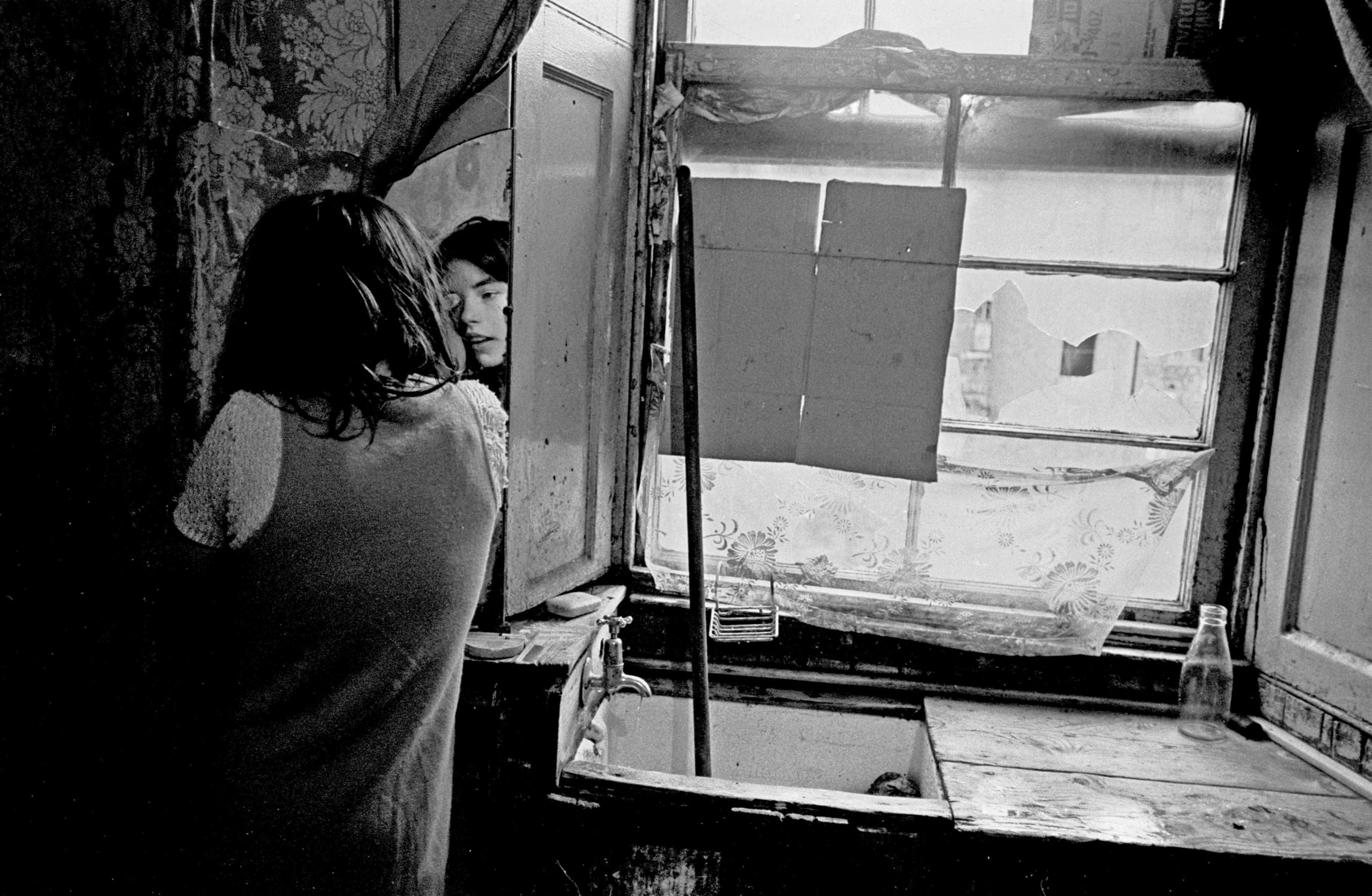
For four years, until 1972, Hedges knocked on hundreds of doors in Britain’s major cities and photographed those families – mainly from working-class and immigrant backgrounds – to draw attention to their plight. These pictures have been compiled in a new photobook, titled Home, which offers a glimpse into the life of the people who were left behind as the country revelled in post-war glory.
Faces and silhouettes are rendered in black-and-white, with damaged wallpaper and crumbling facades in the background. Some subjects look directly into the camera. Their expression is difficult to read, but according to Hedges, is a mix of guilt and resilience. “Misplaced guilt,” he clarifies. “They felt responsible for the situation that their family was in. But in actual fact, they shouldn’t be. The housing shortage was chronic.”
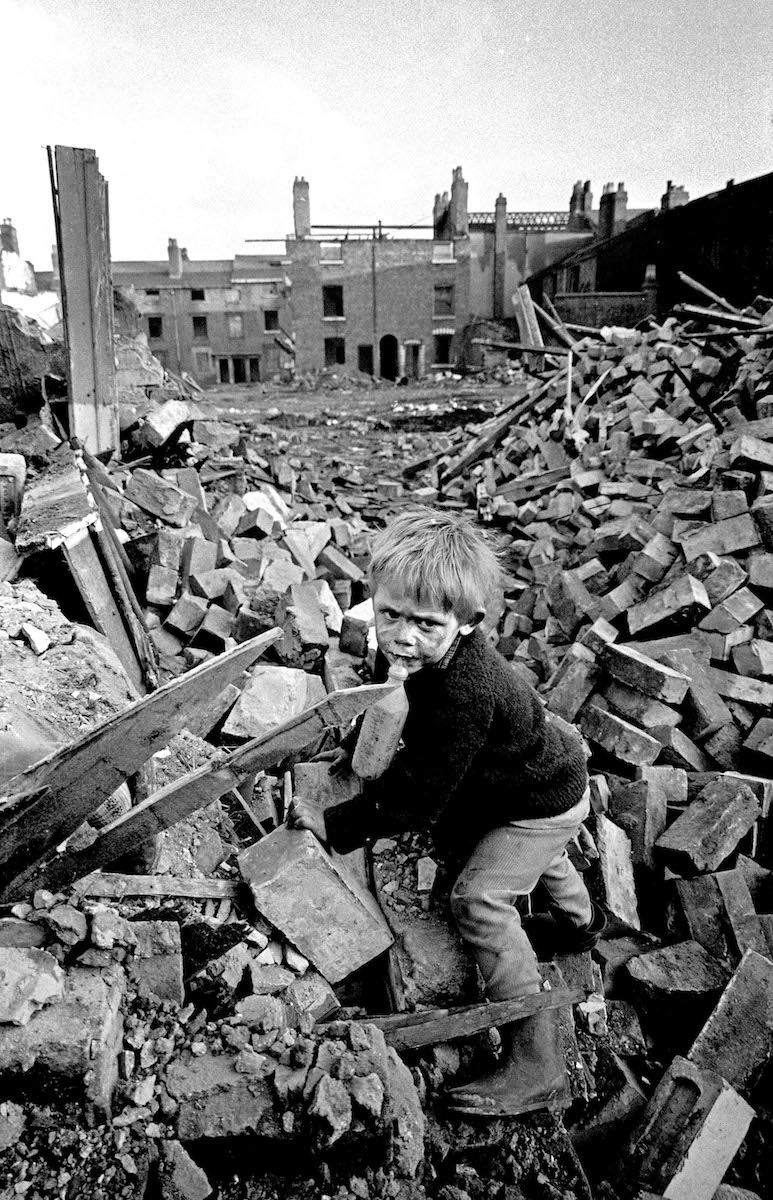
Hedges is grateful to those families who welcomed him into their homes and allowed him to capture the living conditions they were trapped in. “Everyone I met was a very worthy individual, and I got the sense that I should treat them with great humility because I was an outsider. I was invading their space,” he says.
One family, in particular, is forever ingrained in Hedges’ memory: Victor, Peggy, and their five children, who lived in a tower block in Whitechapel, London. Their run-down, crowded basement flat had almost no natural light coming in. “I got to know them very well over a number of months, and we were able to eventually get them rehoused,” Hedges recalls. He’s now in contact with one of their daughters, a happily married manager living in Birmingham.
“The extraordinary thing about the internet is that I’ve been contacted several times in the last two or three years by people who recognise themselves as children in these photographs,” Hedges says. “It’s been very heart-warming to hear their stories and how they’ve managed to survive and improve their lives.”
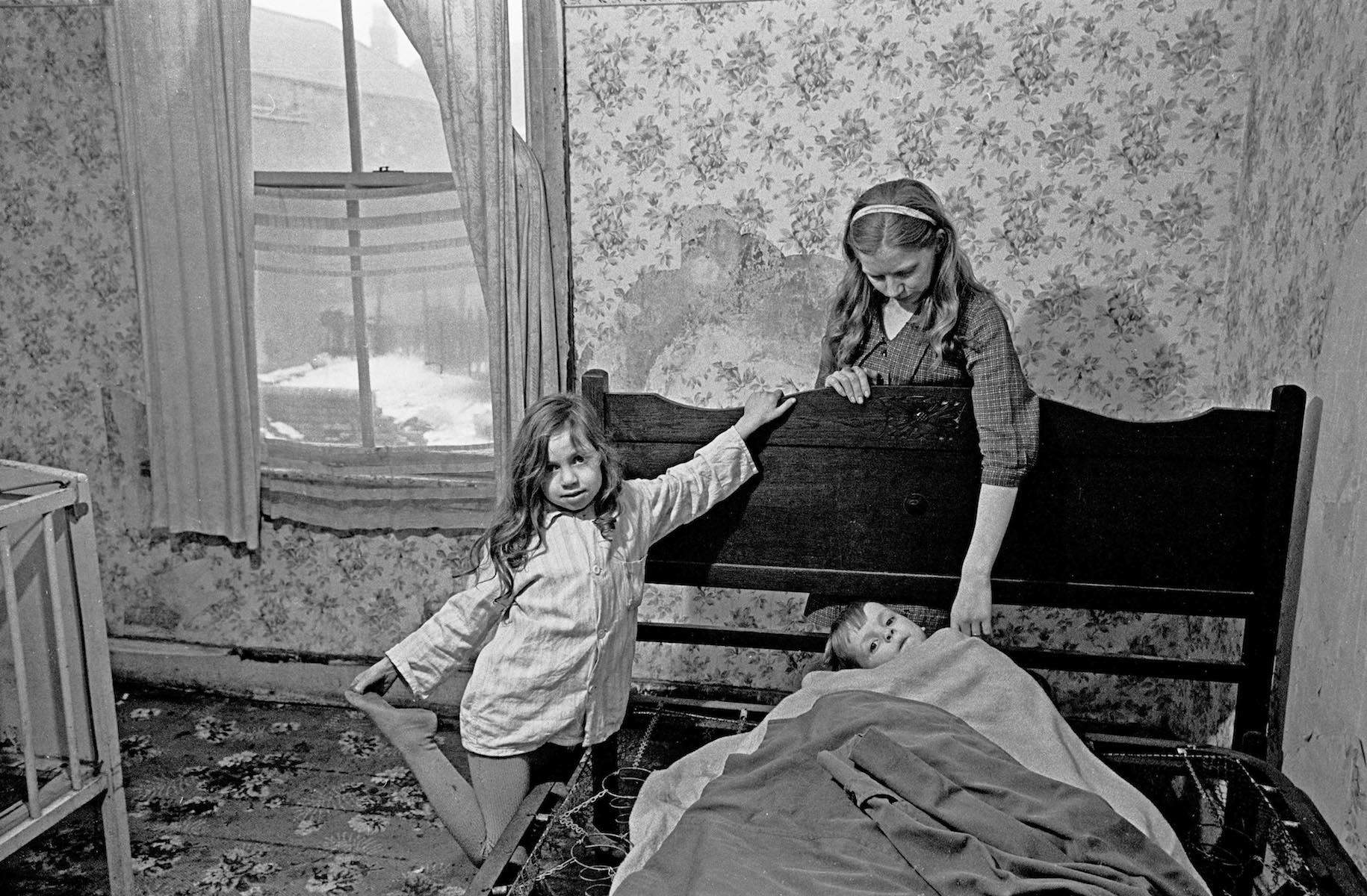
Although he’s delighted to hear about some of his subjects escaping poverty, Hedges is well aware that to this day, thousands of families are living in conditions similar to the ones he documented over 50 years ago. “The idea of social provision seems to have gone out of the window. It’s like there’s no longer a duty to look after the most fragile in our society,” he says. “That’s why the pictures, although they’re historical, do resonate today.”
Hedges considers his work as a record for posterity. “The photos are evidence. They’re evidence of people’s feelings, and of the lives that people have led,” he says. Half a century later, his work is as much a window into the past as a reflection on the present.
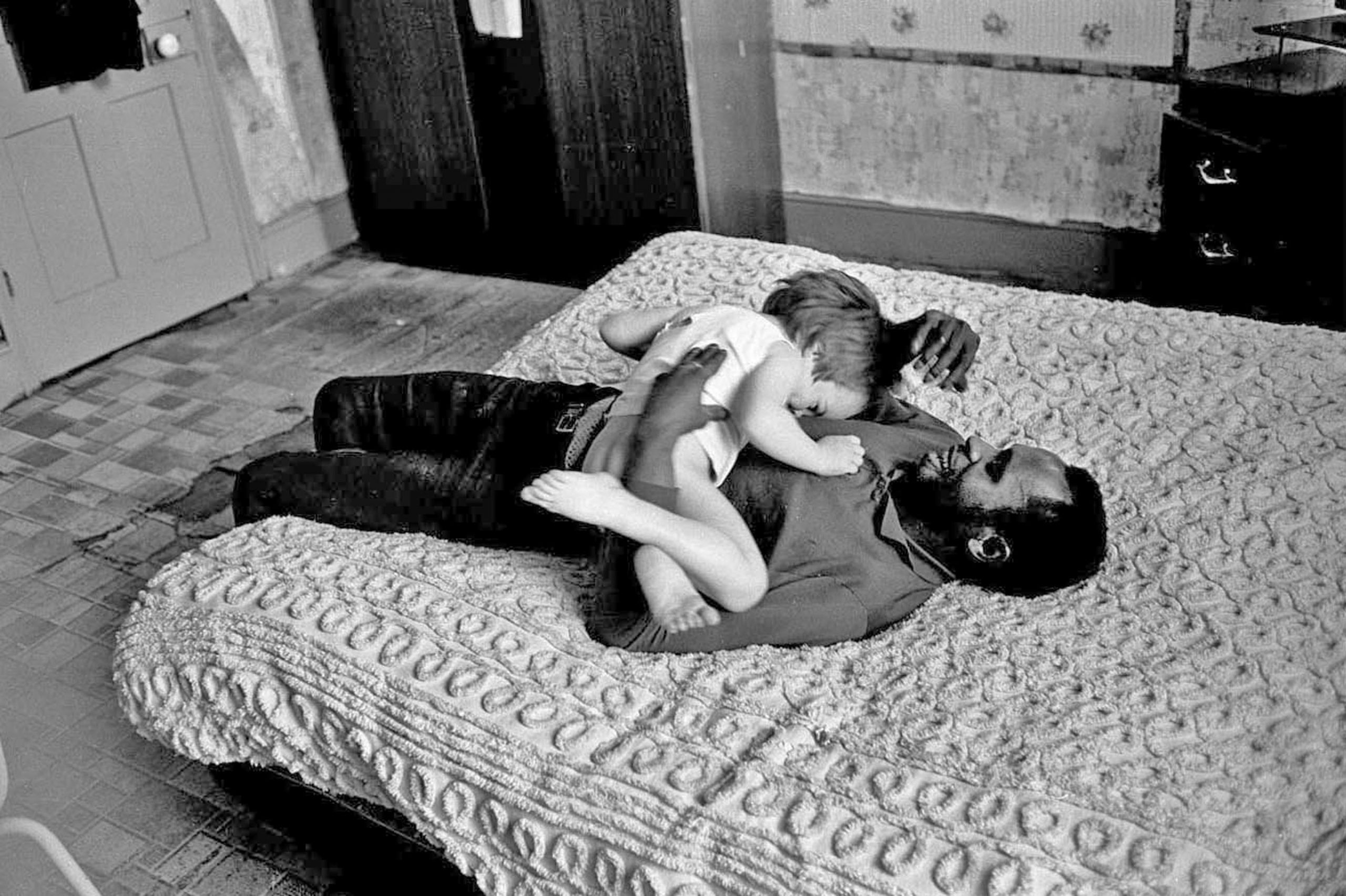
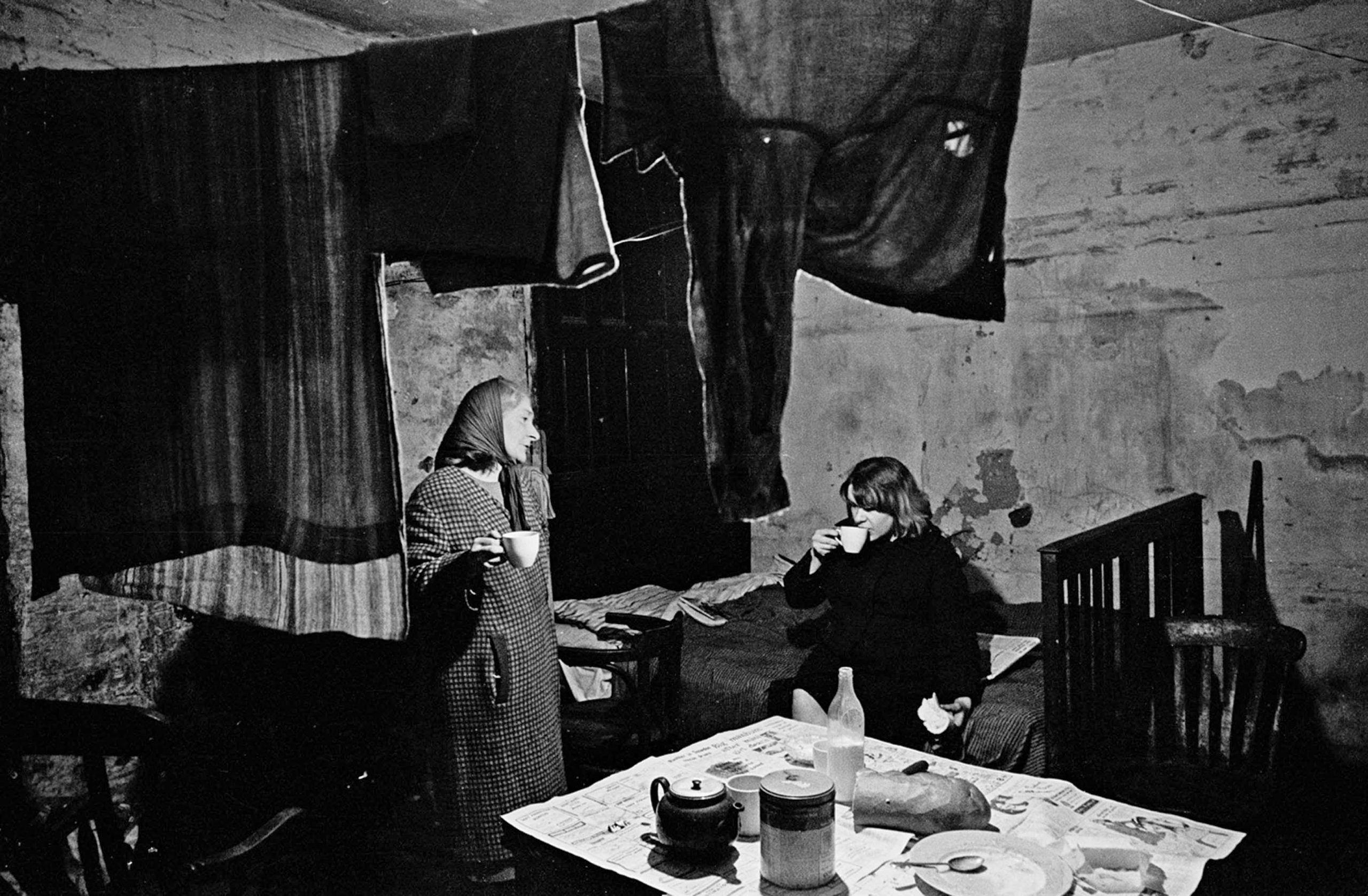
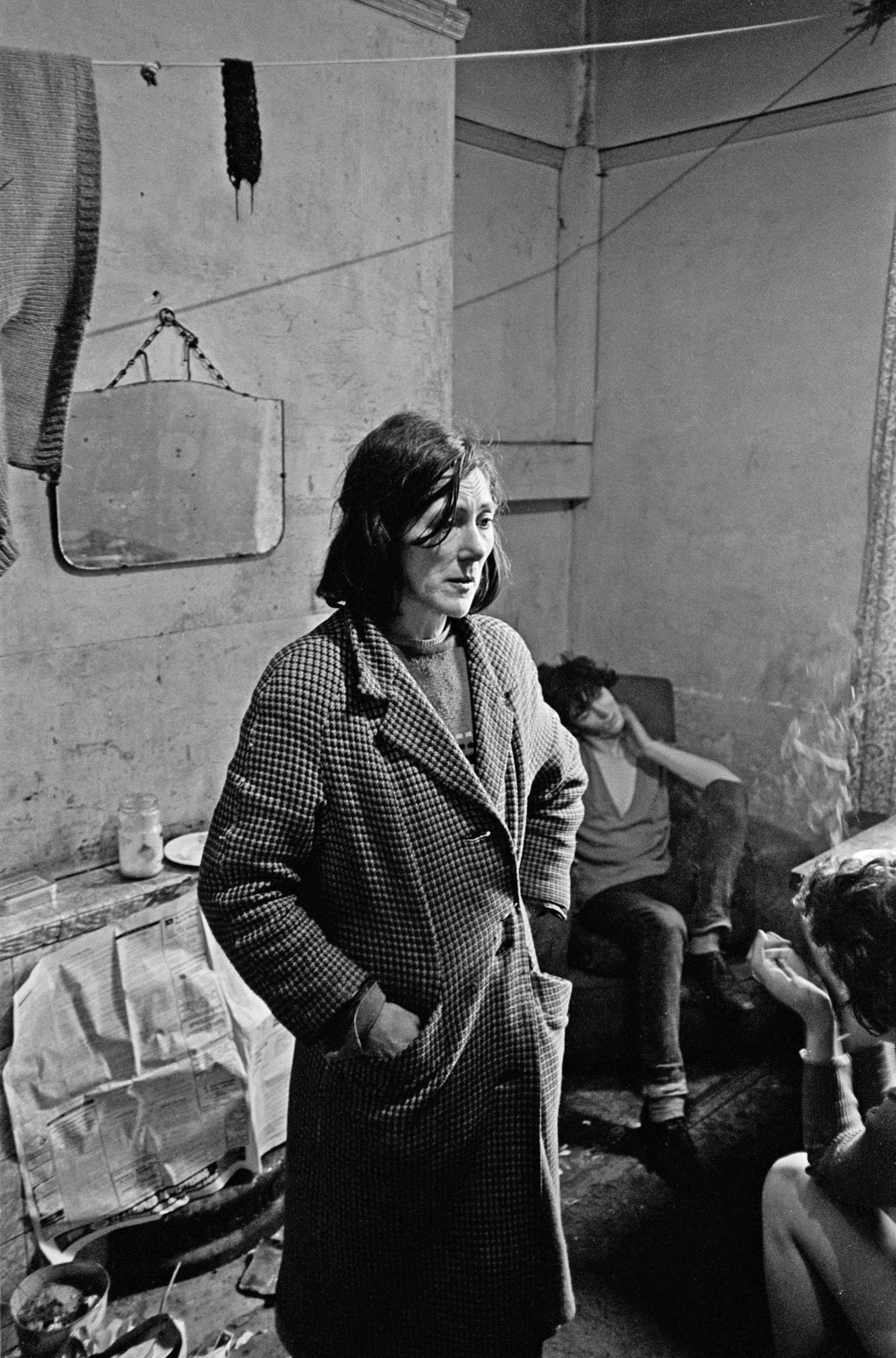
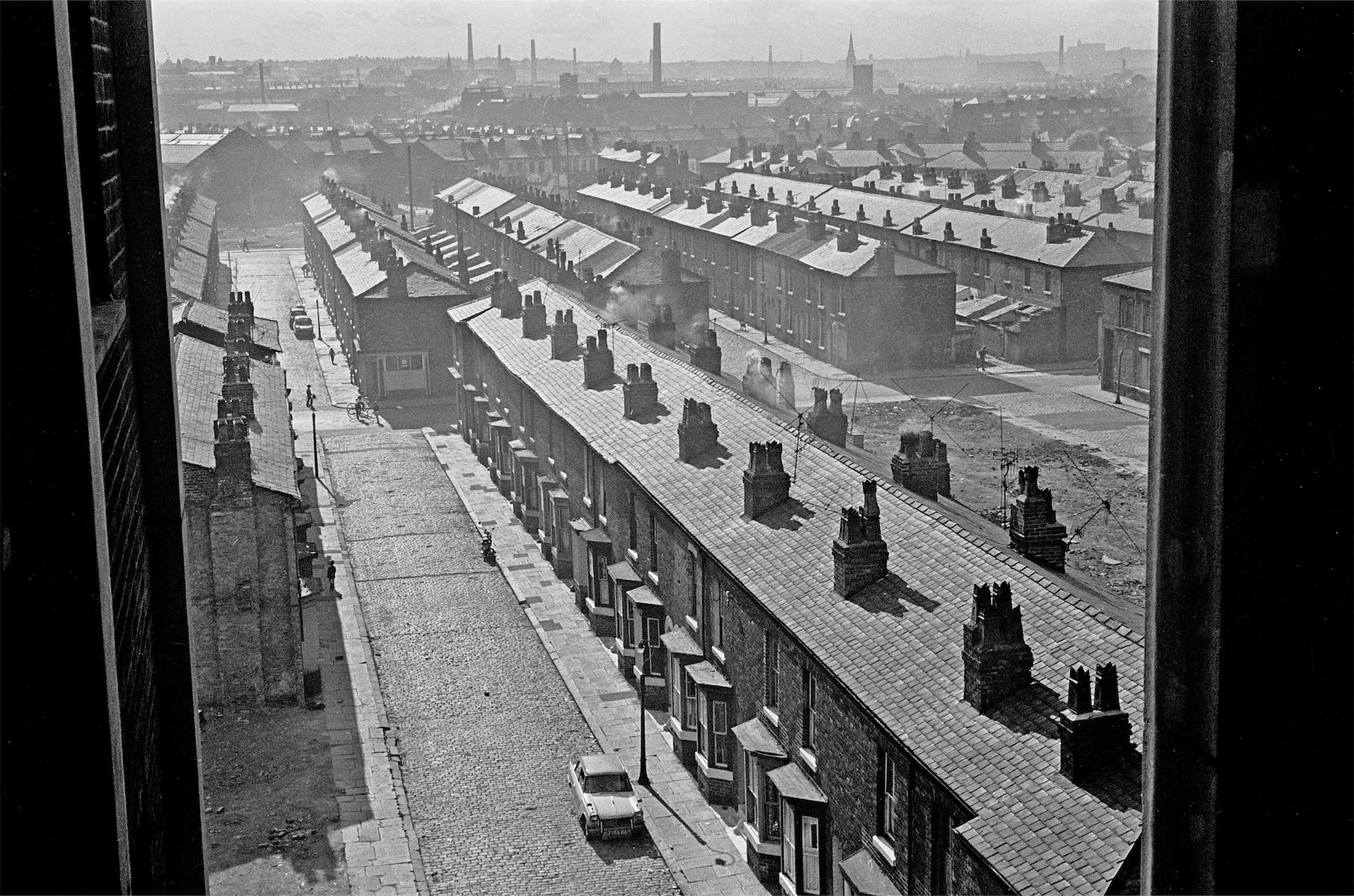
Home is out now on Setanta Books.
Follow Chloé Meley on Twitter.
Enjoyed this article? Like Huck on Facebook or follow us on Twitter.
You might like

In photos: Black Texas life since emancipation
Kinship & Community — A new photobook and exhibition showcases the rich culture, history and community of African American folks in the Lone Star State, whose existence in the region predates colonial Britain.
Written by: Miss Rosen

Youthful joy & end-of-era poignancy at a London school prom
Leavers — For several years, Lewis Khan documented young people as they celebrated the last of their school days and the completion of their exams. The series is now collated in a new self-published photobook and short film.
Written by: Zoe Whitfield

Harry Gruyaert’s vintage, kaleidoscopic scenes of New York
A Sense of Place — For 50 years, the Belgian photographer and Magnum Photos member has been capturing NYC’s colourful chaos. A new photobook and exhibition showcase his unique, technicolour view of the city.
Written by: Miss Rosen

Inside Lower Duck Pond, the nicest town on the internet
/r/HaveWeMet — With a population of 2,500 and no fixed location, the subreddit is a space for roleplaying citizens to solve mysteries, host fictional events and ultimately connect. In an internet that’s often divided and toxic, Vicky Jessop hangs out in one of its most wholesome corners.
Written by: Vicky Jessop

A major Nan Goldin exhibition is coming to London
You Never Did Anything Wrong — Opening at the Hayward Gallery in November, the show will debut a new film from the artist and activist, alongside a slate of recent work.
Written by: Jack Dennison-Thompson

Sepia splashed memories of Britain’s ’90s squatting and free party scene
Bygones — Moving into a Hackney squat at the age of 19, Tom Hunter spent years living on London’s edges, while documenting the vibrant, creative community and culture that it enabled. Huck’s art director Sam White chats to him about the freedom that existed, the collectivism and what’s been lost over the decades since.
Written by: Samuel White


