A visual guide to the hidden history of hip hop
- Text by Miss Rosen

“Rap is something you do. Hip hop is something you live,” KRS One memorably said, reminding fans that the culture of hip hop is more than just an MC on the mic. Hip hop is a style, an attitude, and a way of life that transcends all boundaries, be it cultural or political, and brings people together in celebration of black power, pride, and principles.
At the foundation of hip hop are DJs, MCs, B-boys and B-Girls, and graffiti – which represent the music, literature, dance, and visual arts. Although MCing (aka rapping) has become the most famous element, it’s the fruit of a tree with much deeper roots, one that Rhea Combs, curator of photography and film, and director of CAAMA, explores in the new exhibition, Represent: Hip-Hop Photography.
Represent takes work from Bill Adler’s Eyejammie Hip Hop Photography Collection as its departure point, visually sampling from the seminal archive that includes more than 400 iconic photographs by 60 leading artists including Charlie Ahearn, Harry Allen, Janette Beckman, Al Pereira, and Jamel Shabazz. For the exhibition, Combs has paired these works with historical photographs and other objects from the museum’s permanent collection, to illustrate the ways in which the innovative practices can be found in African-American history decades before hip hop was born in the Bronx.

WOMEN RAPPERS © Janette Beckman
For example, a portrait of Queen Latifah appears alongside ’20s blues singer Gladys Bentley, drawing a striking parallel between the two women who have endured public scrutiny and media speculation about their appearances independent of their work. These pairings add new layers of context and depth in order to show how hip hop is a natural continuation of the black experience in America over centuries.
Bill Adler, a music historian and former publicist for Def Jam, started the collection, which continues to bear and preserve the name of the Eyejammie Gallery, which he ran in New York City from 2003 through 2007. “I was running this gallery and putting together these shows, but in effect, I was creating the collection,” he explains. “I did my best not just to exhibit the photos but to also sell the prints. I might have been a little too early with this.”
“In 2003, I did a show devoted to images of Run-DMC and I pegged it to the 20th-anniversary release of their first single. I had people come to see the show and they dug a lot of the photos but no one was buying anything. I imagine the thought process might have been, ‘Wait a minute. I saw this photograph for the first time in Right On magazine in 1984 and I paid $2.95 for the magazine and now Bill Adler wants me to pay $200 for a print?’”

Collection of the Smithsonian National Museum of African American History and Culture, Gift of Chris DAZE Ellis, © DAZE
Although Adler didn’t sell many prints while the gallery was open, he created a solid collection of work that defined hip hop as it made its way on to the world stage. The collection, which was born out of Adler’s love for preserving music history and culture, was acquired by the museum in 2015.
“It has been tremendously gratifying to me for the museum to acquire the Eyejammie Collection because it confirmed my feelings about this material: that it was capital ‘A’ Art, capital ‘H’ History, and capital ‘C’ Culture and would continue to be of values in those ways,” Adler adds.
“Rhea had a really creative idea about what to do with my collection, and I was knocked out by it. Represent is a gem that speaks to the larger collection that the museum has – and it is nothing short of phenomenal.”

Collection of the Smithsonian National Museum of African American History and Culture, © Janette Beckman

KRS1 & Ms Melodie © Janette Beckman

Collection of the Smithsonian National Museum of African American History and Culture, © Janette Beckman

Collection of the Smithsonian National Museum of African American History and Culture, Photo by Al Pereira, © Al Pereira

Collection of the Smithsonian National Museum of African American History and Culture, Photo by Al Pereira, © Al Pereira

Collection of the Smithsonian National Museum of African American History and Culture, Gift of Antwan Patton
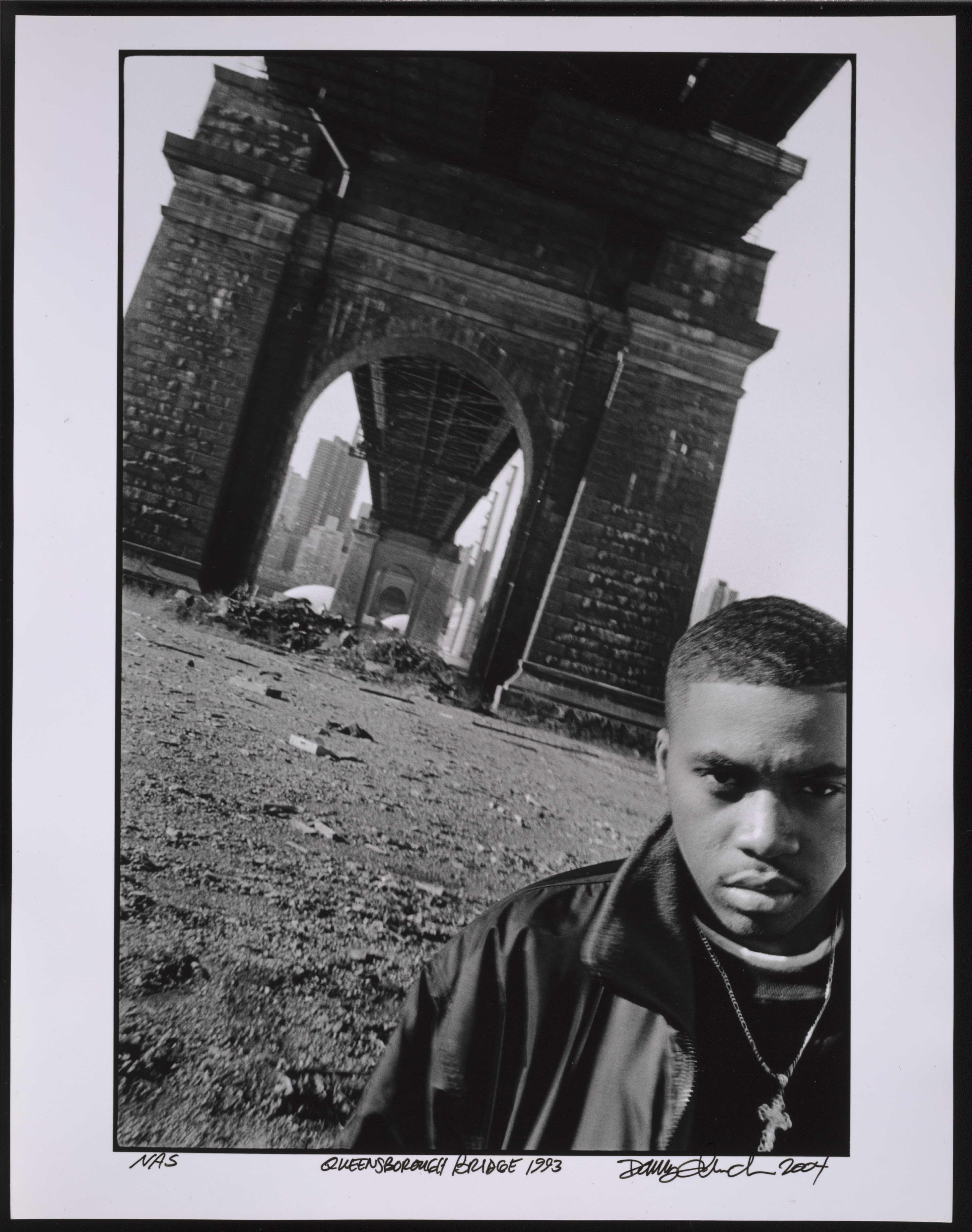
Collection of the Smithsonian National Museum of African American History and Culture, Courtesy of Sony Music Entertainment. Photograph by Danny Clinch. © Sony Music
Represent: Hip-Hop Photography is on view at the National Museum of African American History & Culture in Washington, D.C., through May 3, 2019
Follow Miss Rosen on Twitter.
Enjoyed this article? Like Huck on Facebook or follow us on Twitter.
You might like

In photos: Black Texas life since emancipation
Kinship & Community — A new photobook and exhibition showcases the rich culture, history and community of African American folks in the Lone Star State, whose existence in the region predates colonial Britain.
Written by: Miss Rosen

American Football: The One With The Feelings
Many moons — The Midwest emo architects transformed a college experiment into a coming-of-age soundtrack. 25 years on, their latest iteration sees them bottle the same magic for the ups and downs of middle life.
Written by: Tracy Kawalik

Youthful joy & end-of-era poignancy at a London school prom
Leavers — For several years, Lewis Khan documented young people as they celebrated the last of their school days and the completion of their exams. The series is now collated in a new self-published photobook and short film.
Written by: Zoe Whitfield

Harry Gruyaert’s vintage, kaleidoscopic scenes of New York
A Sense of Place — For 50 years, the Belgian photographer and Magnum Photos member has been capturing NYC’s colourful chaos. A new photobook and exhibition showcase his unique, technicolour view of the city.
Written by: Miss Rosen

In the pit at one of the UK’s last stock car & banger speedways
Stock Car Racing Isn’t Dead — Photographer Liam McCarthy spent time in and around the Arlington Raceway’s circuit, capturing the diehard community that keeps the sport alive.
Written by: Isaac Muk

Inside Lower Duck Pond, the nicest town on the internet
/r/HaveWeMet — With a population of 2,500 and no fixed location, the subreddit is a space for roleplaying citizens to solve mysteries, host fictional events and ultimately connect. In an internet that’s often divided and toxic, Vicky Jessop hangs out in one of its most wholesome corners.
Written by: Vicky Jessop


