Provocative photographer Roger Ballen delves into the abyss of the psyche
- Text by Sam Warner
- Photography by Roger Ballen

Roger Ballen’s work provokes a sense of immediate unease; ghoulish faces, deathly birds interspersed with smiling babies and haggard naked people in run down rooms, all in grainy black-and-white. In his latest book The House Project, the photographer takes the idea of living space as a metaphor for the human mind – in a collaboration with writer Didi Bozzini.
American-born Ballen has worked in South Africa for over 40 years and has been photographing the people on the edges of society in a way that tries to delve both under the subject’s and the viewer’s psyche. He has also worked with South African rap duo Die Antwoord, shaping much of their image, and has garnered both acclaim and derision in South Africa.
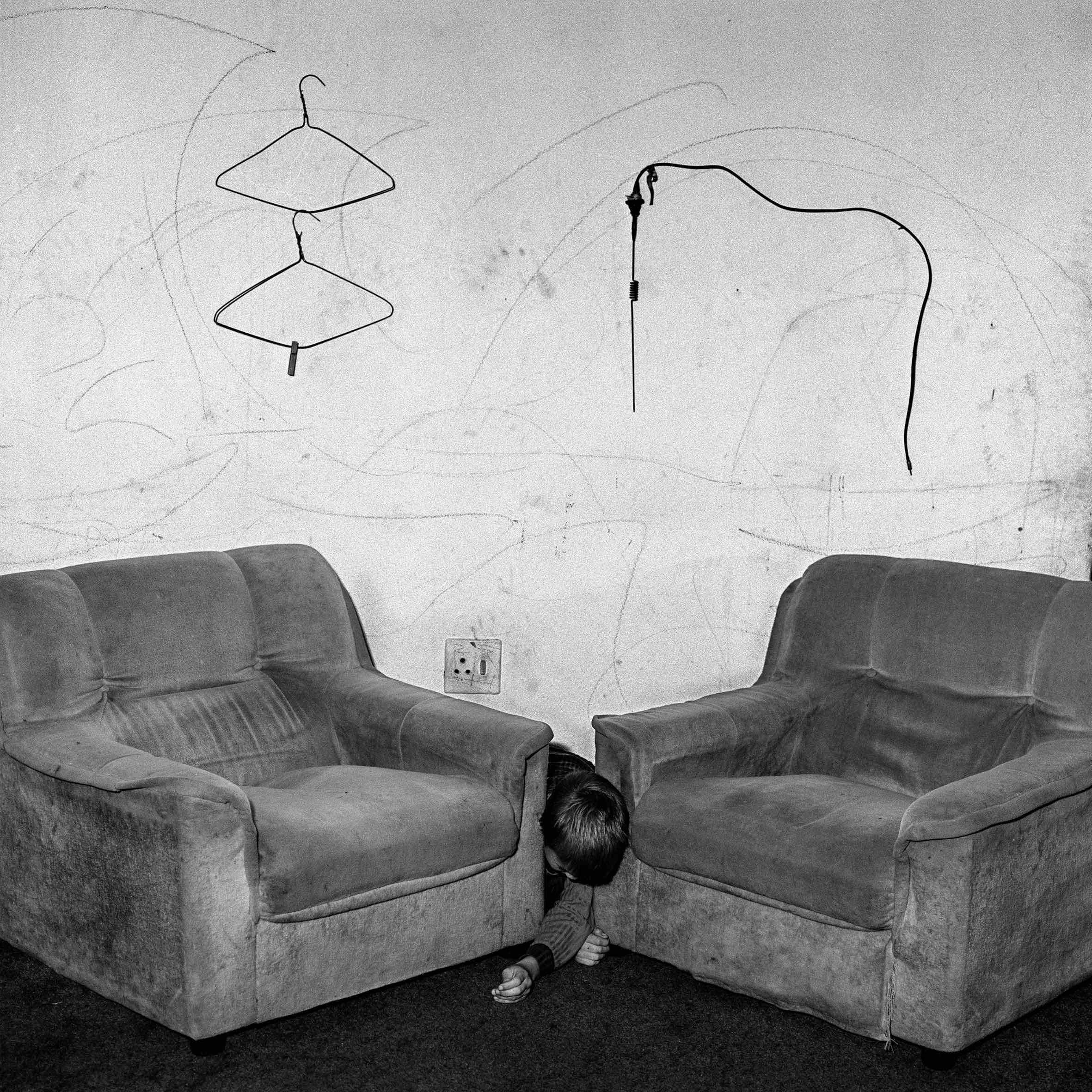
Squeezed, 2000, courtesy Roger Ballen
The House Project continues in that vein, aiming to create an almost Kafka-esque feel by blurring the lines between the real and imaginary, with each floor representing a different state of mind.
With the publication of The House Project, Huck talked to Ballen about it and what he is trying to express.
What are the origins of this project?
Didi and myself agreed in 2014 that it would be interesting to publish a book modelling the mind after a multi-level house. Following this, Didi wrote a text delineating the house into four floors, which created the basis for me to choose the images for the book.
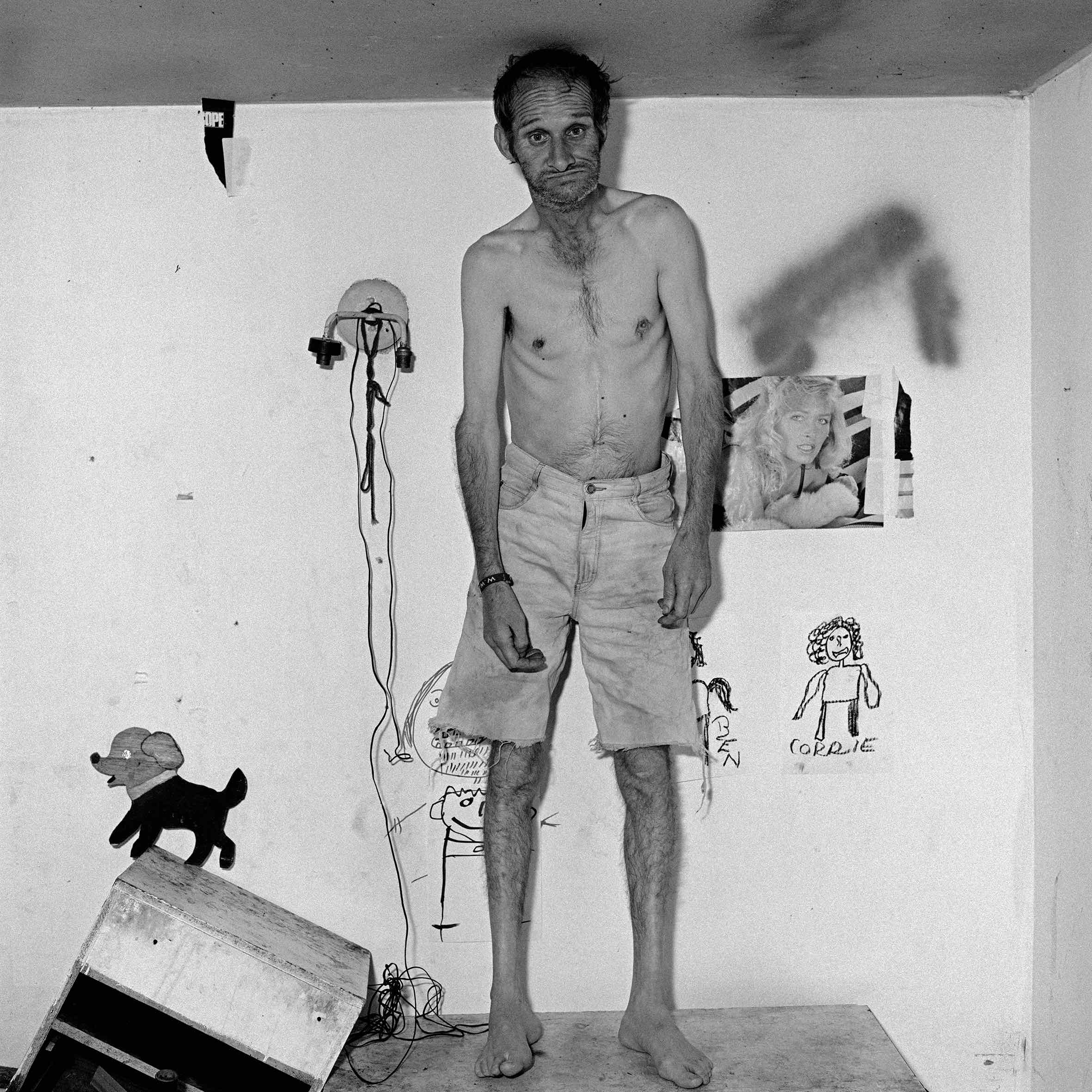
Bennie, 2001, courtesy Roger Ballen
How long have you been working with Didi Bozzini? How did you two come together?
Didi wrote a text for a show I had in 2013 at the Massimo Minini Gallery in Brescia, Italy. I was so impressed by his writing that I asked him to write the introduction to my Thames and Hudson publication Asylum of the Birds.
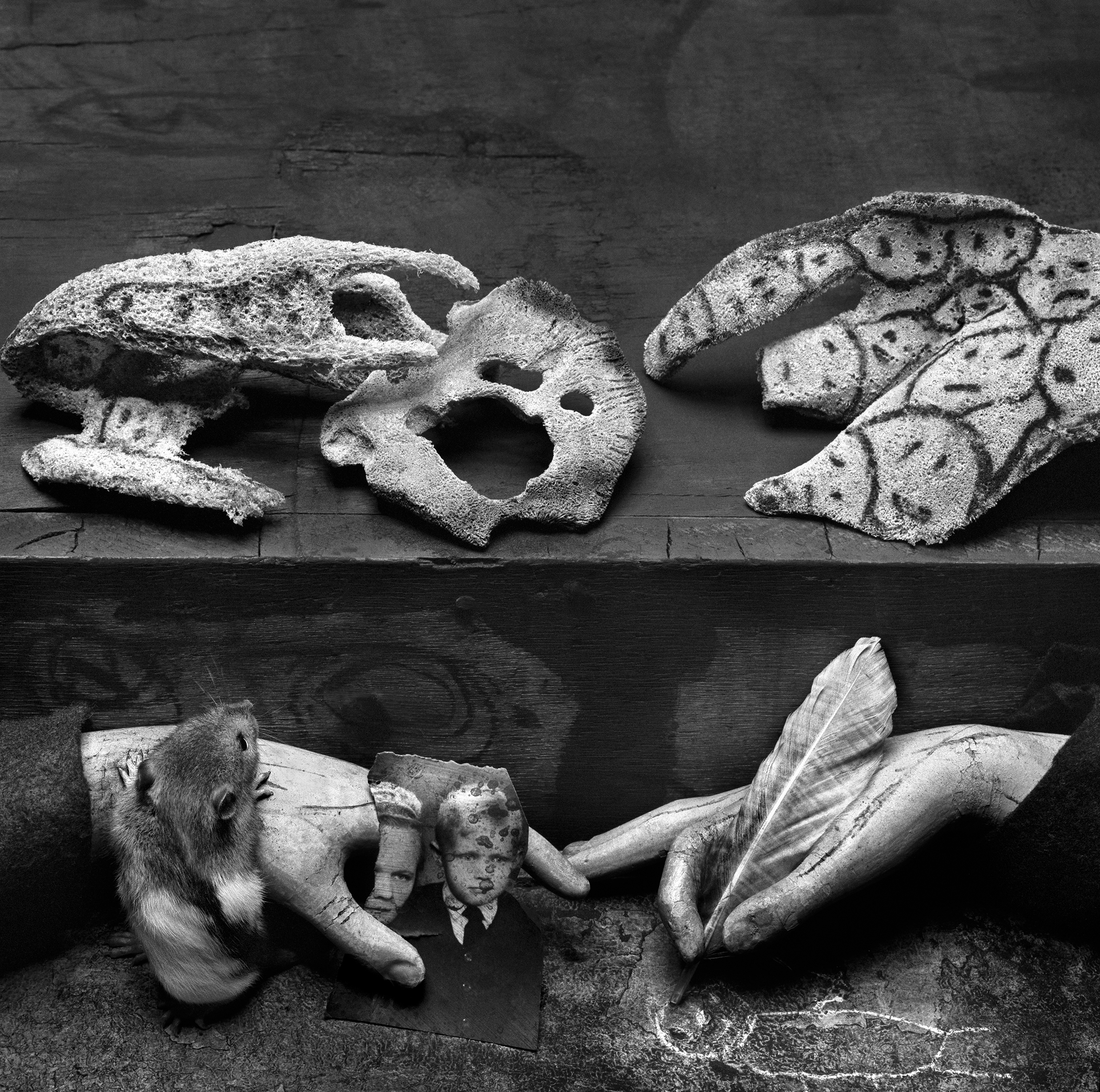
Complex Ambiguity, 2009, courtesy Roger Ballen
Why does the idea of the house as the mind interest you?
The house in the book contains many floors or levels that reflect different places of the mind. The basement in the house reflects primitive consciousness, the attic dreams. Nevertheless, it is important to realise that the mind is fundamentally impossible to comprehend in any objective way. This project is a best attempt to comprehend something beyond words.
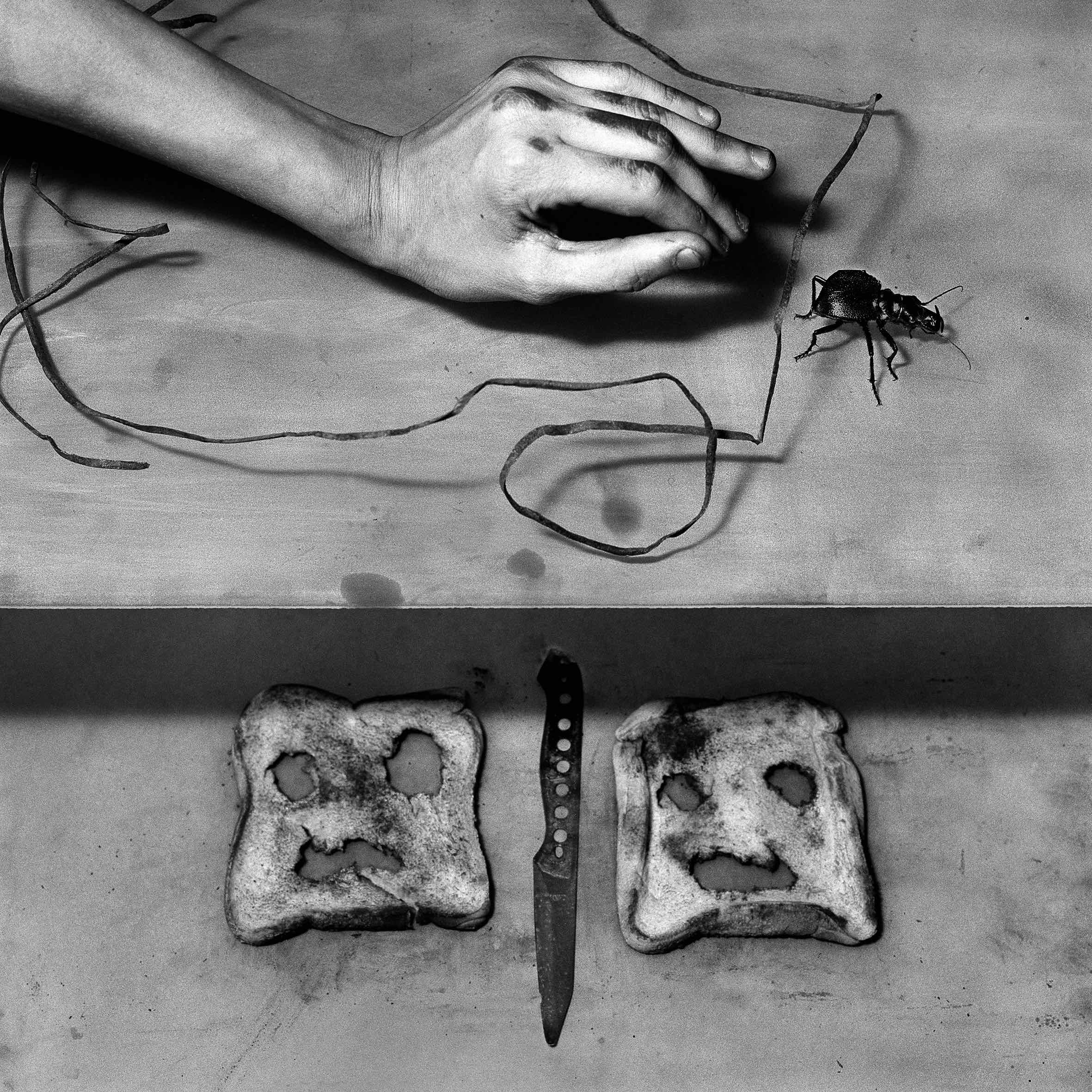
Culprit, 2009, courtesy Roger Ballen
What sort of subjects and houses were you looking for initially?
Most of the photographs in the book are unpublished images of mine. I tried to find photographs of mine for each floor that were characterised by a consistent aesthetic.
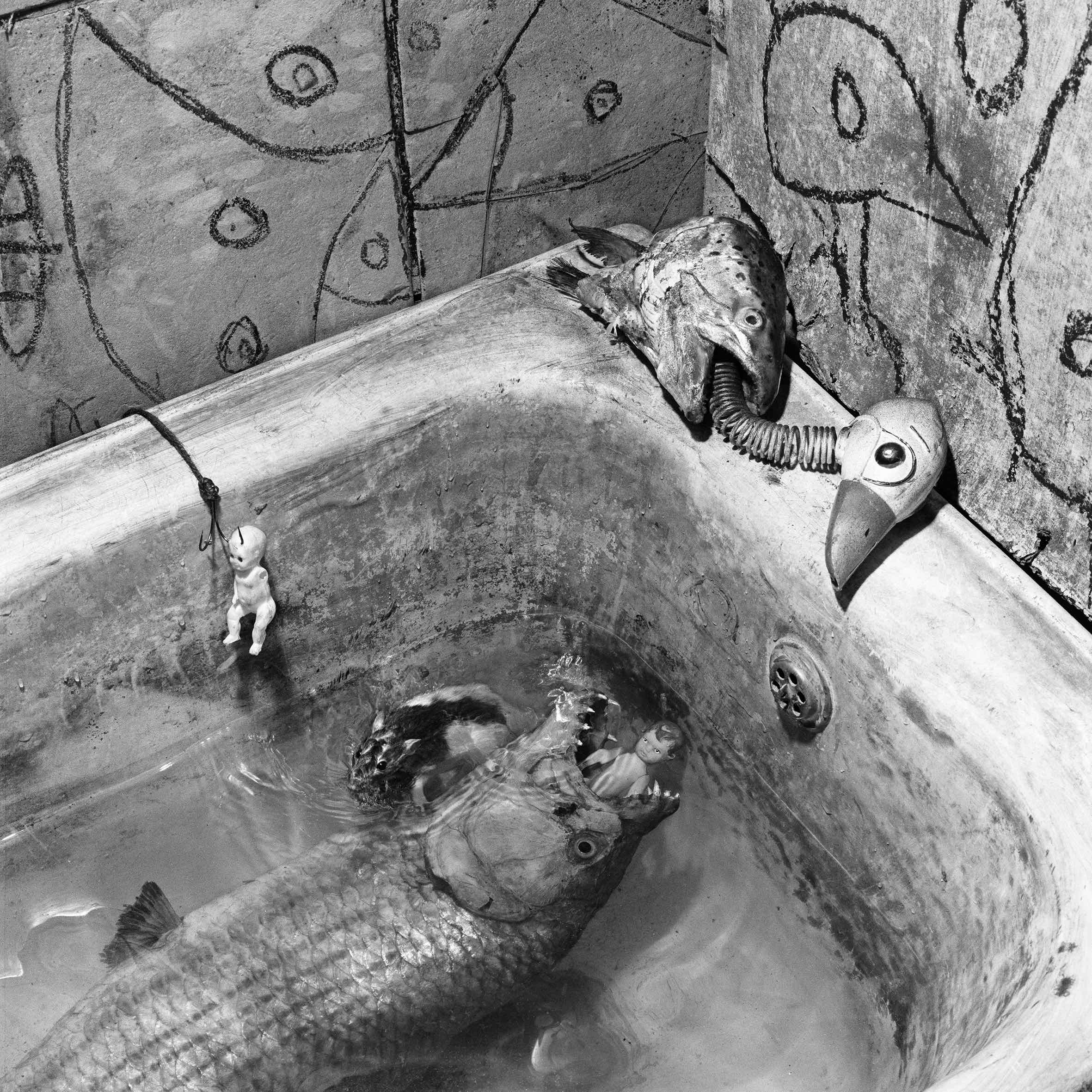
Displaced, 2011, courtesy Roger Ballen
How do you blur the lines between objective reality and the imaginary in your photography?
I do not use verbal logic to create my photographs. My photographs are visual statements that transcend verbal logic. I have often stated that my best photographs are the ones for which there are no words for.
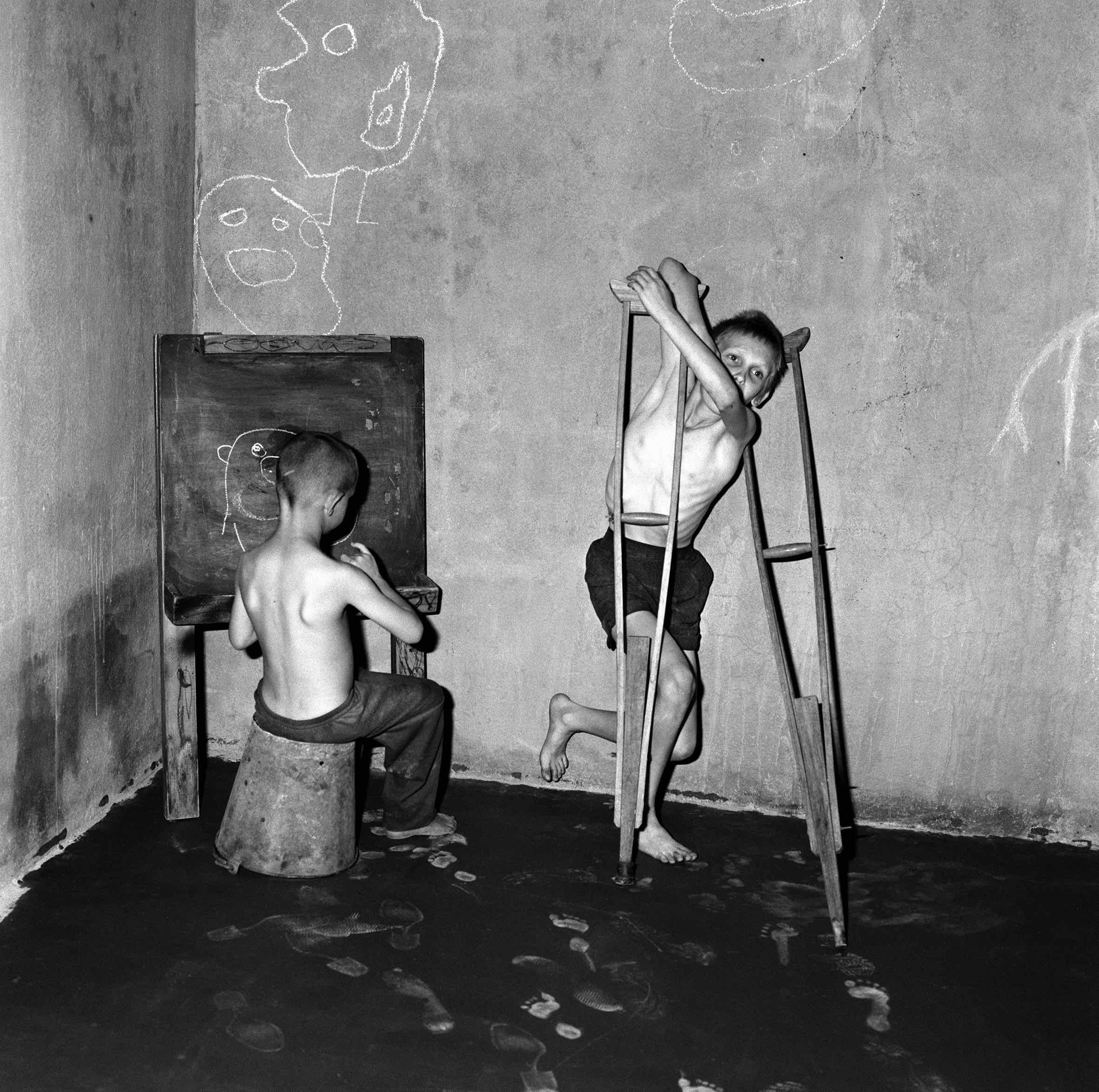
Jeff and Frederik, 2004, courtesy Roger Ballen
Do you aim to tap into the viewer’s subconscious with your work?
It is my hope that my photographs will lodge themselves in the viewers’ subconscious minds and transform their consciousness in a positive way. In my opinion, this is one of the key purposes of art.
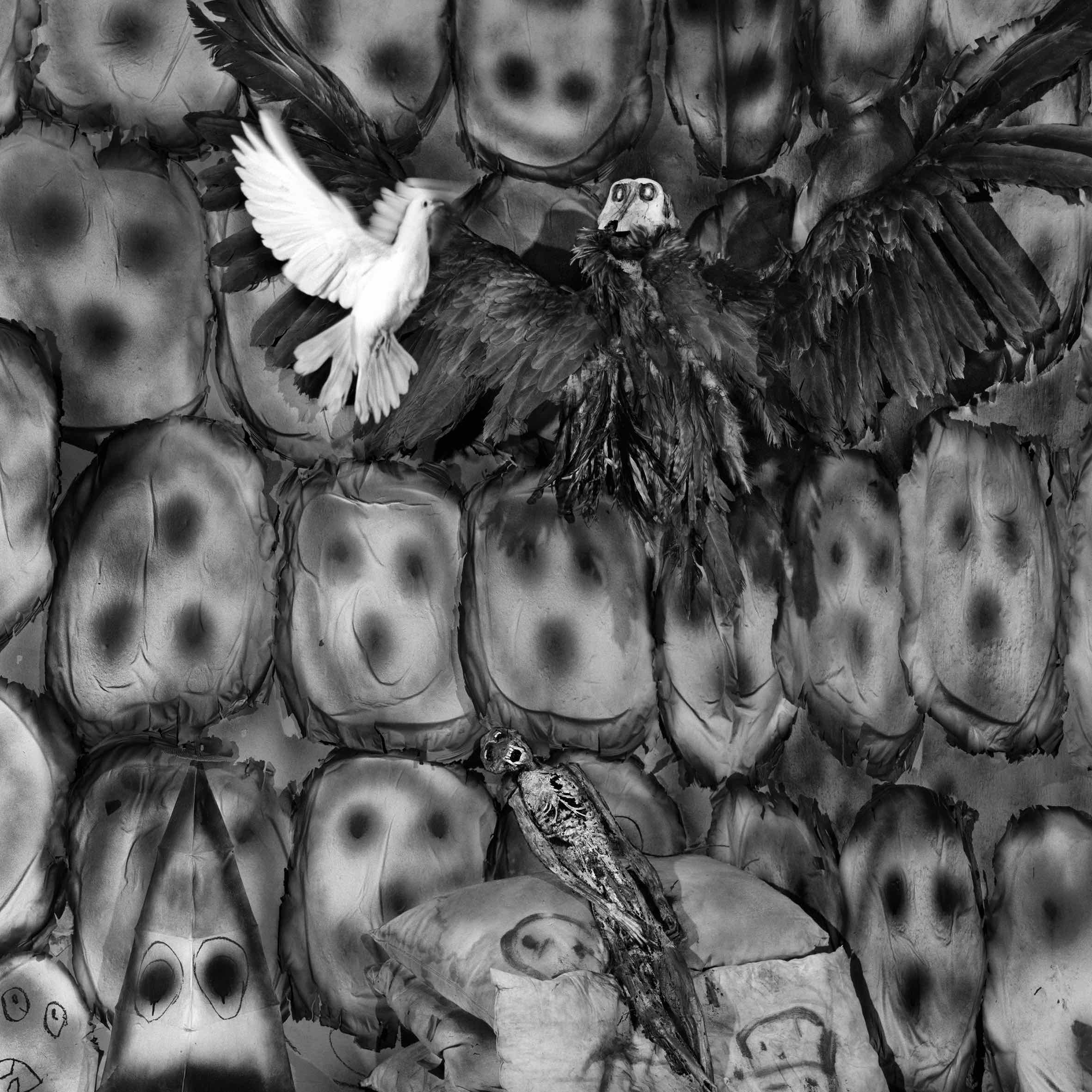
Good and Evil, 2009, courtesy Roger Ballen
The Kafka quote, “We photograph things in order to drive them out of our minds”, is written in the introduction of the book. Is that a mantra that you live by in your work?
The purpose of my work has always been existential. With each strong photograph that I produce I come a bit closer to understanding who Roger Ballen is.
The House Project by Roger Ballen & Didi Bozzini is out November, published by Oodee.
You might like

Jesse Glazzard’s messy portrait of queer friends, lovers and chosen family
The Sound of Dirt and Beauty — The photographer’s debut monograph explores tender, unpolished moments shaped by the people who he surrounds himself with, while offering a window into the UK’s working-class LGBTQ+ community.
Written by: Sunny Sunday

Behind the curtain at Alternative Miss World 1981
Olympia glamour — Running a subversive take on the traditional beauty pageant, the Andrew Logan organised event prioritised underground creativity and invention. Photographer David Corio went behind the scenes at its biggest edition.
Written by: Miss Rosen

New exhibition highlights British radical living over 200 years
Earthly Paradise — Taking place at the William Morris Gallery, it explores the homes and lives of artists, writers, musicians and more, as well as the conditions that allowed them to thrive.
Written by: Isaac Muk

What life on the Strait of Hormuz is really like
Southern Winds — Bandar Abbas based photographer Morteza Niknahad has been capturing the diverse communities and stories of his local region since he first picked up a camera. His new series highlights the human impact of war.
Written by: Isaac Muk

Nick Haymes’s intimate portrait of his family’s life
Chronograph — Over 25 years, the photographer documented his son’s lives as they grew into adults. The resulting photobook is an exploration of the passage of time, as well as the optimism of youth.
Written by: Miss Rosen

Kristina Rozhkova’s scatty, confronting portrait of captivity
Gut Feeling — The Russian artist’s 2024 arrest and subsequent detention opened her eye towards the omnipresent dynamics of power and control. Her new photobook is a stark exploration of being trapped.
Written by: Isaac Muk


