How the pulse of house music keeps South Africa connected
- Text by Mohato Lekena

At a venue on the outskirts of Cape Town, Move D drops one funk classic after another, a sea of waving hands lost in the groove.
Reclining on a couch one level above it all is deep-house artist Jazzuelle, his head covered by a sweaty towel. It makes him look like a boxer post-brawl but, in reality, he’s just stolen the show at Stay True South Africa by Ballantine’s and Boiler Room.
Stay True Journeys is a series of live broadcast events featuring past, present and future legends of the world’s most authentic music scenes. When the showcase first visited the country last year, in Johannesburg, it uncovered just how much of a dominant force dance is here.
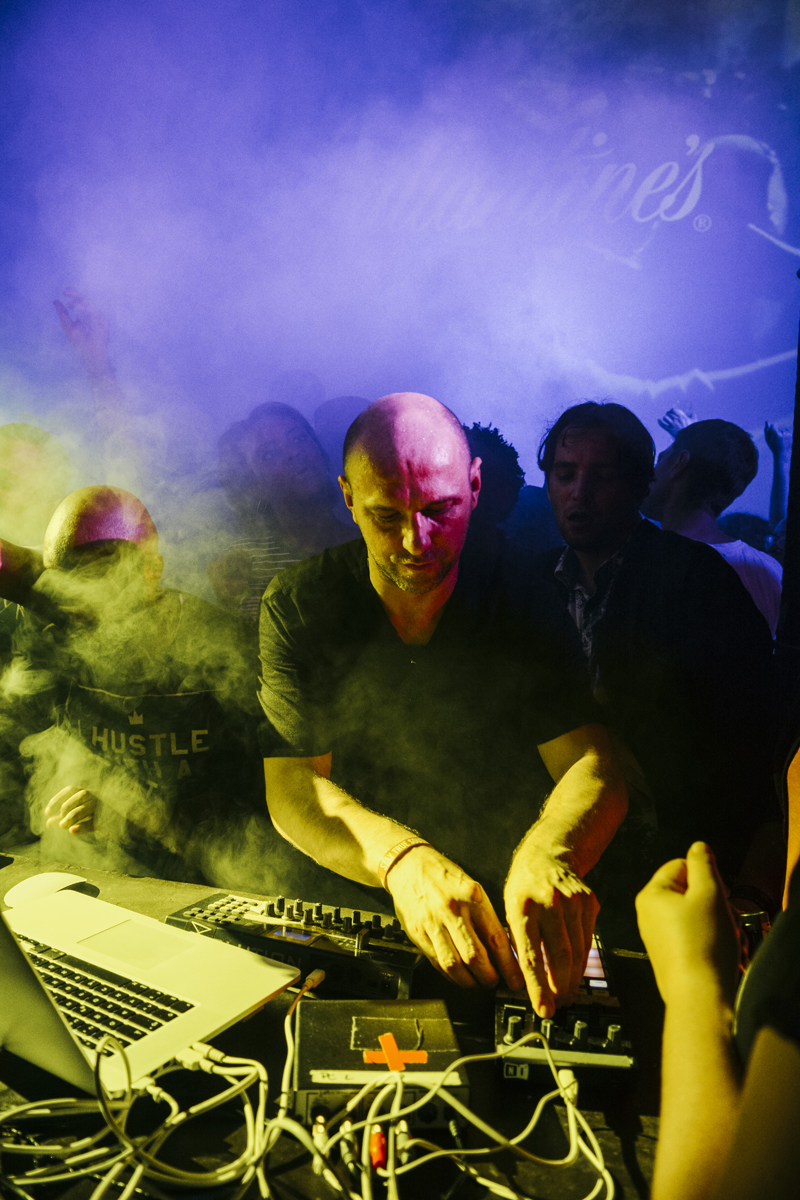
Tonight’s party is a continuation of that exploration – one explicitly focused on deep-house in the Cape – but the choice of location puzzled many at first. This city isn’t exactly known as a stronghold in house music.
“I grew up here…” says Jazzuelle, before trailing off reluctantly. “But Joburg rewards artistic freedom more, especially financially. You can be a house artist and also live off of what you’re doing.”
Deep-house DJs are superstars in South Africa, where more house music is consumed than in any other country.
Its bare structure and repetitive formula allows for freedom of expression while staying true to an established form – a recipe so simple that it becomes easy to embellish it with regional flavours.
“That’s the inner culture of house music,” says DJ Henrik Schwarz, before his set. “It’s open and made for open minded people, so it’s much easier to connect with.”
Every major city in SA has its own unique take on the genre, produced specifically for its own inhabitants.
Johannesburg has the jazzy vocal house of Micasa and Black Motion. Pretoria house is defined by the sparse, kitsch sounds of Mujava and Bujo Mujo, while further up north you can find DJ Spoko’s frantic ‘Bacardi house’.
The east coast, meanwhile, boasts the Kwaito-inspired Durban house of Big Nuz as well as the likes of Rude Boyz’s GQOM, deep house’s spiritual antecedent.
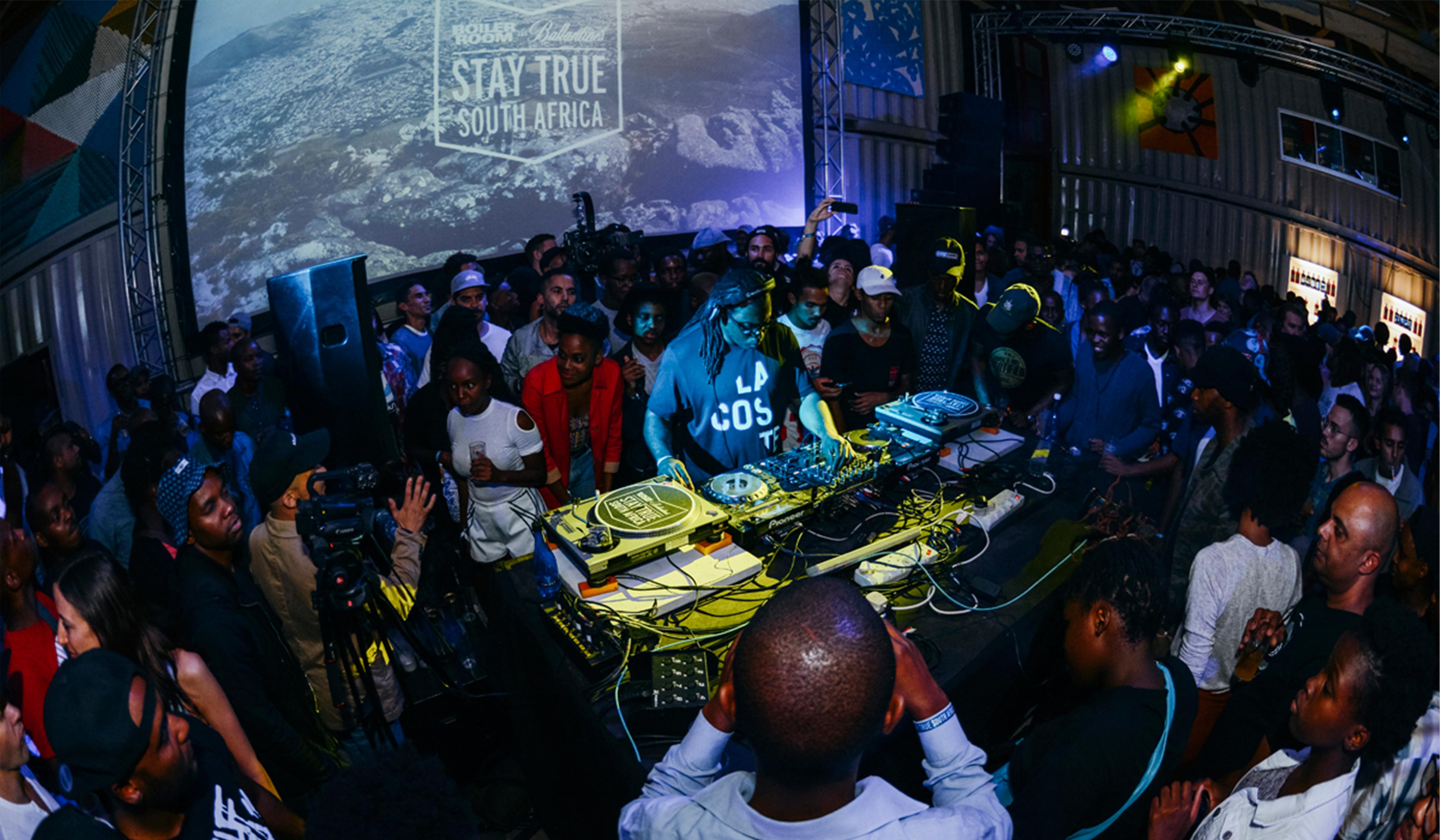
The only city missing here is Cape Town. A geographical and social disconnection between its city centre and the poorer township areas means that house – still predominantly considered ‘black music’ – thrives on the outskirts.
That’s why Boiler Room & Ballantine chose to host this party in Langa, Cape Town’s oldest township, which was established prior to the apartheid era designated for Black Africans.
“There is no more local,” says Henrik Schwarz. “There’s just a world sound. And to stand out, you should be very personal in your music – the more different your ideas, the more interesting.”
That may be true for the rest for the world but, in South Africa, musical connections tend to happen more in person than online. Only a third of the country has broadband access, making regional movements, local styles and showcase parties all the more salient.
It’s fitting, then, that this event takes place at Guga Sthebe’s, a brightly coloured cultural centre dedicated to empowering the local community. Hundreds of tickets had been reserved for Langa residents but, tellingly, just as many inner-city kids have made the trek too.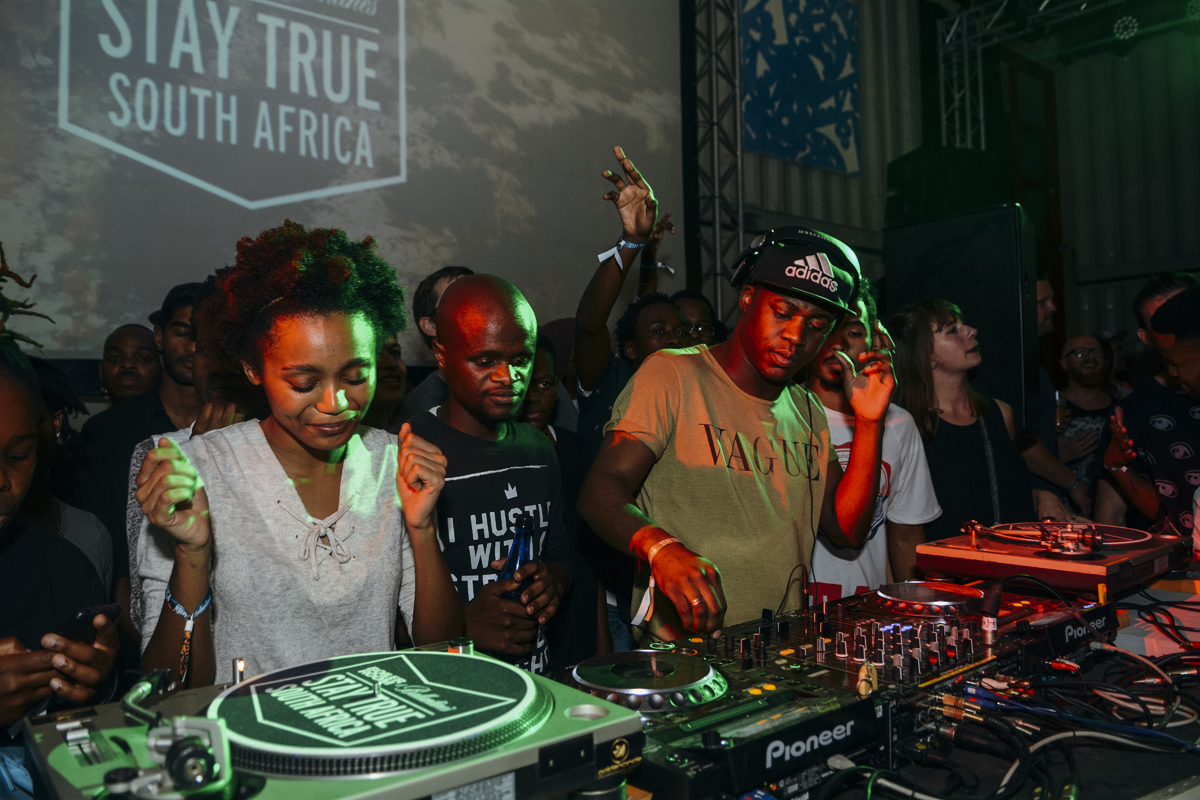 Equally as diverse are the sounds of each set, which mixes local names – DJ Fosta, Jazzuelle, Jullian Gomes and Kid Fonque – with international headliners Move D, Fred P and Schwarz.
But as the night hits full flow, it becomes impossible to tell who is from where. Just absorbing the make-up of the audience – from the macro-level movement of the crowd to the small interactions between revellers – becomes hypnotic.
This is what Cape Town needs more of: a way of forcing different worlds together so that its scene can compete both within South Africa and on the world stage.
“Hopefully what we’re doing here inspires some kids,” says Jazzuelle. “This party was to celebrate deep house and the response proves that the scene has potential.
“That’s why I was happy when everyone was around me on stage. I was like, ‘Yeah, let’s all be seen together! Let’s show the world what we’re about.’”
Head here over the coming week to see all the sets from the Ballantine’s Scotch Whisky x Boiler Room: Stay True South Africa event.
Enjoyed this article? Like Huck on Facebook or follow us on Twitter.
You might like

Green Man is more than a music festival
Planting roots — For nearly a quarter century, the fiercely independent weekender has been flying the flag for Welsh arts and music. As an ecosystem now bubbles around it, Anna Stafford meets the people who keep the fire burning.
Written by: Anna Stafford

Julian Cashwan Pratt: “We fought security until the cops showed up”
Hard Feelings — The lead singer of Show Me the Body joins Rob Kazandjian’s column on fatherhood and masculinity to talk about mentors, scrapping Zionists at shows, and finally making his father proud.
Written by: Robert Kazandjian

Lost photos from the heyday of punk and new wave
Crash Bang — DB Burkeman’s latest photobook unearths photographs from his younger years as an aspiring music photographer, which sat undeveloped in his family home for decades.
Written by: Miss Rosen

Analogue Appreciation: Xmunashe
Make Yourself At Home — In an ever more digital, online world, we ask our favourite artists about their most cherished pieces of physical culture. Today, it’s elusive freeform explorer Xmunashe.
Written by: xmunashe

Grainy, yearning memories of Europe’s ’90s free rave heyday
Never Alone — A new photobook from Cheyenne Clementi and Valentina Morandi presents pictures they made over seven years while touring the continent as part of the Tekno Mobil Squad soundsystem crew. It archives parties, people and a lifestyle largely consigned to the past.
Written by: Isaac Muk

As Hanoi’s nightlife faces raids & repression, its underground scene modulates
Spaces Between the Beats — Tensions between nightlife and authorities have grown in recent times, as police target venues and their patrons with increasingly frequent drug testing and searches. With clubs becoming hostile spaces as a result, Hanoi’s electronic music community is finding new spaces and forms of expression, reports Martin Guttridge-Hewitt.
Written by: Martin Guttridge-Hewitt


