The rappers who took down an African 'dictator'
- Text by Alex King
Music has an extraordinary power in Africa. It can be used to tell stories, preserve memories, and even power revolutions.
In her gripping documentary The Revolution Won’t be Televised, Senegalese filmmaker Rama Thiaw explores how two of the country’s most popular rappers founded a youth resistance movement, Y’en a Marre (We Are Fed Up), that toppled the country’s unpopular leader, former president Abdoulaye Wade, whose rule was marred by persistent corruption allegations.
This documentary is the second volume of a trilogy which investigates the relationship between politics and culture. Rama began with Boul Fallé, the Way of Struggle, shot in 2009, which looks at the political parallels within the revival of traditional wrestling in the Dakar suburbs where she grew up and will be completed with a film that follows six reggae musicians in a variety of countries.

With the cultural movements she explores dominated by young people, what is it about the intersection of youth culture and politics that fascinates her? “I’m not just interested about the impact of youth culture on politics,” she explains. “I’m most interested in the impact of music culture. Music in Africa music is not just entertainment, it’s something really specific, which I’ve never found elsewhere, in Europe or the US, for example. For us, music is deeply engrained in our society and our history. To tell our history, we use song. Music is not just about having fun and forgetting about the problems of life. No, it’s a cultural, social and political tool for our daily lives.”
Hip hop plays a particularly important role in Senegal, transmitting politics and other official information which is usually delivered in French, to people across the country who speak Senegal’s variety of languages. “Hip hop in Senegal is like rock and roll was in Europe and the US in the ‘60s,” she says, “people who want to change the country follow this music. It’s not gangster rap, but conscious hip hop that is used to convey information, engage in politics and challenge the government. I wanted to make this film because I believe that is what hip hop should aspire to.”
Rappers Thiat and Kilifeu, who are part of Keur-Gui Crew, have embodied the activist spirit at the heart of hip hop in Senegal for two decades. “Unlike some artists who use politics as a marketing gimmick, they live their activism in their daily lives,” says Rama. “They are really committed artists who care strongly about social problems.”
Rama had long been interested in making a film with the pair, but when president Abdoulaye Wade announced his decision to modify the constitution and run for an illegal third term, it incensed them to make their greatest contribution to cultural and political life in Senegal yet. Founded in December 2010, Y’en a Marre was Senegal’s first post-independence youth resistance movement and brought young people out onto the streets to challenge Wade’s anti-democratic power grab, which Rama argues made him a “corrupt African dictator.”
“To characterise this primarily as a youth movement would be incorrect,” Rama explains. “In Senegal, we have a paradox in that 60-70% of the population is under 30, so it’s a very young country. But we’re lead by incredibly rich and incredibly old men. So, when you have these people coming together in opposition, it’s not a youth movement but a national movement.”
Capturing Thiat and Kilifeu’s lives from an insider’s perspective, she documented their meetings, campaigning, arrests, concerts and personal strains as Y’en a Marre grew from a small collection of their fans to a pivotal political force. Joining forces with other opposition and civil society groups, it became the M23 pro-democracy movement that eventually unseated Wade in April 2012 and ushered in a wave of progressive reforms.
The success of Y’en a Marre has already inspired 20 copycat movements across Africa, in New York and Paris. In just three days, its offshoot in Burkina Faso, the Balai Citoyen movement succeeded in unseating president of 27 years Blaise Compaoré.
So, what are Rama’s hopes for the future of Y’en a Marre? “What has happened is really significant because we have improved participatory democracy,” she says. “Foreign media don’t talk about what’s going on in Africa, which is really positive – not just for us, but elsewhere too. In so many countries, politics is totally disconnected from the needs of the population. Yet European media are focussed on the migrant crisis and the ‘invaders’, so they don’t see our example of building a bridge between the population and the government. I’ve got high hopes and high expectations for where this can go.”
The Revolution Won’t Be Televised will be screened at Ritzy Brixton on October 30 at 18.30 as part of Film Africa 2016, October 28 – November 7. The screening will be followed by a Q&A with Rama and live music from Keur Gui.
Enjoyed this article? Like Huck on Facebook or follow us on Twitter.
You might like

Is Field Maneuvers the most fun time ever? Yes probably
Collective joy — Huck’s art director Samuel White went to the 2026 edition, braving a wet start and interviewing FLINTA* collective and arm wrestling legends Uhaul Dyke Rescue in the process.
Written by: Samuel White
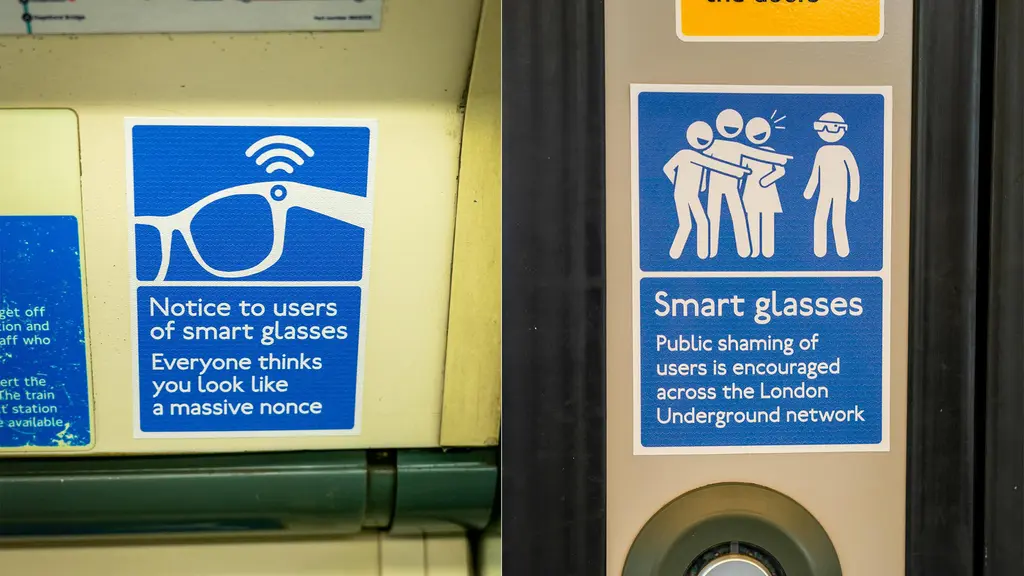
Activists slam “pervert glasses” in new guerrilla campaign
Everyone Hates Elon — Stickers have appeared on the London Underground network, criticising the wearable technology’s covert filming capabilities.
Written by: Isaac Muk

Dan Lacey: “BMX is forever evolving”
Overground — Steph Pomphrey caught up with the two-wheel legend after his latest meet in east London, chatting about fatherhood, music and action sports within the outdoor industry.
Written by: Steph Pomphrey

New exhibition highlights British radical living over 200 years
Earthly Paradise — Taking place at the William Morris Gallery, it explores the homes and lives of artists, writers, musicians and more, as well as the conditions that allowed them to thrive.
Written by: Isaac Muk

Pink Floyd’s Roger Waters joins team of new Palestinian resistance documentary
Freedom Theatre — Directed by Rishi Pelham, the film spotlights a theatre operating in the Jenin refugee camp.
Written by: Ella Glossop

Green Man is more than a music festival
Planting roots — For nearly a quarter century, the fiercely independent weekender has been flying the flag for Welsh arts and music. As an ecosystem now bubbles around it, Anna Stafford meets the people who keep the fire burning.
Written by: Anna Stafford


