The street artist responding to Greece's social turmoil
- Text by Alex Robert Ross
- Photography by Bleeps.gr

As paint chips off of aging buildings on the streets of Athens, decay gives way to colour. Street art is ever-present in the ancient Greek capital, towering over the city on housing blocks and reimagining great swathes of the city’s architecture.
Bleeps.gr has been at the forefront of the Athenian street art movement for over a decade. Growing out of the still-thriving underground graffiti scene in Bristol in the mid 00’s, his work has spread beyond his home in Greece to every corner of Europe. He has, typically, kept his identity under wraps – it’s a part of the game – but he refuses to stay silent on the political issues that he draws out in his work. “I don’t think I can compete with the mass media and the political elite,” he tells me via email from Athens. “I won’t keep quiet though.”

By definition, Bleeps’ work is socially involved. The use of public space at the heart of street art draws graffiti artists into a conversation about society before the content of their work has been considered. And over the last seven years, even in the last week, the existence and content of Bleeps’ work has been intimately concerned with the economic crisis currently dominating media coverage.
It’s easy to paint the current Greek economic crisis in block colours. On the left, we’ve mostly united in favour of SYRIZA, seeing them as the radical alternative to the country’s hawkish creditors and the European Union. And on the right, the general consensus seems to be based somewhere between misinformation and old-fashioned racism, painting the Greek people as lazy, tax dodging and, as a result, the architects of their own downfall.
“Will you people stay in this path or jump off the train? Pardon us, we forgot to mention that the train is going fast.”
But Bleeps paints a very different picture of the situation on the ground. He did not participate in Sunday’s referendum put forward by the government – “a fiasco in the first place” – and says the only source of encouragement that he found from the situation was the high abstention rate. The referendum, he says, was “entrapping voters to express their opinion on a single pathway provided by the marching neoliberal policies: ‘Will you people stay in this path or jump off the train? Pardon us, we forgot to mention that the train is going fast.’”
This commitment to non-participation in the political process set forth by either Greek or European authorities manifests itself in his art. Though he’d been creating art before the financial crisis became apparent in 2008, he says his worked changed shape as the turmoil “forced people to look around for alternative type of discourse.” That discourse is grounded in activism and its artistry.
“It is not just a reclamation of the public space but… more a reinstitution of the public sphere. The properties I choose to create are usually ramshackle, from the neoclassical period, the mid 19th early 20th century,” he explains. “Through my art I delicately borrow from the public sphere. I add a discreet depiction of my view on various topics, including politics. This type of art is not immaculate but [rather] associated with an idealism springing from the notion of the multitude.”

He is sceptical of a global media portraying Greece in foreign terms, an institution that he says aims to “support, fortify and spread their capability to form a global consciousness. The reality presented abroad is hyperealistically nourishing a viewer with a burger and a beer in hand. Independent voices cannot reach vast majorities of individuals.”
The situation, he says, is being poorly portrayed and, in turn, misconstrued globally: “I think historians in the future will accumulate all the details of the present and provide a more unconstrained description of what has actually happened.”
“Right now? It’s just hazy.”
Check out more from Bleeps.gr
You might like

Landmark new exhibition is celebrating 50 years of female punk
God Save the Queens – The Museum of Youth Culture is bringing together rare photography, archive material and a one-night-only supergroup featuring members of X-Ray Spex, The Slits and The Raincoats.
Written by: Ella Glossop

Photographing America’s 20th century rebels
Rebels With a Cause — A new monograph looks back at Jean-Pierre Laffont’s extensive archive documenting counterculture, art, activism and more, shaping the country as it is today.
Written by: Isaac Muk

Sports Banger is throwing a party to mark 90 years since the Battle of Cable Street
“Fascists hate dancing” — The October event will bring DJs, live music, sound system culture and anti-fascist politics together in East London.
Written by: Ella Glossop
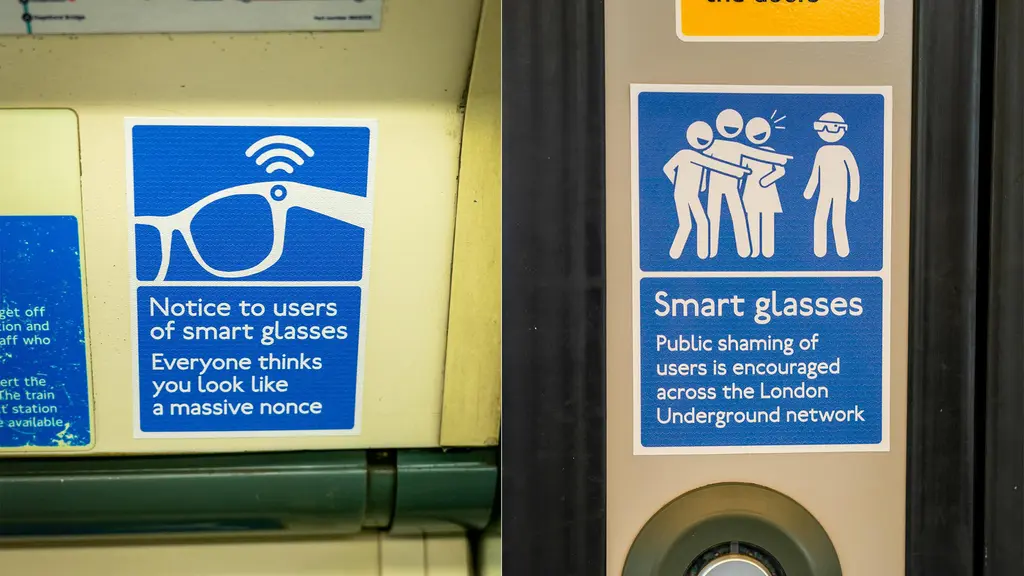
Activists slam “pervert glasses” in new guerrilla campaign
Everyone Hates Elon — Stickers have appeared on the London Underground network, criticising the wearable technology’s covert filming capabilities.
Written by: Isaac Muk

New exhibition highlights British radical living over 200 years
Earthly Paradise — Taking place at the William Morris Gallery, it explores the homes and lives of artists, writers, musicians and more, as well as the conditions that allowed them to thrive.
Written by: Isaac Muk

Pink Floyd’s Roger Waters joins team of new Palestinian resistance documentary
Freedom Theatre — Directed by Rishi Pelham, the film spotlights a theatre operating in the Jenin refugee camp.
Written by: Ella Glossop


