
Surreal scenes of Kim Jong-il surveying North Korea

Since it was founded in 1948, North Korea has become one of the most reclusive states on earth. The government controls the flow of information to its citizens who are neither allowed to travel abroad nor access the outside world through the internet.
Over the past seven decades, the Kim family has led an authoritarian state, using the Korean Central News Agency to distribute official images. In October 2010, Portuguese art director João Rocha launched Kim Jong Il Looking at Things on tumblr, showcasing propaganda photos of Supreme Leader surveying his empire.
The curious scenes of Kim in his trademark sunglasses and thick coif looking at biscuits, rubber boots, and jars of instant soup with the same pride as Louis XIV surveying Versailles quickly became an internet sensation. Their distinct mixture of formality, sincerity, and banality made the images instant camp — and ripe pickings for the newly emerging meme culture.
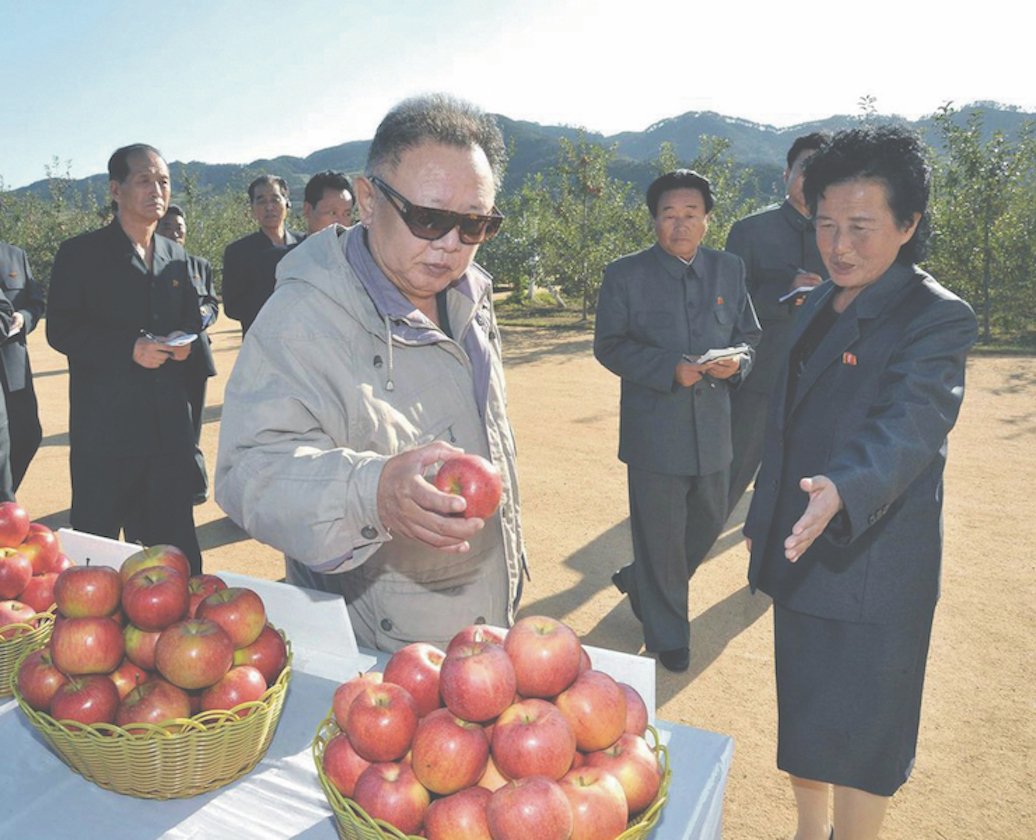
A photo released by KCNA shows North Korean leader Kim Jong-il visits a fruit farm in South Hamkyong Province
First published in 2012, JBE Books re-released Kim Jong Il Looking at Things earlier this year. Although Kim Jong-il died in 2011, his legacy still holds intrigue, and North Korea still feels shrouded in mystery. “It’s a fascination for the unknown. We can’t have real access, so we can only imagine the hidden and mysterious,” says David Desrimais, Director of JBE Books.
“But also it is spectacularly grotesque in our modern eyes: the construction of the leader, giant portraits of three generations, massive propaganda, parades, missiles launches, international relationships, and so on,” adds Desrimais. “This is all very theatrical in a terrible way.”
The repetitive nature of these official photographs only adds to their allure. Although the propaganda is transparent, it reveals nothing at all. Elevated to icon status, Jong-il can do as he pleases with subtle aplomb as he leads various contingents of military officials and dark-suited men in proud appraisals of watermelon, children, and geese. 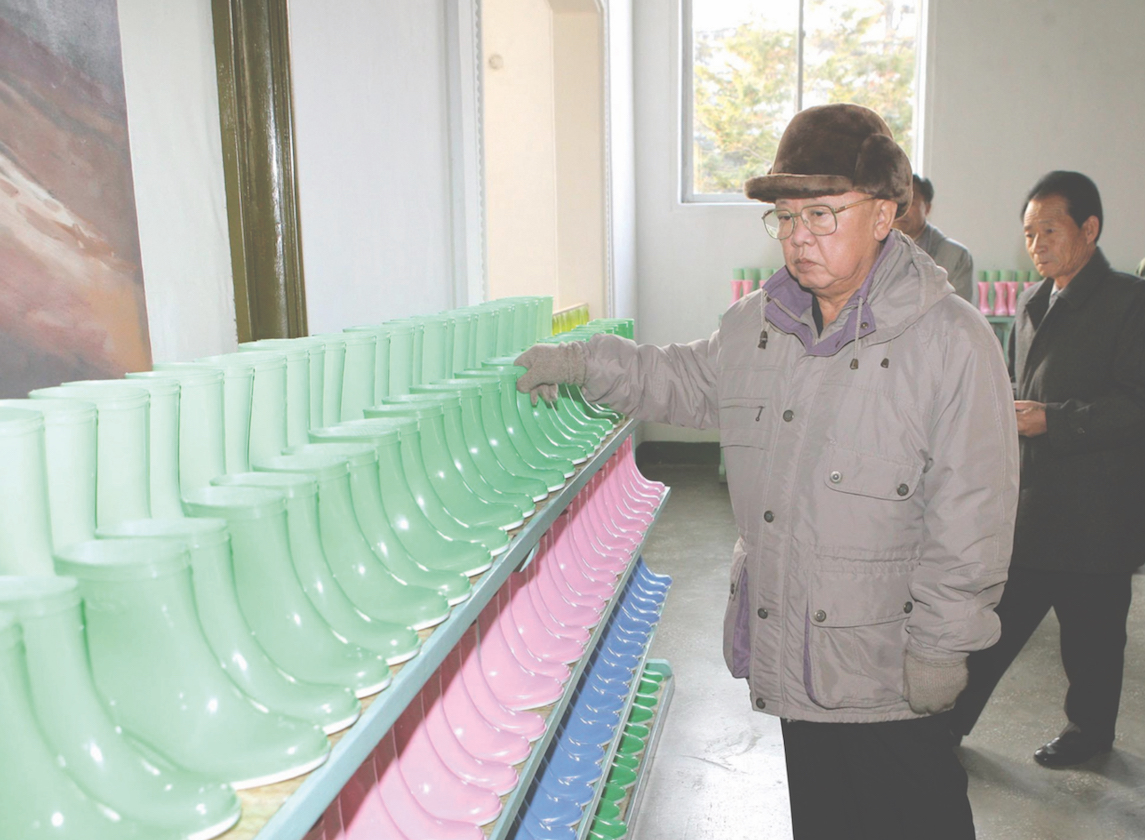
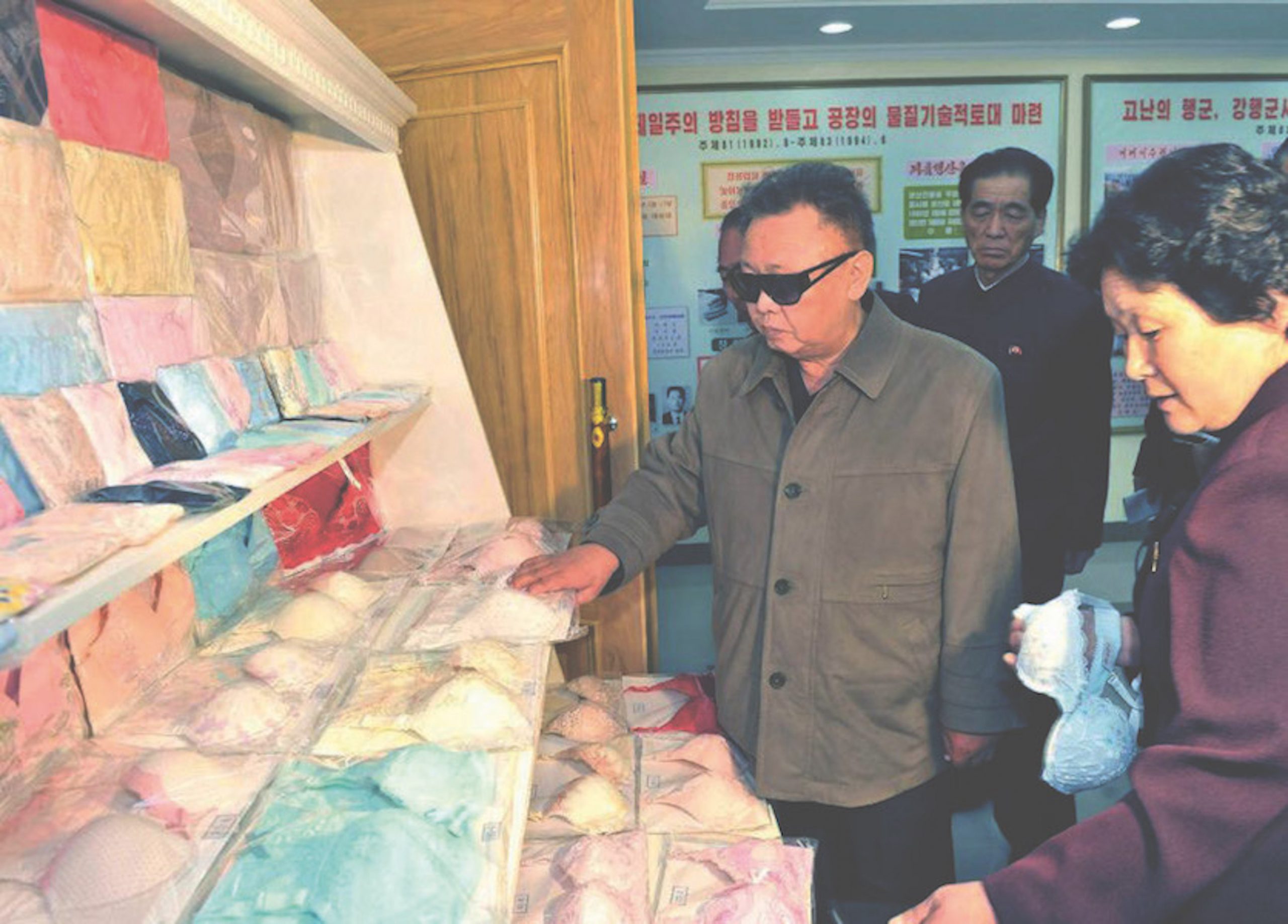
This undated photo released by North Korea’s official Korean Central News Agency (KCNA) on May 8, 2011 shows North Korean leader Kim Jong-Il (C) visiting the Rakrang Ponghwa Garment Factory in Pyongyang
After Kim Jong-il died, Martin Parr and Gerry Badger selected images from João Rocha’s archive for The Photobook: A History, Volume III, writing: “It ranges from the sublime to the ridiculous, but the unconscious humour in the images derive from the fact that, no matter how humble the object, each picture has been given the same portentous, formulaic treatment.”
“The photos give us insight into how they want to be seen inside and outside the country. The rest is pure fantasy and suppositions,” Desrimais says. “We have the feeling of seeing a glance at this secret country and [a desire] to laugh at the same time.”
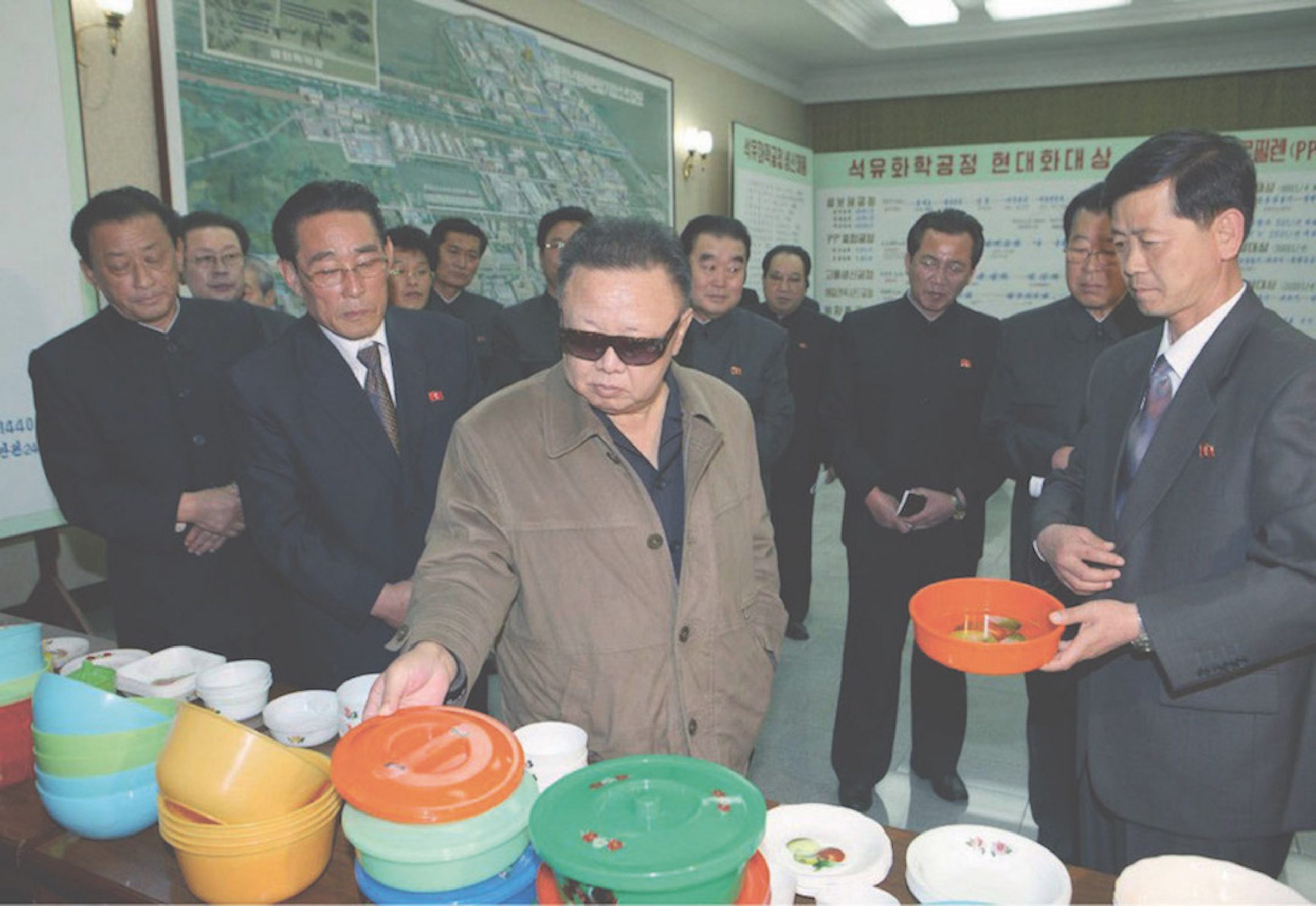
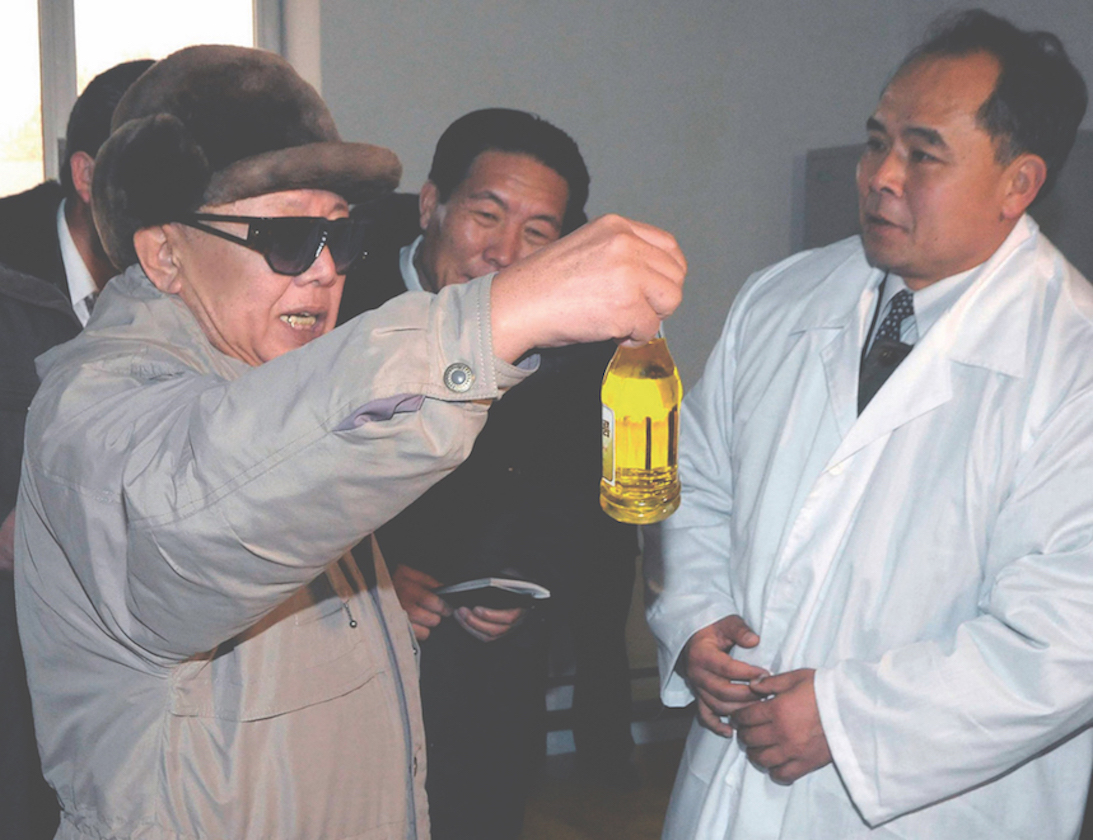
North Korean leader Kim Jong-il visits Ryongsong Foodstuff Factory in Pyongyang in this picture released by North Korea’s KCNA news agency on January 24, 2010
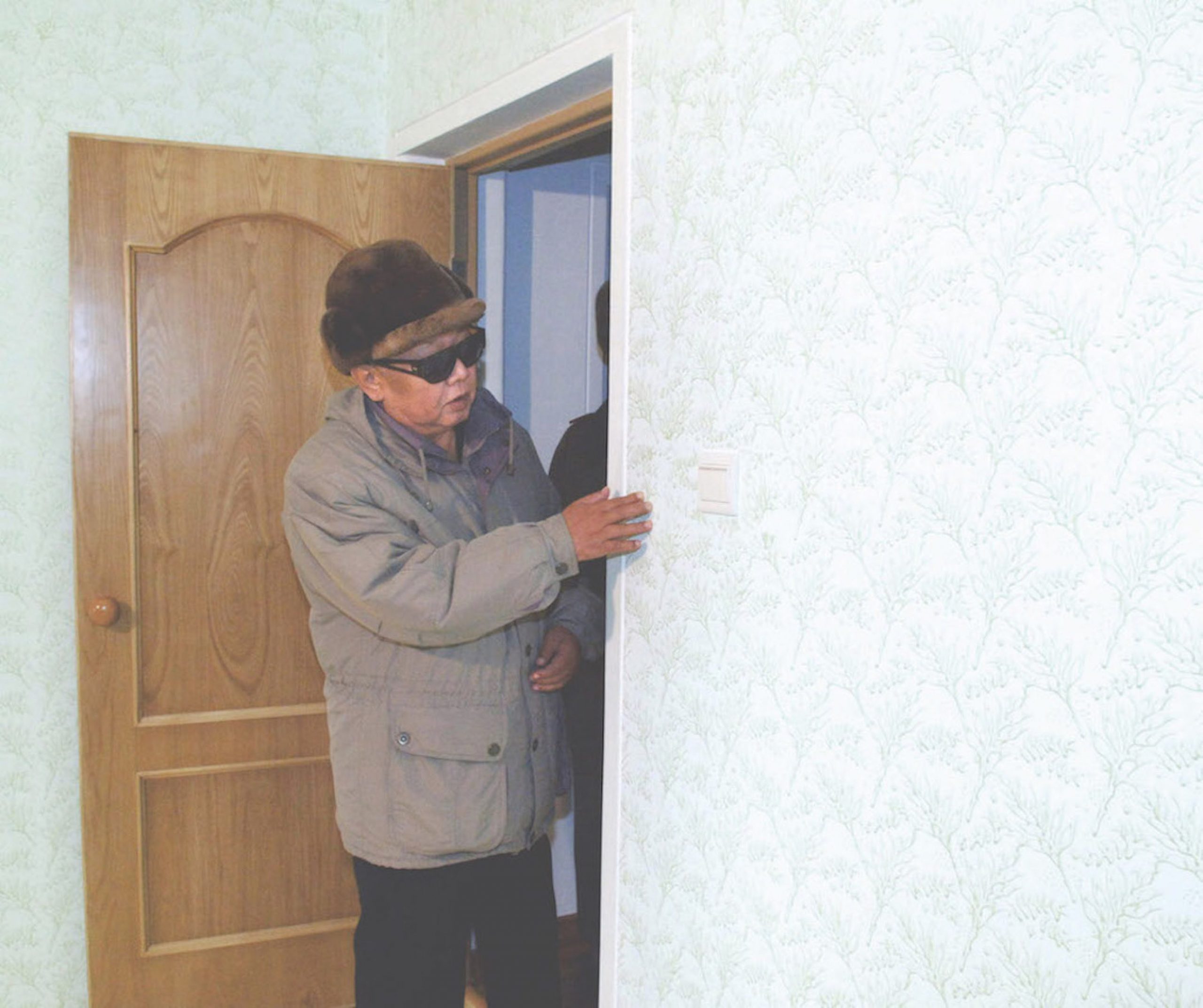
North Korean leader Kim Jong-il visits a newly built home at Liberation Mountain in this undated picture released by the North’s official KCNA news agency in Pyongyang November 26, 2010
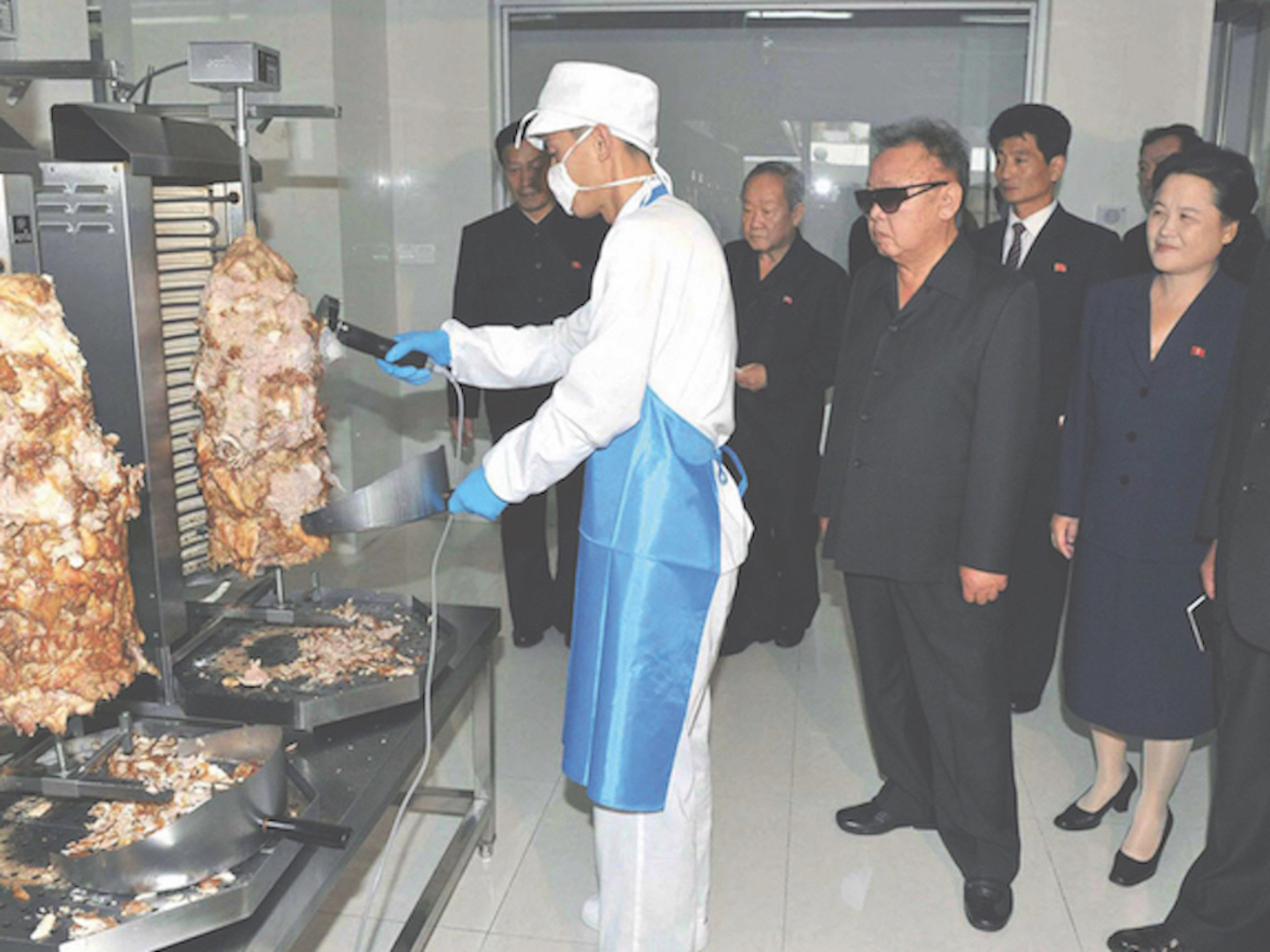
Kim Jong Il Looking at Things is available on JBE Books.
Enjoyed this article? Like Huck on Facebook or follow us on Twitter.
You might like

What went down at Huck’s 20th birthday party
84 issues and counting — We took over east London’s Jaguar Shoes with friends old and new to celebrate two decades and our new issue, with Tony Bontana taking the decks for a special set.

Photos of friends, lovers and afters in Berlin’s party scene
Dreams and How to Keep Them – Vincent Wechselberger’s new monograph documents a decade of hedonism in the German capital, and the people he met along the way.

Inside the Los Angeles scene kid revival
The Rawring ’20s — For the cover of Huck 84, photographer Alexis Gross and writer Anna Zanes meet the latest faces of scene, who are finding freedom to express themselves through its technicolour, unafraid aesthetic.

Introducing our new issue of Huck Magazine: It Starts With Us
Huck 84 — For our second 20th anniversary issue, we spotlight 20 people and groups providing the world with a hopeful future.

The sharp rise of video game photography
Point, shoot — As the entertainment medium’s fidelity levels increase and developers build more powerful tools, a growing community of gamers are pushing the boundaries of image making in virtual worlds. Vicky Jessop meets people at the forefront of the emerging artform.

Joyous photos from the heart of the UK’s radical free festival movement
Common Grounds — The photographer has been capturing British counterculture for the past half century. A new exhibition looks at his archive sitting at the intersection of music, community and grassroots protest.


