Tender photos of a maligned Cape Town neighbourhood
- Text by Isaac Muk
- Photography by Sarah Stacke

Over a decade ago in 2011, while studying for her degree at Duke University, Sarah Stacke took a trip to South Africa to trawl through the University of Cape Town’s archives. One day while she was out taking photographs around Sea Point – a particularly wealthy part of town where the land meets the sea – she came across a group of young women who were living on the streets.
Stacke struck up a conversation with them, listening to their stories and taking their pictures before continuing with her day. As the weeks went by, she kept bumping into one woman in particular, a 25-year-old called Naomi Lottering, who had grown up Manenberg – a suburb of Cape Town about 15 miles away. After catching up one time, Naomi asked Stacke for a lift back to her family home, which Stacke agreed to, and the pair jumped into her rental car and drove off.
Without knowing, suddenly Stacke was driving to one of the most notoriously dangerous areas in South Africa. As an area shaped by the Forced Removals during South Africa’s apartheid era, Manenberg has become the base for the notorious Hard Livings gang. For outsiders, the small 1.29-square-mile neighbourhood that is home to around 50,000 people is known mainly as an area rife with crime, drugs and violence.
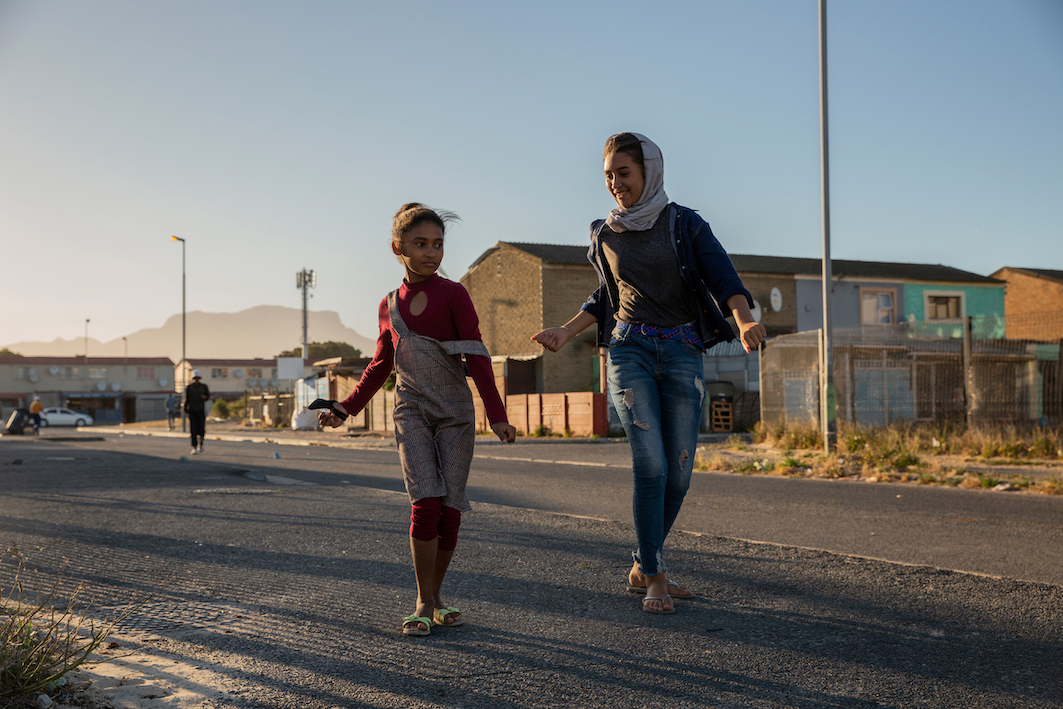
“It’s inescapable,” Stacke explains about the effects of gang violence and organisation. “It’s a part of every moment of every day.
“Manenberg receives the brunt of negative media coverage [in Cape Town],” she continues. “The coverage isn’t wrong, it’s just that it tells a single story – the gangs are certainly a part of Manenberg, but they are a very small percentage of people living there. The majority of people aren’t in gangs.”
But when she first arrived that day with Naomi, she found a different story to what would be found in a newspaper, or broadcast on television about the area. “My first impression was that Manenberg was a place of warmth and welcoming,” she says. “That was the very first experience I had there when Naomi introduced me to her family – Debbie [Naomi’s sister], Debbie’s two kids and her father Franz.”
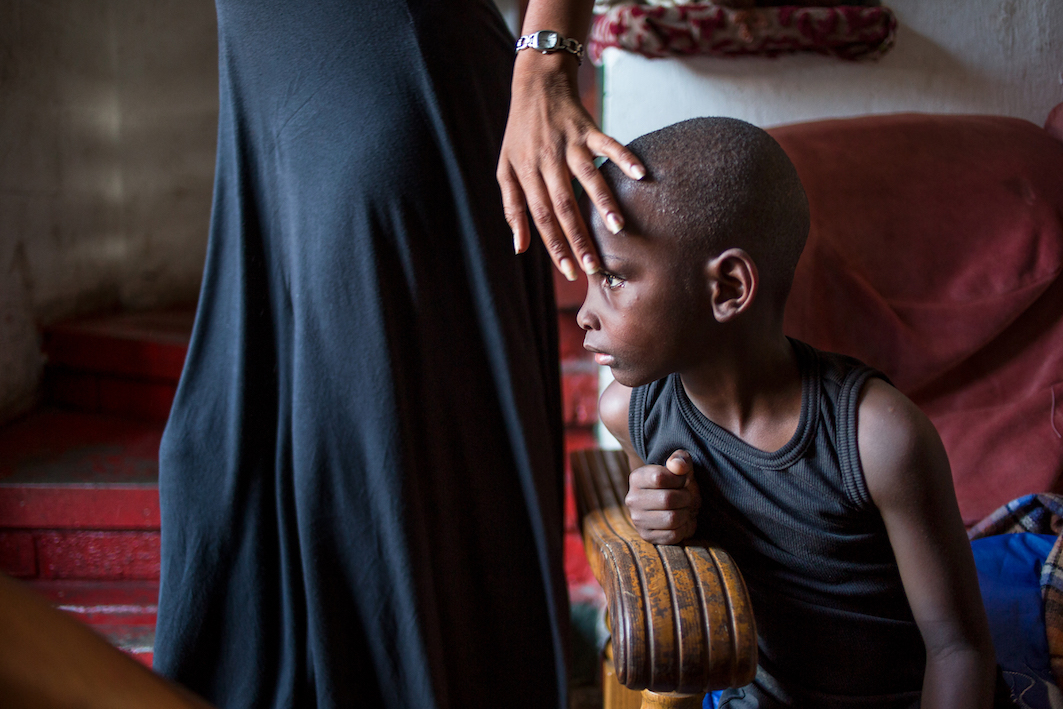
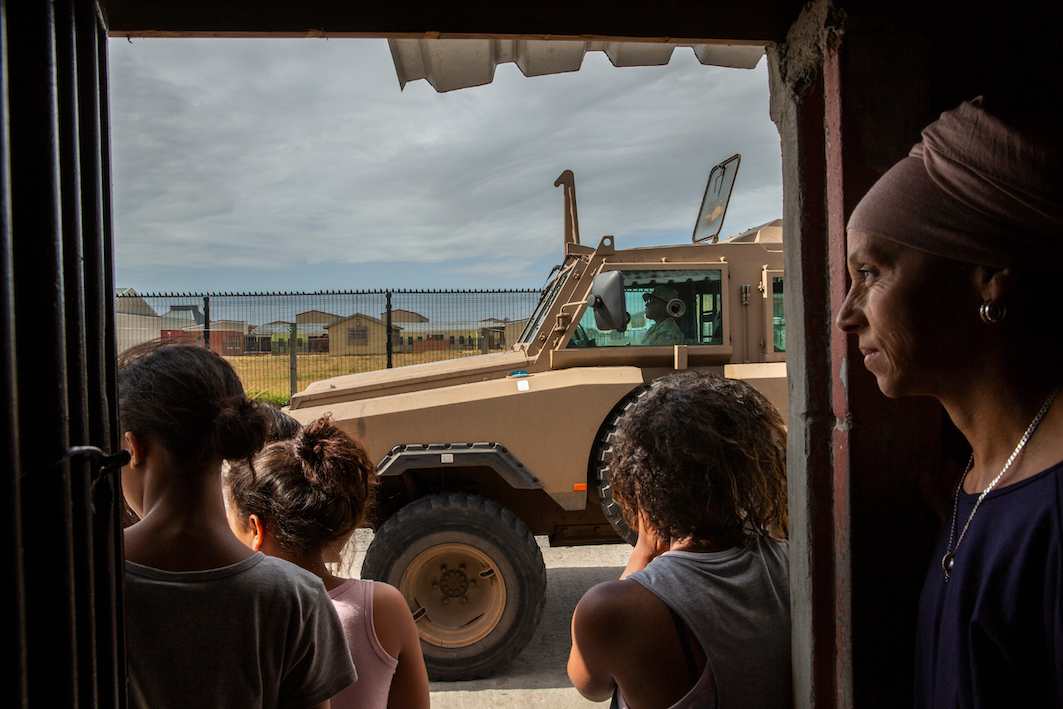
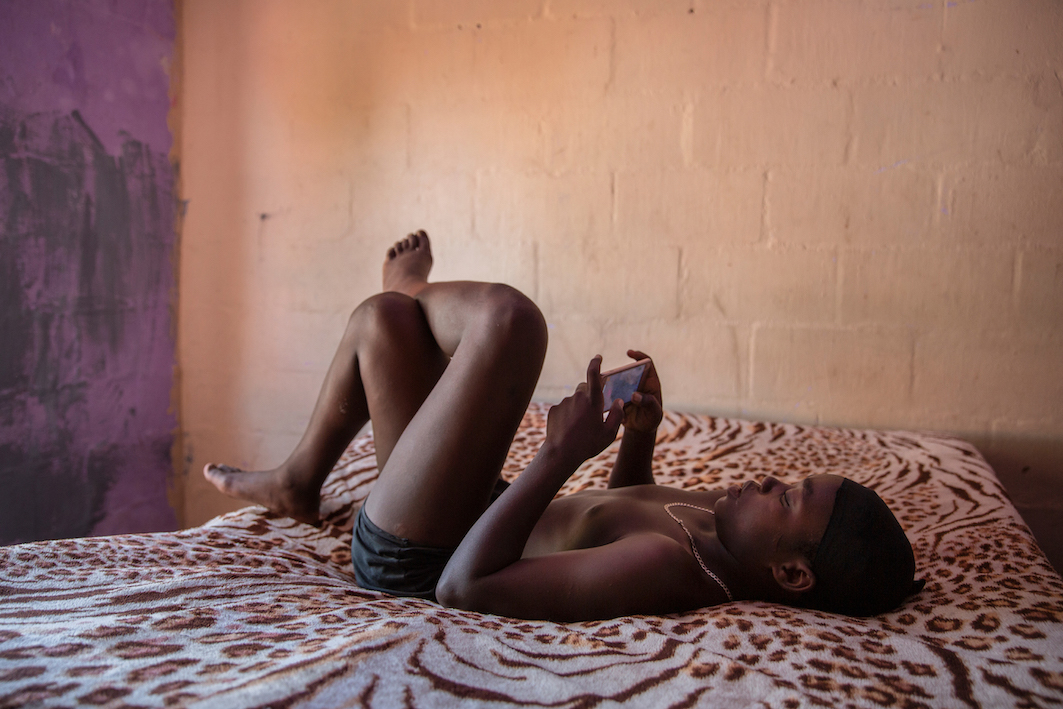
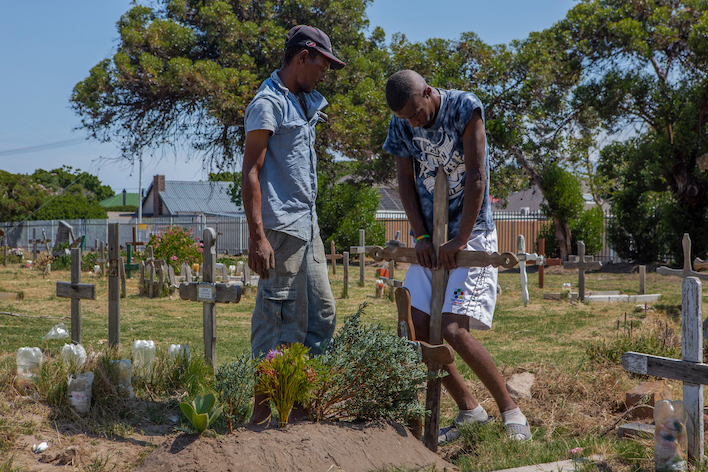
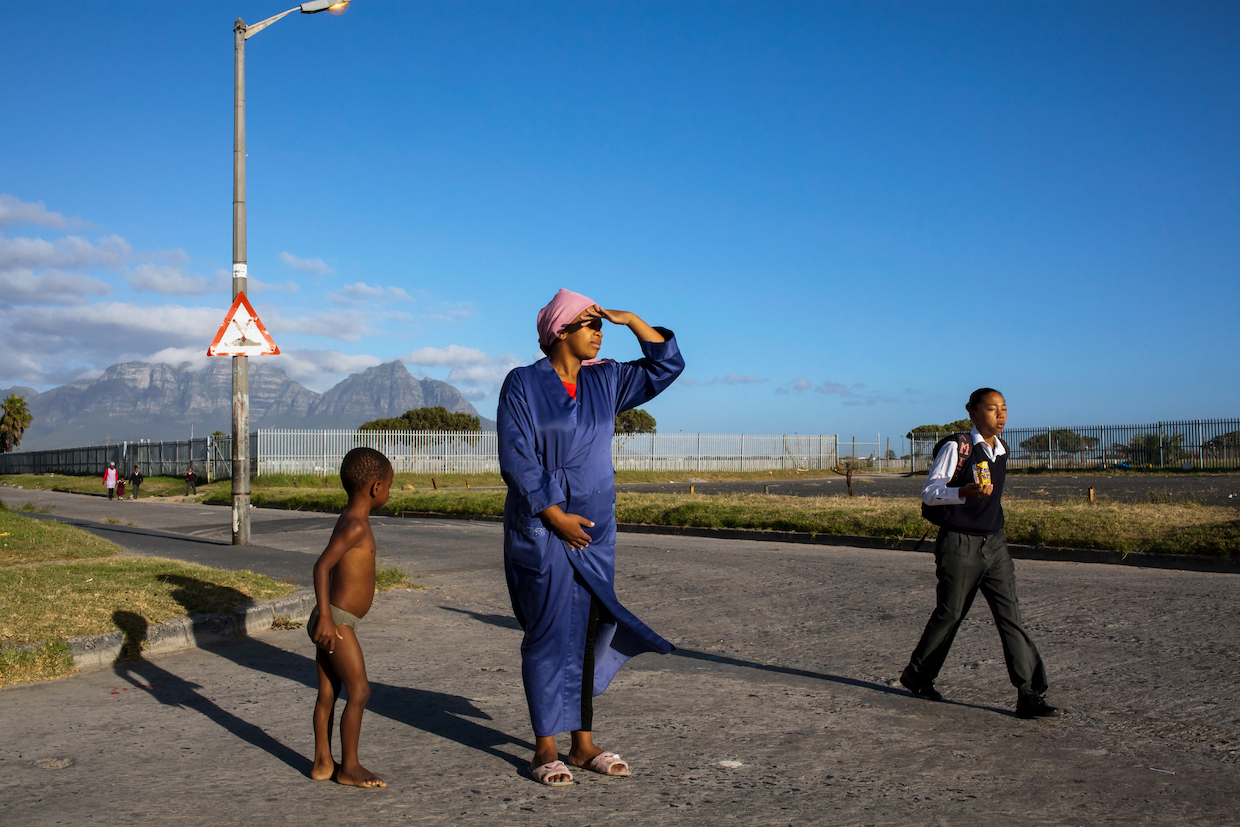
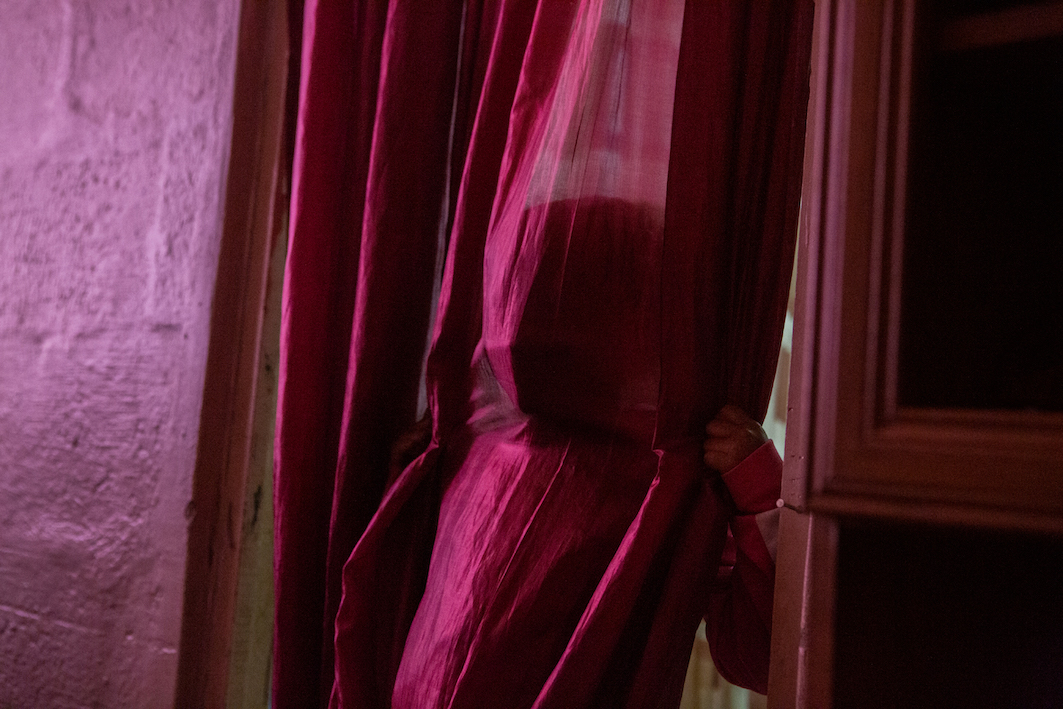
All of this warmth is captured in her newly published photobook Love from Manenberg. Having first experienced the friendship and community from the Lotterings and the people of the area, Stacke came back to visit just six months later, and has continued to travel there every year since, making pictures of the people she met and ultimately became close friends with.
The photographs tell a story of humanity, community, and resilience against the backdrop of violence and economic hardship. Studies estimate that just around 35 per cent of the population are employed, and residents of the area are three times more likely to be murdered than anywhere else in the country.
“It’s very hard for people to retain employment,” Stacke says. “I imagine 99 per cent of people would have to travel for employment, but unfortunately the architects of apartheid were very good at what they did. Travelling for employment is cumbersome for the people who live in Manenberg.”
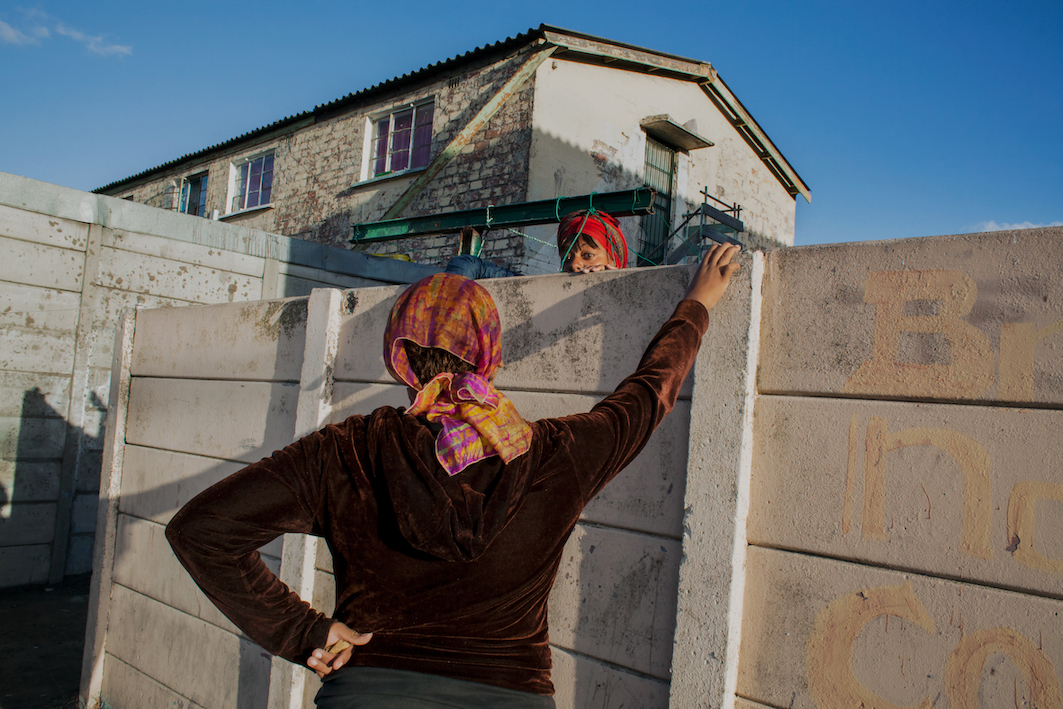
But despite the hardships, Stacke captured a beauty in the daily lives of the people who live in the area. “Debbie says it best, she says: ‘We’re all like family members here,’” explains Stacke. “And she’s right – when I go out in Manenberg with Debbie, we’ll go out to get something from the tuck shop, whether it’s milk, or crackers, or chips, and we’re out for hours because every 20 feet she sees someone, and they have catching up to do.
“They have a huge sense of who they are in Manenberg,” she continues. “They go through some serious events together – there’s a lot of joy, there’s a lot of loss, there’s a lot of violence, and they stick together. It still impresses me and it still surprises me.”
Love From Manenberg is available on Kehrer Verlag.
Follow Isaac Muk on Twitter.
Enjoyed this article? Follow Huck on Twitter or Instagram.
You might like

In photos: Black Texas life since emancipation
Kinship & Community — A new photobook and exhibition showcases the rich culture, history and community of African American folks in the Lone Star State, whose existence in the region predates colonial Britain.
Written by: Miss Rosen

Youthful joy & end-of-era poignancy at a London school prom
Leavers — For several years, Lewis Khan documented young people as they celebrated the last of their school days and the completion of their exams. The series is now collated in a new self-published photobook and short film.
Written by: Zoe Whitfield

Harry Gruyaert’s vintage, kaleidoscopic scenes of New York
A Sense of Place — For 50 years, the Belgian photographer and Magnum Photos member has been capturing NYC’s colourful chaos. A new photobook and exhibition showcase his unique, technicolour view of the city.
Written by: Miss Rosen

In the pit at one of the UK’s last stock car & banger speedways
Stock Car Racing Isn’t Dead — Photographer Liam McCarthy spent time in and around the Arlington Raceway’s circuit, capturing the diehard community that keeps the sport alive.
Written by: Isaac Muk

Inside Lower Duck Pond, the nicest town on the internet
/r/HaveWeMet — With a population of 2,500 and no fixed location, the subreddit is a space for roleplaying citizens to solve mysteries, host fictional events and ultimately connect. In an internet that’s often divided and toxic, Vicky Jessop hangs out in one of its most wholesome corners.
Written by: Vicky Jessop

A major Nan Goldin exhibition is coming to London
You Never Did Anything Wrong — Opening at the Hayward Gallery in November, the show will debut a new film from the artist and activist, alongside a slate of recent work.
Written by: Jack Dennison-Thompson


