Tender portraits of pre-gentrification Boston
- Text by Isaac Muk
- Photography by Jack Lueders-Booth

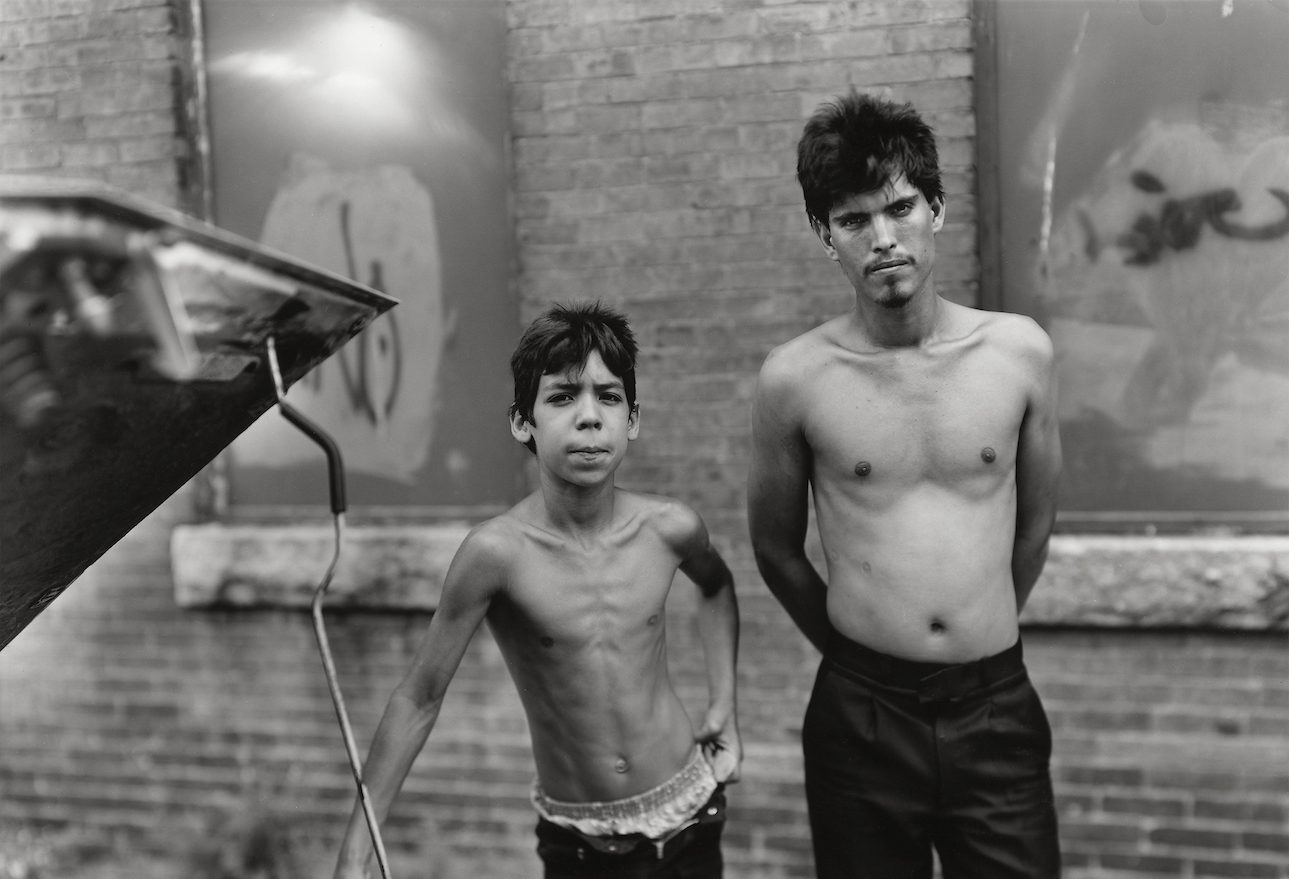
One day in 1985, Jack Lueders-Booth was walking around southern Boston (as he did often that year), lugging around his giant view camera about the size of his torso. He was looking for someone to photograph, having been commissioned to create a photographic series documenting the community who lived around the lower part of the city’s north-to-south railway transit system – a section due to be demolished in a year’s time.
It was approaching the end of the day, and the shadows tailing from the buildings and the large, rusting overhead railway were growing taller and longer. Feeling tired, he decided that it was probably time to go home, and he started walking. But then, in the opposite direction, a silhouette of a man came into view.
The man was muscly – very muscly in fact, as the evening sunshine accentuated his figure. Lueders-Booth instantly went over and began to speak to him.
“Man, you look great! You look like you work out seriously,” he said to the man as they instantly struck up conversation. “Do you mind if I take a picture of you?”
The man agreed and begun to tell Lueders-Booth his life story. He was a recovering drug addict but had been clean for several years, and his key to staying clean was going to the gym every day, lifting weights for hours on end. As Lueders-Booth set up the shot for the photograph, the man lifted both of his arms above his head and tensed his muscles.
“I think it’s a very interesting picture,” reflects Lueders-Booth. “I think it contains a kind of a contradiction, in that he’s flexing his muscles, but not with any real conviction. And in the image he is trying to project with his physique is kind of betrayed by his face – he looks vulnerable and soft.”
That picture of the man is on the front cover of Lueders-Booth’s newly-published photobook, The Orange Line, which brings together photographs from the 18 months he spent walking up and down the railway tracks making pictures of the people he met along the way.

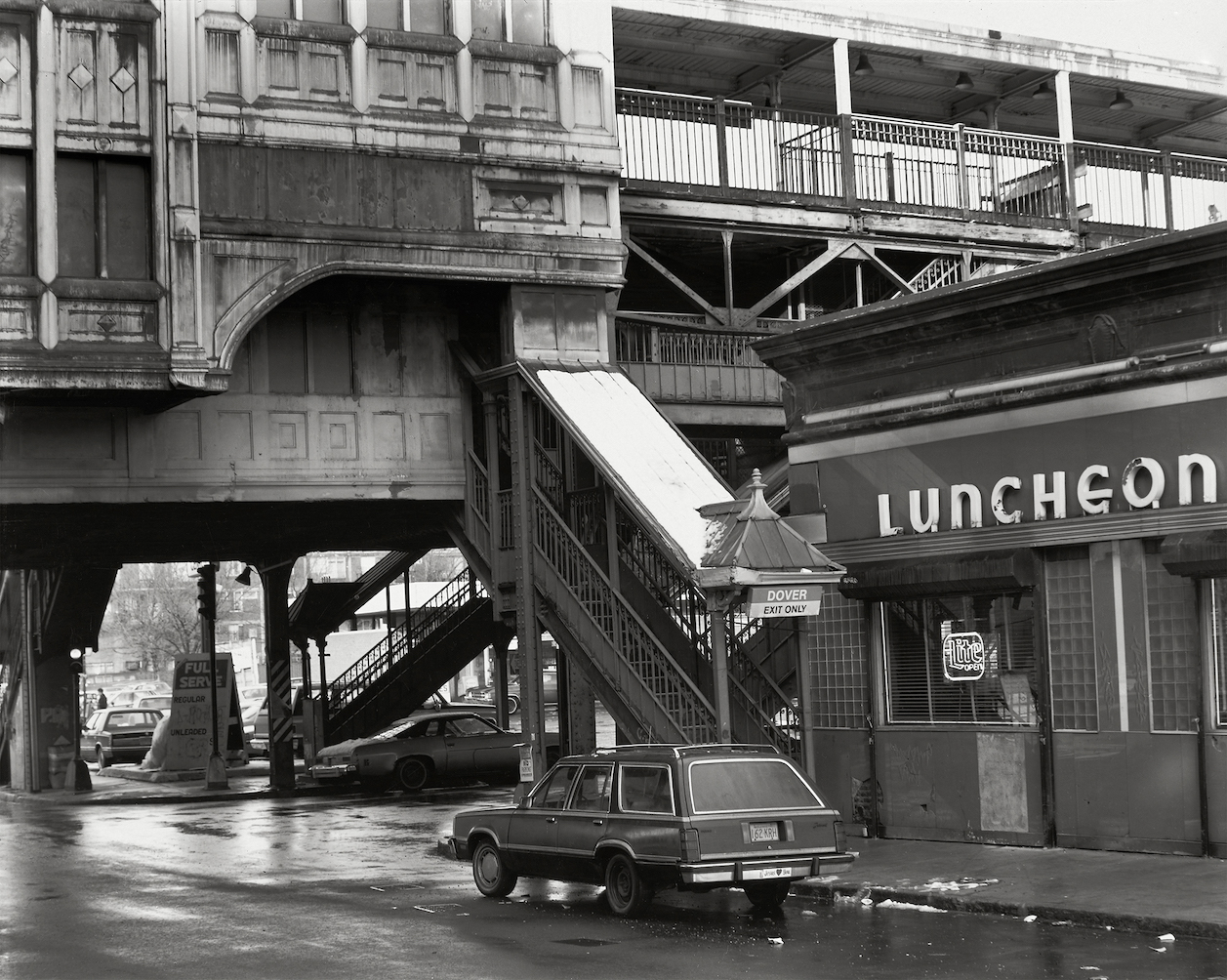
 Built in 1901, the southern part of the railway tracks running from Chinatown to Forest Hills, with its giant overbearing structure and incessantly noisy, creaky trains, had become a noise-polluting eye sore. As a result, property prices in the neighbourhoods running down the line were lower than in other parts of the city and it was seen as a less desirable place to live.
“It was not a large population, but it was substantial,” says Lueders-Booth. Outside of the people who lived there, there wasn’t a lot of interest in the area. But what this meant was that there was a thriving working-class community, who often could not afford to live in other parts of Boston. With the impending demolition of the tracks, there was uncertainty about what it would mean for rental prices and their futures in the city.
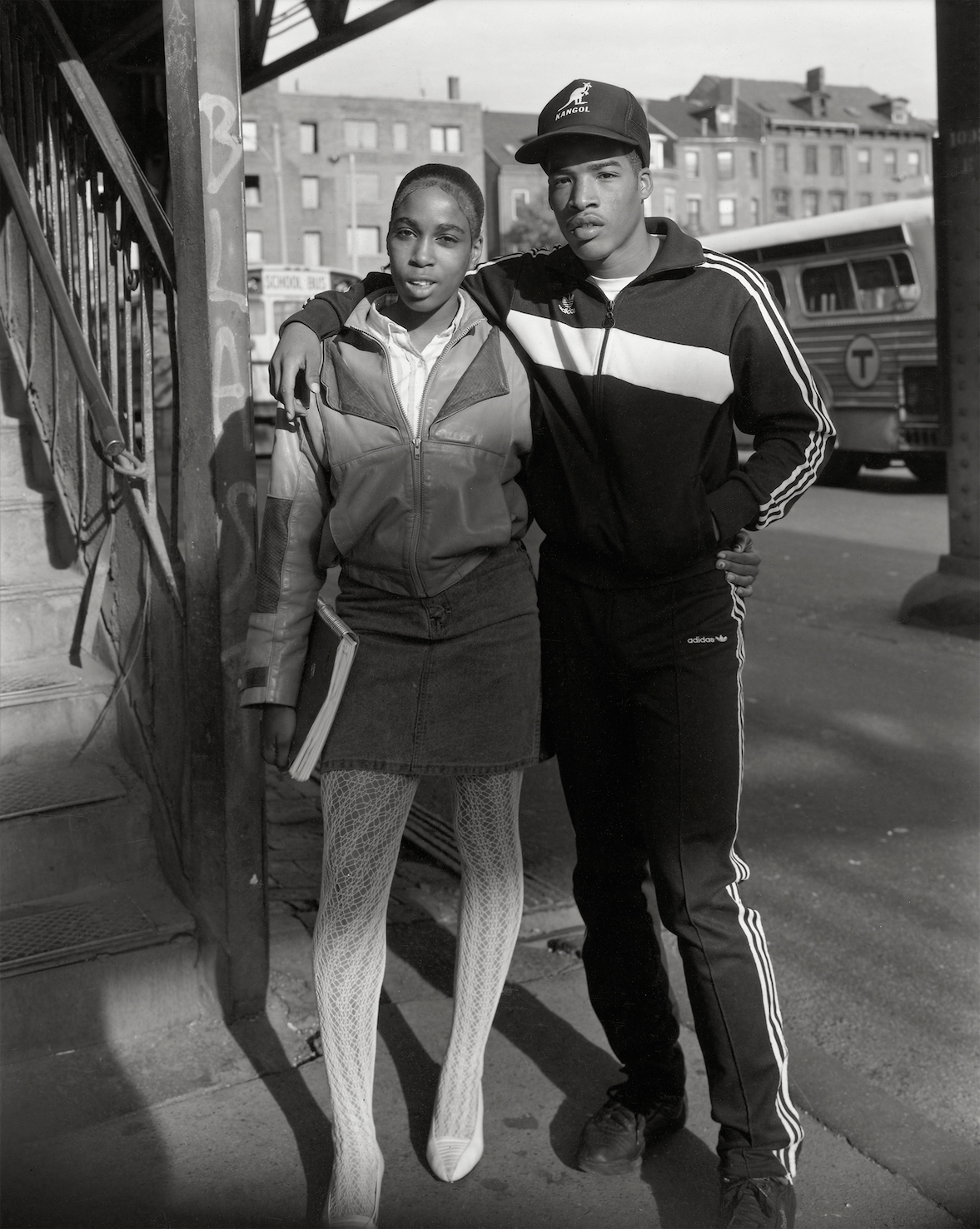
“All of the people were worried about what would happen to their neighbourhood,” says Lueders-Booth. “That was one of the problems – that those people who did consider it home would no longer be able to live there.”
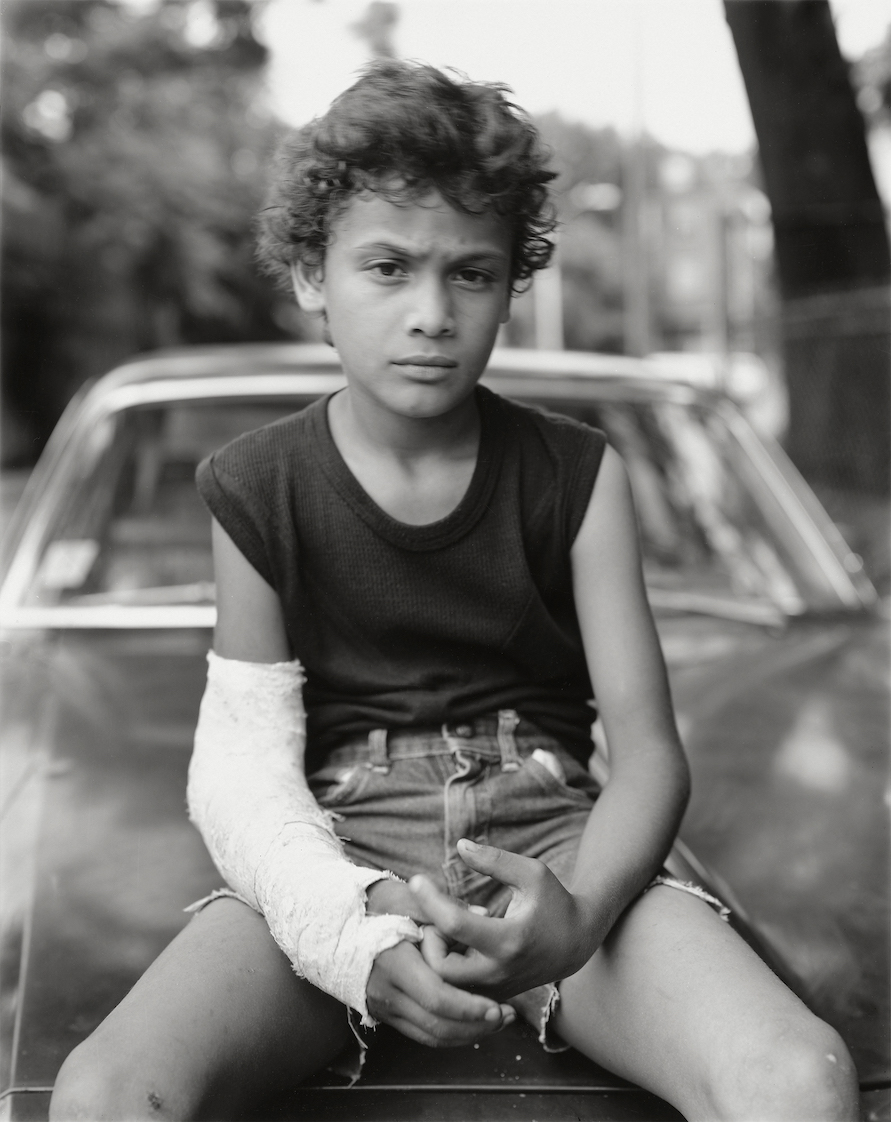
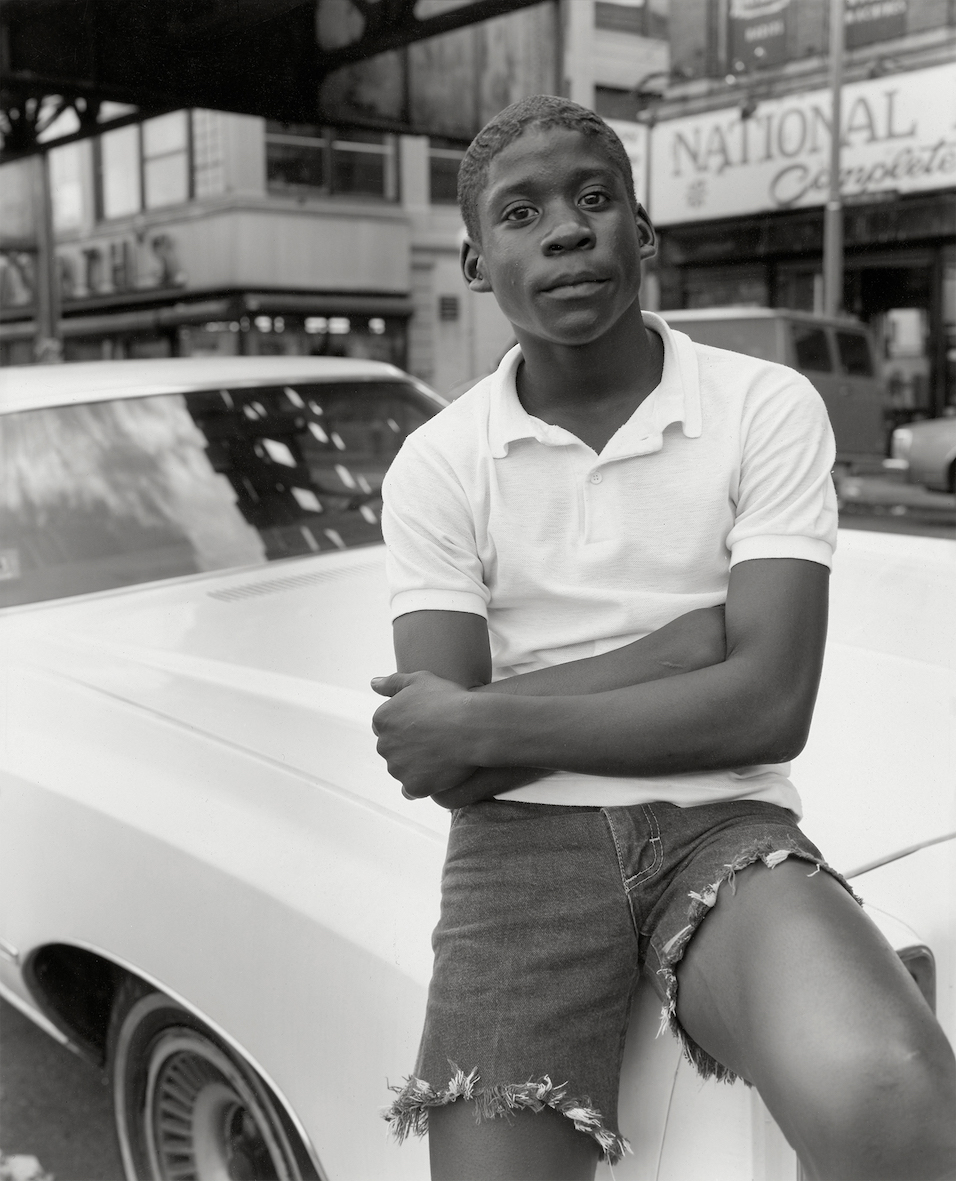
His photographs are an ode to the lost neighbourhood of the four-mile stretch of tracks. Found in the shots is a diverse, multiracial community going about their daily lives. In a personal account of an often-maligned area, the beauty of the everyday is captured. The black-and-white shots show people of all ages, from children to the elderly; various ethnicities; workers, businesses and just people taking a casual stroll.
Nowadays, as many predicted at the time, the area has been gentrified. House prices rose and new businesses moved in, pricing out many of the people who had lived along the length of the railway. “It’s very commercial now,” says Lueders-Booth. “The affordable used clothing stores, junk stores and garage sales are all gone – it’s been obliterated. The clientele became a higher class.”
“I never lived there” he continues. “But the sound of the particular squeaking of the steel wheels on the worn tracks had a very special meaning to me.”
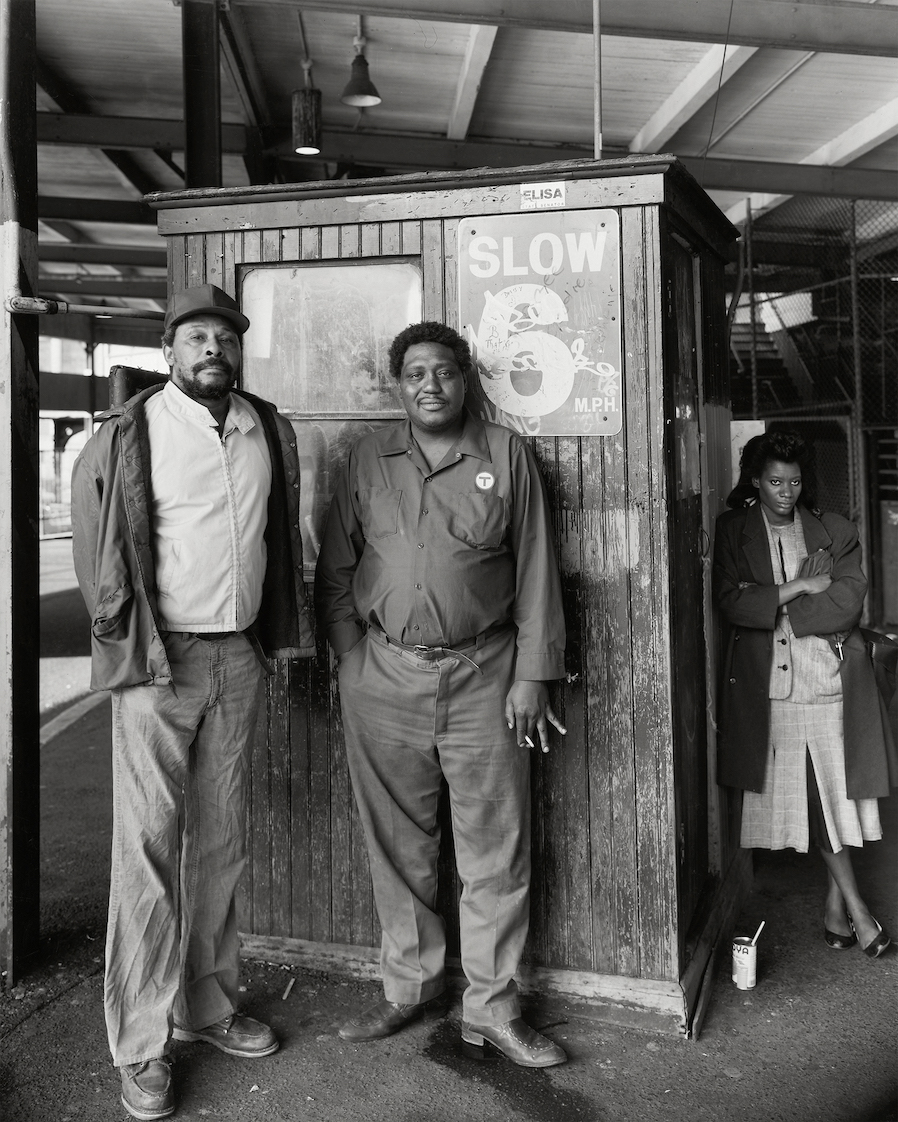
The Orange Line by Jack Lueders-Booth is published by Stanley/Barker.
Follow Isaac Muk on Twitter.
Enjoyed this article? Follow Huck on Twitter or Instagram.
You might like

In photos: Black Texas life since emancipation
Kinship & Community — A new photobook and exhibition showcases the rich culture, history and community of African American folks in the Lone Star State, whose existence in the region predates colonial Britain.
Written by: Miss Rosen

Youthful joy & end-of-era poignancy at a London school prom
Leavers — For several years, Lewis Khan documented young people as they celebrated the last of their school days and the completion of their exams. The series is now collated in a new self-published photobook and short film.
Written by: Zoe Whitfield

Harry Gruyaert’s vintage, kaleidoscopic scenes of New York
A Sense of Place — For 50 years, the Belgian photographer and Magnum Photos member has been capturing NYC’s colourful chaos. A new photobook and exhibition showcase his unique, technicolour view of the city.
Written by: Miss Rosen

In the pit at one of the UK’s last stock car & banger speedways
Stock Car Racing Isn’t Dead — Photographer Liam McCarthy spent time in and around the Arlington Raceway’s circuit, capturing the diehard community that keeps the sport alive.
Written by: Isaac Muk

Inside Lower Duck Pond, the nicest town on the internet
/r/HaveWeMet — With a population of 2,500 and no fixed location, the subreddit is a space for roleplaying citizens to solve mysteries, host fictional events and ultimately connect. In an internet that’s often divided and toxic, Vicky Jessop hangs out in one of its most wholesome corners.
Written by: Vicky Jessop

A major Nan Goldin exhibition is coming to London
You Never Did Anything Wrong — Opening at the Hayward Gallery in November, the show will debut a new film from the artist and activist, alongside a slate of recent work.
Written by: Jack Dennison-Thompson


