The Hong Kong diaspora are still fighting for their homeland
- Text by Acacia Redding
- Photography by Humothy

A crowd of black-clad activists walk in unison across central London; some holding banners bearing popular protest slogans, others symbolic yellow umbrellas or colonial British Hong Kong flags. They march ahead, a combination of Cantonese and English voices singing along to a tinny-sounding boombox. A protest song, which became known as the ‘new national anthem’ for pro-democracy activists during the 2019 demonstrations, blasts from a speaker (“May people reign proud and free, now and evermore. Glory be to thee, Hong Kong”). A voice among the crowd yells out “fight for freedom!”, and is quickly met with a fervent response of “stand for Hong Kong!”.

It’s 15 January 2022, and activists have gathered to demand media freedom in Hong Kong. The protests were called in response to tightening press restrictions in the city since the introduction of the controversial National Security Law, which has seen numerous journalists imprisoned and media outlets closed for publishing pro-democracy or anti-government sentiment. Organisers hand out letters for attendees to post at the Hong Kong Economic Trade Office – their final destination. “The movement in 2019 may have ended, but it started something among Hongkongers,” says Terry Leung, 36, founder of Justitia Hong Kong (JHK), an activism group for UK-based Hongkongers and one of the protest’s organisers.
A study by the organisation Hongkongers in Britain found that 96 per cent of Hongkongers no longer felt ‘safe and free’ in Hong Kong since the introduction of the National Security Law diminished various freedoms in the city. This hasn’t stopped the growing diaspora from continuing to stand up for the city, and UK gatherings commemorating significant events – from the arrests of pro-democracy lawmakers to the closure of media outlets – have only grown.


Leung moved to the UK 20 years ago for boarding school, but has remained avidly engaged with Hong Kong affairs. In 2014, he watched as the Occupy Movement, a series of protests demanding universal suffrage, gripped his home city. Starting to lose hope in democracy reform, he decided he would stay in the UK. “It was the response from the [Hong Kong] government that really disappointed me,” he says.
In 2019, the Hong Kong government’s proposed extradition bill, which would have allowed criminal extraditions to mainland China, sparked over a year of pro-democracy protests. These demonstrations were met with a harsh crackdown by police, who used teargas, pepper spray and water cannon against protestors. It was in this context that Leung founded JHK. The group began arranging regular events to stand in solidarity with Hong Kong and to support incoming Hongkongers, many of whom were feeling overwhelmed by the ongoing situation.


“[Hopelessness] was a common feeling among Hongkongers,” Leung says. “But I’ve realised that the future of Hong Kong doesn’t only lie in the city – it lies in its people. Wherever Hongkongers go, we can rebuild our community and take the spirit of Hong Kong with us.”
Wanting to find ways to unite Hongkongers beyond on-the-ground protests, Leung created a ‘solidarity map’, using yellow and blue pins to politicise businesses across the UK. While ‘yellow businesses’ support the pro-democracy movement, ‘blue businesses’ support, or are affiliated with, the Chinese government.
The ‘colouring’ of political views in Hong Kong came about during the Occupy Movement and continued into 2019 protests. Maps like JHK’s were widespread, with users strictly boycotting businesses marked blue.
This was something Leung wanted to bring to the UK, giving Hongkongers the chance to unify during a time in which he felt their collective identity to be stronger than ever. Before 2019, he says, “most Hongkongers did not really feel like they belonged to any country,” not seeing themselves as Chinese but neither from an independent nation. But as the city and those in it became increasingly targeted by government suppression, he and others grew more eager to stand together and support their homeland.

For Eliz Cheung, 44, a barber who moved to the UK under the government’s BNO scheme – a pathway for Hongkongers with British National Overseas passports to move to the UK – this couldn’t ring more true. Having seen the increasing state control and violence against pro-democracy protesters, politicians and journalists, she left her home in the hope of a life free from oppression. This meant leaving everything behind; including her husband, who did not share her political beliefs. “If he was anti-government, the story [would be] different,” she says. “But because he was standing on the opposite side of me, I had to build something alone.”
Upon moving to the UK, Cheung wanted to do everything she could to stand with those still in Hong Kong – joining protests, sharing news on social media and getting a commemorative tattoo of the famous protest slogan, ‘liberate Hong Kong, the revolution of our times’. “I have to step up and say something,” she says. “Because if we don’t say anything, slowly, slowly, we will forget it.”
Cheung settled quickly, starting her mobile hairdressing business, Hong Kong Barber, and swiftly building up a clientele of customers, most being fellow Hongkongers. She offered discounted or free haircuts to struggling Hongkongers and soon earned her place on JHK’s solidarity map as one of 145 ‘yellow shops’ in the UK. 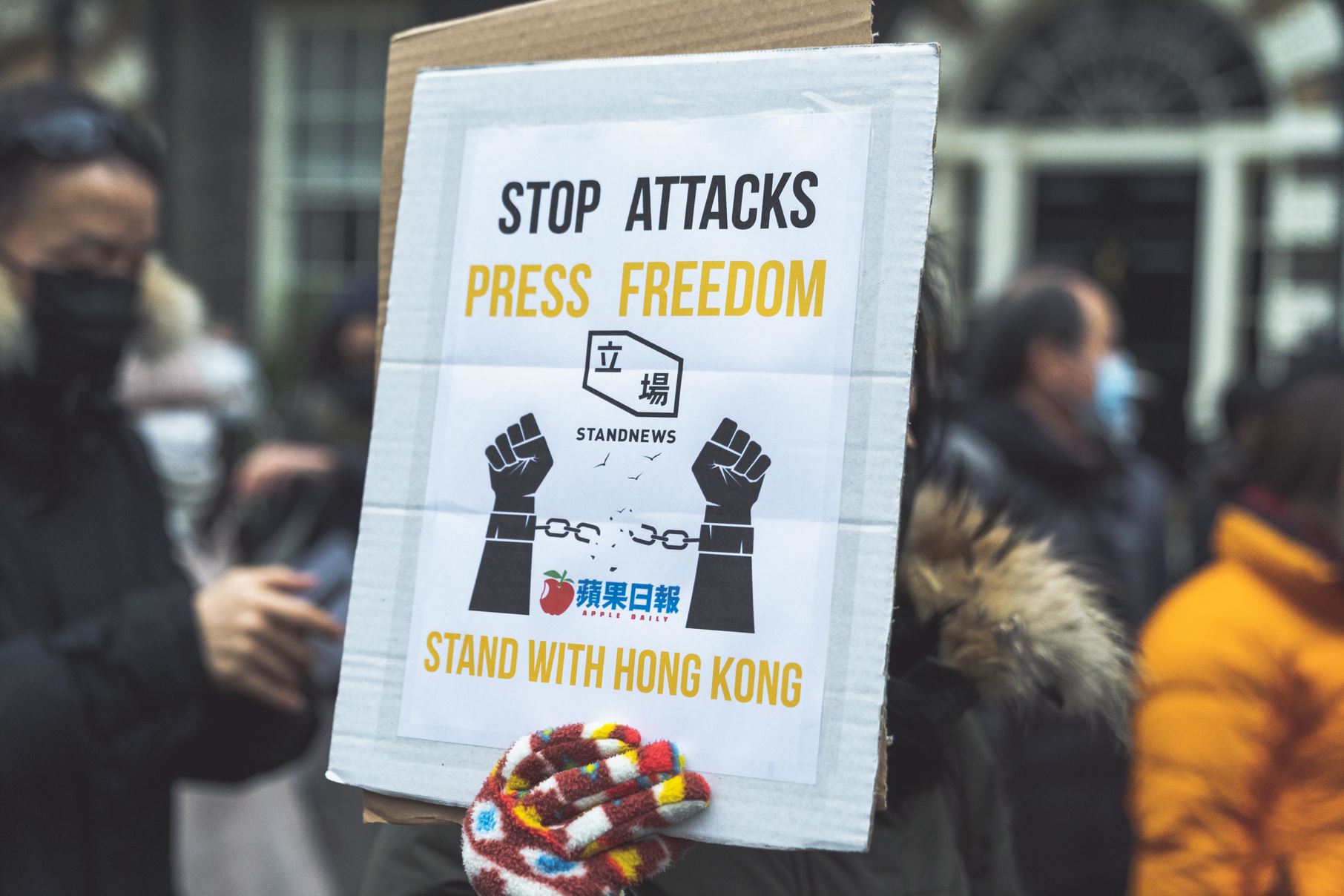

Leung plans to expand the map, wanting to bring attention to “potential CCP [Chinese Communist Party] infiltration,” which he fears is a threat to freedom in the UK. “If people continue to ignore these threats,” he argues, “Britain will gradually lose its traditional values; namely liberty, freedom.”
The Chinese government’s global influence is something Simon Cheng, 31, a political activist in exile and co-founder of Hongkongers in Britain, has campaigned against since moving to London in June 2020. Cheng says he still dreams about the day he was detained by Chinese authorities when returning from a business trip in mainland China, where he was interrogated, tortured and forced to confess to his involvement in political unrest in Hong Kong. He was later granted political asylum in the UK and has been speaking out since.
“People have been suppressed and it’s very simple,” he says. “They shouldn’t be detained, they shouldn’t be sentenced in jail […] just because they criticise the government. It’s just intolerable.” Cheng began to see it as his duty to speak out on behalf of those remaining in Hong Kong, many of whom have been prosecuted for advocating for democracy. “[They] were previously our representatives. Some, they might be our friends, our family,” he says. “They made a great sacrifice for the cause.” He hasn’t spoken to his family since he left, fearing they will be targeted by Chinese authorities.

Speaking at regular demonstrations, Cheng has lobbied to raise awareness about CCP human rights abuses against Hongkongers, Uyghurs and others suppressed by the Chinese authorities. But beyond that, a priority for Cheng is to support Hongkongers in the UK with employment and integrating into British society.
Cheng also emphasises the importance of providing mental-health support to Hongkongers in the UK, with many struggling from PTSD from their experiences; whether from witnessing police violence at protests, losing political freedom or being separated from family members and friends. He says that it is common for young ex-frontline protesters to suffer from nightmares, with loud noises being a triggering reminder of the tear gas guns, police batons and water cannons. Alongside this, Cheng says, is the looming “homesickness, culture shock and uncertainty” of being a new immigrant in the UK.
Having given up his career to pursue activism, Cheng says he will keep fighting “endlessly” until change happens in Hong Kong and China. “Hopefully, I’m still young enough to see the regime [change] someday,” he says. “But, I’m open-minded, if not my generation, at least we can find the basement for the next generations to come.”
Eliz Cheung agrees, having no plans to stop fighting for the cause which has united so many, not just in Hong Kong, but in a growing global diaspora. “Hong Kong is just a place, that’s it,” she says. “The place is destroyed. But the people from there, our spirit is not destroyed. We are still here.”

Follow Acacia Redding on Twitter.
Follow Humothy on Instagram.
Enjoyed this article? Like Huck on Facebook or follow us on Twitter.
You might like
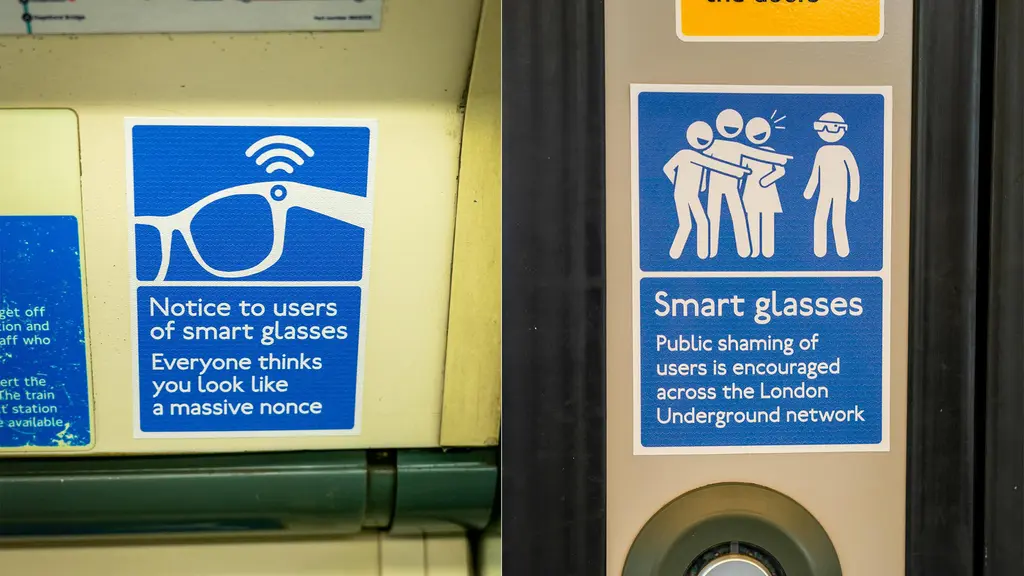
Activists slam “pervert glasses” in new guerrilla campaign
Everyone Hates Elon — Stickers have appeared on the London Underground network, criticising the wearable technology’s covert filming capabilities.
Written by: Isaac Muk

Behind the curtain at Alternative Miss World 1981
Olympia glamour — Running a subversive take on the traditional beauty pageant, the Andrew Logan organised event prioritised underground creativity and invention. Photographer David Corio went behind the scenes at its biggest edition.
Written by: Miss Rosen

Dan Lacey: “BMX is forever evolving”
Overground — Steph Pomphrey caught up with the two-wheel legend after his latest meet in east London, chatting about fatherhood, music and action sports within the outdoor industry.
Written by: Steph Pomphrey

The battle for the soul of lockpicking
Under locksport and key — In recent years, breaking locks for fun has grown from a niche hobby into an activity followed by millions of people. As it has matured, so have tensions over who sets the rules.
Written by: Jack Dennison-Thompson

New exhibition highlights British radical living over 200 years
Earthly Paradise — Taking place at the William Morris Gallery, it explores the homes and lives of artists, writers, musicians and more, as well as the conditions that allowed them to thrive.
Written by: Isaac Muk

Pink Floyd’s Roger Waters joins team of new Palestinian resistance documentary
Freedom Theatre — Directed by Rishi Pelham, the film spotlights a theatre operating in the Jenin refugee camp.
Written by: Ella Glossop


