Inside the shadowy, booming underground world of Urbex
- Text by Letty Cole

Touching bricks — Spurred by social media success and a desire to live in the physical world, a new generation of teenagers and young people are sneaking into abandoned buildings and documenting their discoveries. Letty Cole goes fence-jumping with two Urbexers to find out more, and gets chased by security in the process.
“This is a bit above my pay grade,” I shout-whisper to my companions for the day, two cargo-trousered teenagers called Rachel* and Jay*. I am scaling the fence of a disused mansion once belonging, apparently, to Colonel Gaddafi. And I’m stuck.
Attempting to sneak into abandoned houses owned by deceased military leaders isn’t usually how I spend my Saturday mornings. But for Rachel, Jay and their friends (plus thousands of others around the world), Urban Exploration – or simply Urbex – is a pastime that has come to occupy every spare moment. “More and more people are wanting to get involved”, Rachel explains of the growing number of Urbex accounts appearing on TikTok, alongside mounting interest from her schoolmates. I’m here to understand why such a strange hobby holds so much appeal.
Urbex is, as the name suggests, the practice of identifying abandoned or uninhabited buildings, before climbing, crawling and squeezing through whatever spaces are necessary to explore them. Urbexers never break and enter – a far more serious crime than simple trespassing. It can mean exploring everything from war bunkers and abandoned factories, to tower blocks and mansions, to disused hotels and hospitals (a particularly rich seam given their size and history, though I was destined to discover less about this than about the stamina necessary to “play cat and mouse” with a security guard). Rachel and Jay tell me that next summer they’re planning a group Urbexer trip to the Catacombs in Paris.


Though often presented as a new phenomenon, Urban Exploration is an ancient pastime that has no doubt been around since we first started building (and abandoning) buildings. But it’s only in the past 20 years that it’s earned its official nickname and a cult global following. In 2016, Red Bull premiered URBEX: Enter At Your Own Risk – a documentary featuring explorers from across the world, professing ‘The Golden Age of Urban Exploration’ was upon us. Now, 10 years on, Urbex is seeing another boom in interest from Gen Z, catapulted by a thriving digital community that is, by design, desperate to ‘touch grass’.
But in 2025, Urbexers’ digital landscape has grown along with its member numbers. There is, for a start, the r/Urbex subreddit, a long-time mecca for urban explorers, where dozens of its 45k members post daily about their adventures. Today, Rachel, Jay and their friends chart most of their exploits on TikTok, where they can rack up tens of thousands of views, and sometimes even more gaudy numbers. Meanwhile, on the ground, WhatsApp groups and shared maps act as digital scaffolding that mirrors their IRL adventures. “Everyone in the community shares around this map,” Jay says as he shows me a Google Maps covered in flags, completely obscuring London, and peppering the rest of the world.
“Obviously, that’s not all of them,” Jay says of the literal thousands of spots marked on his map. But that’s exactly the point. Urbex is an ever-changing game, one that looks different for every new generation coming into it. Indeed, the growing community isn’t only reacting to a changing digital landscape, but a fast-changing physical world, where the number of buildings that are left abandoned in the first place, is rising steeply. “My dad has been Urbexing all his life,” Jay tells me. “But it used to be just ruins and bunkers – you wouldn’t find untouched mansions like you do now.”
“It used to be just ruins and bunkers – you wouldn’t find untouched mansions like you do now. The houses are empty because people can’t afford to keep up with inflation.” Jay, Urbexer
He’s right, the number of long-term vacant properties has risen starkly between generations. Especially in cities like London, where the number of uninhabited homes has grown from 40,229 (1.6% of homes) in 1961, to a staggering 297,000 (8.0% of all homes) in 2021, according to Census data. “The houses are empty because people can’t afford to keep up with inflation,” Jay says as we walk along a residential street in a North London suburb, “and wars and stuff too…” He goes on to explain how several Russian-owned homes in London were seized by the British government as the war with Ukraine mounted, leaving them to rot.
Yet, unlike Rachel and Jay, who point out several such properties to me during the day, this isn’t usually something that the general public can experience first-hand. The more time I spend with these young Urbexers, the more I come to understand that their motivations aren’t solely the thrill of the chase, but an insistent curiosity in the world that surrounds them.
Social media access might have accelerated these teenagers’ involvement in Urbex, but there’s a certain irony there. As I watch Rachel and Jay roam around the streets, vaulting over fences and scaling walls, I’m struck by how comfortable they are with the physical world. They look just like teen avatars in an adventure game, except reality is their playground. “Most people my age just sit on their phones all day,” says Rachel, who tells me that she gets teased for her hobby, of which she’s the only person at her school to do. When I ask her if she thinks it helps with her mental health, she says: “It has a positive impact for me personally – it gets me out the house and moving around and just lets me explore parts of the world that have been tucked away.”
Read next: Where did all the naturists go?


For a generation raised online, this growing commitment to the physical seems like a profound form of protest, a reluctance to be made passive. I press Jay on this: what does Urbex mean to him on a spiritual level? Does he feel nostalgia for an analogue past? Or existential about the state of our future realities? In response, he gets distracted and starts telling me about another of his favourite spots, a totally untouched hotel he visited the previous weekend. I smile to myself. In one fell swoop Jay tells me more than he could’ve put into words: this is the desire to touch grass pushed to extremes, and thank God for that.
I say goodbye to Rachel and Jay outside the abandoned hospital we got chased from minutes before, and ask if they’re heading home. No, of course they’re not. They’re going to carry on exploring. I watch their backpacks disappear around the corner.
*Names have been changed to protect privacy.
Letty Cole is a freelance journalist and creative strategist. Follow her on Instagram.
Buy your copy of Huck 82 here.
Enjoyed this article? Follow Huck on Instagram and sign up to our newsletter for more from the cutting edge of sport, music and counterculture.
Support stories like this by becoming a member of Club Huck.
You might like

In London, rollerskating’s revival rumbles with the city’s soundsystem culture
Rink magic — New quad skate events around the capital are being soundtracked by a cocktail of jungle, dancehall, amapiano, UK rap and more, in a uniquely London fusion. Ian McQuaid reports on the hybrid skate-dances, and the growing pains that the scene has faced.
Written by: Ian McQuaid

Sports Banger is throwing a party to mark 90 years since the Battle of Cable Street
“Fascists hate dancing” — The October event will bring DJs, live music, sound system culture and anti-fascist politics together in East London.
Written by: Ella Glossop

Guts, glory and goat tossing at the World Nomad Games
All eyes on Bishkek — From kok boru to eagle hunting, Kyrgyzstan’s global showcase spotlights ancient sports and celebrates local traditional culture, while also stiffening the regime’s ambitions, reports Antoine Goullin.
Written by: Antoine Goullin
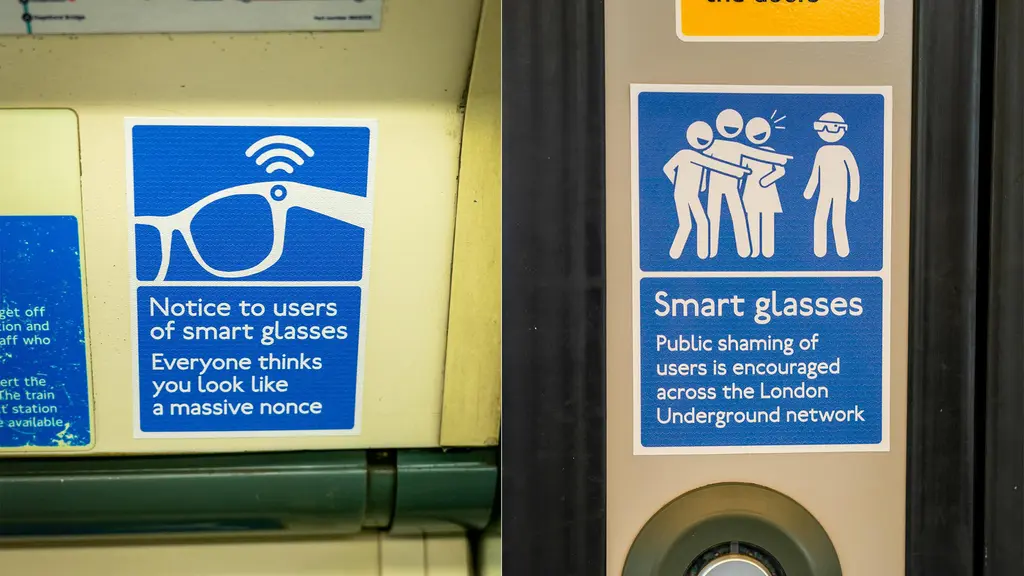
Activists slam “pervert glasses” in new guerrilla campaign
Everyone Hates Elon — Stickers have appeared on the London Underground network, criticising the wearable technology’s covert filming capabilities.
Written by: Isaac Muk

Behind the curtain at Alternative Miss World 1981
Olympia glamour — Running a subversive take on the traditional beauty pageant, the Andrew Logan organised event prioritised underground creativity and invention. Photographer David Corio went behind the scenes at its biggest edition.
Written by: Miss Rosen

Dan Lacey: “BMX is forever evolving”
Overground — Steph Pomphrey caught up with the two-wheel legend after his latest meet in east London, chatting about fatherhood, music and action sports within the outdoor industry.
Written by: Steph Pomphrey


