Why UK doctors are now prescribing surf therapy
- Text by Eva Clifford
- Photography by Eva Clifford

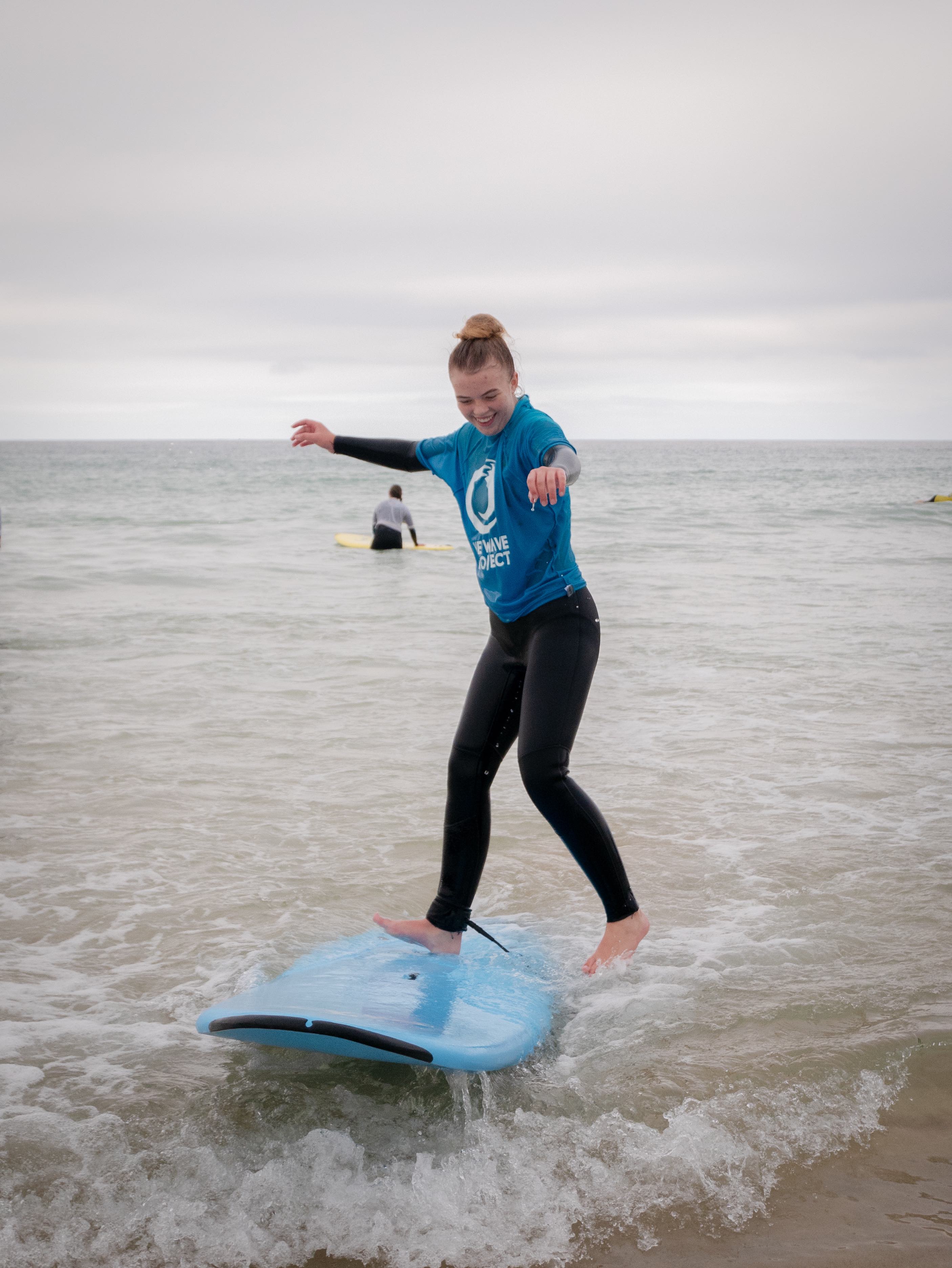
“Once you enter the water, you leave all your baggage and your worries on the shore,” says Katy, Project Coordinator for The Wave Project in West Cornwall. “And for that hour or whatever that you’re in the sea, you don’t think of anything else.”
Started in 2010, The Wave Project is a charity that runs six-week therapeutic surf courses across the UK. Despite initially targeting kids with autism, they now benefit young people aged eight – 18 experiencing physical and mental health issues, social deprivation or social isolation.
“We’re trying to reach the young people who need this intervention the most,” explains Katy. “Kids are referred to us by professionals working with them – often a doctor, teacher or social worker – if they’re experiencing very high levels of anxiety and they’re socially isolated.”
“Obviously the more isolated you get, the worse your mental health becomes, so we’re trying to break that cycle by taking away every barrier possible to get them to join in in our surf therapy sessions.”
Given the breadth of the anxiety spectrum, a typical surf session might include people with physical disabilities, learning difficulties, family problems or issues at school with bullying.
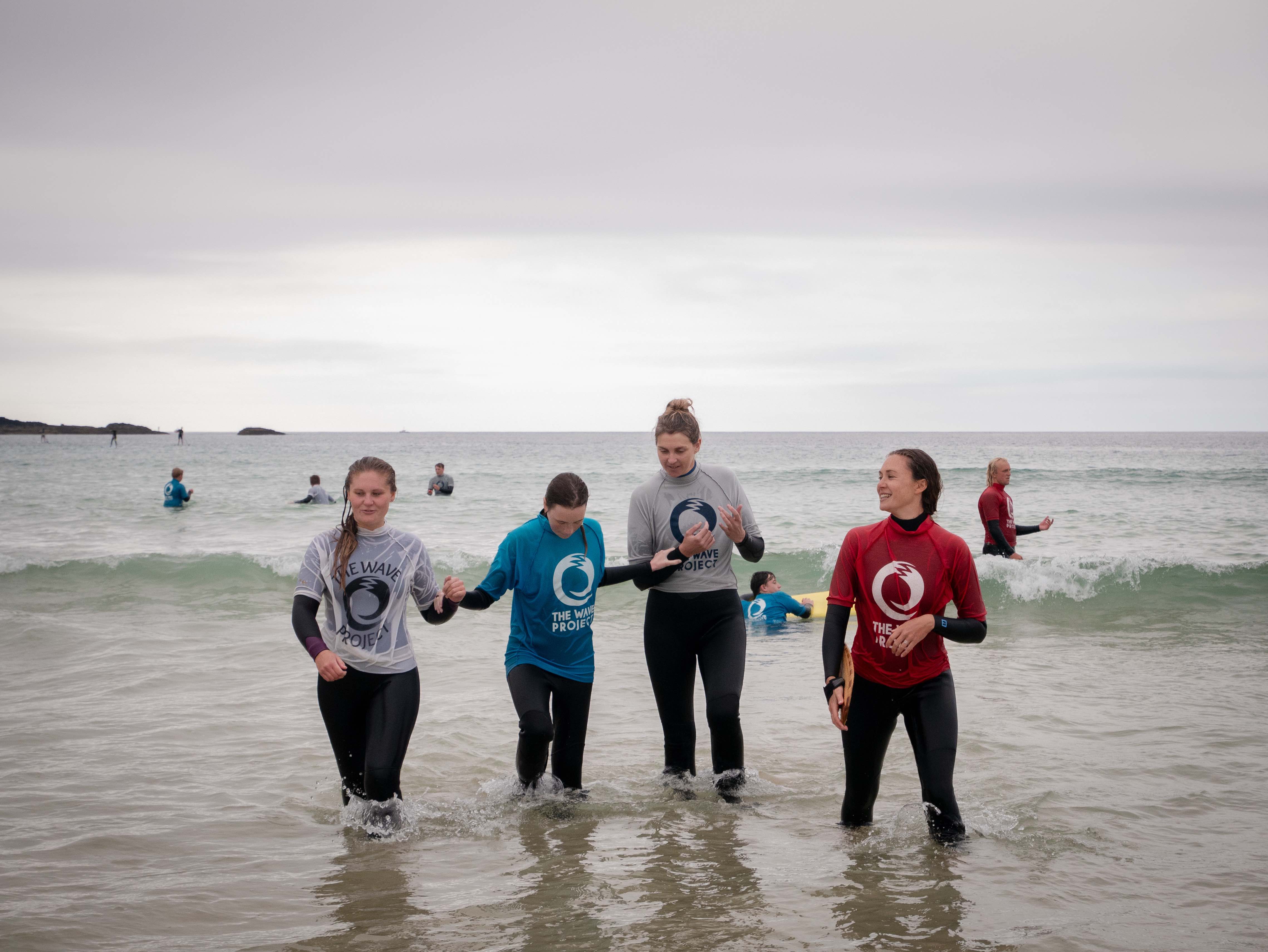
“That’s one of the reasons it works because there isn’t any box they’re fitting in to,” says Katy. “It’s just a random group of people and because there’s also a random group of volunteers, it’s just a big group having fun together.”
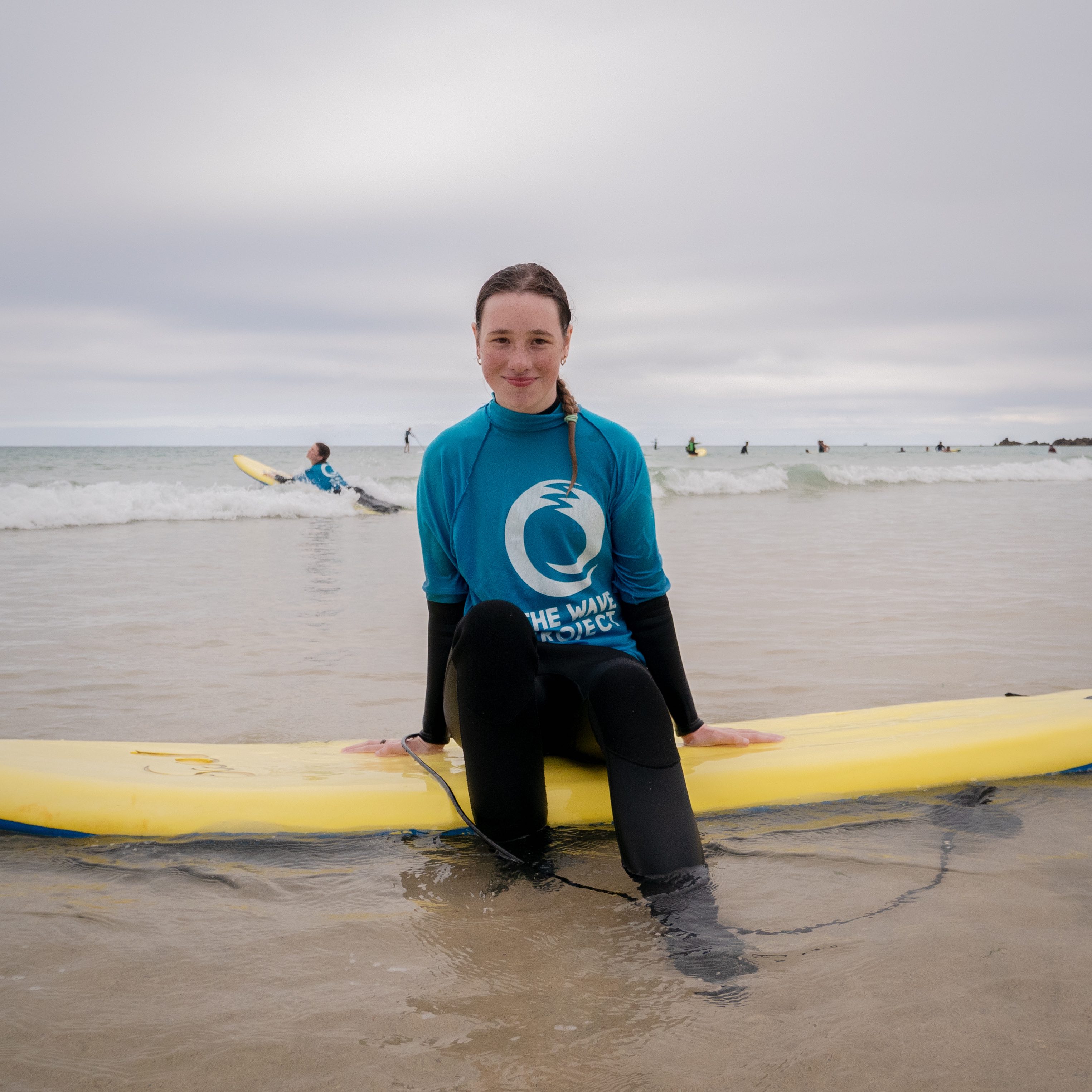
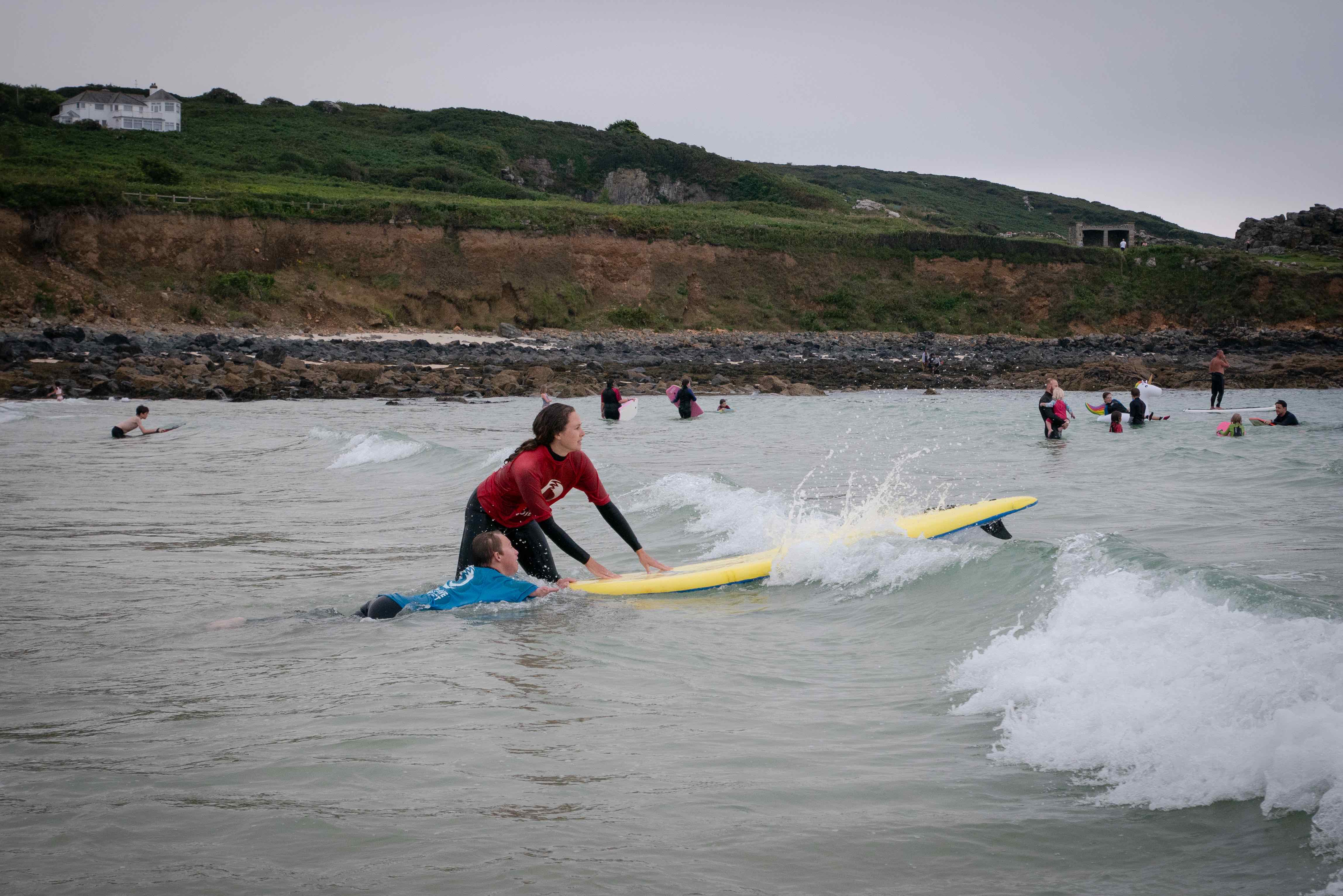
Surf therapy is a relatively new concept, yet the evidence so far shows it is having a positive impact in terms of wellbeing and self-esteem. An NHS-funded pilot of The Wave Project in 2010 – involving a group of 20 young people with mental disorders – revealed that wellbeing increased among the group overall, with participants feeling calmer, less angry and more connected to each other after surfing.
Surf therapy projects are also springing up globally for a range of demographics. Warrior Surf, for instance, works with military veterans in the US to alleviate symptoms of post-traumatic stress disorder (PTSD). Likewise, the Waves for Change program, based in Cape Town, South Africa, operates in communities impacted by violence, poverty and conflict.
“Surfing in particular, helps to build resilience because the nature of learning to surf means you have to fall off a lot and try again,” says Katy. “You take away failure and that helps to actually build resilience, which they can then transfer to other areas of their life.”
Katy also highlights the importance of risk-taking and overcoming fears. “On the first day before you enter the water, your anxiety is through the roof,” she says. “Some of the kids are absolutely terrified and anxious to the point to where they really don’t want to do it, but if you can just get them in the water, I would say that’s where the magic happens.”
Each person at The Wave Project is allocated a one-to-one peer mentor, and encouraged to take things at their own pace. For those who want to continue after the six-week course ends, they can attend Surf Club. But as the scheme doesn’t receive direct funding and relies largely on donations, it costs £5 per session.
“For a lot of the kids, sometimes it’s not about the surfing,” says Katy. “If they can then have the confidence to join the football club they’ve always wanted to join but they didn’t have the confidence beforehand, then that’s a success for us.”
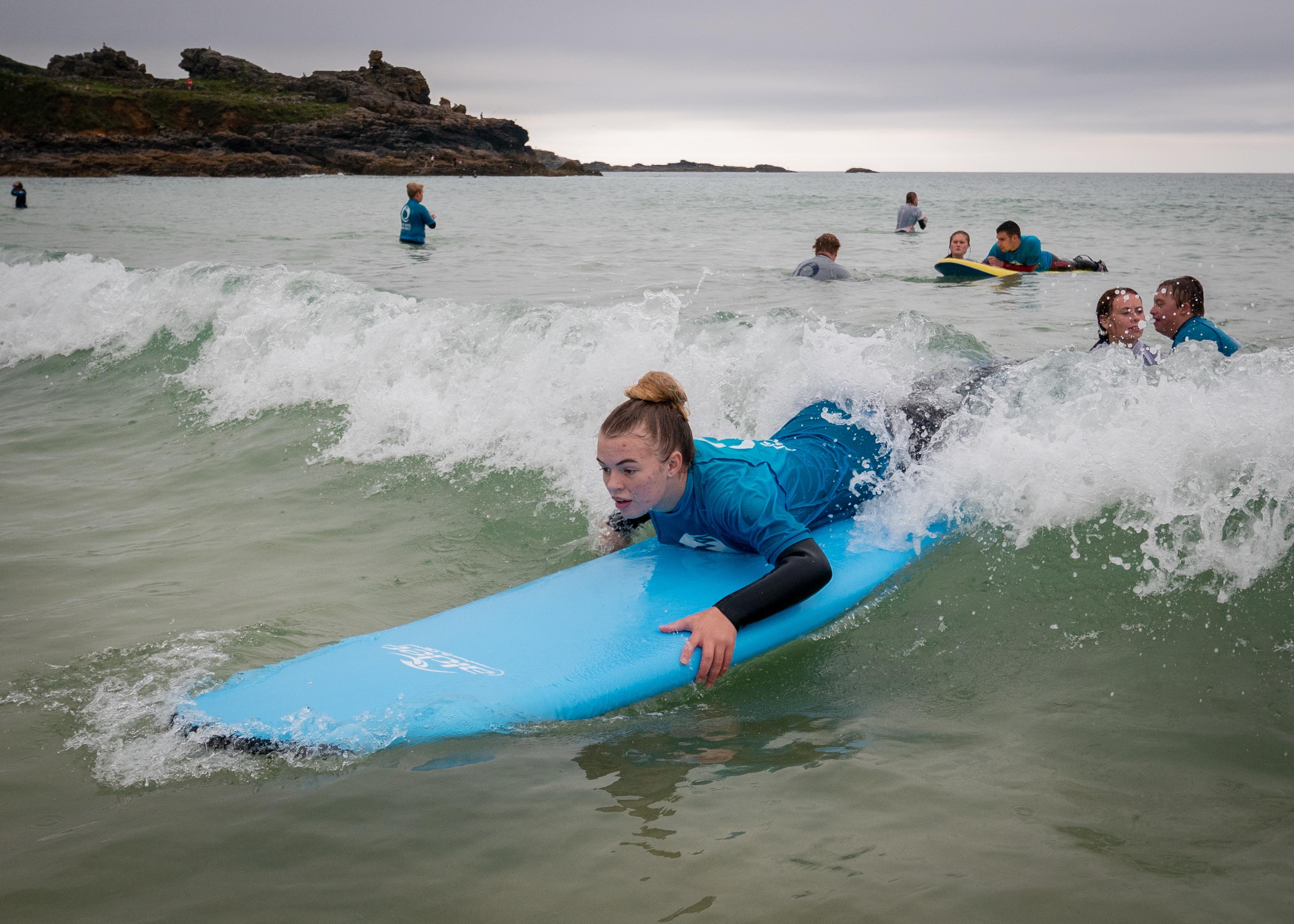
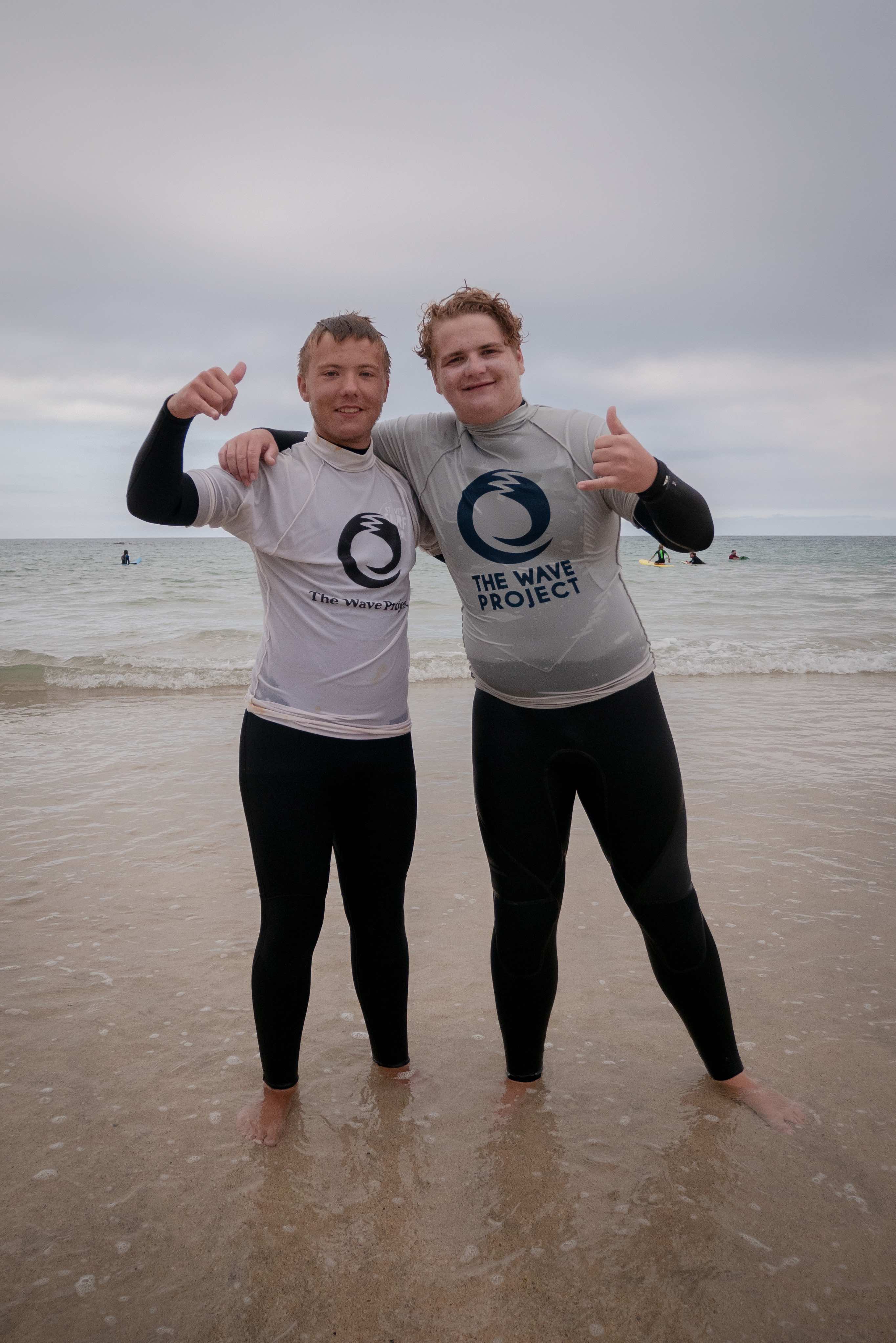
In Cornwall, where the Surf Club has been running for over five years, around 60 per cent of people attending the initial six-week course have gone on to join Surf Club or expressed an interest in doing so, and 10 per cent of those over 14 and able to do so, have become volunteers with The Wave Project.
Lewis, 16, has been volunteering with The Wave Project for two years. “I started off as a student and then since then, I’ve wanted to give back what I had,” he tells me. “Most weekends I’ll come down to St Ives and volunteer. I live in Penzance, so it’s a bit of a trek but it’s really good fun. It’s pushed me to learn new techniques and want to become a surf teacher myself.”
“It’s like a second family,” chimes in Harvey, who’s volunteered since 2017. Although it can be challenging at times, Harvey says he learns more because of it and claims the experience has improved his communication skills.
Like Harvey, Lewis says the group is like family and the beach his second home. For him, being able to help people overcome fears is an especially rewarding factor of volunteering: “Some people might be scared of sand or the sea, or putting on a wet suit, but you just gradually build their confidence around it and by the end of the six weeks they’re loving it, loving life.”
“It’s just being in the sea,” he adds, finally. “There’s something about it, isn’t there?”
Learn more about The Wave Project on its official website.
Enjoyed this article? Like Huck on Facebook or follow us on Twitter.
You might like

In the pit at one of the UK’s last stock car & banger speedways
Stock Car Racing Isn’t Dead — Photographer Liam McCarthy spent time in and around the Arlington Raceway’s circuit, capturing the diehard community that keeps the sport alive.
Written by: Isaac Muk

Tish Murtha’s searing documentation of broken Britain
Vandalism on a Grand Scale — Capturing youth unemployment and poverty in north-east England during the ’80s, the photographer never lived to see her work published. A new photobook by British Culture Archive brings her eye-opening work to light.
Written by: Miss Rosen

Sepia splashed memories of Britain’s ’90s squatting and free party scene
Bygones — Moving into a Hackney squat at the age of 19, Tom Hunter spent years living on London’s edges, while documenting the vibrant, creative community and culture that it enabled. Huck’s art director Sam White chats to him about the freedom that existed, the collectivism and what’s been lost over the decades since.
Written by: Samuel White

‘Baking Street’: Activists rename Tube stations in heatwave protest
‘Heatwave, sponsored by Shell’ — The protest comes as the UK recorded the hottest day in June ever recorded at 36.7C.
Written by: Ella Glossop

Moshpits & kickflips at the Volcom Garden Experience 2026
Family affair — Last weekend, the skate, surf and snow culture brand hosted a free mini festival in its European backyard of Biarritz. We went along and chatted to legendary artist and surfer Ozzie Wright.
Written by: Isaac Muk

As the Cornwall & Devon coastline gentrifies, what’s left at UK surfing’s spiritual home?
Priced out — Once belonging to anyone willing to be cold and thrown around underwater, the sport is becoming increasingly inaccessible, as second homes and commodification reshape England’s southwestern shores.
Written by: Noah Petersons


