Why young people will make sure Keir Starmer can no longer ignore climate crisis
- Text by Emma de Saram
- Photography by Green New Deal Rising

Three years ago, on a dreary grey Sunday morning, I raced along Brighton pier to confront Keir Starmer on climate. Backed by a team of young people involved in the group Green New Deal Rising, I asked the then-leader of the opposition if he was committed to funding the £85 billion that we needed for a just transition to a green economy.
I walked alongside the Labour leader, asking him to answer a simple question. He refused to acknowledge me, eventually brushing past me with a smug smile, before sweeping into a recording of The Andrew Marr Show, cameras clicking, his attention fixed firmly away from me. This interaction was caught on camera, immortalising how the Labour leader treats young people fighting for a liveable planet.
Looking back, this moment encapsulates Starmer’s attitude, not only towards young activists like me, but also towards the public at large and the planet we’re fighting to protect. Starmer has only continued to box up and bury the climate crisis in pursuit of winning power.
Young people were ignored by @Keir_Starmer when we asked him where he stood on the #GreenNewDeal in Brighton today.
— Green New Deal Rising (@GNDRising) September 26, 2021
£85 billion is the minimum we would need to create millions of good green jobs.
But Keir won’t even commit to that? pic.twitter.com/k9UHHQRBqe
During that Labour Conference of 2021, Green New Deal Rising volunteers came together from across the country, pushing to make the climate commitments we need to secure a future a party priority. We had some success, with Labour pledging £28 billion towards climate. However as Labour edged closer to power, confident of victory after 14 years of Tory austerity, they abandoned their £28 billion climate commitment.
Far from discouraging me, my confrontation with Starmer only deepened my determination to get through to our leaders over the coming years. Later that year, I headed to COP26 in Glasgow, where it became clear that governments in the Global North were sleepwalking into climate breakdown. The UK’s refusal to implement meaningful climate policies or pay genuine reparations to the countries least responsible and most impacted by the crisis we created made clear the urgency of this fight for justice. As President of my student union, I led campaigns for fossil fuel divestment and affordable food, worked with trade unions, and took action for a free Palestine – because my generation knows the climate crisis is part of a shared struggle for equality and liberation.
Now that Labour is in power, Starmer simply cannot afford to ignore the climate emergency. This is the last government that can take meaningful action on climate on the climate crisis – we are 5 years out from 2030, a pivotal milestone for the plan to reach net zero. For how much longer will the Prime Minister justify his inertia in the face of potentially 3.1C of global heating, a far hotter planet than humans have ever lived on? Torrential floods, collapsing public services, and the worsening cost-of-living crisis also grow larger by the day.
Although Starmer tried to slip away from accountability in 2021, young people with everything to fight for are still chasing the Labour leader down. Yesterday, over 60 young Green New Deal Rising activists descended on Parliament, holding placards and erecting a huge table on the lawn. Our message: that MPs need to come to the table and get serious, finally, about the root-and-branch changes needed to solve the crises we face, in the time we have left.
Afterwards, we held a lobby day inside, speaking with MPs about the urgency of a Green New Deal – an ambitious plan to tackle the climate and cost of living crises through mass public investment across the economy. If politicians won’t listen to us, then we will go directly to the seat of power to tell our MPs about the solutions they can support.


The energy in the room was palpable. Packed with young people telling their stories – of austerity, of climate breakdown, of rising prices and falling living standards – all inside the corridors of power which too often forget these realities in favour of corporate interests. In just two hours, we spoke to over 40 MPs, with many signing our Green New Deal pledge. The determination of young people, organising together, plus the fear of a far-right surge if Labour does not deliver much bolder changes, can turn the tide of this government towards a just future. That is the work young people are taking up in huge numbers.
And there are signs of progress. At this year’s COP, Keir Starmer committed the UK to an ambitious target for 2035 – to cut climate emissions by 81%. But the climate doesn’t respond to targets. It requires serious action, and we need concrete plans and mass investment to reach it. The Green New Deal is modelled on Roosevelt’s New Deal, which followed the Great Depression in the United States. It demands large-scale public investment in the green economy, addressing our climate and economic crises on the scale that they exist. This is the level of action that we know is necessary to secure our futures.
Climate activists like me have taken on seemingly insurmountable battles, with sometimes the most incomprehensible consequences. With the backdrop of climate catastrophe, the UK government’s reckless approval of over 100 new fossil fuel projects, and backtracking on previous commitments, only exemplifies the urgency of systems change. It’s not that the system is broken – it’s that it’s working exactly as it was designed to – benefiting the wealthy elite at the expense of everyone else.
Too often, my generation are told we’re doing it wrong – that we’re too radical, and are asking for too much. Starmer himself has called for climate activists to be locked up. But when the stakes are this high, when the UN is saying we are on a “highway to climate hell”, what choice do young people have? Our generation is continuing to escalate because we know that both the economic and climate crises that we face can be overcome. We won’t stop chasing politicians down – in or outside of Parliament – until they deliver.
You might like

COP26 may have failed, but our fight must continue
No planet b — The chasm between what has been promised and what’s needed to stop catastrophic climate change is still far too big. But it’s on the streets that we should look for hope, writes Friends of the Earth campaigner, Rachel Kennerley.
Written by: Rachel Kennerley
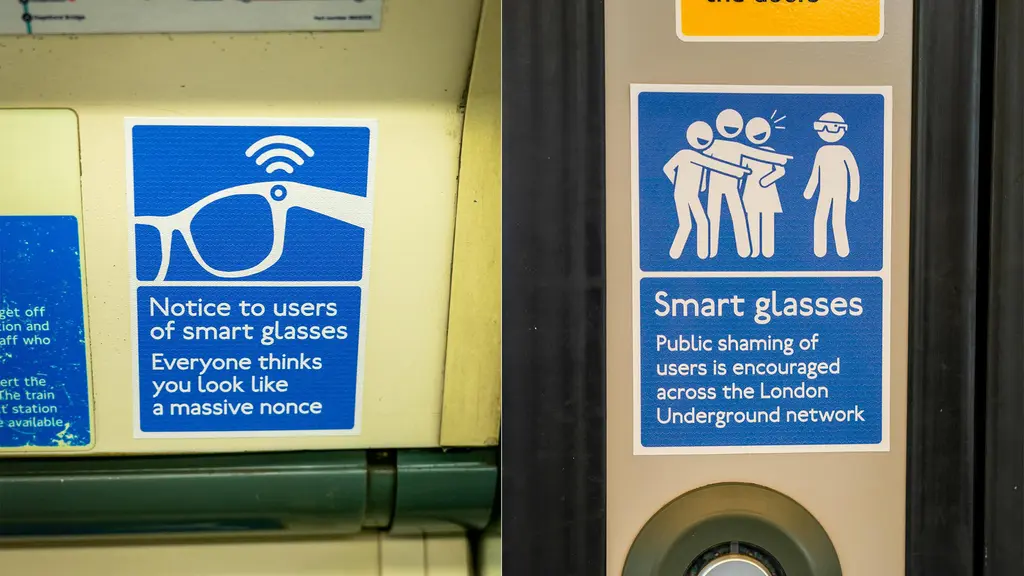
Activists slam “pervert glasses” in new guerrilla campaign
Everyone Hates Elon — Stickers have appeared on the London Underground network, criticising the wearable technology’s covert filming capabilities.
Written by: Isaac Muk

New exhibition highlights British radical living over 200 years
Earthly Paradise — Taking place at the William Morris Gallery, it explores the homes and lives of artists, writers, musicians and more, as well as the conditions that allowed them to thrive.
Written by: Isaac Muk

Pink Floyd’s Roger Waters joins team of new Palestinian resistance documentary
Freedom Theatre — Directed by Rishi Pelham, the film spotlights a theatre operating in the Jenin refugee camp.
Written by: Ella Glossop

Just Stop Oil holds first protest in 17 months
No new drilling — Having previously said that it was “hanging up the hi-vis”, the climate activist group has blocked a road outside Parliament to protest Andy Burnham opening the door for new oil and gas extraction licenses in the North Sea.
Written by: Ella Glossop

In photos: The enduring resistance of Notting Hill Carnival
Carnival of Resistance — A new photobook by Wayne Campbell and Wayne Crichlow reflects on the protest beginnings of Europe’s biggest street festival, along with the traditions keeping its original spirit alive today.
Written by: Isaac Muk


