Boots on the Ground: Volunteers of the Refugee Crisis
- Text by HUCK HQ
- Photography by Hendrik Faller and Bailey Tom Bailey
Since Lesvos emerged as a focal point of the refugee crisis, volunteer organisations have worked tirelessly to mitigate the human cost of the unfolding humanitarian disaster. The Greek government and international aid agencies have proven unable to cope with the half a million and counting arrivals to the island on flimsy dinghies from Turkey – but where they’ve failed, an army of volunteers have stepped in to meet refugees’ basic needs.
Merel Graeve is a dedicated member of Better Days For Moria – named in reference to the over-stretched and under-resourced official registration camp on Lesvos, called Moria. While the authorities have struggled to cope with one of the largest movements of people in history, the assistance of volunteers has not always been welcomed, and there has been friction over the volunteers’ unofficial “Olive Grove” camp next that sits next to the state-run Camp Moria.
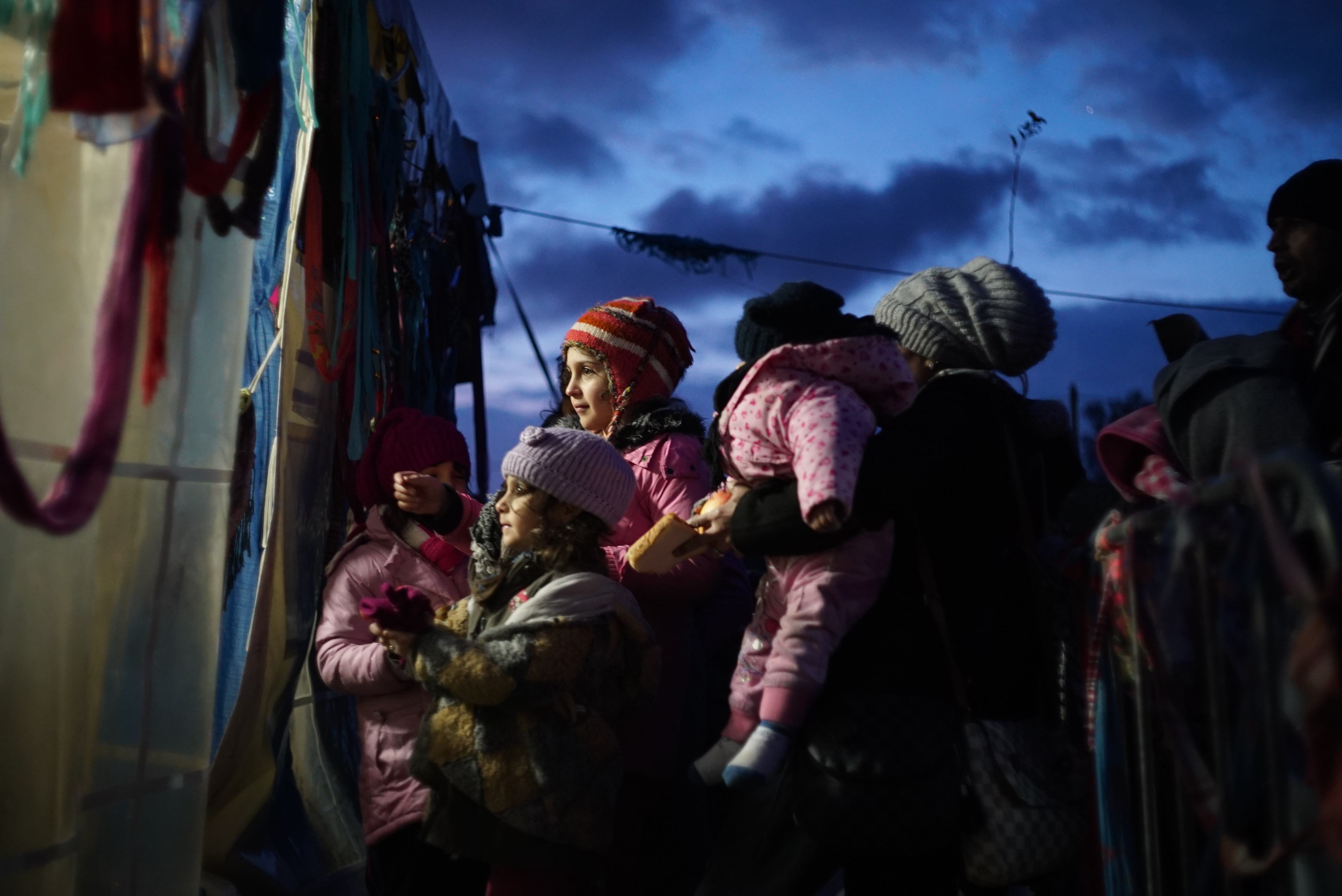
Photo by Bailey Tom Bailey

The Olive Grove unofficial camp. Photo by Bailey Tom Bailey
The situation facing arriving refugees reached its lowest ebb in October 2015, when they experienced delays, a lack of resources, and often degrading treatment at the hands of authorities. Conditions for refugees on Lesvos have improved since then, with an increase in supplies and the winter weather discouraging others from making the perilous trip. Life, however, remains tough.
Following the implementation of the ‘one in one out’ EU-Turkey deal, tensions have rising between the Greek government, the UN Refugee Agency (UNHCR), and NGO’s including Doctors Without Borders (MSF). The UNHCR has condemned those responsible for seeing registration camps like Moria being turned into detention centres.
Volunteer organisations like Better Days for Moria are also considering leaving the islands to move to one of the camps on mainland Greece, where tens of thousands of people are now stuck in limbo.
MSF released a statement announcing their decision to leave Lesvos. “We took the extremely difficult decision to end our activities in Moria because continuing to work inside would make us complicit in a system we consider to be both unfair and inhumane,” said Marie Elisabeth Ingres, MSF Head of Mission in Greece. “We will not allow our assistance to be instrumentalized for a mass expulsion operation and we refuse to be part of a system that has no regard for the humanitarian or protection needs of asylum seekers and migrants.”
Enjoyed this article? Like Huck on Facebook or follow us on Twitter.
Shot and directed by Hendrik Faller. Second camera by Bailey Tom Bailey.
You might like

The battle for the soul of lockpicking
Under locksport and key — In recent years, breaking locks for fun has grown from a niche hobby into an activity followed by millions of people. As it has matured, so have tensions over who sets the rules.
Written by: Jack Dennison-Thompson

What life on the Strait of Hormuz is really like
Southern Winds — Bandar Abbas based photographer Morteza Niknahad has been capturing the diverse communities and stories of his local region since he first picked up a camera. His new series highlights the human impact of war.
Written by: Isaac Muk

Pink Floyd’s Roger Waters joins team of new Palestinian resistance documentary
Freedom Theatre — Directed by Rishi Pelham, the film spotlights a theatre operating in the Jenin refugee camp.
Written by: Ella Glossop

UK’s first ever Latino film festival is coming to London
LoLaFF — Taking place between October 2-6, it will feature 55 filmmakers from Latin America, with an opening night at the Barbican.
Written by: Isaac Muk

Inside the searing, strangely wholesome world of competitive chilli eating
Red hot — Exploding out of pandemic-era isolation, a growing community of chilliheads are competing across the globe, devouring millions of Scoville units and fighting off agonising capsaicin cramps in the process. Hannah Bentley speaks to some of the scene’s key figures to find out why.
Written by: Hannah Bentley

As Hanoi’s nightlife faces raids & repression, its underground scene modulates
Spaces Between the Beats — Tensions between nightlife and authorities have grown in recent times, as police target venues and their patrons with increasingly frequent drug testing and searches. With clubs becoming hostile spaces as a result, Hanoi’s electronic music community is finding new spaces and forms of expression, reports Martin Guttridge-Hewitt.
Written by: Martin Guttridge-Hewitt


