
Colourful images of millions of Brazilians flooding the streets gave the movement to impeach president Dilma Rousseff a badge of respectability. Local media painted the white, middle-class protests as representing popular anger towards high-level corruption across the political spectrum. But when Brazil’s parliament voted for impeachment on Sunday, that narrative was destroyed for ever.
Sixty percent of those who voted to remove Dilma from power are themselves under investigation for serious crimes ranging from corruption to money laundering, forging documents, misappropriating public funds, conspiracy, illegal deforestation, kidnapping and homicide. The leader of efforts to depose Dilma, house speaker Eduardo Cunha of the conservative PMDB party, was discovered to have millions of dollars in bribes in secret Swiss bank accounts last year after denials to congress. In contrast, Dilma is charged with shifting funds around to massage government statistics before the election. She remains one of the few politicians not accused of enriching herself.
The Brazilian public are outraged at the entire political class, but they’ve recognised the hypocrisy. Despite Dilma being blamed for a deep recession, political chaos and failing to stop corruption, only 61-67% want to see her stripped of her mandate, while 77% support Cunha’s removal. But the events of recent months have shown the people’s views count for little as anti-Dilma events have largely been stage-managed by militant right-wing politicians working with a politicised and monopolistic media.
So, where does Brazil go from here? How can the country recover from its deep political crisis? With Dilma’s fall bringing to an end two decades of Worker’s Party (PT) domination and the resurgent right contemplating deep spending cuts and rolling back many of their progressive policies, what will be the consequences for ordinary people? How can young people, activists and social movements ensure they still have a voice in developments and defend the rights they’ve gained over the last two decades? To find some answers, we reached out to Mathias de Alencastro, a political scientist and director of IPEA (the federal government’s internal research centre), and Cynara Menezes, an independent journalist and publisher of news blog Socialista Morena.

Anti-impeachment protests in São Paolo earlier this year
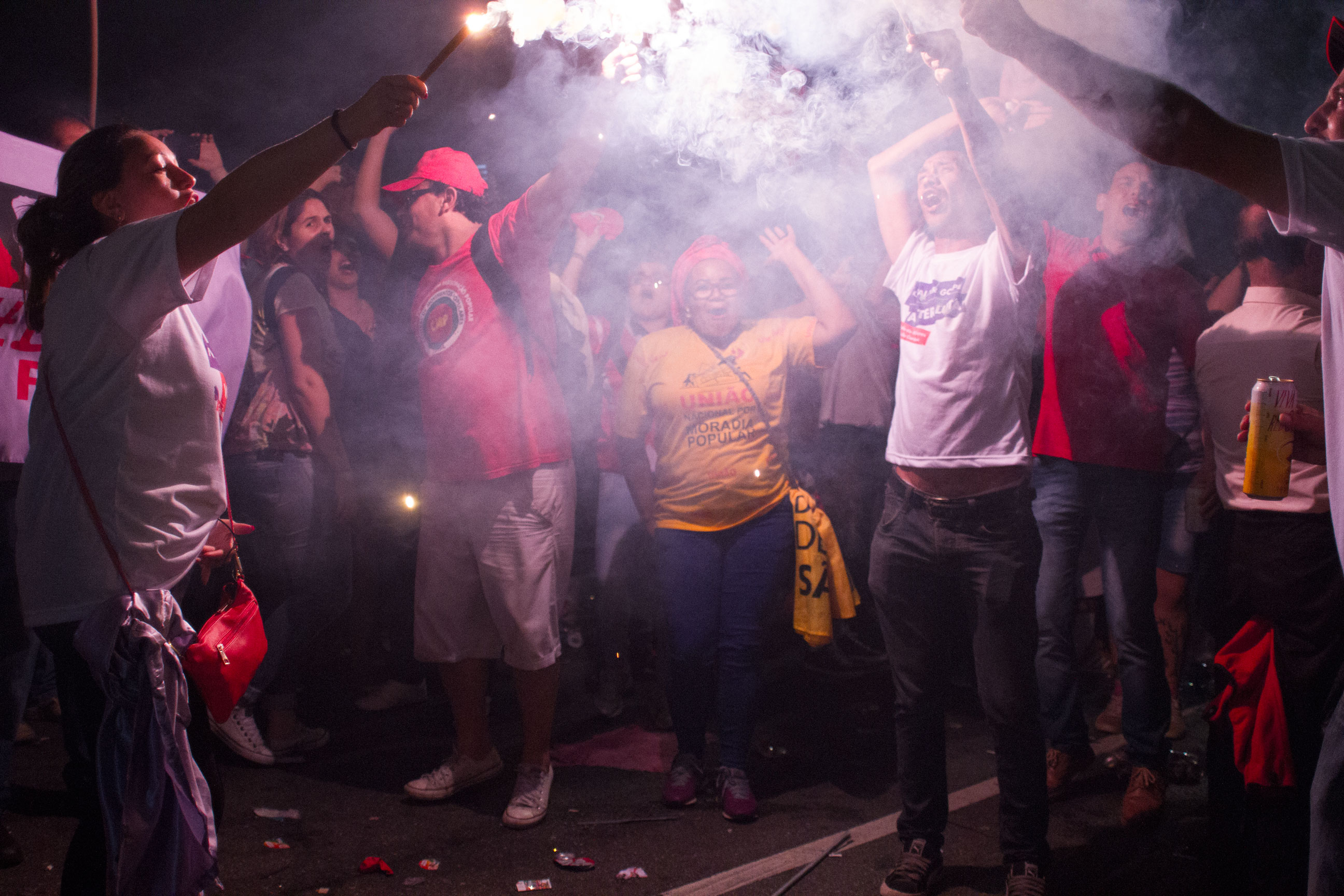
“I think Brazil has begun walking down a very dangerous path,” Cynara explains. “The path of religious intolerance, homophobia, persecution of minorities, gays, black people, women. Poor people will lose their rights.”
Although Dilma has never possessed the charisma of her PT predecessor Luíz Inácio “Lula” da Silva, there’s widespread appreciation for the achievements of her Workers Party since the early 2000s. For the first time in its history, PT began to challenge the social structures that make Brazil one of the most unequal countries in the world. They helped lift 40 million people out of poverty and integrated millions of Brazilians into the political process for the first time, from the LGBT community to poor blacks and landless peasants – many of whom now fear being excluded socially and economically.
But this mobilisation has created a powerful counter-reaction. “This is not a fight against corruption,” Mathias explains. “It’s a battle of ideas. It’s a reactionary restoration that is being defended by [the right]. What has been fuelling this conservative movement now coming to power is a complete hatred of the social development of Brazil over the last 15 years.”
He mentions the maids of wealthy families buying cars for the first time, the poor beginning to fly around the country and people from the favelas organising themselves to take walks in upper-class shopping malls, as examples of shifting social relations in Brazil. “This is seen as an attempt by the poorest people to appropriate public space and the elite considers it an invasion of their territory,” he explains. “Discussions about gender and racial empowerment are seen as threatening Brazilian values, seen from a very conservative perspective. It’s the minority, white historical rulers of the country feeling threatened and insulted over the past 15 years by popular emancipation. They want their country back.”

Anti-government protests in São Paulo


But PT’s lurch to the right under Dilma, involvement in corruption, their cuts in response to the economic crisis and abandonment of many allied social movements, have angered longtime supporters. “PT have committed a bunch of mistakes which took us to the situation we are in today,” Cynara explains. “They have made excessive concessions to the right in the name of governability. And above all, they behaved just like other parties which they criticised and used the same campaign financing methods. These should have been changed back in 2002, when Lula took office for the first time and was very, very popular.”
To get out of its deep-rooted crisis, Brazil needs to make long-term changes, such as electoral reform and fundamental reform of political campaign funding. Cynara argues there are lots of changes Brazil needs, but will likely be blocked by the conservative forces, at least for now, such as instituting a wealth tax; decriminalisation of marijuana, which will help reduce the imprisonment and deaths of young black men at the hands of the police; strengthened indigenous rights and land reform.
Young people have been disappointed by PT, but they will be at the forefront of whatever comes next. “Many entered progressive politics thanks to this government, but feel the government has betrayed them,” Mathias explains. “These people are going to feel emancipated – it’s their turn to create the rules. Saying it’s a generational shift is too basic, but some people are going to be able to formulate thoughts in a different way than they have under the hegemony of PT’s ideology. We’re already seeing the seeds of that in terms of new social movements that are prospering.” Mathias’ examples include innovative new ecological NGOs, investigative journalism centre Pública and disruptive alternative media network Mídia Ninja. “There are signs that progressive politics will still have a pulse after the government shuts down,” he adds.
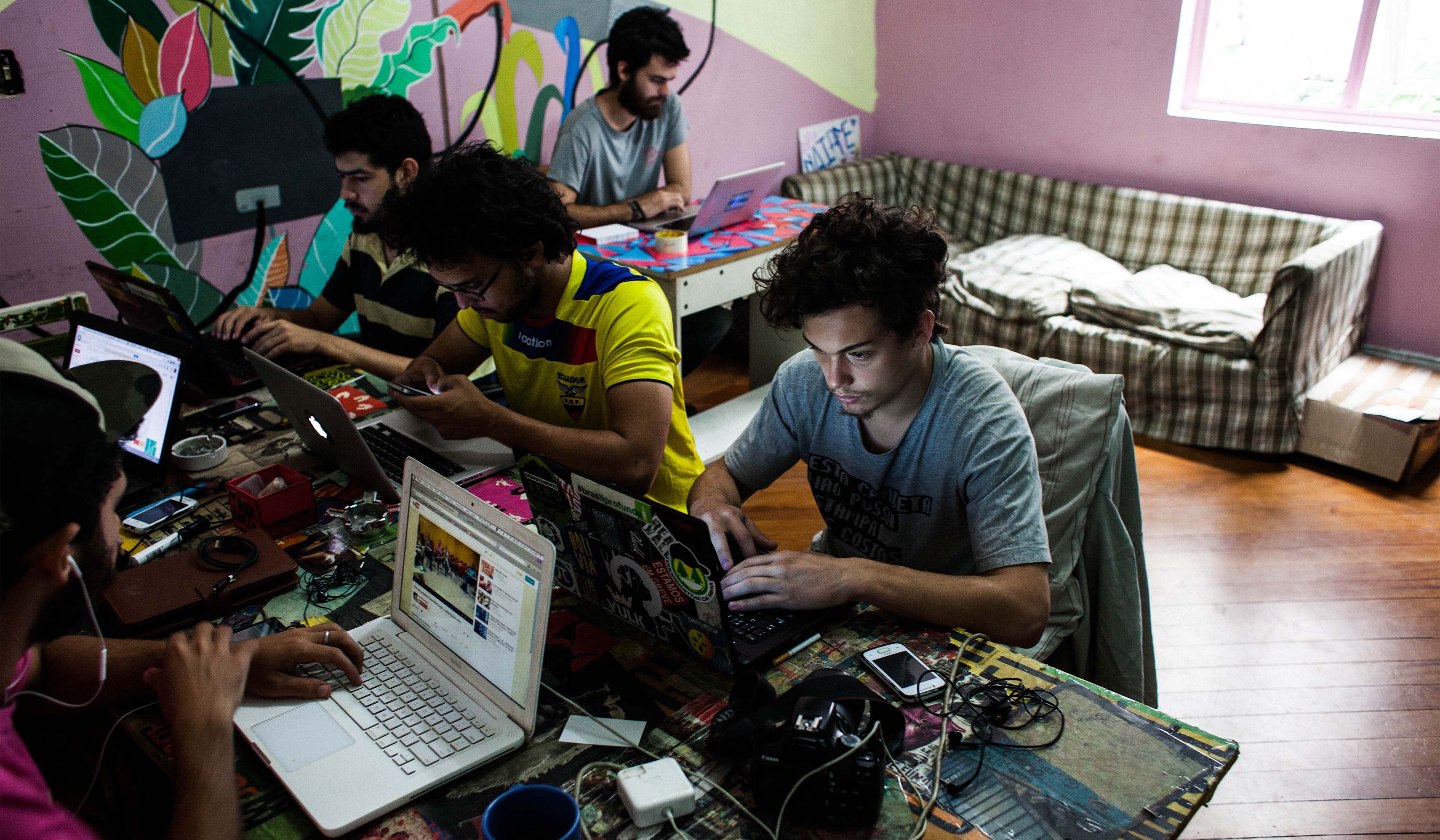
Mídia Ninja’s São Paulo base. Photo by Tommaso Protti
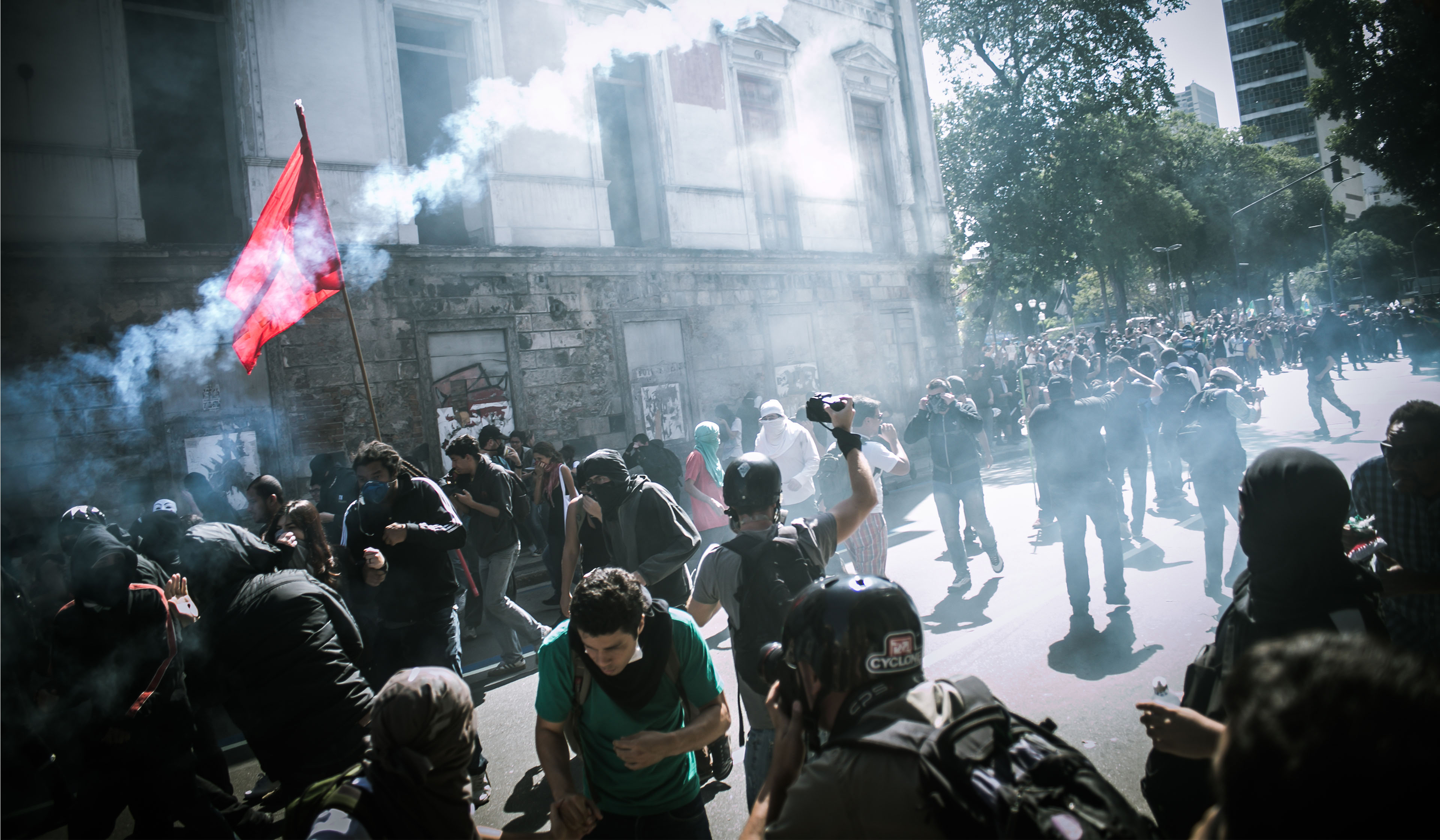
Photo from Mídia Ninja protest coverage
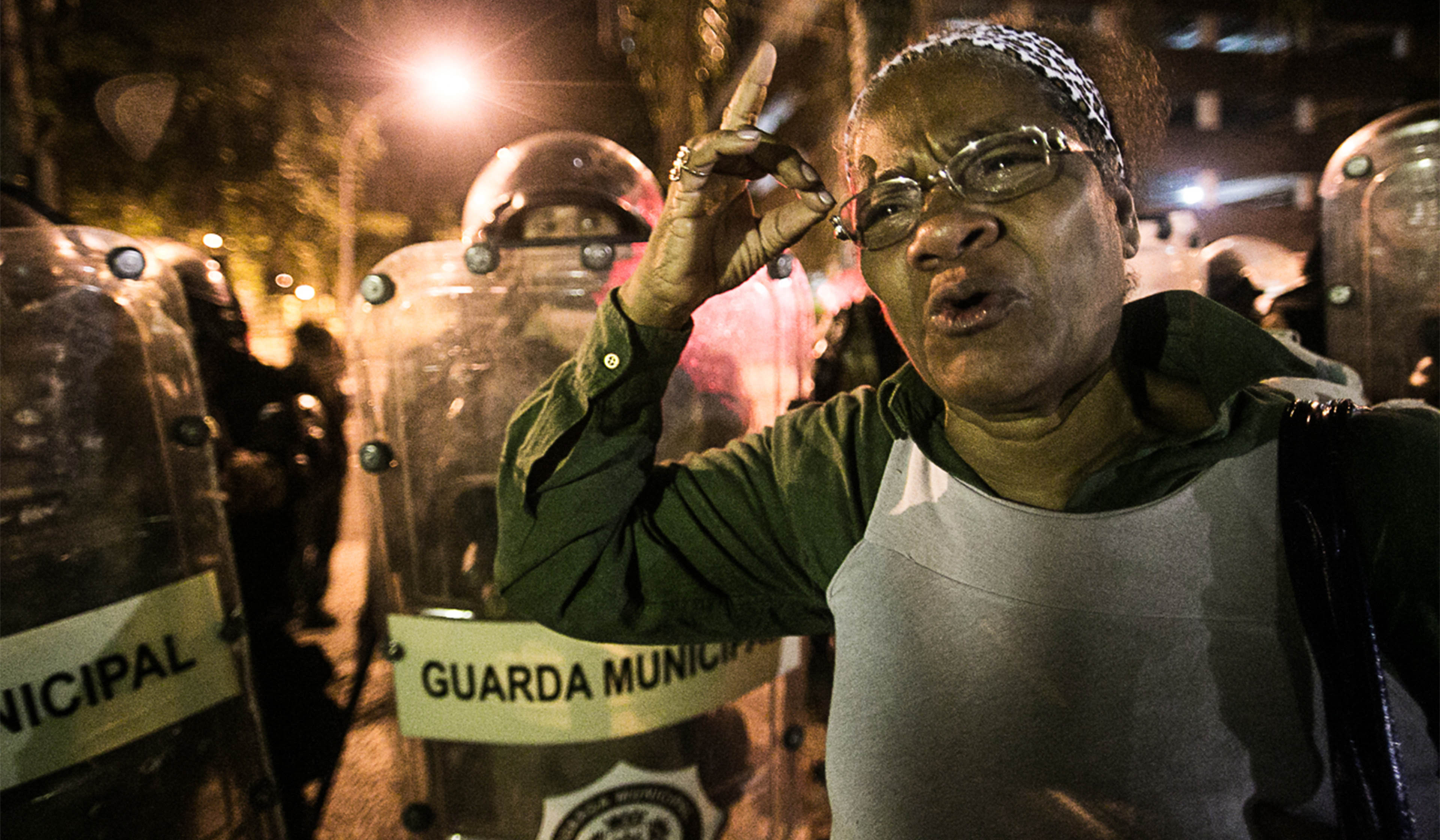
Photo from Mídia Ninja protest coverage
While many see the prospects for progressive politics looking bleak right now, Mathias argues it’s actually a moment of huge opportunity for the left to rebuild and better serve the demands of the new Brazil. “Sociologist Jessé Souza has identified a group of roughly 20% of the population who are trying to find new political references but don’t identify with the traditional structures,” he explains. “They’re called the batalhadores, the warriors: the new lower middle-class fighting every day to survive. They work in the service sector, call-centres not factories, and don’t relate to unions but they have a tendency for progressive politics. Social movements will have to find these new Brazilians in society and develop a new language to connect with them.”
In what many expect to be a very difficult and repressive period for social movements, there is also an opening for progressive politics to evolve and learn from the mistakes of the PT era – if they can be brave enough to look beyond the daily battles of today and lay down a broader vision. “I think the priority right now is not to confuse the urgent with the important,” Mathias explains. “Even though the immediate struggle against the new government will be very frustrating, reinventing social movements and establishing a new connection with Brazilian society should remain the focus. People shouldn’t be demotivated in the short term. I think the future for progressive politics is going to be way more interesting than what PT have provided over the last 15 years.”
Enjoyed this article? Like Huck on Facebook or follow us on Twitter.
You might like
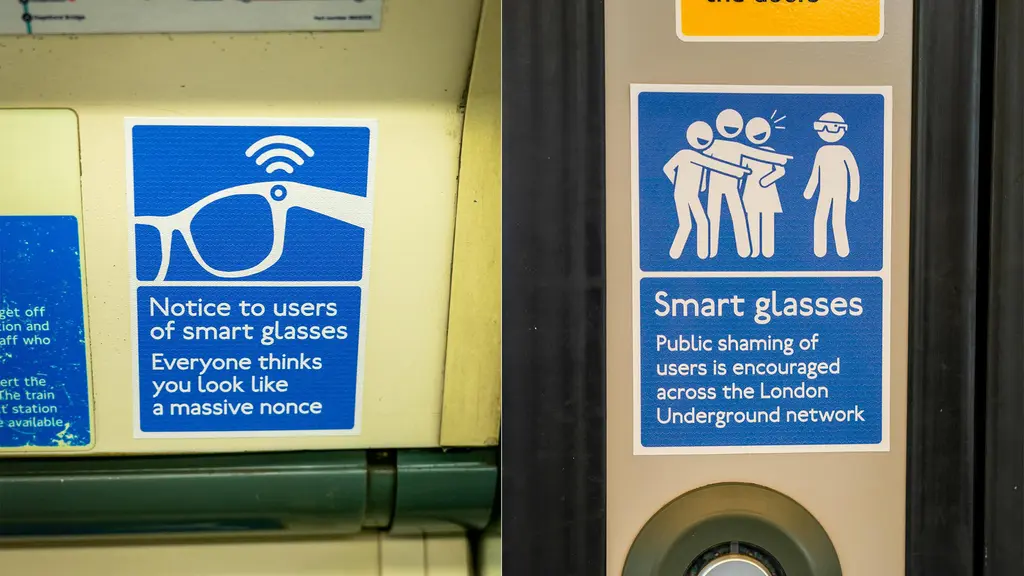
Activists slam “pervert glasses” in new guerrilla campaign
Everyone Hates Elon — Stickers have appeared on the London Underground network, criticising the wearable technology’s covert filming capabilities.
Written by: Isaac Muk

New exhibition highlights British radical living over 200 years
Earthly Paradise — Taking place at the William Morris Gallery, it explores the homes and lives of artists, writers, musicians and more, as well as the conditions that allowed them to thrive.
Written by: Isaac Muk

Pink Floyd’s Roger Waters joins team of new Palestinian resistance documentary
Freedom Theatre — Directed by Rishi Pelham, the film spotlights a theatre operating in the Jenin refugee camp.
Written by: Ella Glossop

Just Stop Oil holds first protest in 17 months
No new drilling — Having previously said that it was “hanging up the hi-vis”, the climate activist group has blocked a road outside Parliament to protest Andy Burnham opening the door for new oil and gas extraction licenses in the North Sea.
Written by: Ella Glossop

In photos: The enduring resistance of Notting Hill Carnival
Carnival of Resistance — A new photobook by Wayne Campbell and Wayne Crichlow reflects on the protest beginnings of Europe’s biggest street festival, along with the traditions keeping its original spirit alive today.
Written by: Isaac Muk

Tens of thousands gather to remember Jason Arday at London vigil
Stand Up to Racism — It took place in Trafalgar Square, with speakers paying tribute to the former Cambridge professor’s life and achievements, while calling for accountability over the reporting he faced from the mainstream press.
Written by: Ella Glossop


