Hate your job? Why not join a complaints choir
- Text by Emily Reynolds
- Photography by Amina Bihi

Bad bosses, poor pay, that colleague who always eats with their mouth open – from the structural to the quotidian, pretty much all of us have something to complain about when it comes to work.
What exactly we should do with that pent-up rage, however, is a different matter altogether. Some of us vent to our partners or friends, others to trusted colleagues in secret WhatsApp groups. Some of us have a glass of wine at the end of the day, others take out their fury in the gym, while some of us say nothing at all, swallowing our disgruntlement entirely. Most of us employ a combination of the lot.
What you’re unlikely to have done is turn your complaints into song. But that’s exactly what one group in Liverpool have recently done. The aptly named Complaints Choir – originally founded in Finland in 2005, and recently performed at FACT Liverpool – is led byJennifer John. John was tasked with turning the choir’s complaints about work into song.
“The initial session was for people to talk about their beef – their gripes with the jobs they have,” John explains. “They ranged from feeling like their office was too small, to the effects of the Conservative government on the NHS, and everything in-between.” John then took the complaints away and turned them into a piece of vocal music.

“My job was to get the singers to really think about themselves in terms of how they express the emotions that complaining can evoke,” she says. “So we explored anger, we explored the sound of isolation, of sadness, and frustration.” You can sense this rage in John’s song, too. Starting with sighs, the song soon soars into an angry crescendo of claps and stomps: they’re fed up with work and they’re not afraid to tell you.
Inspiration for the choir came, for the two artists who created it, from a phrase in their native Finnish: valituskuoro. In literal terms, the phrase means ‘complaints choir’; more abstractly, it refers to a group of people complaining simultaneously. This double meaning intrigued them – what would happen if the complaints choir was real? Since its inception, various iterations of the choir have performed hundreds of times across the world.
Taking part in the project, fairly obviously, does not change the structure of your work or life: if you’re subject to unfair labour practices or intolerable conditions then you need a union, not a choir. But having somewhere to vent – somewhere to put those complaints, rather than letting them fester – is a powerful thing.
“It’s therapeutic,” says Sharon, a member of the choir. Working in the NHS, Sharon is faced with complaints herself: people who can’t get an appointment or have been placed on seemingly endless waiting lists. At work, she has to be patient: “you can imagine the abuse I get on a daily basis,” she says. But in the choir, she can let loose; “complain in a positive way”. “And what a medium to be able to do it in!” she says.

“It really has highlighted problems that need addressing,” she continues. “Your personal and your work and the political all intertwine.” Her ‘everyday’ complaints, she says, are inherently political – people telling her they can’t get seen by the NHS because of cuts, that their operations have been cancelled or delayed. It’s all part of the same thing, she says.
John also believes that the creativity of the choir can help people come to terms with stressful situations in their life. “People can be so reserved,” she says. “So allowing them to have a voice to vent is really, really good. Choir members have said they’ve found it really cathartic – it’s a stress release to combine complaining with singing. It can be really liberating.” Those feelings of catharsis are evident in the song, the stomping and sighing that characterises its rhythm building into something both incredibly intense and deeply relatable. Who hasn’t felt the need for that kind of release?
As for Sharon, she’s found the process incredibly freeing.
“People are scared of complaining,” Sharon concludes. “They don’t want to lose their jobs. So it’s really good to express this through song, and in a positive way. I know they might be negative comments, but you can sing them positively, if you know what I mean.”
“If you’re singing something, then you’re happy.”
Follow Emily Reynolds on Twitter.
Enjoyed this article? Like Huck on Facebook or follow us on Twitter.
You might like
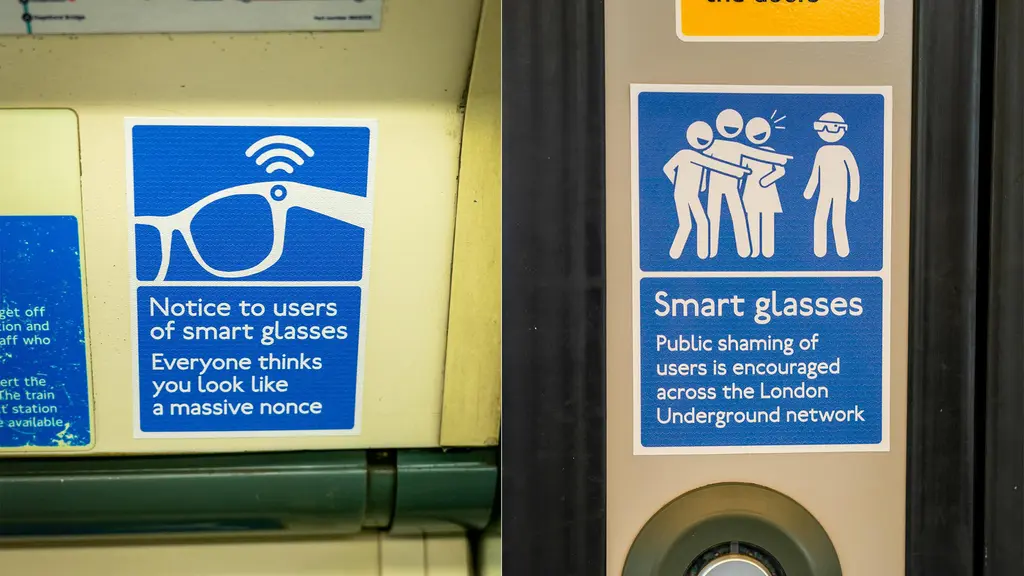
Activists slam “pervert glasses” in new guerrilla campaign
Everyone Hates Elon — Stickers have appeared on the London Underground network, criticising the wearable technology’s covert filming capabilities.
Written by: Isaac Muk

New exhibition highlights British radical living over 200 years
Earthly Paradise — Taking place at the William Morris Gallery, it explores the homes and lives of artists, writers, musicians and more, as well as the conditions that allowed them to thrive.
Written by: Isaac Muk

Pink Floyd’s Roger Waters joins team of new Palestinian resistance documentary
Freedom Theatre — Directed by Rishi Pelham, the film spotlights a theatre operating in the Jenin refugee camp.
Written by: Ella Glossop

Just Stop Oil holds first protest in 17 months
No new drilling — Having previously said that it was “hanging up the hi-vis”, the climate activist group has blocked a road outside Parliament to protest Andy Burnham opening the door for new oil and gas extraction licenses in the North Sea.
Written by: Ella Glossop

In photos: The enduring resistance of Notting Hill Carnival
Carnival of Resistance — A new photobook by Wayne Campbell and Wayne Crichlow reflects on the protest beginnings of Europe’s biggest street festival, along with the traditions keeping its original spirit alive today.
Written by: Isaac Muk

Tens of thousands gather to remember Jason Arday at London vigil
Stand Up to Racism — It took place in Trafalgar Square, with speakers paying tribute to the former Cambridge professor’s life and achievements, while calling for accountability over the reporting he faced from the mainstream press.
Written by: Ella Glossop


