
The London caterers feeding their community

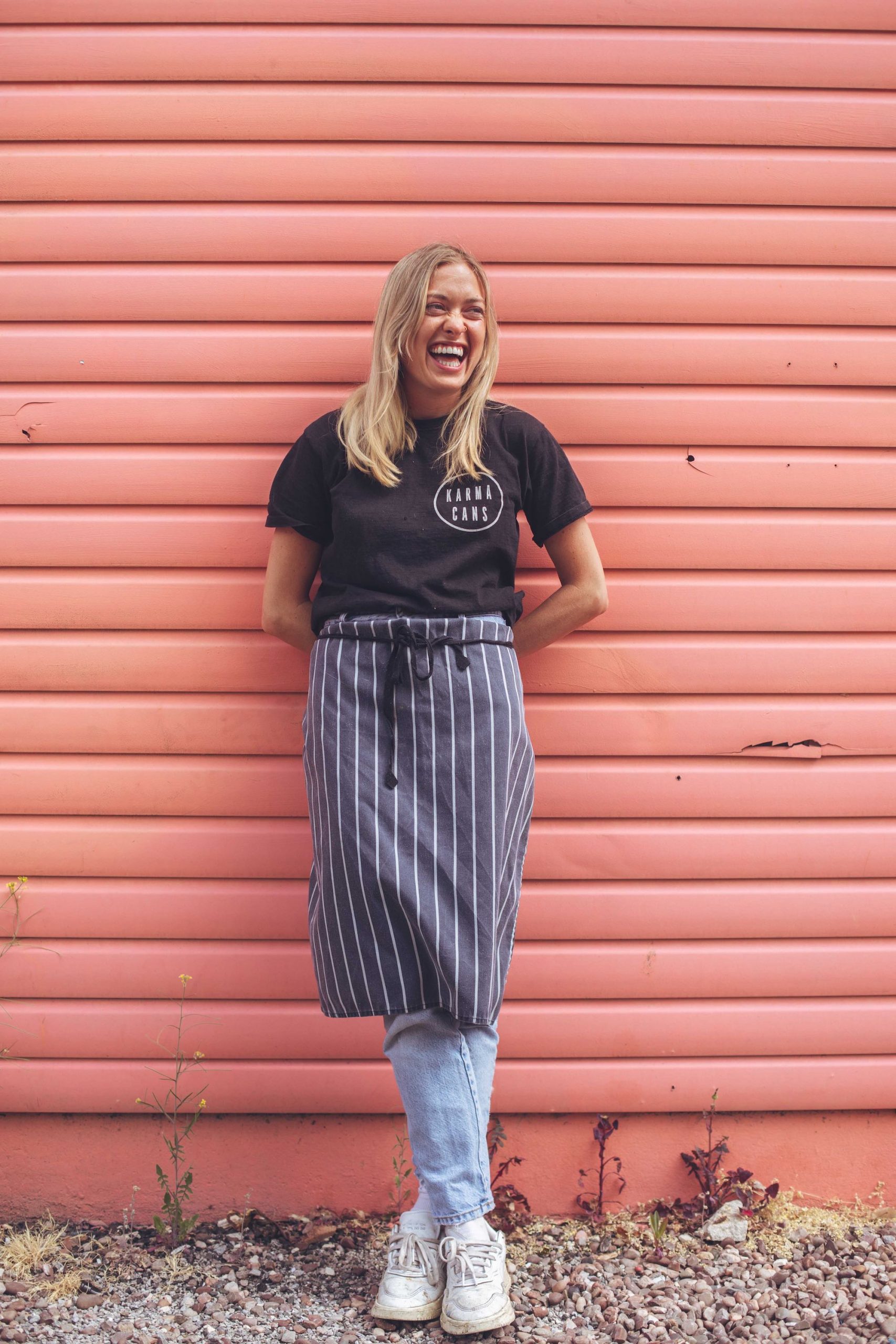
Six years ago, sisters Gini and Eccie Newton started Karma Cans: a two-woman catering company based in London. In its early days, the pair would do all the cooking and delivery themselves; rocketing around the capital on courier bikes with fresh, seasonal and sustainably-made meals.
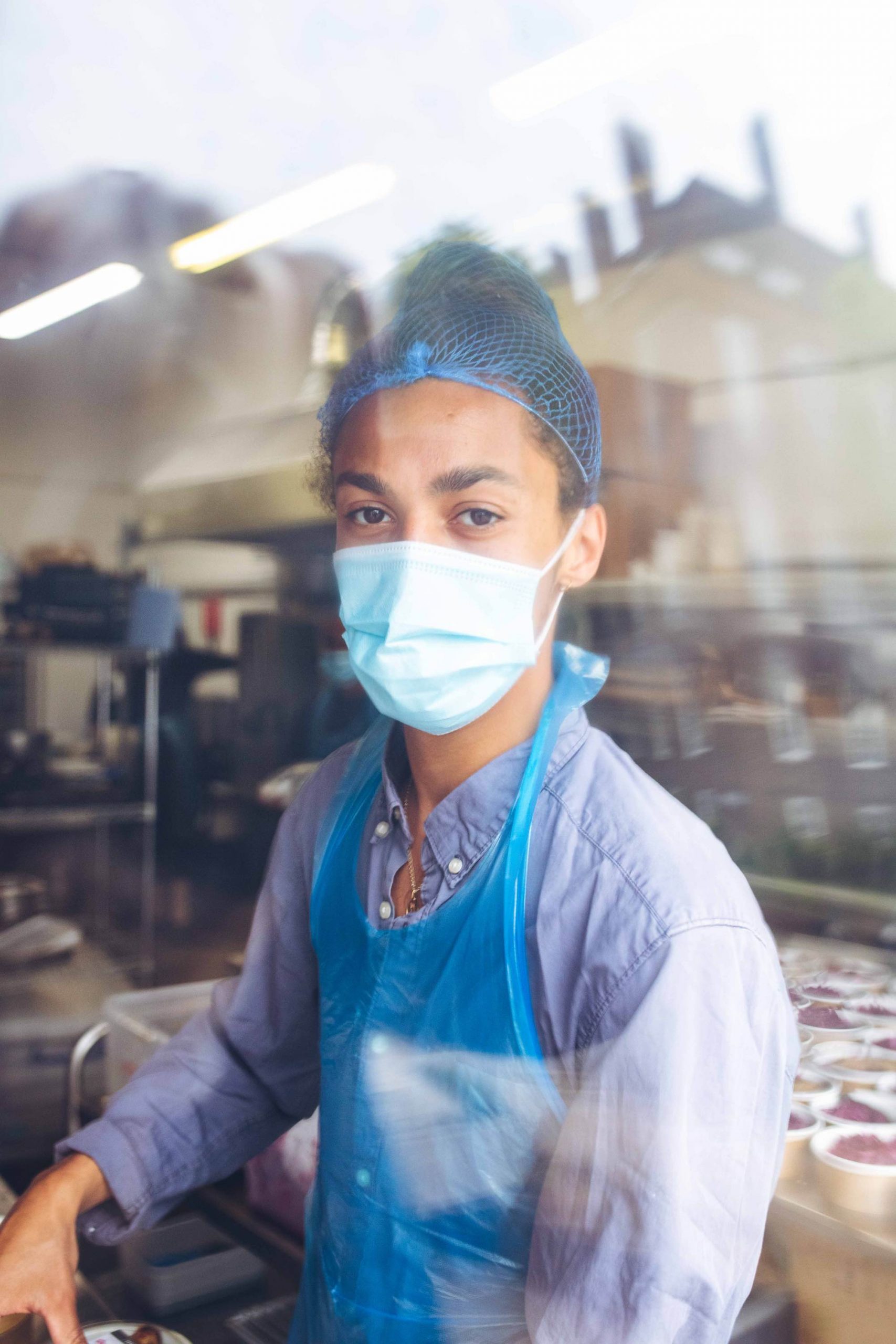
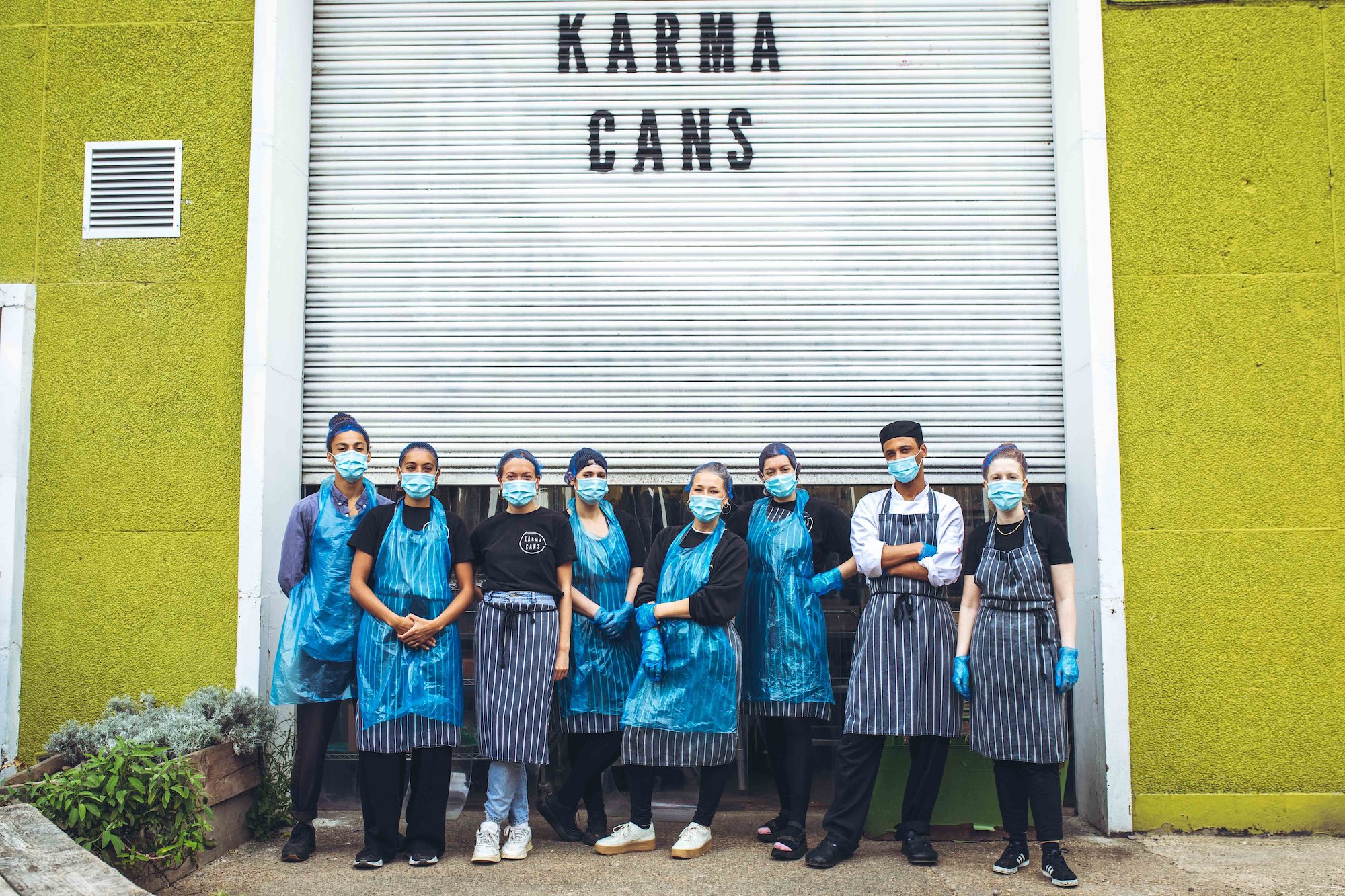
Over time, Karma Cans grew into something much bigger. The company – which now has around 15-20 employees – soon began catering for some of London’s biggest businesses, delivering up to 1000 meals a day. Then, the pandemic hit.
Like many companies across the country, Karma Cans’ world was turned upside down. What was once a successful and reliable business model, became instantly irrelevant. “It all happened so quickly,” remembers Gini. “The big clients went first, then the smaller businesses. So, it was really challenging – we’d built this brand for years around corporates, and then suddenly the market just changed overnight and we went from corporate to individual again.”
Despite the grave existential threat, the company managed to pull through. Rather than feeding the big corporations, they slashed their profit margins and shifted their gaze to the community – and in the months since, they’ve worked with the NHS, charities and local councils. In the latest of our new series on Pandemic Innovators, we find out how they did it.
Tell me about how you weathered the start of lockdown. It must have been a huge change – how did you adapt?
We had to adjust really quickly. The safety of the team is really, really important: some of our chefs are living with older people, so we decided to close for two weeks at the very beginning and think about what we wanted to do.
When we did reopen, we did so with a new team. We furloughed our original chefs who couldn’t work and took on new people, because it was an amazing opportunity to help chefs who were recently unemployed. We also managed to get a few different contracts with some hospitals, and started working with the charities Hospitality for Heroes and Meals for the NHS. I think for us it’s not really about the finance, it’s about keeping morale high in the team – by working with NHS charities we were doing something good, and the team felt really happy about it. 
 How has being a small business helped?
I think smaller businesses are more adaptable, we’re so used to this kind of hustle because honestly, we don’t have investment, so we don’t have the luxury of a buffer zone. Karma Cans has not always been stable: it nearly failed at the beginning, and mid-way through. But it builds such a resilience into the team, so it means that when trauma hits you act in a very different way to many people who haven’t kind of dealt with that in business before.
What was most markedly different about this direction? What were the biggest challenges?
We had to redesign the menus to suit the NHS: our menus are normally quite elaborate and the costs are very high, so we had to really reduce the ingredients but also keep it tasty. When we were charging £8.50 a head for corporate, with the NHS we had to get it down to £3 a head. So we’ve had to think in an entirely different way.
We also had to remember that doctors and nurses are working such long hours, so the food needs to be filling. We went from corporate catering, which is all about keeping people focused at their desks, to keeping people fuelled on the front line.
What was the feedback from the hospitals?
We were really surprised every time a doctor posted something positive about our food, because for us they’re so busy and the fact that they Googled us or went on our Instagram to find our name was such a surprise. And honestly, that was the reward right there, that feedback.
What’s next for Karma Cans? How do you feel about the future?
Our NHS contracts have ended for now, but we’ve hopefully got a new project with Tower Hamlets to help cater for vulnerable people in the borough. It’s very low budget – around £2 a head – but it’s so worth it. So that’ll be our focus, until we get corporates back. That said, we have decided that our community work has to continue as a part of our business model, because we’ve all really enjoyed doing it. We’re also opening a rooftop residency at Hoxton Docks this summer.
Honestly, when the pandemic first started, it was a complete nightmare. But reflecting on it now, there have been some serious positives. It has been an amazing opportunity to think in a different way; to reexamine our pricing and our food. We just wouldn’t have had the time to really rip the company apart and start again if it wasn’t for the coronavirus. I think we’ll come out of it, hopefully, as a stronger, better business.




Find out more about Karma Cans on their official website.
See more of Theo McInnes’s work on his official website. You can follow him on Instagram and Twitter.
Enjoyed this article? Like Huck on Facebook or follow us on Twitter.
You might like

Inside the Los Angeles scene kid revival
The Rawring ’20s — For the cover of Huck 84, photographer Alexis Gross and writer Anna Zanes meet the latest faces of scene, who are finding freedom to express themselves through its technicolour, unafraid aesthetic.

Introducing our new issue of Huck Magazine: It Starts With Us
Huck 84 — For our second 20th anniversary issue, we spotlight 20 people and groups providing the world with a hopeful future.

The sharp rise of video game photography
Point, shoot — As the entertainment medium’s fidelity levels increase and developers build more powerful tools, a growing community of gamers are pushing the boundaries of image making in virtual worlds. Vicky Jessop meets people at the forefront of the emerging artform.

Joyous photos from the heart of the UK’s radical free festival movement
Common Grounds — The photographer has been capturing British counterculture for the past half century. A new exhibition looks at his archive sitting at the intersection of music, community and grassroots protest.

The lasting community legacy of a legendary Californian boxing gym
Moretón — Since opening in the ’80s, the Coachella Valley Boxing Club has trained multiple world champions, while providing a vital hub for local youth. In his new photobook, Darren Vargas documents its tight-knit, Chicano-led community, while also weaving a deeply personal story.

Inside the grunge golden age with Hole’s former bassist
My ’90s Rock Photographs — Melissa Auf der Maur’s new photobook is a sprawling visual memoir of her time at the heart of the US scene, from Tinker to The Smashing Pumpkins.


