Trans liberation will take more than honouring the dead
- Text by Sarah Lamble and Nim Ralph
- Photography by Bex Wade

Every year on 20 November, communities around the world gather to honour trans and gender diverse people whose lives have been lost as a result of anti-trans violence. Trans Day of Remembrance (TDOR) – often marked by candlelight vigils and publicly reading the names of those who have been killed over the past year – is an important touchpoint in trans communities. It encourages us to pause, reflect and remember the real people behind unreported news, sensationalised stories and cold statistics. This year is reportedly the deadliest on record for trans people and reading through the official list of killings is truly chilling.
Our rituals of remembering are about bringing humanity back to our community members, who are so often denied that dignity in life. Solidarity takes many forms, and this is certainly one of them. A phrase frequently invoked on TDOR is “Honour the dead and fight like hell for the living”.
It is important to recognise that most of the TDOR recorded deaths are Black and migrant women of colour, sex workers and many are from the global south; their deaths are often the result of intersecting forms of poverty, racism and violence. Such deaths are not simply ‘isolated’ events enacted by lone, ‘hateful’ perpetrators; they are the acute manifestations of wider cultural norms and institutional structures which devalue trans lives – particularly through systemic racism, xenophobia and poverty.
Many more trans people die prematurely each year than are officially noted on these lists. This is because many countries do not adequately record acts of transphobic violence, but also because records do not monitor deaths that arise from wider structures of transphobia.
Though mainstream media doesn’t always report trans deaths by suicide, drug overdose, poverty, mental ill-health, and HIV-related illness, many trans communities acutely know the pain of lives cut short by these realities. While it is impossible to attribute a single ‘cause’, these deaths reveal the accumulative effects of systems and structures that deprive marginalised people of basic needs. It is the slow violence of poverty, addiction, homelessness, imprisonment and denial of health care.
For many of us, TDOR is more and more painful each year, as we reckon with the growing number of friends and chosen family we’ve lost as a result of these wider structures of harm. We ache with the losses of loved ones who have died in prison, those who have ended their lives as a result of acute mental distress, been denied adequate health care or disability support, hounded by hostile media, and repeatedly let down by the very social systems that were meant to protect them.
Yet so often when marking TDOR, these larger structures of poverty, racism and institutional violence are obscured. Instead, trans communities are asked to “prove” transphobia exists by pointing to horrific acts of violence and hatred. We become caught in a trap that pushes us to frame violence and transphobia as a problem of individual acts and attitudes, rather than a consequence of wider social structures and systems of harm.
We recognise that when our positionality and systemic issues are not foregrounded, TDOR events can invoke a saviour-like dynamic, particularly when the more privileged among us, who don’t directly face the sharp end of anti-trans and racist violence, read the names of those who do. A vigil can be an important place to remember the real full lives of those lost and show solidarity with those who face violence. But outside these vigils we must recognise the actions needed to fight against the systems that contribute to violence here and elsewhere.
Not addressing wider structures of harm also paves the way for ‘solutions’ which don’t actually help our communities. Too often we are encouraged to channel our energies into tougher laws, more policing, and harsher sentences for people who commit violence, rather than focusing on improving the lives of trans people through health care, housing, and income security – key factors which can help protect against violence.
Law and order responses, such as hate crime legislation, won’t actually protect trans communities. Instead, such laws give more power and resources to police, courts and prisons – institutions which disproportionately target trans communities who are already over policed and under protected. Trans sex workers, for example, are forced into less safe working practices by criminalisation, police harassment and risk of imprisonment.
TDOR provides an important opportunity to clarify what we need to fight for and how to move from passive witnessing to active solidarity. It is a chance to focus our collective efforts on strategies that will actually reduce violence in the long run and support our communities to not only survive but flourish.
Taking action means supporting local campaigns to provide safe housing; joining mutual aid groups that offer community food and collective care; increasing resources for accessing trans health care and disability support, advocacy to ensure trans-inclusive services for survivors of violence; hardship funds for sex workers; crowdfunding redistribution projects; supporting migrant justice and asylum seekers; solidarity for trans prisoners; and other initiatives that are working to build collective resilience and resistance in the face of wider systems of harm.
We hope that TDOR revitalises energy into national and global campaigns to decriminalise sex work; decriminalise drug use; end the violence of border controls, demand racial justice; redistribute wealth and ensure free, inclusive and accessible health care for all. TDOR solidarity means channelling our energies into campaigns that get to the heart of the structural injustices that fosters anti-trans violence in the first place.
This Trans Day of Remembrance, as we assemble to light candles for those who have died, let us also light a fire under the action needed to truly honour those lost, by joining together to fight like hell for the living.
Enjoyed this article? Like Huck on Facebook or follow us on Twitter.
You might like

Landmark new exhibition is celebrating 50 years of female punk
God Save the Queens – The Museum of Youth Culture is bringing together rare photography, archive material and a one-night-only supergroup featuring members of X-Ray Spex, The Slits and The Raincoats.
Written by: Ella Glossop

Photographing America’s 20th century rebels
Rebels With a Cause — A new monograph looks back at Jean-Pierre Laffont’s extensive archive documenting counterculture, art, activism and more, shaping the country as it is today.
Written by: Isaac Muk
The long history of slop in music
Top of the Slops — The term might be everywhere now, but the act of copying and enshittifying has been around for decades, explains Ian McQuaid.
Written by: Ian McQuaid

Sports Banger is throwing a party to mark 90 years since the Battle of Cable Street
“Fascists hate dancing” — The October event will bring DJs, live music, sound system culture and anti-fascist politics together in East London.
Written by: Ella Glossop
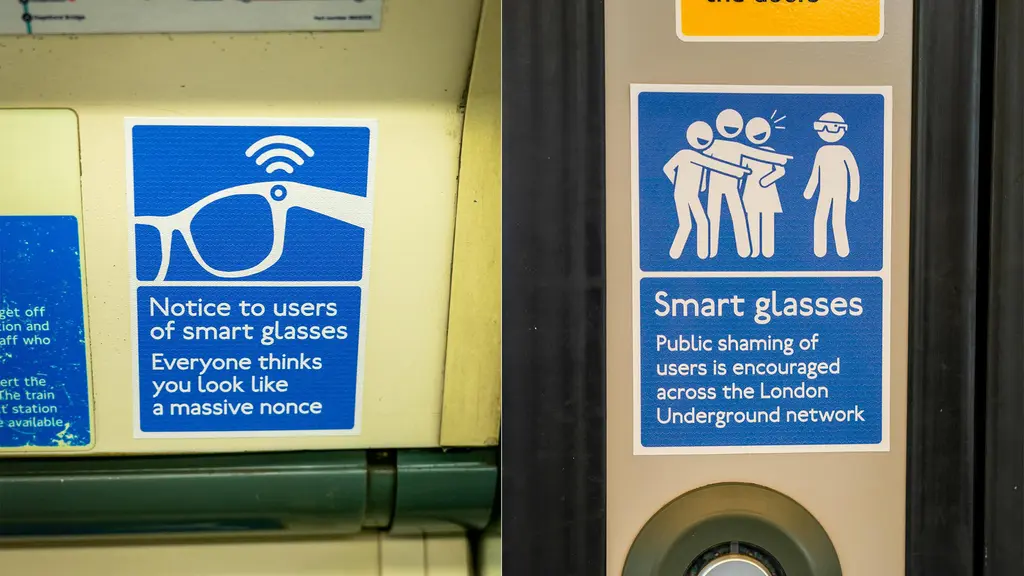
Activists slam “pervert glasses” in new guerrilla campaign
Everyone Hates Elon — Stickers have appeared on the London Underground network, criticising the wearable technology’s covert filming capabilities.
Written by: Isaac Muk

New exhibition highlights British radical living over 200 years
Earthly Paradise — Taking place at the William Morris Gallery, it explores the homes and lives of artists, writers, musicians and more, as well as the conditions that allowed them to thrive.
Written by: Isaac Muk


