The story behind London’s most radical design studio
- Text by Jacob Charles Wilson
- Photography by Posters From Paddington Printshop by John Phillips (Four Corners Books)

London has a long and radical print culture, stretching from the civil war to the present day. “Printers were always at the forefront of social conflict,” John Phillips, co-founder of Paddington Printshop, tells me. “They were the most literate part of the working class. They had to be able to read, and they read the stuff that was coming onto the presses.”
In the 1970s, the Paddington Printshop – an Anarchist-run studio in west London – played a significant role in this history, supporting and promoting the hard work of squatters networks, feminist groups, anti-racist campaigns, and community events such as the burgeoning Notting Hill carnival. Now, the Printshop’s vibrant and vital contribution to working-class history has been collated in a new publication by Four Corners Books.
Printshop co-founder John Phillips stumbled into printing after finishing art school. After scrounging some basic equipment, he soon mastered hand-cut and photo stencil techniques before setting up a studio in his kitchen and doing a few small jobs for local community centres. “It soon became so crowded it was almost impossible to eat in the kitchen,” he remembers. “We found one of our clients had been given a large factory to turn into a community centre, and we borrowed the back room from them. It grew from demand really, rather than setting out with a plan.”
Paddington was then a notoriously deprived borough. But, John emphasises, it was culturally vital and politically active, which suited the Printshop’s radical principles – “nothing racist, sexist, or commercial!” – and its commitment to high-quality production at next to no profit.
They also benefited from a unique set of circumstances: a deindustrialising city with a sympathetic council, and officials who were willing to bend the rules. “With lots of manufacturing places and the docks disappearing, what you got was empty factory spaces that could be squatted or gained under a short licence,” he says. “There was the possibility of people coming together, and thinking previously unthinkable thoughts about how we can work together.”

MONEY TALKS, 1987, John Phillips

BUCKINGHAM PALACE VIEW FROM THE NORTH, 1976, John Phillips
In John’s words, what Paddington Printshop wanted to undertake was nothing less than a “revolution of everyday life”. Collaborating designers would draw on left-wing graphic design history to create visually striking and politically compelling posters; with homage paid to Atelier Populair, Cuban revolutionaries, the Dadaist John Heartfield, and pop-artist Tadanori Yokoo in their use of photomontage, psychedelic colour schemes, and punching satire.
“We apply our own skills, but we don’t apply them as people who are above you and distanced from you, but alongside you. If you want to learn how to do it then we’ll show you the tricks of the trade, and we’ll help you do it yourself. We were turning the world upside down, in some ways, young and idealistic in others!”
John also attributes the Printshop’s success to what he calls “poster culture”. “Many organisations – whether they were a playgroup or a theatre group, through to squatters organising their own advisory service and national agents like Liberty – would think about making posters to promote what they were doing. And that meant that you had a huge variety of people from the local vicar to the local anarchists knocking on your door.”
While the idea of a poster culture has diminished, John still sees the use in political graphics today: “I think that it always feels like David and Goliath, we are always against forces that are much greater than ourselves. I really admire Extinction Rebellion and what they’re doing, and I think that they use really strong visual images, and that they use the media in a really really positive way. I think that things change and that there’s little point in being nostalgic for whatever one did then. Forget about the good old days, and work with the bad new ones.”

BENEFIT BOP, 1978, John Phillips

LANDLORD, 1986, John Phillips

SEND THE RACISTS HOME, 1978, John Phillips

MEANWHILE GARDENS POSTER, 1979, John Phillips

THE STREETS BELONG TO THE PEOPLE, KEEP CARNIVAL IN THE STREETS, 1976, John Phillips

ON AVERAGE HOUSING CONDITIONS IN WESTMINSTER ARE THE BEST IN THE COUNTRY, 1988, John Phillips

ANOTHER EMPTY HOME, 1976, Pippa Smith

Front Cover: Posters From Paddington Printshop by John Phillips
Posters From Paddington Printshop is available now on Four Corners Books.
Follow Jacob Charles Wilson on Twitter.
Enjoyed this article? Like Huck on Facebook or follow us on Twitter.
You might like

Hak Baker: “Being a lad is dreaming of a decent life”
Hard Feelings — The East London storyweaver joins our column on masculinity and fatherhood to chat about being raised by his mother, his family of friends, and the momentary bliss of the sesh.
Written by: Robert Kazandjian

Nick Danziger’s striking vision of everyday British life in the ’90s
The British 1994-1999 — The renowned photojournalist returned to his birth country on the cusp of the Millennium, capturing its contradictions with humour and wit.
Written by: Miss Rosen

Sports Banger is throwing a party to mark 90 years since the Battle of Cable Street
“Fascists hate dancing” — The October event will bring DJs, live music, sound system culture and anti-fascist politics together in East London.
Written by: Ella Glossop

Is Field Maneuvers the most fun time ever? Yes probably
Collective joy — Huck’s art director Samuel White went to the 2026 edition, braving a wet start and interviewing FLINTA* collective and arm wrestling legends Uhaul Dyke Rescue in the process.
Written by: Samuel White

Jesse Glazzard’s messy portrait of queer friends, lovers and chosen family
The Sound of Dirt and Beauty — The photographer’s debut monograph explores tender, unpolished moments shaped by the people who he surrounds himself with, while offering a window into the UK’s working-class LGBTQ+ community.
Written by: Sunny Sunday
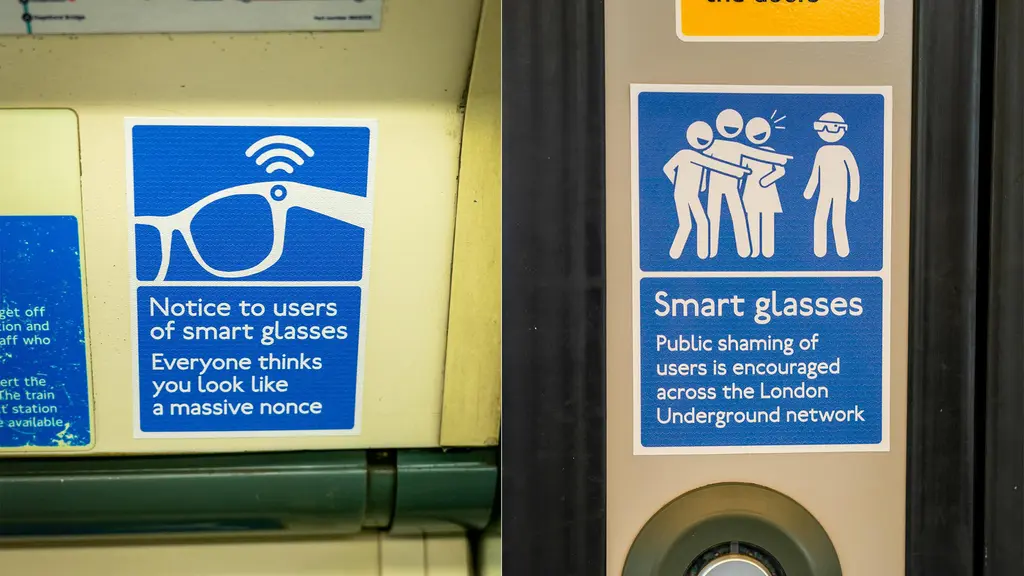
Activists slam “pervert glasses” in new guerrilla campaign
Everyone Hates Elon — Stickers have appeared on the London Underground network, criticising the wearable technology’s covert filming capabilities.
Written by: Isaac Muk


