
The Bristol Bike Project is transforming lives with the power of two wheels

Stokes Croft, in the city of Bristol, has long been a hotbed of creativity and activism: a microcosm that retains its independent roots even in a time of increased gentrification and development.
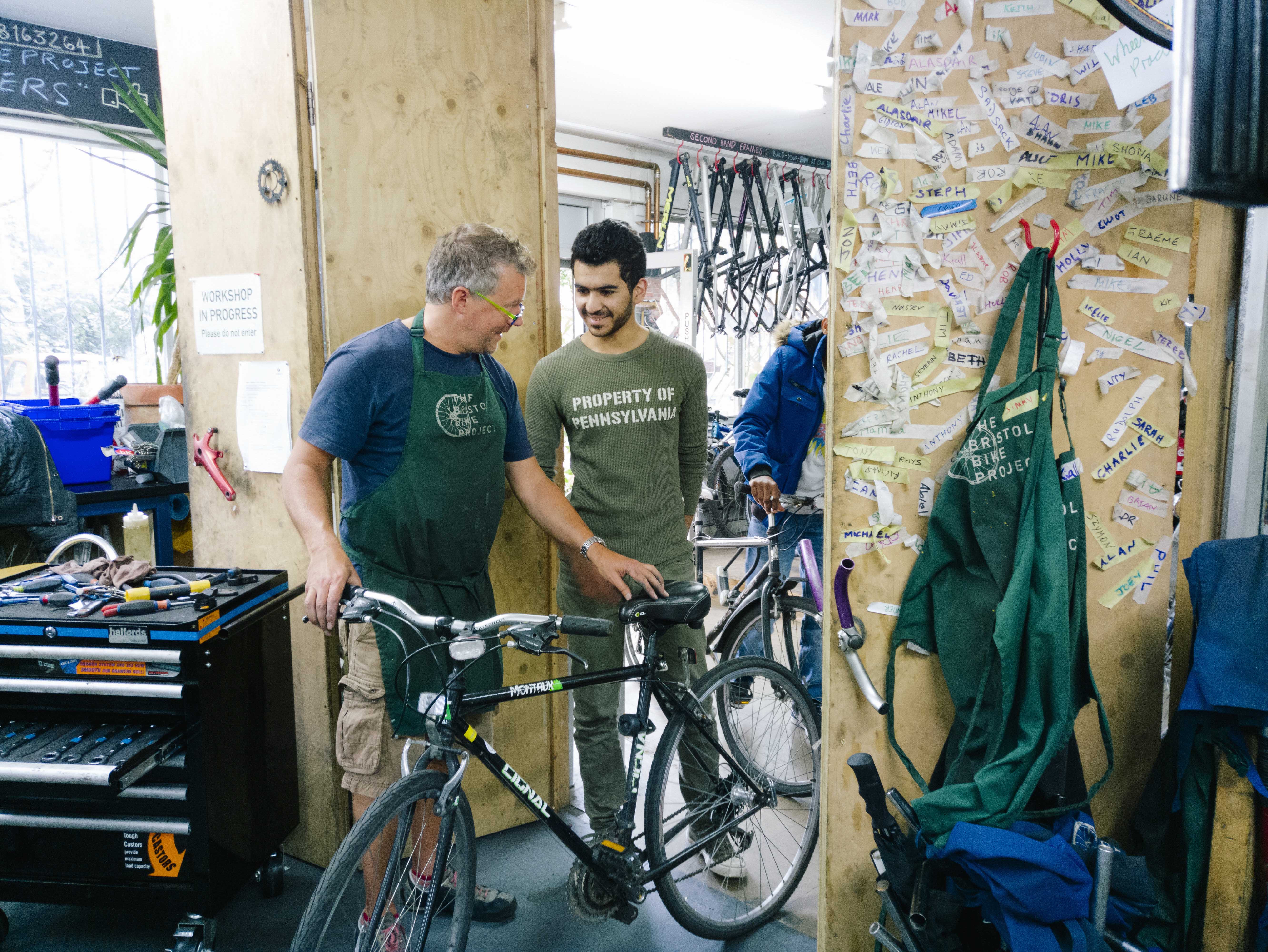
Nestled under the Banksy-adorned Hamilton House, an otherwise standard five-storey office block, lies the Bristol Bike Project (BBP), a workshop-cum-bike shop that sells second-hand steeds and offers maintenance courses.
But BBP is no ordinary bike pitstop: people who walk through these doors never really leave.

Founded in 2008 by James Lucas and Colin Fan, the project has grown into a full-time enterprise that supports and equips vulnerable groups in the local community through the humble bicycle.
At the core of the project is their Earn-a-Bike programme, set up so that people from all walks of life – from asylum seekers and at-risk youth, to anyone living on the margins – can learn basic mechanics and earn a bicycle in the process: there are no hand-outs here.
BBP operates as a not-for-profit workers’ co-operative with a flat structure of pay. “All profits are channelled back into our volunteer-run programme,” says James, who also founded Boneshaker magazine as an outlet for his two-wheeled passion.
“The programme is inspired by the Chinese proverb: ‘Tell me and I’ll forget. Show me and I may remember. Involve me and I’ll understand.’”

Co-founder James Lucas has long believed in the transformative power of bikes.
This philosophy leads to a hustle and bustle that doesn’t limit itself to staff. On a sunny day in early June, Julien and Big Al – both experienced bike mechanics – are running the Fix-a-Bike session, overseeing volunteers at six busy work stations.
Customers, volunteers and users of the project rub shoulders as they work alongside one another, talking bikes and life, exchanging skills and advice, and generally having a laugh.


There’s something infectious about the spirit of the place. As a photographer, it’s my job to capture that. But gaining the trust of your subjects is always a brand new challenge.
I’m used to turning up to shoots with a huge camera bag in hand, rolls of film and sturdy light metre. But there’s something distinctly freeing about simply shooting on a phone like the Kodak Ektra. Without a huge camera in my face, conversations flowed more freely.


One work-station down, 22-year-old Salah from Eritrea is tinkering with a chain. He wipes the grease from his hands.
“The Bike Project allows me to get to school using my bike and it is a positive way to spend my time,” he says. “I can also practice my English here; this is very important.”

I’m used to covering stories of social change around the world in places like Turkey and most recently Israel. These stories have taught me many things about people and how resilient and kind they can be.
But what I didn’t expect was to find a such a depth of stories so close to home. It seems that some of the most remarkable stories are being played out right under our noses.

Over the course of the afternoon, around 30 people pass through the doors to work on and repair bikes. The project isn’t just about fixing bikes; it’s about fixing the gaps that exist in society and involving everyone in an equal way.
Pivot Points: Stories of Change from Huck Photographers are shot entirely on the Kodak Ektra, a 21 megapixel camera smartphone with 4K video capability.
Enjoyed this article? Like Huck on Facebook or follow us on Twitter.
You might like

Inside the grunge golden age with Hole’s former bassist
My ’90s Rock Photographs — Melissa Auf der Maur’s new photobook is a sprawling visual memoir of her time at the heart of the US scene, from Tinker to The Smashing Pumpkins.

Introducing ‘The Chaos Isles’, a new photozine by Huck and Yushy
Normal Island — From unlicensed raves to the solstice at Stonehenge, furries to giant vegetable growers, Yushy is one of the UK’s best lensmen of its wild side. ‘The Chaos Isles’ will be sent out exclusively to Club Huck+ members.

Join Club Huck+ to get the most from Huck
Dispatches from the sharp edge of culture — Members get our print magazine, special photozines, The Huck Long Read newsletter, discounts from our friends and partners, digital versions of back issues and priority access to events.

Signs of solidarity as London marks three years of genocide in Palestine
Never forget — 250,000 people gathered on Saturday as Israeli attacks have continued in Gaza and the West Bank. Daisy Schofield photographed the diverse people and placards in attendance.

Landmark new exhibition is celebrating 50 years of female punk
God Save the Queens — The Museum of Youth Culture is bringing together rare photography, archive material and a one-night-only supergroup featuring members of X-Ray Spex, The Slits and The Raincoats.

Halcyon, end of summer days in ’80s Massachusetts
Bell Pond — Stephen DiRado’s new photobook is a nostalgic look at blissed out moments of young love, family and coming of age at a swimming pond in Worcester, Massachusetts.


