This photographer took a road trip in search of adventure... and his identity
- Text by Chris Bethell
- Photography by Chris Bethell

There’s something quite strange about having a passport from a country that you’ve never stepped foot in.
It’s like possessing an identity that exists through paper: not through experience but only in your mind.
It’s similar to the way we connect to family photographs from before our time.

My grandfather was an American citizen and a travelling jazz musician who, after a failed marriage with my grandmother, returned to playing the clubs of LA and San Francisco.
Things didn’t quite work out as planned. He headed to Vegas where he slowly drank himself to death.
At least, that’s what I believed. I never actually met my grandfather, Joseph ‘Joey’ O’Donnell. He died in the US when I was growing up in rural England.

My family didn’t talk about him; it was too painful and raw. Instead it was through photographs that I imagined his life as an intrepid American hero.
Despite his absence, he was an important figure throughout my childhood. As an eight-year-old, I would lie to friends, claiming I was born in Boston and telling elaborate tales of Joey’s daring life.
At the time, I think I believed it. When I grew older I became more curious, determined to make my pilgrimage to the States to find out more about the man who’d been missing in my life.
So I asked my mother and grandma to tell me more. It turns out that much of what I thought I knew of him was my own curated fantasy.
While much of the reality remains a mystery, it was an alcohol problem and the pressures of fatherhood so early on, not aspirations of greatness, that drove my family apart.
Towards the end, he headed west, looking for a home, some stability and redemption from a family he had left.


I’d longed to visit, but it took me four years to find the funds and courage to take the flight.
When the day finally came, my girlfriend and I drove across the US for six weeks, kickstarting a process of catharsis.
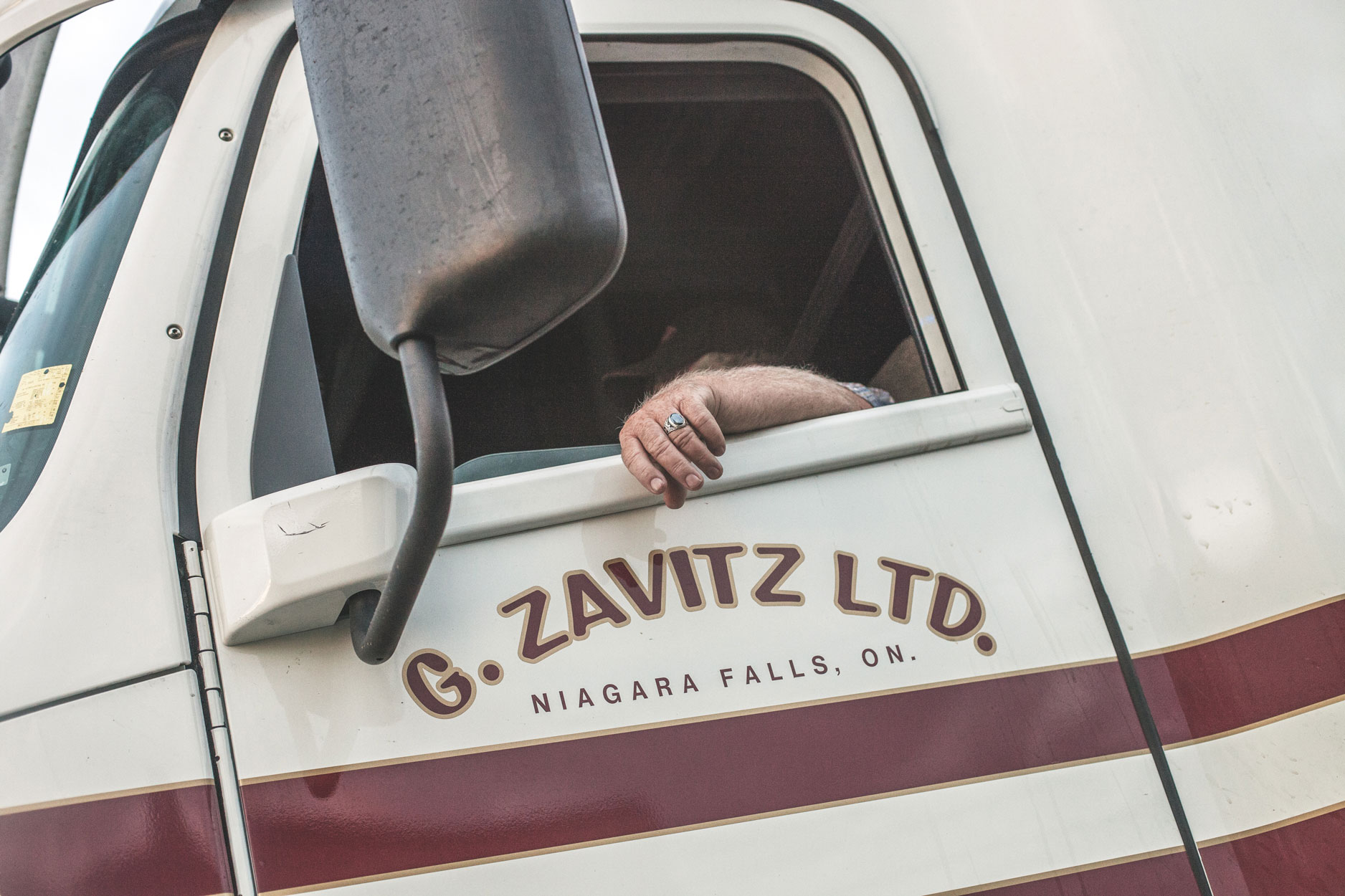
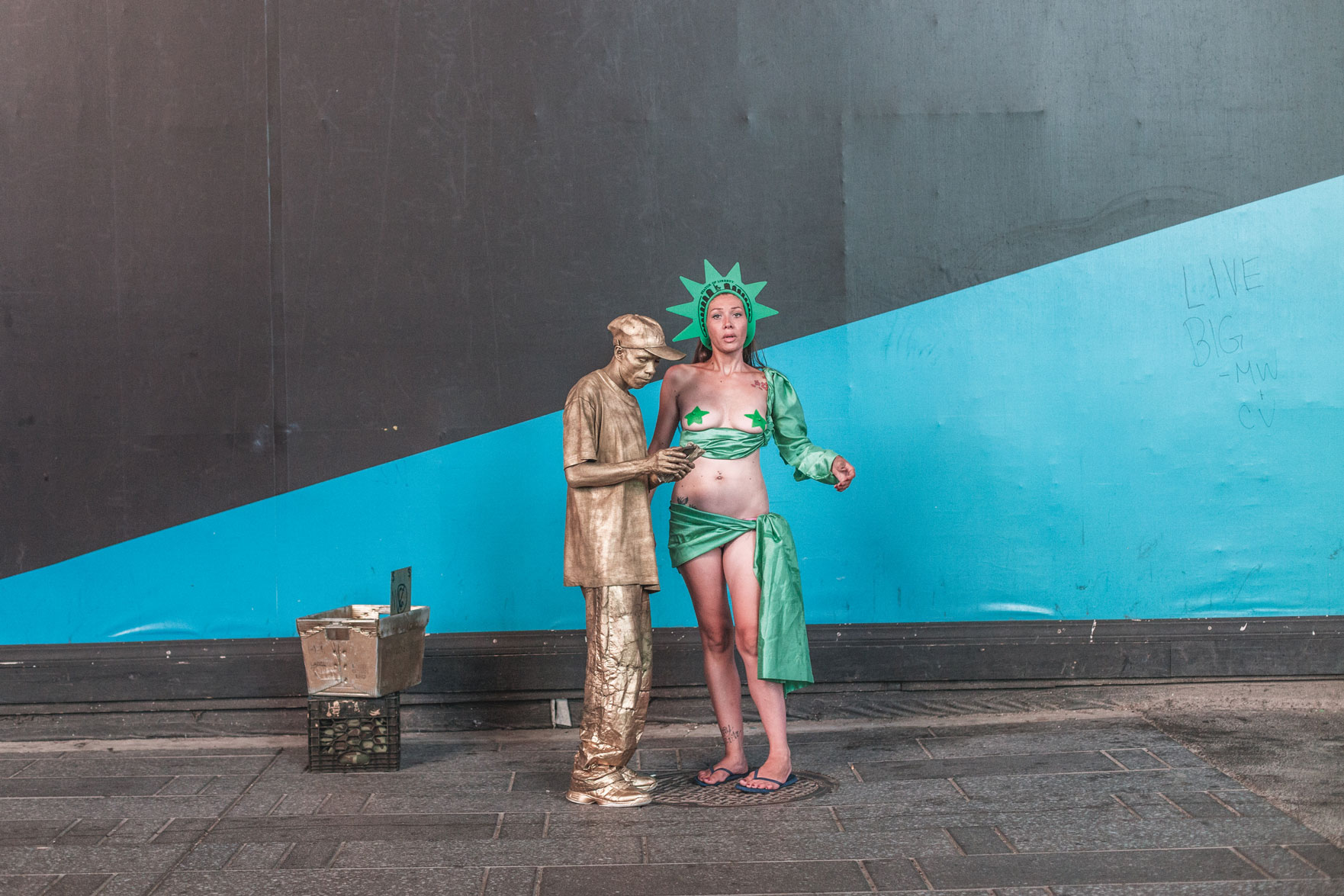
We each shot landscapes, signs and characters, documenting the lives of strangers we encountered along the way.

We stopped in Vegas, New York City, LA and San Francisco, before pulling up in Clarkston, Washington, to find the place where Joey finally died.
All the knowledge I had of him might have come from cinema, but it was a Hollywood ending that pulled us together.
Finding his grave in the Washington moonlight, and lying down alongside him, was by far the most important experience of my life. I suppose from the beginning I wasn’t just looking for the reality of his story.

I was searching for clichés and dreams that I’d held close my entire life, the story I’d told myself as a child: my own American dream.
The Duke of Earl, my book, is a document that weaves together my identity, his identity, and my perception of what his life could have been.
Breaking up the sections are letters that Joey wrote to my mother, allowing the fictitious and the factual to sit side-by-side.
I plotted the truth, the reality of the life that he led, but at the same time I also lived out my fantasy. I travelled the roads that, in my mind, he’d journeyed down.

I visited the cities – the same streets and bars – where for so long I thought he had been. There’s an odd misconception about the camera, that it always tells you the truth.
Sure, you’re taking an image, capturing a moment that sits in front of you, but honestly I don’t see it that way.
My camera allows me to return to a dream, to re-enter a space that I once believed to be real. I guess the way we live our life, and the way we present it to the world, are often two entirely separate stories.

Photography allows us to lay out our thoughts and understanding, capturing experiences under this cloth of romanticism.
Looking back now, flicking through the pictures, getting lost in the memories, it feels like I’ve come full circle.
I sit looking at what could now be old family photos, imagining what Joey’s life might have been. In some ways I still hope that it was real. This was my American dream.

This article appears in Huck 57 – The Documentary Photo Special IV. Subscribe today so you never miss another issue.
Check out the portfolio of photographer Christopher Bethell or follow him on Instagram.
Enjoyed this article? Like Huck on Facebook or follow us on Twitter.
You might like

The last days of St Agnes Place, London’s longest ever running squat
Off the grid — Photographer Janine Wiedel spent four years documenting the people of the Kennington squat, who for decades made a forgotten row of terraced houses a home.
Written by: Isaac Muk

How Japan revolutionised art & photography in the ’60s and ’70s
From Angura to Provoke — A new photobook chronicles the radical avant-garde scene of the postwar period, whose subversion of the medium of image making remains shocking and groundbreaking to this day.
Written by: Miss Rosen

Artifaxing: “We’ve become so addicted to these supercomputers in our hands”
Framing the future — Predominantly publishing on Instagram and X, the account is one of social media’s most prominent archiving pages. We caught up with the mysterious figure behind it to chat about the internet’s past, present and future, finding inspiration and art in the age of AI.
Written by: Isaac Muk

The lacerating catharsis of body suspension in Hong Kong
Self-Ferrying — In one of the world’s most densely packed cities, an underground group of young people are piercing their skin and hanging their bodies with hooks in a shocking exploration of pain and pleasure. Sophie Liu goes to a session to understand why they partake in the extreme underground practice.
Written by: Sophie Liu

What we’re excited for at SXSW 2026
Austin 40 — For the festival’s 40th anniversary edition, we are heading to Texas to join one of the biggest global meetups of the year. We’ve selected a few things to highlight on your schedules.
Written by: Huck

In photos: The boys of the Bibby Stockholm
Bibby Boys — A new exhibition by Theo McInnes and Thomas Ralph documents the men who lived on the three-story barge in Dorset, giving them the chance to control their own narrative.
Written by: Thomas Ralph


