
Forgotten shots of Europe’s underground music legacy

On October 1, 1977, the Clash played Switzerland for the very first time. Their 15-track set at Kaufleuten in Zürich began with “London’s Burning” and “Complete Control” — and somewhere in the audience, 16-year-old Bruno Stettler was taking his very first concert photographs.
Over the next decade, Stettler would go on to take 20,000 photographs at nearly 100 rock concerts around town, capturing the raw intimacy of live shows long before they became overproduced spectacles.
In his new book, Als War’s Das Letze Mal (Sturm & Drang), Stettler takes us on a magical trip through the looking glass, back in the late 1970s and ’80s, when legends like Bob Marley, David Bowie. Iggy Pop, Debbie Harry, Patti Smith, Nina Hagen, and Kraftwerk called the shots.

Blondie. Zürich. 24. 9. 1978
“Today Zürich is one of the world’s leading cities but at that time it was really a terrible, grey sad city,” Stettler says. “Nothing happened. Nothing was allowed. Dancing was forbidden on Easter, Christmas, and other holidays. There were no parties, no clubs. Everything needed to be closed after midnight. Going to concerts was the only possibility.”
Back then, Stettler could see bands like Black Sabbath, AC/DC, the Ramones, Queen, and the Who for $20. “And those concerts were never sold out,” Stettler reveals. “People didn’t know music history was going on because there was no promotion in the newspaper or on television. You needed to know yourself which band and why – their importance.”
At that time, security at concerts was not a concern, and flash photography was openly allowed. Stettler liked to make his way down to the second or third row, away from the hardcore fans blocking the first row: “I wanted to be close to the stage.”

Musical Youth. Zürich. 1983

Mistery Action. Mario 3. 11. 1979.
“At that time, they were not afraid that a fan would attack the band, and the band wanted to be quite close to the audience. They wanted to touch the fans so they played quite close to the audience. I would be four to six metres from the band — that was perfect.”
Stettler sold his photographs through a mail-order business, making thousands of prints from the original 9×13 format negatives before putting the work into storage for 20 years. When he unearthed them 10 years ago, he discovered some of the negatives had been damaged by water and mould. Yet the results, once seen when digitised, was a stroke of luck, creating a surreal, hallucinogenic effect that only serves to amplify how deliciously trippy these shows must have felt at the time.
“When I was at the concert of Bob Marley or ABBA, I was completely in the moment,” Stettler says. “I never thought about the future or the past. I was into the present, into everything. This was the best moment that could ever happen on earth.”
“When I started to look at some of the pictures, I realised they are not the same. Something had happened with my photographs, they started to change into art.”

David Bowie. München. 1983

Disco Three. Zürich. 6. 11. / 8. 11. 1983

Public Enemy. Montreux. Ca. 1986

Iggy Pop. München. 1983

Ramones. Zürich. 1980

Judas Priest. Zürich 17. 4. 1980
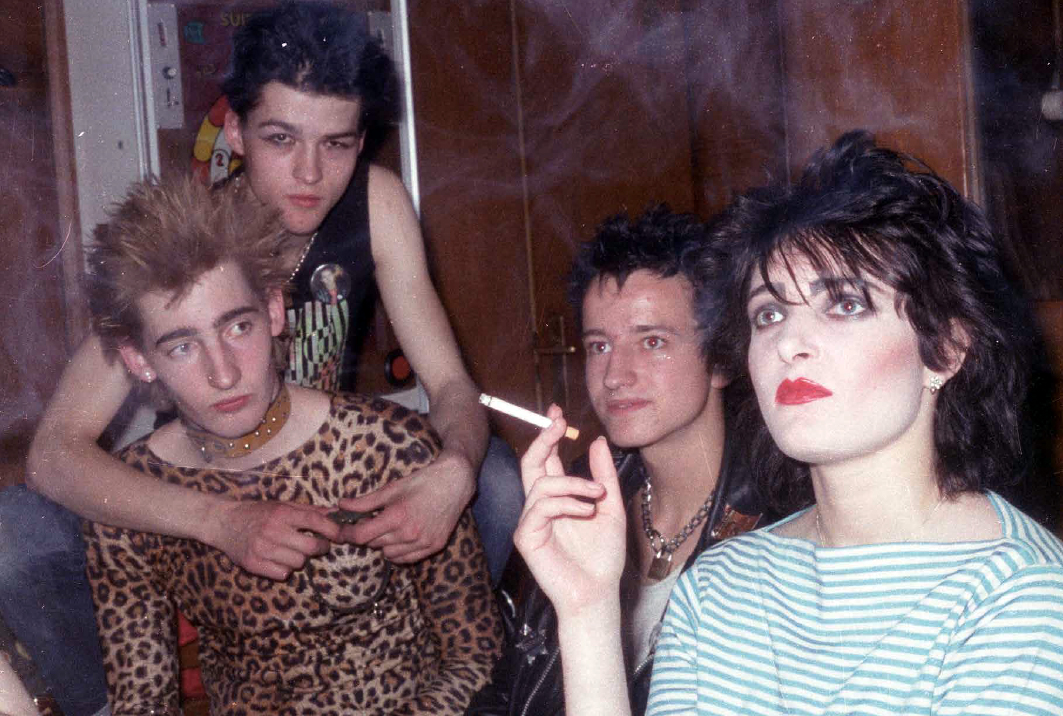
Siouxsie & the Banshees. Baden. 9. 7. 1979
Als War’s Das Letze Mal is published on Sturm & Drang.
Follow Miss Rosen on Twitter.
Enjoyed this article? Like Huck on Facebook or follow us on Twitter.
You might like

The sharp rise of video game photography
Point, shoot — As the entertainment medium’s fidelity levels increase and developers build more powerful tools, a growing community of gamers are pushing the boundaries of image making in virtual worlds. Vicky Jessop meets people at the forefront of the emerging artform.

Joyous photos from the heart of the UK’s radical free festival movement
Common Grounds — The photographer has been capturing British counterculture for the past half century. A new exhibition looks at his archive sitting at the intersection of music, community and grassroots protest.

The lasting community legacy of a legendary Californian boxing gym
Moretón — Since opening in the ’80s, the Coachella Valley Boxing Club has trained multiple world champions, while providing a vital hub for local youth. In his new photobook, Darren Vargas documents its tight-knit, Chicano-led community, while also weaving a deeply personal story.

Inside the grunge golden age with Hole’s former bassist
My ’90s Rock Photographs — Melissa Auf der Maur’s new photobook is a sprawling visual memoir of her time at the heart of the US scene, from Tinker to The Smashing Pumpkins.

How the Home Counties took over UK rap

Introducing ‘The Chaos Isles’, a new photozine by Huck and Yushy
Normal Island — From unlicensed raves to the solstice at Stonehenge, furries to giant vegetable growers, Yushy is one of the UK’s best lensmen of its wild side. ‘The Chaos Isles’ will be sent out exclusively to Club Huck+ members.


