Photos celebrating the eccentricities of London
- Text by Miss Rosen
- Photography by John Benton-Harri

Hailing from the South Bronx, John Benton-Harris dreamed of being a pilot or a Method actor – then he discovered photography at age 14 and found his calling. “I quickly realised early on I could be all three as a photographer,” he says.
Now 81, the photographer traces his foundation to Edward Steichen’s seminal photography exhibition, Family of Man, which he saw at Museum of Modern Art in 1955. “It motivated me to focus on the human condition and try to explain men to men and to myself at the same time,” he says.
In 1962, Benton-Harris “sort of gate crashed” art director Alexey Brodovitch’s famed Design Laboratory class at Richard Avedon’s studio. “He was criticising everyone’s work,” Benton-Harris remembers. “He picked up my work and said, ‘He understood what this project was about.’ Then he looked up to say, ‘Who the hell are you?’”
Impressed by Benton-Harris’s moxie, Brodovitch brought him into the fold. The young photographer most enjoyed their conversations at the local automat after class. He was also invited to lunch with Brodovitch and Hungarian photographer André Kertész, who would soon become a lifelong friend.
In 1963, Benton-Harris was about to receive his call up for the draft, so he hatched a plan to leverage his photographic talents in the armed forces. Benton-Harris met with magazine and art heavyweights and discussed story ideas. LIFE magazine thought “Life Through the Eyes of a Private” was interesting, and backed it up with a note of letterhead stationary, which Benton-Harris then took with him, along with his other references to his basic training.
“I remember one morning we were on the on an open field doing calisthenics. It was a very hot day and the men took off their shirts. I was the only guy doing calisthenics with a camera bouncing up and down on my neck,” Benton-Harris recalls.
“The drill sergeant spotted me and said, ‘Where the hell do you think you are — on holiday?’ I mentioned my references, and he sent me to the company commander, who assumed my story idea was also an assignment. I did nothing to correct their perception. So during basic training I did everything twice, to capture the experience for myself and others.”
After training, Benton-Harris moved to San Pedro, California, then to Vicenza, Italy, to work as a photographer with the US Army information service while also running its photographic facility. While with the Army, he took leave to cover the state funeral of Sir Winston Churchill.
Five months later, Benton-Harris relocated to London to continue his investigation of the English and to prove Churchill wrong, when he stated, “You must not underrate England, she is a curious country and few foreigners can understand her mind… She is very clever.”
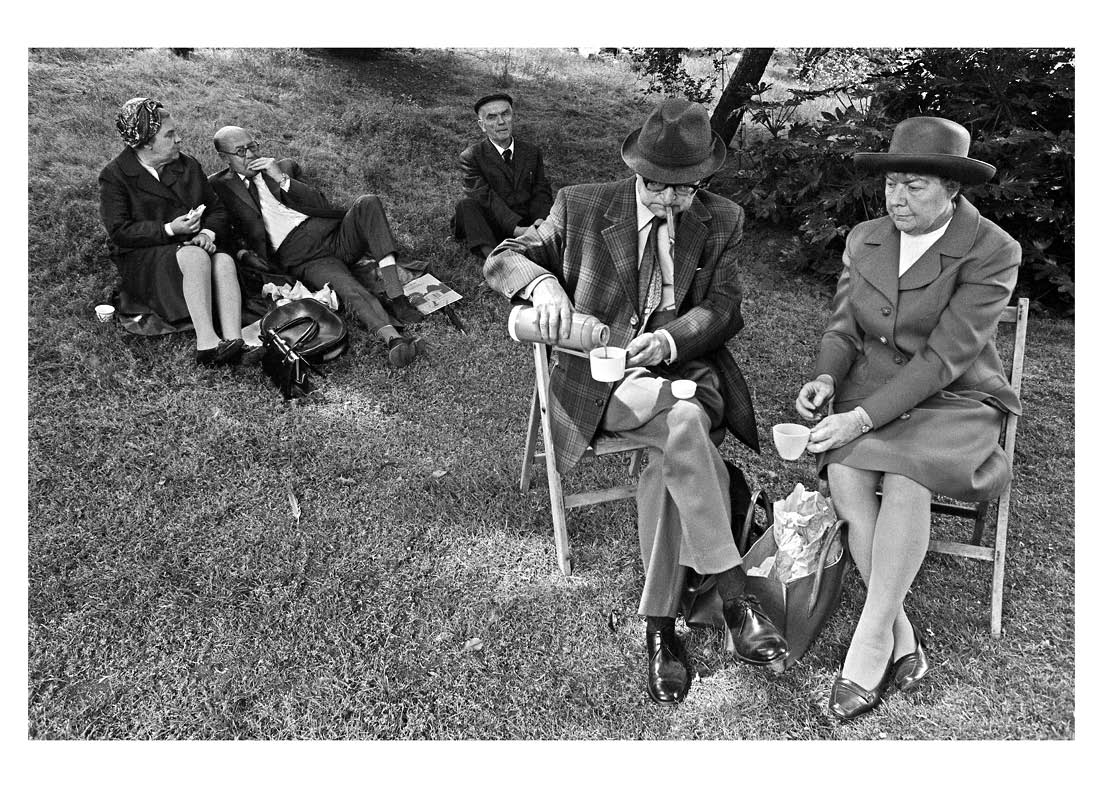
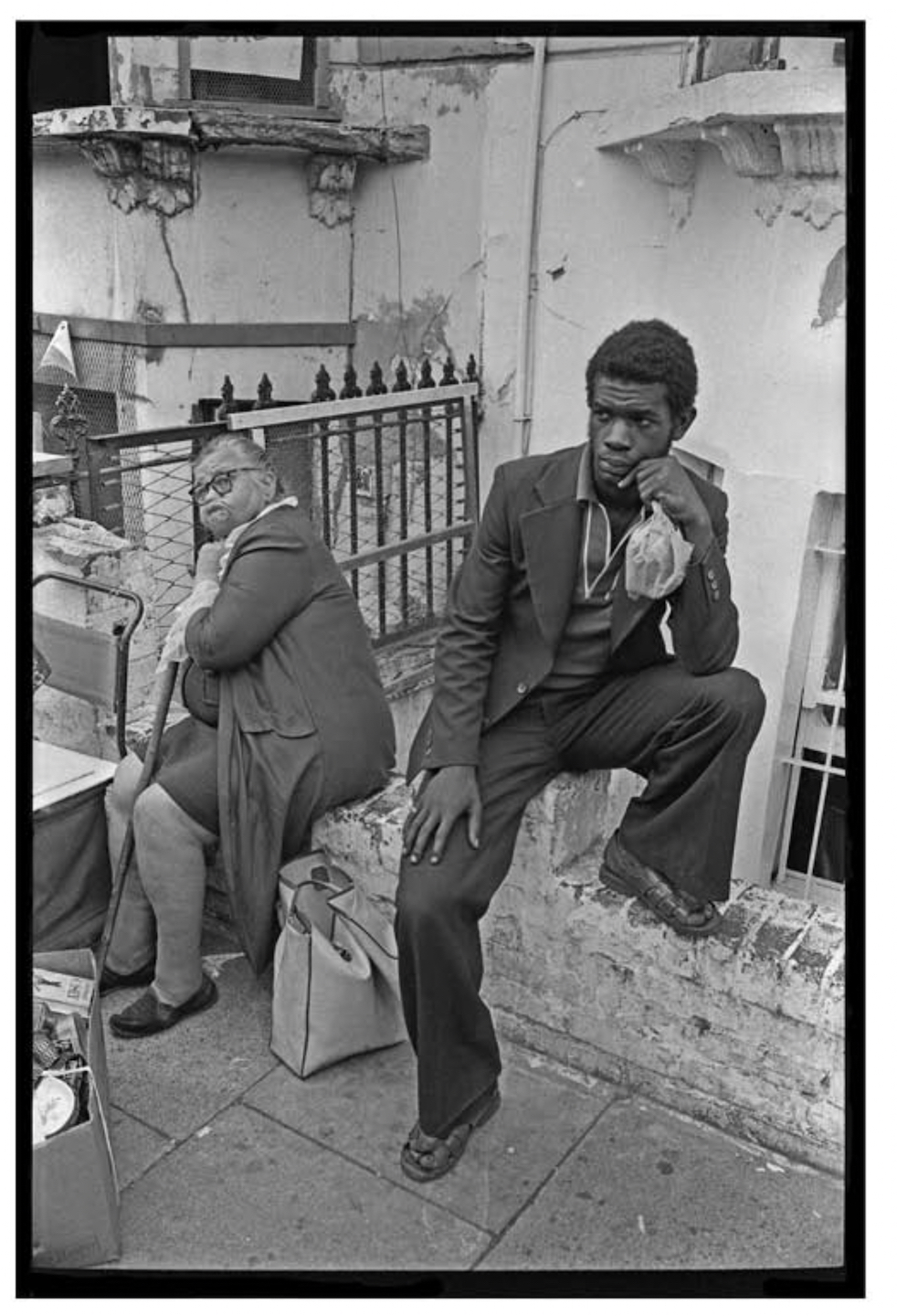
Although he worked as a photojournalist for the better part of his career, Benton-Harris describes himself as a “visual sociologist.” With Walking London 1965-1988 (Café Royal Books), Benton-Harris looks back at three decades of work.
He observes, “I am social critic with a satirical sense of humour, working to shed new light on a contrary people who say one thing, think another and do a third.”
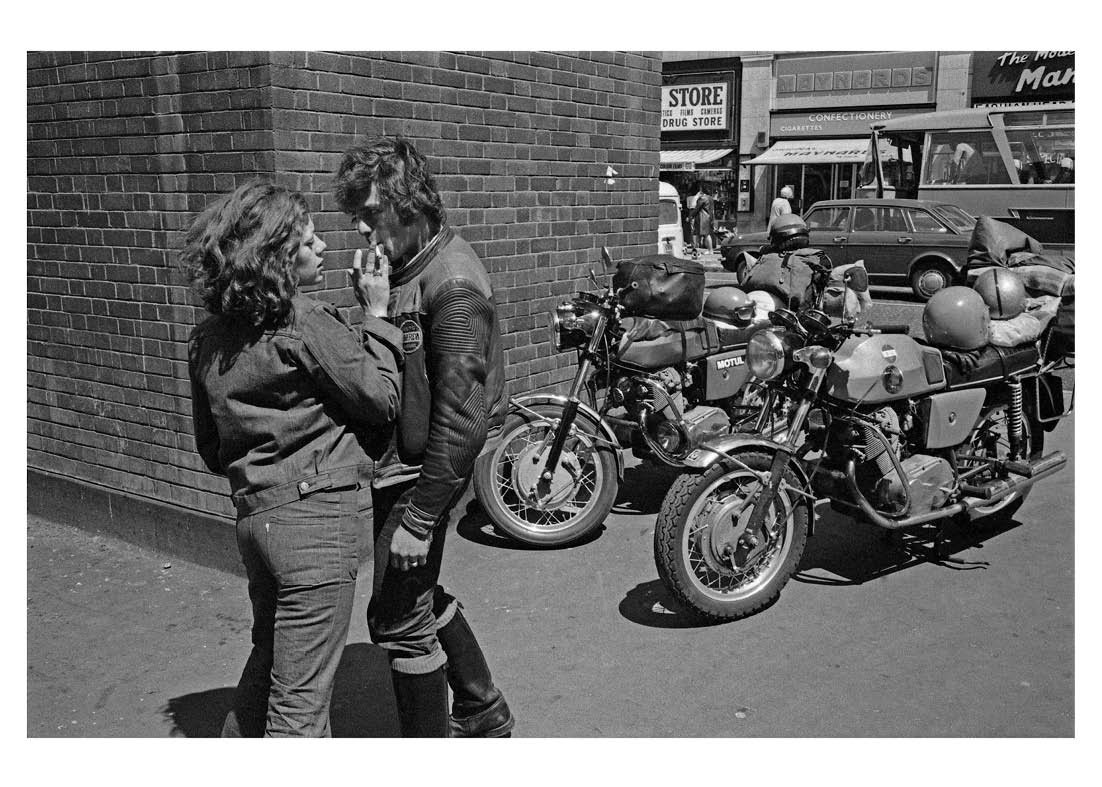
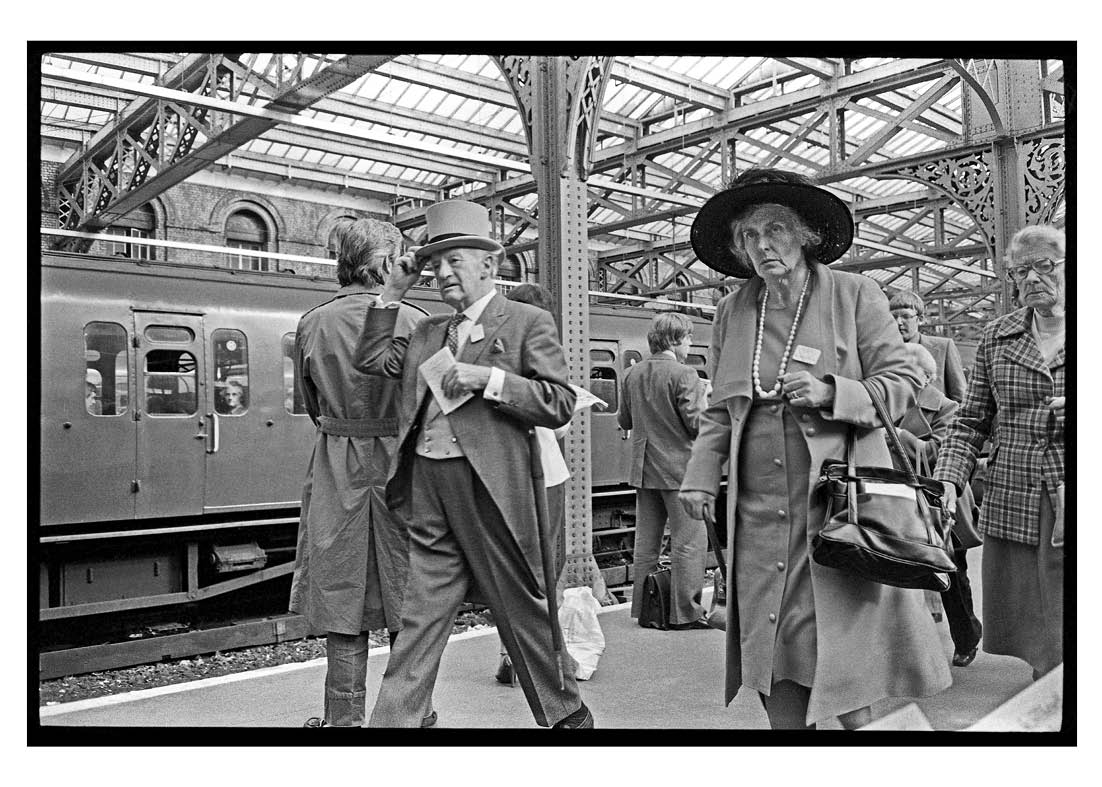
Walking London 1965-1988 is out now on Café Royal Books.
Follow Miss Rosen on Twitter.
Enjoyed this article? Like Huck on Facebook or follow us on Twitter.
You might like

The last days of St Agnes Place, London’s longest ever running squat
Off the grid — Photographer Janine Wiedel spent four years documenting the people of the Kennington squat, who for decades made a forgotten row of terraced houses a home.
Written by: Isaac Muk

How Japan revolutionised art & photography in the ’60s and ’70s
From Angura to Provoke — A new photobook chronicles the radical avant-garde scene of the postwar period, whose subversion of the medium of image making remains shocking and groundbreaking to this day.
Written by: Miss Rosen

Artifaxing: “We’ve become so addicted to these supercomputers in our hands”
Framing the future — Predominantly publishing on Instagram and X, the account is one of social media’s most prominent archiving pages. We caught up with the mysterious figure behind it to chat about the internet’s past, present and future, finding inspiration and art in the age of AI.
Written by: Isaac Muk

The lacerating catharsis of body suspension in Hong Kong
Self-Ferrying — In one of the world’s most densely packed cities, an underground group of young people are piercing their skin and hanging their bodies with hooks in a shocking exploration of pain and pleasure. Sophie Liu goes to a session to understand why they partake in the extreme underground practice.
Written by: Sophie Liu

What we’re excited for at SXSW 2026
Austin 40 — For the festival’s 40th anniversary edition, we are heading to Texas to join one of the biggest global meetups of the year. We’ve selected a few things to highlight on your schedules.
Written by: Huck

In photos: The boys of the Bibby Stockholm
Bibby Boys — A new exhibition by Theo McInnes and Thomas Ralph documents the men who lived on the three-story barge in Dorset, giving them the chance to control their own narrative.
Written by: Thomas Ralph


