
A photographer’s colourful ode to her grandma in Russia

Photographer Kseniia Grebennikova has fond memories of visiting her grandmother in Sakhalin Island, a tiny seaport town of Nevelsk, while growing up. “I had a strong bond with the island,” Grebennikova says, “I never wanted to leave. [When I go to Nevelsk] it’s kind of like I’m going back to my roots, remembering who I am, where I’m from, before going back to my regular life.”
Grebennikova always had a close relationship with her grandmother, who lived alone on the Island, where she worked as a grocery store cashier. “I always thought it was really cool, because she’d bring home lots of candies,” she recalls.
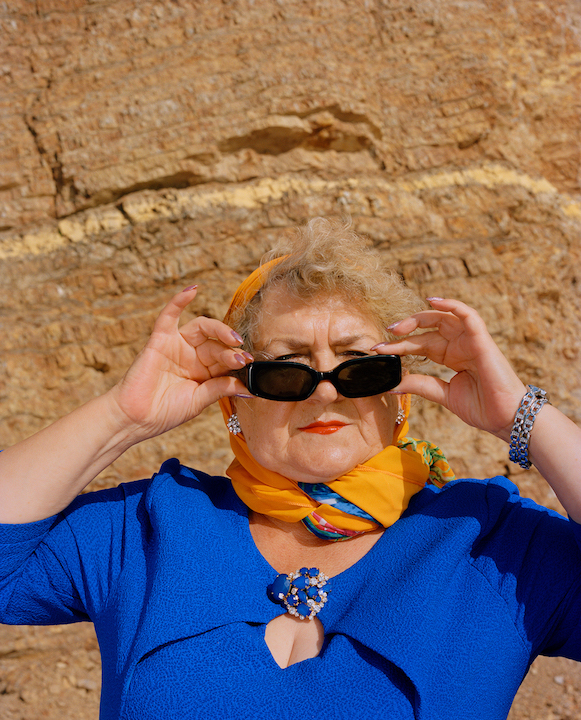
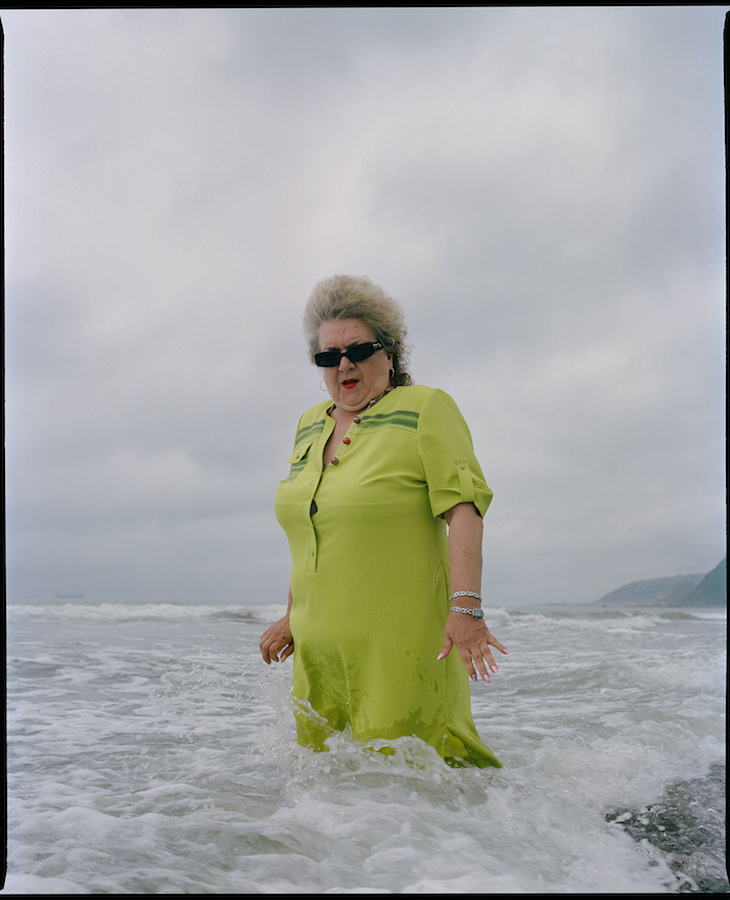
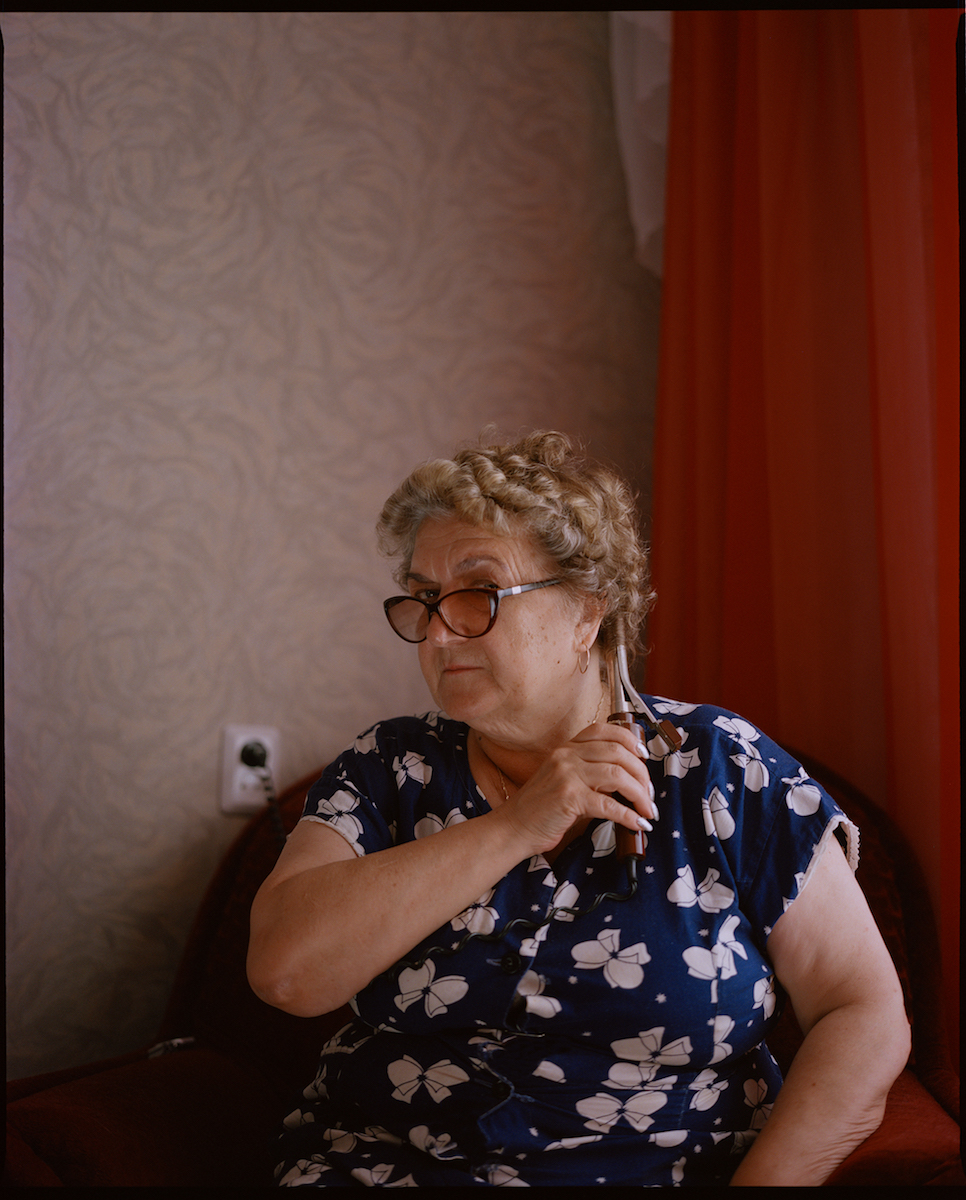
Grebennikova says that growing up, her grandmother had a profound influence on her – particularly when it came to fashion. “She kind of formed my impression of how a chic woman should look; she always had her makeup, her hair and her manicure were done perfectly – even to take the garbage out,” she says.
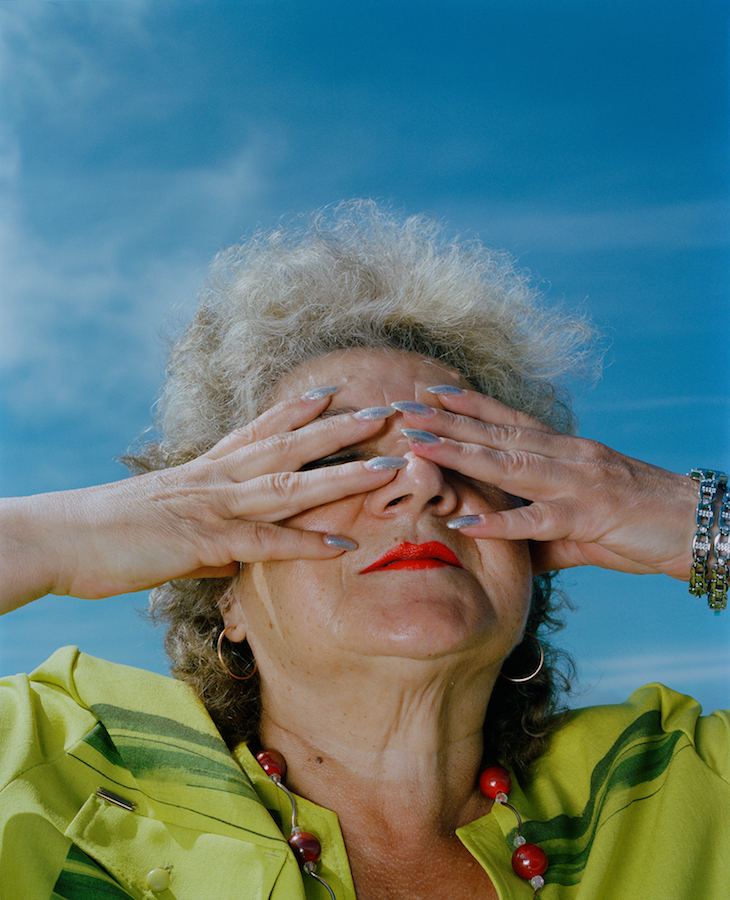
“People in Russia [my grandmother included], are on a really, really low pension,” continues Grebennikova, “they prefer to spend money for food and other necessities. But my grandmother will never leave the house without a manicure.”
It was her grandmother’s bold sense of style, combined with a desire to preserve her memory, that gave Grebennikova the idea to photograph her in Nevelsk. “I wanted to explore my relationship with her through photography,” she says. For three months, Grebennikova wandered around the town with her grandmother, shooting everything from trips to the hairdressers, to her paddling in the sea, and parading around the town’s Soviet architecture in brightly coloured clothing. These photographs form part of an ongoing series, titled Obsession of Return.
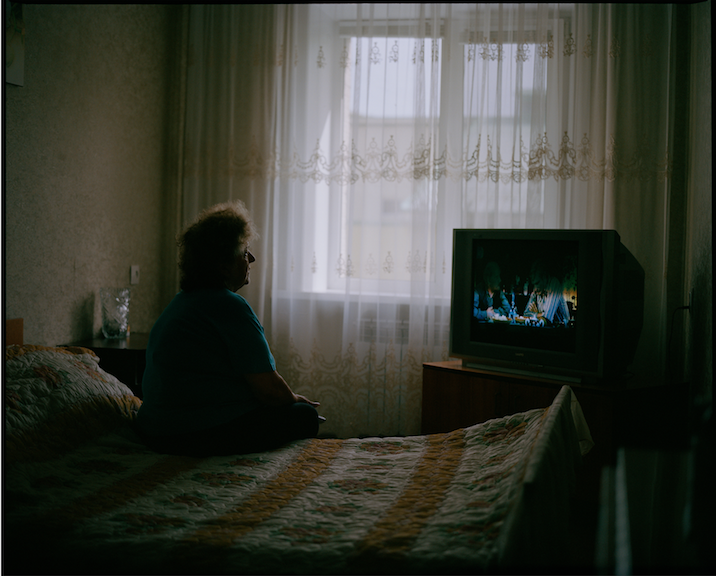
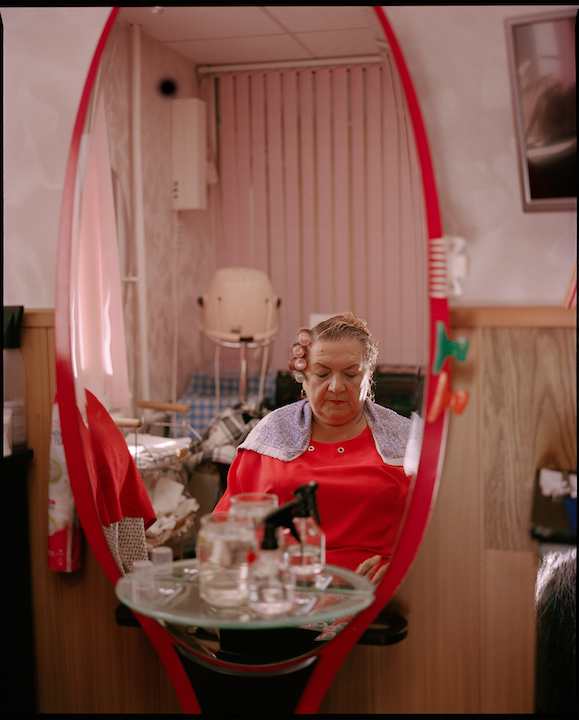
While in the photographs, she appears confident and at ease, Grebennikova reveals that her grandmother found it a very “uncomfortable experience” to be photographed. “She’s always really critical of herself, and unhappy with the way she looks,” she explains.
However, Grebennikcova suspects that her grandmother’s relative anonymity and secluded life meant that she also enjoyed the feeling of having her photo taken and subsequently shared widely. The town itself has become increasingly isolated over the years, with an earthquake in 2007 driving out a large part of the town’s population. “Lots of buildings were destroyed, so thousands of people just left because they had no place to live,” says Grebennikova. “So in a way, my grandma is quite one of a kind in the town.”
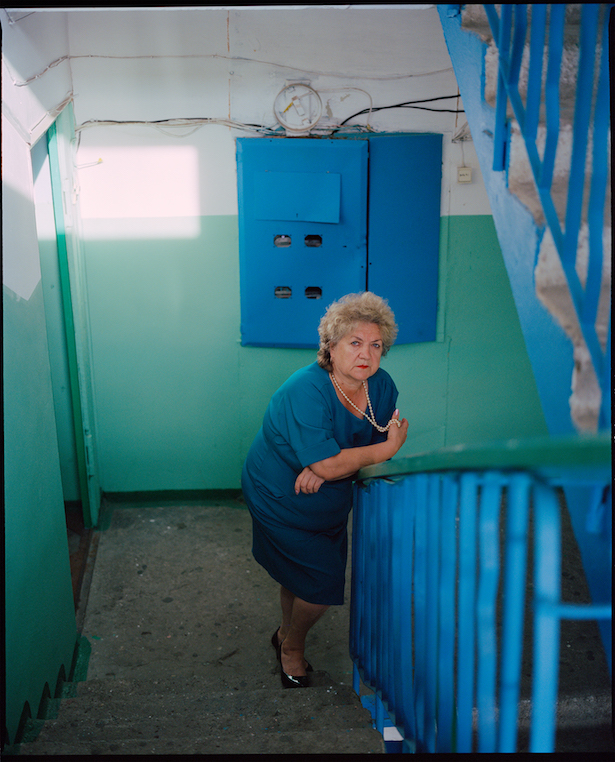
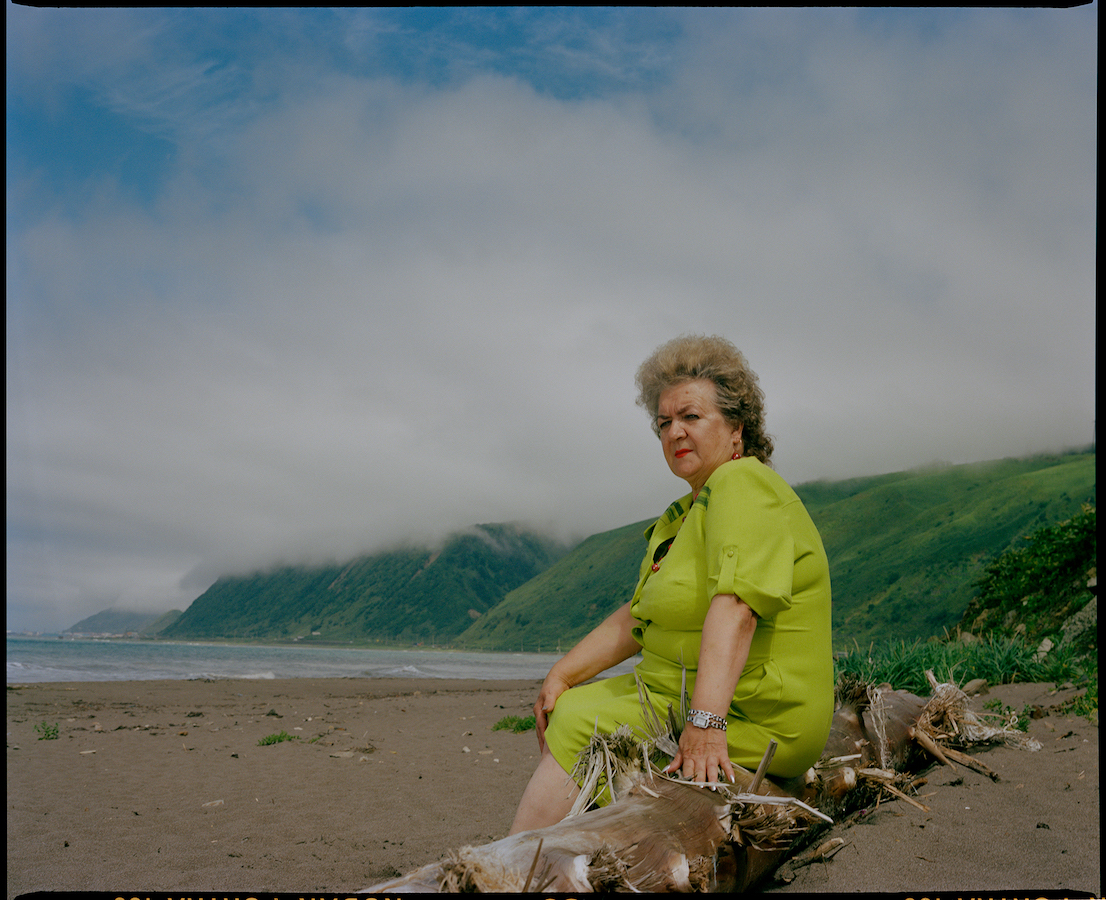
Grebennikova still remembers Nevelsk before the earthquake, describing it as “a really beautiful, really cool Soviet town”. Now, much of the town has fallen into dereliction, and with the lack of inhabitants, it has become increasingly “ghostly”, she says. “When I see the town now, I feel a lot of sad feelings, this reflective nostalgia. My grandmother misses [how the town once was] a lot. It’s quite a Russian mentality to miss the past.”
“I always miss my hometown, and I always miss my childhood,” she continues. “The project was an opportunity for me to go back and experience all those things again.”
Follow Ksenia Grebennikova on Instagram.
Enjoyed this article? Like Huck on Facebook or follow us on Twitter.
You might like

What went down at Huck’s 20th birthday party
84 issues and counting — We took over east London’s Jaguar Shoes with friends old and new to celebrate two decades and our new issue, with Tony Bontana taking the decks for a special set.

Inside the Los Angeles scene kid revival
The Rawring ’20s — For the cover of Huck 84, photographer Alexis Gross and writer Anna Zanes meet the latest faces of scene, who are finding freedom to express themselves through its technicolour, unafraid aesthetic.

Introducing our new issue of Huck Magazine: It Starts With Us
Huck 84 — For our second 20th anniversary issue, we spotlight 20 people and groups providing the world with a hopeful future.

The sharp rise of video game photography
Point, shoot — As the entertainment medium’s fidelity levels increase and developers build more powerful tools, a growing community of gamers are pushing the boundaries of image making in virtual worlds. Vicky Jessop meets people at the forefront of the emerging artform.

Joyous photos from the heart of the UK’s radical free festival movement
Common Grounds — The photographer has been capturing British counterculture for the past half century. A new exhibition looks at his archive sitting at the intersection of music, community and grassroots protest.

Introducing ‘The Chaos Isles’, a new photozine by Huck and Yushy
Normal Island — From unlicensed raves to the solstice at Stonehenge, furries to giant vegetable growers, Yushy is one of the UK’s best lensmen of its wild side. ‘The Chaos Isles’ will be sent out exclusively to Club Huck+ members.


