A vivid portrait of everyday life & resistance in Ukraine
- Text by Miss Rosen
- Photography by Mark Neville

“I am angry. This is my home. Everyone feels terrorised and is packing a bag with emergency supplies and travel documents. It’s horrible to live with that pressure,” British photographer Mark Neville says on the phone from Kyiv, shortly before Russia invaded the Ukraine on February 24, 2022.
“This is my way of fighting back. It’s the only way I know how,” Neville says of Stop Tanks With Books (Nazraeli), a powerful portrait of life across the Ukraine from 2015 to the present day. Over the years, Neville has travelled throughout the nation, photographing scenes of some of the 2.5 million Ukranians already displaced by the war whose only wish is that their stories be told.

Meat market, Slоvyansk, 2019
In this book, Neville offers an accessible guide to the complex issues that have emerged since the Ukranians began forging a free and democratic nation after the collapse of the Soviet Union. Since 2014, the Russians’ undeclared war on the Ukraine has resulted in the annexation of Crimea and the occupation of Luhansk and Donetsk.
Neville sees these actions as a threat to not only Ukraine, but the world itself. “Appeasing Russia has not worked,” he says. “[Military aggression] won’t stop there. It will just continue. We need a well-concerted global effort to stop this war.”

Woman smoking on a bench in Myrnograd, Donetsk, 2021

The Choir at Kyiv Pechersk Lavra Orthodox Church, 2017
Although Neville was told that “books won’t stop tanks,” he is determined to make a stand by sending 750 copies of the book to key policy makers, ambassadors, member of the international community and people involved directly in the peace talks to show the human cost of war.
In the book, Neville brings together a powerful collection of different ideas and perspectives through a selection of 80 photographs accompanied by stories from Ukrainian novelist Lyuba Yakimchuk, and research from the Centre of Eastern European Studies in Berlin printed in English, Ukranian, and Russian.

‘Stalingrad’ checkpoint, Avdiivka, Donetsk, 2016

Policewomen, Mariupol, 2019
Neville also includes a specific set of actions the international community can take including NATO membership, energy supply, sanctions, and fighting disinformation produced by the Kremlin. “I am trying to use this photography book to have an impact on the real world,” he says.
Neville understands the impact of his work; it was the very thing that first brought him to Ukraine in 2015 after the The Kyiv Military Hospital asked for a Ukrainian language version of his book Battle Against Stigma to distribute to their veteran patients. Neville made the book to encourage veterans suffering from PTSD to seek professional help – something he experienced after spending three months embedded within the British paratroopers in Afghanistan in 2011.
“One of the themes in my work is trauma. Science shows us trauma is passed down and becomes part of your genetic makeup. I see it in my own history from the Afghanistan as well as in the people of the Ukraine,” he says.
“I am deeply touched by their resilience. So many people have lost everything but they don’t want money. They will make me a cup of tea and tell me their story.”

Skateboarder in Mariupol, 2021

Families eating on Arkadia Beach, Odesa, 2017

Boy near a frontline, Luhansk, 2019
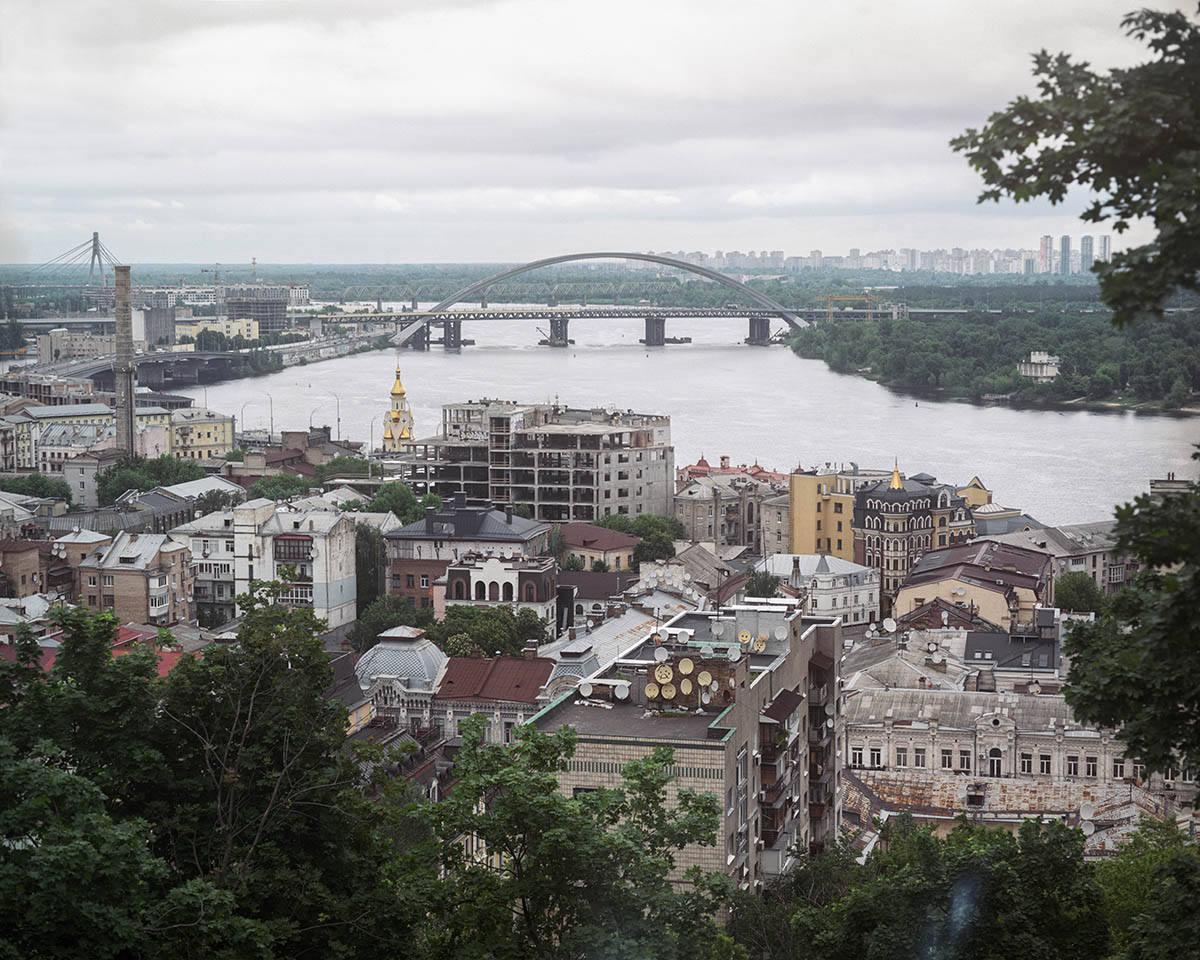
View on Podil District, Kyiv, 2021

Soldier, Avdiivka, 2019
If you know of anyone who has it in their power to help support Ukraine’s continued fight for independence and deter Russian aggression, please contact Mark Neville directly on [email protected], and he will send either you, or your proposed recipient, one of the 750 copies which are being disseminated for free.
Stop Tanks with Books is available to pre-order here.
Enjoyed this article? Like Huck on Facebook or follow us on Twitter.
You might like

In photos: Lives of solitude at the world’s edge
Coirón — Pie Aerts’s new photobook documents years spent in close quarters with puesteros in Patagonia – a group of aging gauchos who live almost completely isolated existences.
Written by: Isaac Muk

The raw, fledgling intimacy of Peter Hujar’s contact sheets
Hujar:Contact — A new photobook highlights the process of the legendary queer photographer, and his process of growing into the artist he ultimately became.
Written by: Miss Rosen

Jesse Glazzard’s messy portrait of queer friends, lovers and chosen family
The Sound of Dirt and Beauty — The photographer’s debut monograph explores tender, unpolished moments shaped by the people who he surrounds himself with, while offering a window into the UK’s working-class LGBTQ+ community.
Written by: Sunny Sunday

Behind the curtain at Alternative Miss World 1981
Olympia glamour — Running a subversive take on the traditional beauty pageant, the Andrew Logan organised event prioritised underground creativity and invention. Photographer David Corio went behind the scenes at its biggest edition.
Written by: Miss Rosen

New exhibition highlights British radical living over 200 years
Earthly Paradise — Taking place at the William Morris Gallery, it explores the homes and lives of artists, writers, musicians and more, as well as the conditions that allowed them to thrive.
Written by: Isaac Muk

What life on the Strait of Hormuz is really like
Southern Winds — Bandar Abbas based photographer Morteza Niknahad has been capturing the diverse communities and stories of his local region since he first picked up a camera. His new series highlights the human impact of war.
Written by: Isaac Muk


