Bridges across England blockaded to demand action on domestic violence
- Text by Michael Segalov
- Photography by Theo McInnes

Busy bridges across the United Kingdom were blockaded Sunday by hundreds activists from Sisters Uncut, who demanded the British government increase spending and support for survivors of domestic violence.
About 600 people took part nationwide — mostly women and nonbinary people, who identify themselves as neither male or female. A third of the activists joined the London protest, which unfolded just three days before the British government’s first Autumn Statement budget speech.
Meeting at Trafalgar Square, the capital’s action kicked off at midday, with the names of women who died at the hands of abusive partners read out. Each echoed as the crowds stood silent and remembered. Then the protest got moving, shutting down the streets until at 1 p.m. The group blocked Waterloo Bridge in front of the Houses of Parliament. Both lanes of traffic were stopped, with the activists blocking the busy thoroughfare for 40 minutes.


With the flares now in short supply, on speaker criticised Prime Minister Theresa May’s pledge of £20m of temporary funding for domestic violence services, available to service-providers via a bidding process, as a ‘sticking plaster on a haemorrhage’. They hope that these actions, and the plenty more they intend to keep coming should nothing change, will force the government to rethink their approach to domestic violence.


There was a particular focus on the needs of black, Asian and minority , or BAME women. Nine in 10 BAME survivors of domestic violence prefer to receive support from a specialist BAME organisation, according to a 2015 report by Imkaan, the only UK-based organisation dedicated to addressing violence against women from visible minorities. Despite this, government austerity measures have hit groups supporting Asian, African and Caribbean communities the hardest, according to Sisters Uncut.
“When I went to the police with bruises, they said they couldn’t see my bruises because I was black”, said Marcia Smith, a domestic violence survivor from Doncaster who joined the protest in Newcastle. “People don’t see black women as victims and we get racism instead of help. With black services, you don’t have racism, you have the trust and support you need.”


“As domestic violence services shrink, Sisters Uncut will continue to grow,”a Sisters Uncut member named Nadine added. “We will not stand by as black and brown survivors are left stranded in abusive homes without the bridges to safety provided by specialist domestic violence services, whilst migrant survivors with ‘no recourse to public funds’ find all of their bridges blocked by the government’s immigration policies.”
By 1:45 p.m., the London group were once again on the move, making their way to the other side of the River Thames before dispersing.


Enjoyed this article? Like Huck on Facebook or follow us on Twitter.
You might like
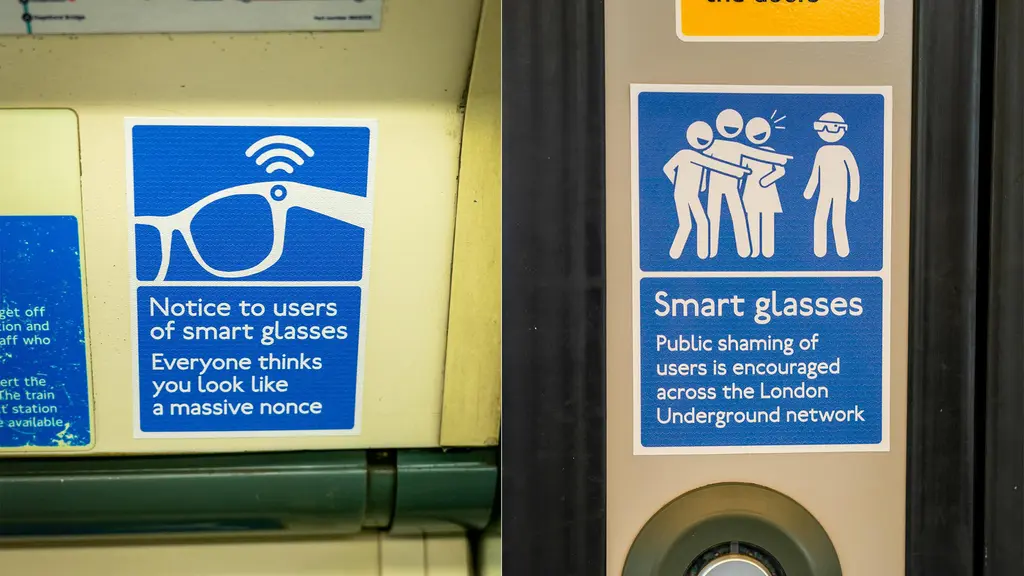
Activists slam “pervert glasses” in new guerrilla campaign
Everyone Hates Elon — Stickers have appeared on the London Underground network, criticising the wearable technology’s covert filming capabilities.
Written by: Isaac Muk

Behind the curtain at Alternative Miss World 1981
Olympia glamour — Running a subversive take on the traditional beauty pageant, the Andrew Logan organised event prioritised underground creativity and invention. Photographer David Corio went behind the scenes at its biggest edition.
Written by: Miss Rosen

Dan Lacey: “BMX is forever evolving”
Overground — Steph Pomphrey caught up with the two-wheel legend after his latest meet in east London, chatting about fatherhood, music and action sports within the outdoor industry.
Written by: Steph Pomphrey

The battle for the soul of lockpicking
Under locksport and key — In recent years, breaking locks for fun has grown from a niche hobby into an activity followed by millions of people. As it has matured, so have tensions over who sets the rules.
Written by: Jack Dennison-Thompson

New exhibition highlights British radical living over 200 years
Earthly Paradise — Taking place at the William Morris Gallery, it explores the homes and lives of artists, writers, musicians and more, as well as the conditions that allowed them to thrive.
Written by: Isaac Muk

Pink Floyd’s Roger Waters joins team of new Palestinian resistance documentary
Freedom Theatre — Directed by Rishi Pelham, the film spotlights a theatre operating in the Jenin refugee camp.
Written by: Ella Glossop


