Why we should abolish the world’s borders
- Text by Gracie Mae Bradley and Luke de Noronha
- Illustrations by Harry J. Salt

What do borders do? In conventional accounts, borders establish where one country ends and another begins. They are lines on maps, permanent and taken for granted. Borders delineate a country’s territory and mediate the movement of people and goods in and out. They keep out the things that are prohibited: undeclared sums of money, live animals, invasive plant species, disease, drugs – and of course, unauthorised people.
For affluent people in the global North, borders can be crossed with relative ease. There is the brief discomfort of luggage scanners and passport control, before the warm embrace of distant family and the languor of holidays. Law-abiding travellers accept the pat-downs and full-body X-ray scans because they believe that they have nothing to hide and, indeed, because they share a desire for control, order and safety.
It is this desire for control and security that defines the politics of immigration more broadly: the headlines and political speeches that rail against the dangers of unchecked migration.
Borders are always being breached, it seems. Hence the watery metaphors – the ‘deluge’, ‘waves’, or ‘floods’ of migrants – surpassed only by the animalising language of ‘swarms’. Migrants usually come into focus as an assortment of their most threatening characteristics, and the arrival and settlement of migrants – too many, too fast, the wrong type – is seen as bringing only risk, insecurity and national decline. In this context, governments seem continually compelled to allocate greater resources and more sophisticated technologies to strengthen their borders. The recent rise of right-wing governments has been accompanied by the proliferation of border walls, razor-wire fences, floating barriers in the sea, drones surveilling migrants crossing deserts and oceans, push-backs at the borders of Europe, and the processing of asylum claims in offshore detention camps. The intensification of violent and spectacular bordering is intimately connected to the ascendancy of racist, nationalist and right-wing governments in the present historical moment. But this is not only a problem on the right. Voices from across the political spectrum assert that borders are sensible and necessary. Many political parties and even trade unions argue that borders protect the working classes from low wages caused by a surplus of migrant labour, ease strains on housing and public services, and preserve the ‘way of life’ and ‘national culture’ of migrant-receiving societies. Borders are also said to combat people-smuggling and sex-trafficking, and to prevent the most valuable and talented individuals from abandoning poorer countries. Across these accounts, people on the move are reduced to statistics, units of labour, racialised threats, legal categories and abject victims. Their humanity is effaced, and the ‘push factors’ driving their decisions to migrate hang in the background: a kind of miasma of war, persecution and ecological collapse divorced from the actions and histories of countries in the global North.
Part of the problem is that the global system of nation states is simply taken for granted, as if countries and the inequalities between them were natural and permanent. Citizenship – the political/legal system that assigns individuals to states – goes unquestioned. More than this, citizenship is seen as a universal good, a marker of political inclusion and subjectivity, and each individual is supposed to be a citizen ‘at home’, where they have deep cultural and social ties, and thus where they belong. In this context, immigration controls are seen as merely enforcing coherent legal and spatial distinctions between national populations, through such bureaucratic devices as visas, passports, border checks, and agreements between states. Borders between nation-states are seen to be vital for democracy: they demarcate the necessarily bounded demos.
To sustain this account of borders, all nation-states must be represented as formally equal and sovereign. But this conceit requires a deep historical amnesia about colonialism, and an unwillingness to consider ongoing relations of economic domination. Of course, not all citizenships are equal; citizens of Sweden, New Zealand or the United States have substantially better life chances and greater freedom of movement than citizens of Bangladesh, the Democratic Republic of Congo or Kyrgyzstan. Immigration controls do not simply carve up the world then, they enforce fixed legal and spatial distinctions between highly unequal nationalised populations.
Borders Are Everywhere
The glaring problem with these dominant accounts is that borders are not, in fact, very effective at achieving their stated aims. With or without legal authorisation, the right paperwork, or the right status, people move. Borders may force migrants to take different, longer and more dangerous routes; to use documents in other people’s names; and to pay people to facilitate the journey. By depriving people of safer and more direct routes, borders therefore often expose them to harms – robbery, extortion, exploitation and violence – but they do not stop them moving.
And so, people arrive. They make friends, fall in love (with people and with places) and sometimes decide to stay. If they do so without regular status, they might then be excluded from rights to work, to rent housing lawfully, and to access essential public services like health and education. In this context, they are compelled to take jobs within particular sectors, often with particularly bad working conditions, sometimes on pain of criminalisation.
Even migrants with legal status may not have the right to change employers, leave a spouse, or stay after their university course finishes. This limits their ability to express themselves freely, assert rights at work, or leave abusive relationships. Their loved ones may be unable to join or even visit them. Non-citizens may be obliged to submit to regular biometric checks, to pay significant sums to access essential services – on top of other taxes – and to pay lofty fees to maintain their immigration status. Labour migrants, asylum seekers and undocumented people are often excluded from welfare benefits and free healthcare, even during a global pandemic.
Moreover, as was demonstrated by the so-called Windrush scandal, in which elderly Caribbean migrants in the UK were wrongfully denied access to healthcare and welfare benefits, and in some cases deported to countries they had left in the 1960s and ’70s, people can always be deprived of status and rights they have enjoyed for decades.
People who have authorisation to live somewhere might wake up to find the rules have changed, and that they are suddenly ‘illegal’. We should not be fooled into thinking of this as an aberration; it is part of what borders do: they follow people around, excluding them in various ways at different times, thus producing the precarity and disposability that characterises the migrant condition.
All of this reminds us that borders do not materialise only at the edges of national territory, in airports, or at border walls. In fact, borders are everyday and everywhere, determining how people relate to partners, employers and the police, where they live and work, and their access to healthcare and welfare support.
Borders do not solely affect people on the move, or those who understand themselves to be migrants, but often impact long-settled individuals who have been illegalised – turned into migrants – as well as the family and friends of illegalised migrants. More than this, bordering practices have negative consequences for minoritised citizens, who are racialised as ‘migrants’ or as ‘of migrant background’ – regularly described as ‘second-generation immigrants’ despite shared political membership and formal equality (indeed, distinguishing migrants from citizens in multiracial societies is not straightforward). Meanwhile, some non-citizens (migrants in law) are not constructed as migrants in discourse – elite businesspeople, backpackers, and ‘expats’ are not visible in debates about immigration.
Once we move away from the idea that borders mark the edge of territory, we can see how immigration controls create divisions and hierarchies within individual nation-states. Immigration regimes are systems by which differentiated rights are bestowed, and therefore also by which basic rights are denied – such as the rights to work, to join family, to access welfare benefits and healthcare, and to move freely. Borders thus separate workers, neighbours and family members from one another, fuelling racist divisions and nativist resentments. Borders promise to unite citizens through the exclusion of migrants, but this promise proves hollow. Instead, borders are used to surveil and control whole populations, migrants and citizens both, and new forms of disentitlement and conditionality within welfare, education and health services tend to be trialled initially on migrants. Meanwhile, new biometric technologies and predictive analytics are catalysing states’ capacities to extend exclusionary and often fatal policing and surveillance practices at borders. None of these techniques will be reserved only for ‘migrants’. Borders harm us all, which is why we must all be committed to their abolition.
Borders Are Obsolete
Indeed, things do not have to be this way. Immigration controls do not prevent human movement, nor do they protect citizens. In fact, borders produce many of the social harms they claim to prevent, including loss of life, inhuman and degrading treatment, and rampant inequality. Borders fail to address the conditions that shape migration processes in the first place – global inequalities, the dispossession of lands and livelihoods, climate breakdown – and they render people on the move vulnerable to various forms of exploitation and abuse. Immigration controls cannot be used to protect people’s rights or to alleviate global inequality; they only ever worsen these problems.
Echoing Angela Davis in her account of prisons, we contend that immigration controls are obsolete and should be abolished. Borders and prisons are both punitive systems for managing undesirable subjects, and both punish people through immobilisation and forced exile. Whatever the important differences between prisons and borders, state violence is in both cases directed towards managing and restricting movement. The struggle for freedom is therefore in both cases a struggle over movement – a struggle for the right to locomotion, to move freely, over fences and out of cages. What we call border abolition is concerned with expanding this freedom, the freedom to move and to stay. This does not mean advocating for free movement in the world as it is currently configured, but rather for transformation of the conditions to which borders are a response. Abolition is concerned with presence (the presence of life-sustaining goods, services and practices of care) as well as absence (of violent state practices like detention and deportation). Accordingly, border abolition seeks to dismantle violent borders, but also to cultivate new ways of caring for one another, nurturing forms of collectivity more conducive to human flourishing than the nation-states we currently inhabit. Border abolition is a revolutionary politics situated within wider struggles for economic justice, racial equality and sustainable ecologies, based on the conviction that there will be no liveable futures in which borders between political communities are violently guarded.
We do not provide a roadmap for how to get to border abolition. We do not know what that world will look like, and there is no single route to get us there. From prison abolition and the wider black feminist politics that shape it, we take a longer-term view of political change. We hope to offer some suggestions and guiding questions, considering the steps we should take and hazards we should avoid. Border abolition offers practical frameworks for acting strategically now, but always focusing on the possibility and urgency of building a world without borders. The first step is to increase our collective understanding of what borders do in the world.
Clearly, border abolition is easier said than done. The realisation that the one thing we need to change is everything can certainly be overwhelming. How do we fight to close detention centres and end deportations, stop transnational corporations ruining lives and destroying the planet, while at the same time nurturing spaces of sanctuary and safety in our neighbourhoods? How can we reduce the purview of surveillance, big data and algorithms, while at the same time developing new forms of intimacy beyond the family – all at a time when disaster nationalism seems to be extending its hold over popular political imaginaries? Though the road is long, we should recognise the hopeful signs around us – developments already in motion – and think about the strategies that can build on this work. We need to keep imagining and building, even as despair shadows hope.
In Ernst Bloch’s words, ‘The work of [hope] requires people who throw themselves actively into what is becoming, to which they themselves belong.’ Clearly, this claim chimes with the politics of abolition. Mariame Kaba writes of hope as a discipline, while bell hooks writes that ‘[h]opefulness empowers us to continue our work for justice even as the forces of injustice may gain power for a time. To live by hope is to believe that it is worth taking the next step.’ Hope is not the same as optimism, but rather defined by ‘a worldly attentiveness to what is emerging in the conditions of the present as they are carried into the future’. We offer this book as an example of such hope.
We invite you to consider what borders actually do in the world, and to entertain, however briefly, the possibility that communities across the world can relate to one another with out recourse to immigration controls. We know that many of you will already share our dreams for a world without borders
We do not pretend to have all the answers, and we have the humility to know that much of what we propose is not new. As Mariame Kaba reminds us, abolition is as much about asking the right questions as having the right answers. Ultimately, we hope this book can open up some space and shed some light for those of us working towards a world without borders and the false promises of race and nation.
Against Borders: The Case for Abolition is out 19 July.
Enjoyed this article? Like Huck on Facebook or follow us on Twitter and Instagram.
You might like

Photographing America’s 20th century rebels
Rebels With a Cause — A new monograph looks back at Jean-Pierre Laffont’s extensive archive documenting counterculture, art, activism and more, shaping the country as it is today.
Written by: Isaac Muk

The long history of slop in music
Top of the Slops — The term might be everywhere now, but the act of copying and enshittifying has been around for decades, explains Ian McQuaid.
Written by: Ian McQuaid

Sports Banger is throwing a party to mark 90 years since the Battle of Cable Street
“Fascists hate dancing” — The October event will bring DJs, live music, sound system culture and anti-fascist politics together in East London.
Written by: Ella Glossop
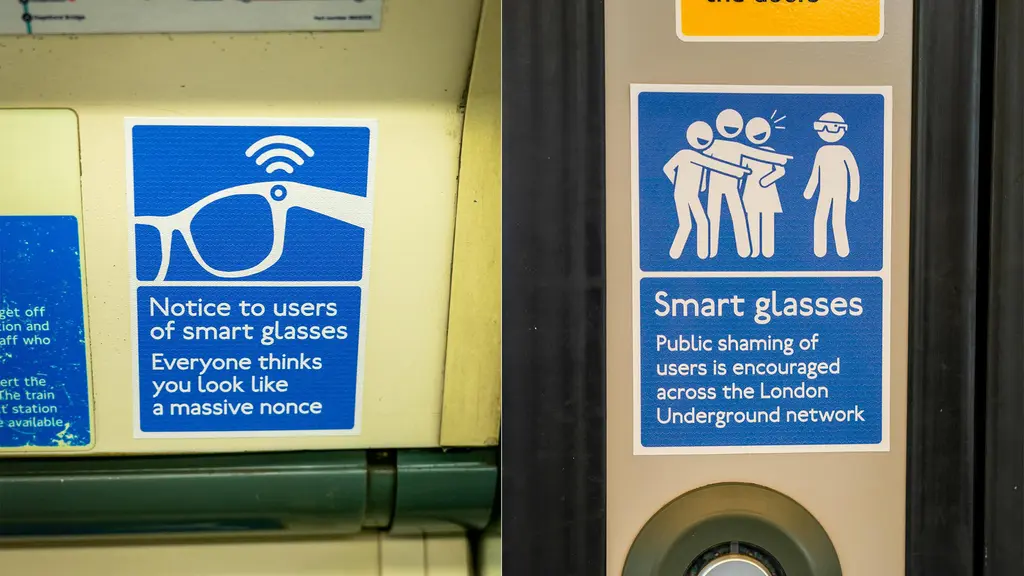
Activists slam “pervert glasses” in new guerrilla campaign
Everyone Hates Elon — Stickers have appeared on the London Underground network, criticising the wearable technology’s covert filming capabilities.
Written by: Isaac Muk

New exhibition highlights British radical living over 200 years
Earthly Paradise — Taking place at the William Morris Gallery, it explores the homes and lives of artists, writers, musicians and more, as well as the conditions that allowed them to thrive.
Written by: Isaac Muk

Pink Floyd’s Roger Waters joins team of new Palestinian resistance documentary
Freedom Theatre — Directed by Rishi Pelham, the film spotlights a theatre operating in the Jenin refugee camp.
Written by: Ella Glossop


