In Baghdad, skater girls are reshaping Iraqi womanhood
- Text by Dalia Dawood
- Photography by Anmar Khalil, Samantha Robison

Baghdad is rad — As the city’s first skatepark opens, the new space is providing a blank canvas for its board culture. Dalia Dawood speaks to the people looking to make its ramps and rails a safe haven for women and girls.
“I decided to come and change the world.” That was Ishtar Obaid’s ambition when she moved to Iraq from Abu Dhabi three years ago, and launched Baghdad Skate Girls. A skate collective may not seem groundbreaking, but in Iraq, it’s a powerful statement. She aimed to shift social attitudes in a conservative culture where women’s rights are often overlooked, and in the process, has created a safe space for women and girls to learn new skills and support each other through sports.
Ishtar wears many hats: she is a jiu jitsu world champion, an advisor to the Iraq National Olympic committee, founder of an NGO for Iraqi youth development and a certified health coach. But the title she gives herself is “community builder”. Growing up, this was something she felt that she lacked, and she wanted to find a “tribe” of like-minded Iraqi women who had similar interests. She started skateboarding as a hobby but felt out of place on the streets of Baghdad, where women partaking in sports remains unconventional at best, and frowned upon at worst. “I felt like an alien in Iraq and I thought there must be other aliens out here!” she says, laughing.
She put a call out on social media and a small group of girls began to meet regularly to skateboard at Al-Zawraa park in central Baghdad – but there were obstacles. “It was not comfortable,” recalls one of the skaters, Zainab. “So many people would watch and judge us.” What’s more, the park lacked the right infrastructure for skating – there were no ramps or places to practice tricks safely.


When Baghdad’s first skatepark opened in February this year, it was a ray of hope – not just for the girls, but a blooming skateboarding subculture in Iraq’s capital that had been itching for a place of its own. “We saw a lot of skaters from Baghdad take the long trip to Suli so they could skate at a skatepark for the first time,” says Arne Hillerns, founder of Make Life Skate Life, the non-profit behind the Baghdad development and Suli Skatepark in Sulaymaniyah, the Kurdish region of Iraq. “It’s super difficult to skate anywhere in Baghdad; we saw the demand and decided to build there.” The Baghdad project received funding from the German and French embassies and took five years to realise.
Once it was up and running, Ishtar “had to take charge very quickly and put in some rules”. This meant not only creating ground rules for health and safety, but also to reshape a mentality of male dominance and rivalry. “It’s a mini-Iraq, this place,” she says of the skatepark. Such testosterone-fuelled behaviour is not specific to Iraq – it’s common in skate culture the world over – but Ishtar wanted to tackle this from the outset with a narrative that swaps competitiveness with camaraderie. “I had to explain to some of the male coaches that they’re creating rivalry, whereas I want the girls to inspire each other and raise each other up.”
Even the skatepark’s location – inside the Ministry of Youth and Sports, accessible only via a guarded checkpoint – has led to physical and cultural barriers, with security and ministry staff initially sceptical that skateboarding is a “bad boy sport”, according to Ishtar. “But now I get guards asking when they can bring their daughters – for me that’s huge because we worked hard to make sure this is a safe space.”
“It’s a mini-Iraq, this place. I had to explain to some of the male coaches that they’re creating rivalry, whereas I want the girls to inspire each other and raise each other up.” Ishtar Obaid, Baghdad Skate Girls founder

Its small wins reflect wider Iraq, too. It’s a country that has made progressive strides in recent times, including launching a UN youth advisory council and campaigns to expand women’s political power ahead of upcoming elections this year, and projects that encourage young entrepreneurs to develop businesses, such as co-working initiative The Station. Yet it often stumbles back into regressive policies, among them the controversial amendment to its personal status law in 2024, which makes it legal for girls as young as nine to marry, and a law passed last year criminalising same-sex relationships.
Ishtar’s desire to break boundaries and challenge authority runs in tandem with skateboarding’s counterculture origins, though resisting gender binaries and roles must play out subtly and slowly with what she calls “social experiments”. Girls often take their skateboards to the streets to see people’s reactions, “but we’ll do it on a Friday when everyone is at prayers and there’s just a few people outside”.
This jostling for acceptance is hard won, as some of the girls know. Dania has been skating for several years but only within the confines of her parents’ garage, as they disapprove of her skateboarding outside. Zainab has to keep skateboarding a secret. “My family doesn’t know about it,” she says. “They won’t let me do sports, which makes life challenging.”
Yet both acknowledge that things are progressing. Girls being active outdoors is more accepted. The skatepark allows them to practice without judgment and take part in girls’ only lessons. In fact, Dania is even set to begin coaching. “I love it because I know that the girls who come, even if they don’t skate and just watch other girls, they’ll be inspired.” Make Life Skate Life’s Samantha Robison agrees: “When you see powerful women, it makes you want to be a more powerful woman. If you give the girls an opportunity to help each other and grow, they’ll be more confident.”


With Ishtar at the helm, this tribe of skate girls symbolises the “essence” of skateboarding: “Being brave, every single minute,” she says, something with which local youth are familiar with. Iraq has one of the youngest populations in the world with nearly 60% under 25; most of them have grown up amid conflict and waves of social instability, sectarianism and stagnant policies. Yet their agency is growing, and people like Ishtar are providing them with the tools to flourish – changing the country through community.
“I call my Baghdad Skate Girls project ‘reclaiming public spaces’, because when my mum lived in Iraq she could do sports, girls could play in the streets and no one would think it’s strange – that’s what we’re reclaiming, our right to be here. We’ve put in a lot of work to protect our community and to make it accepted.
“When I came to Iraq I said: ‘I am going to change this country,’ and everyone laughed at me,” she continues. “They think this means being president, but for me it’s working on these communities that will grow.” Many of the skaters can already feel themselves rolling towards a brighter future, including Dania. “What Ishtar and the skatepark are offering, it’s changing the next generation of Iraqis through sports. It’s happening, I can feel it and everyone around me can feel it, too.”
Dalia Dawood is a freelance journalist. Follow her on Instagram.
Buy your copy of Huck 81 here.
Enjoyed this article? Follow Huck on Instagram and sign up to our newsletter for more from the cutting edge of sport, music and counterculture.
Support stories like this by becoming a member of Club Huck.
You might like

Photos capturing life in the aftermath of the Iraq War
The cost of war — Twenty years on from the beginning of the US-led invasion, Moises Saman's photographs show the scale of the destruction and loss faced by Iraqi civilians – as well as their resilience.
Written by: Isaac Muk

Baghdad’s first skatepark set to open next week
Make Life Skate Life — Opening to the public on February 1, it will be located at the Ministry of Youth and Sports in the city centre and free-of-charge to use.
Written by: Isaac Muk

On the frontlines with the Kurdish female fighters beating back ISIS
Öcalan's Angels — Iraqi pro-government forces are making gains in the start of their large-scale operation to retake Mosul, the last major stronghold of the so-called Islamic State In eastern Syria. Fighting alongside the government forces are a Kurdish feminist army, but what’s driving young Kurdish women to take up arms, knowing they may never return? Magnum photographer Newsha Tavakolian went to find out for Huck's Defiance Issue.
Written by: Newsha Tavakolian

This is what 30 years of British counterculture looks like
Exist to Resist — Matthew Smith has spent three decades documenting street culture at its rawest, from rural raves to political protests, in the face of police pressure.
Written by: Khadija Ahmed

Guts, glory and goat tossing at the World Nomad Games
All eyes on Bishkek — From kok boru to eagle hunting, Kyrgyzstan’s global showcase spotlights ancient sports and celebrates local traditional culture, while also stiffening the regime’s ambitions, reports Antoine Goullin.
Written by: Antoine Goullin
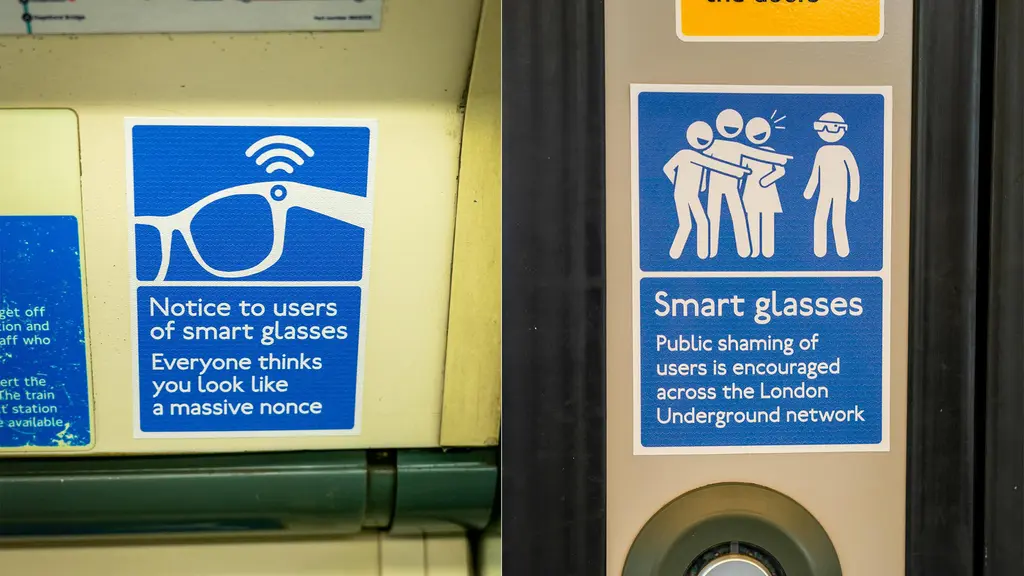
Activists slam “pervert glasses” in new guerrilla campaign
Everyone Hates Elon — Stickers have appeared on the London Underground network, criticising the wearable technology’s covert filming capabilities.
Written by: Isaac Muk


