Breaking the chain: It's time to stop separating refugee families
- Text by Michael Segalov
- Photography by Theo McInnes

Campaigners from Amnesty International and the Student Action for Refugees (STAR) joined together outside the Home Office and the Department for Education in London today with a giant paper chain to present a 30,000 strong petition calling on the UK government to stop forcibly separating child refugees from their families.


The 240 metre long colourful paper chain stretched between the two buildings, as it’s these two government departments that are set to publish a joint strategy on the safeguarding of unaccompanied child refugees on Monday 1 May.
Adult refugees in the UK are entitled to apply for their immediate family members to join them. However, this is not the case for children. The UK is one of only two European countries (along with Denmark) which denies this opportunity for refugee children.


“It is a travesty that vulnerable children who have come to this country, fleeing conflict and persecution, are not entitled to apply for their family members to join them,” explains Kerry Moscogiuri, Amnesty UK’s Director of Campaigns. “Many of them are already deeply traumatised and this cruel policy only exacerbates their suffering. We want to send a strong message to the UK Government to change the rules to allow them to be reunited with their loved ones.”
The activists were joined by Amnesty Ambassadors, actress Juliet Stevenson and members of the Kaiser Chiefs.


“I have met many unaccompanied refugee children who have been through the most traumatic of experiences; they are suffering from intense anxiety and are scared and lonely,” says Juliet Stevenson. “The UK Government must urgently act to alleviate their suffering. It’s not only the moral thing to do; it also makes sense from a policy perspective. Allowing children to be reunited with their close family could save valuable resources in the long run, such as costs for mental health services and foster care.”
The petition and the paper chain action are part of Amnesty’s “I Welcome” campaign, which calls on the UK Government to share responsibility in responding to the global refugee crisis.
Enjoyed this article? Like Huck on Facebook or follow us on Twitter.
You might like
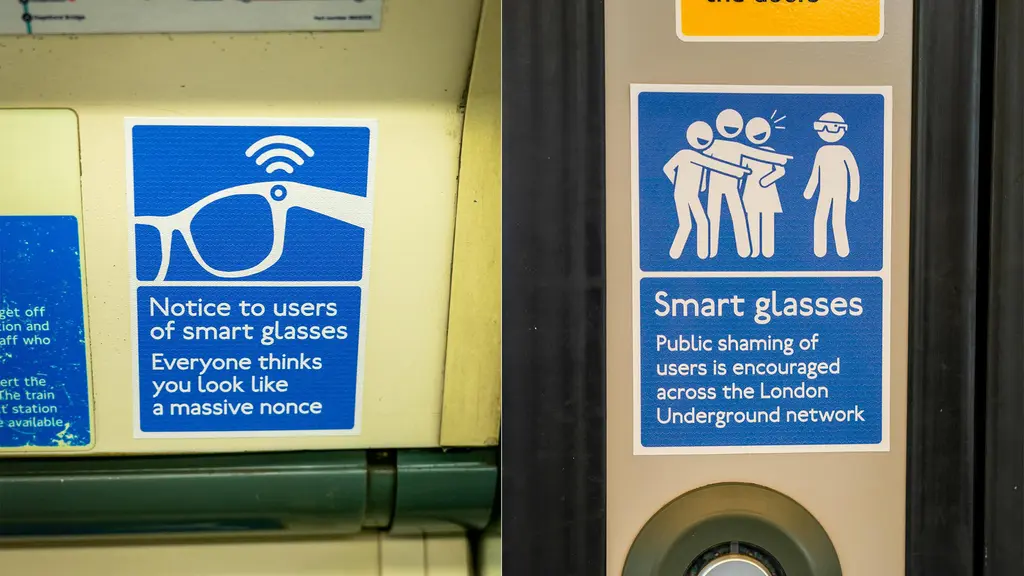
Activists slam “pervert glasses” in new guerrilla campaign
Everyone Hates Elon — Stickers have appeared on the London Underground network, criticising the wearable technology’s covert filming capabilities.
Written by: Isaac Muk

Behind the curtain at Alternative Miss World 1981
Olympia glamour — Running a subversive take on the traditional beauty pageant, the Andrew Logan organised event prioritised underground creativity and invention. Photographer David Corio went behind the scenes at its biggest edition.
Written by: Miss Rosen

Dan Lacey: “BMX is forever evolving”
Overground — Steph Pomphrey caught up with the two-wheel legend after his latest meet in east London, chatting about fatherhood, music and action sports within the outdoor industry.
Written by: Steph Pomphrey

The battle for the soul of lockpicking
Under locksport and key — In recent years, breaking locks for fun has grown from a niche hobby into an activity followed by millions of people. As it has matured, so have tensions over who sets the rules.
Written by: Jack Dennison-Thompson

New exhibition highlights British radical living over 200 years
Earthly Paradise — Taking place at the William Morris Gallery, it explores the homes and lives of artists, writers, musicians and more, as well as the conditions that allowed them to thrive.
Written by: Isaac Muk

Pink Floyd’s Roger Waters joins team of new Palestinian resistance documentary
Freedom Theatre — Directed by Rishi Pelham, the film spotlights a theatre operating in the Jenin refugee camp.
Written by: Ella Glossop


