Capturing love and loss on the streets of Poughkeepsie
- Text by Caleb Stein
- Photography by Caleb Stein

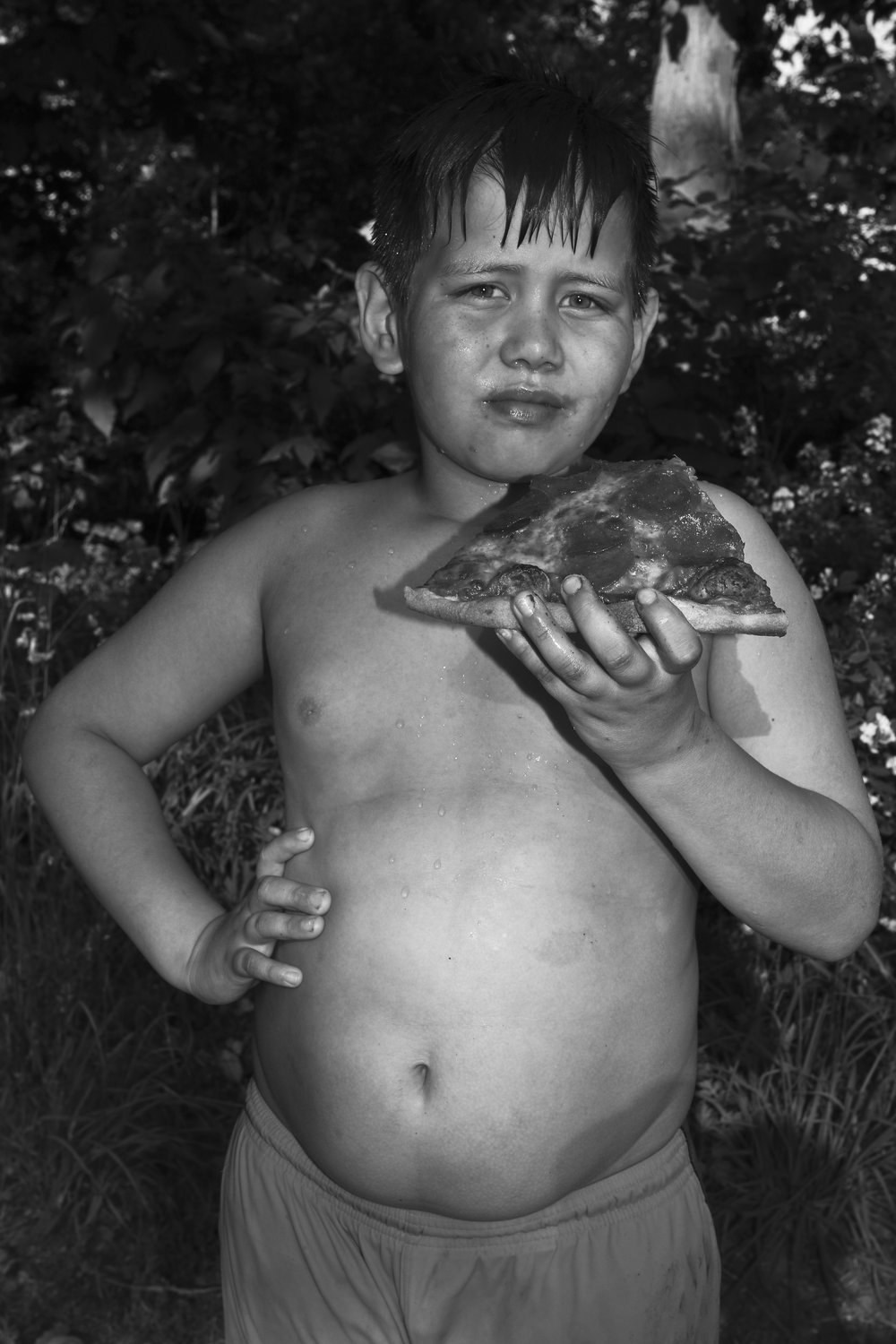
There’s a widespread conception that Poughkeepsie is a dangerous, inaccessible place – but after coming to the city to study, I’ve quite quickly realised that this isn’t the case. I decided to work on my latest photo series, Down By The Hudson, because I wanted to learn more about Poughkeepsie and the people living in it. This project is about opening up, without judgment, and trying to better understand where I live.
I’m learning about Poughkeepsie’s history, how it’s changed over the years. Most people say the same thing – that the city has been on a downward track for quite some time. They tell me how the East-West Arterial road has literally cut neighbourhoods in half. Then IBM downsized, and the local economy took a hit. Then Route 9 and the Galleria Mall appeared with their corporate stores, which, in turn, meant that a lot of local businesses disappeared.


That said, there are people who enjoy Poughkeepsie – they mention the little things that make it worthwhile, like Kennedy Fried Chicken, the Hudson River, the historic architecture. A lot of these people love the fact that when they walk outside they know everyone; Poughkeepsie is more a village than a small city to those who have always lived in it.
I’ve also seen tragedy on a level I’ve never before experienced. Nikki, a woman who is featured in a lot of the pictures in this series, came from a home where her mother was a drug addict. She hasn’t seen her family in years, including her daughter, and spends most of her time doing drugs or trying to figure out how to get them. She’s been to jail – where she got clean and put on some healthy weight – but when she came out it only took two weeks for her to start taking the drugs again. She’s told me that prostitution and drug addiction have become a vicious cycle for her – she does sex work to buy drugs but she can’t do the sex work without being on drugs.


Another woman, Virginia, has been addicted to heroin for decades. Her entire family has died of overdoses. She describes herself as a hippy and a wild child rolled up into one. When I first met her she was telling me about how she goes down to Malcolm X Park, by the creek, and makes rock pools by gathering rocks and directing the stream into a closed-off area. I asked her if she could show me and if I could take her picture by the rockpool; I wanted to take a picture of her near something she loves. We walked over there together and when we arrived a couple told her that her youngest son, Jimmy, had just died of an overdose. She broke down and cried.
I feel that photographs can hit people in the guts in a way that very few words can. Yes, photographs can be appropriated, manipulated, and used for propaganda. It’s happened before and, unfortunately, it’ll happen again. But, if made honestly, and, in the right hands, with the right context, photographs can show the reality of the world we live in – and I’m not talking about photojournalism or that type of photography necessarily. I’m talking about a larger reality, one that shows: this is the world, this is how I see it, it’s tough, but it can still be beautiful, and you should look at it. I think photography can encourage openness. It’s a way of embracing the world. However abstract this may seem, I think this is what makes photography an immensely powerful tool for social change.



See more of Caleb Stein’s work on his official website, or follow him on Instagram.
Enjoyed this article? Like Huck on Facebook or follow us on Twitter.
You might like

Jesse Glazzard’s messy portrait of queer friends, lovers and chosen family
The Sound of Dirt and Beauty — The photographer’s debut monograph explores tender, unpolished moments shaped by the people who he surrounds himself with, while offering a window into the UK’s working-class LGBTQ+ community.
Written by: Sunny Sunday

Behind the curtain at Alternative Miss World 1981
Olympia glamour — Running a subversive take on the traditional beauty pageant, the Andrew Logan organised event prioritised underground creativity and invention. Photographer David Corio went behind the scenes at its biggest edition.
Written by: Miss Rosen

New exhibition highlights British radical living over 200 years
Earthly Paradise — Taking place at the William Morris Gallery, it explores the homes and lives of artists, writers, musicians and more, as well as the conditions that allowed them to thrive.
Written by: Isaac Muk

What life on the Strait of Hormuz is really like
Southern Winds — Bandar Abbas based photographer Morteza Niknahad has been capturing the diverse communities and stories of his local region since he first picked up a camera. His new series highlights the human impact of war.
Written by: Isaac Muk

Nick Haymes’s intimate portrait of his family’s life
Chronograph — Over 25 years, the photographer documented his son’s lives as they grew into adults. The resulting photobook is an exploration of the passage of time, as well as the optimism of youth.
Written by: Miss Rosen

Kristina Rozhkova’s scatty, confronting portrait of captivity
Gut Feeling — The Russian artist’s 2024 arrest and subsequent detention opened her eye towards the omnipresent dynamics of power and control. Her new photobook is a stark exploration of being trapped.
Written by: Isaac Muk


