
A colourful ode to Albanian womanhood

“I was really annoyed about the depiction of Albania in photography,” says multi-disciplinary artist Anna Ehrenstein. “Even the works that I really admired for skill were just a huge divergence from reality.”
The Albanian photographer’s ongoing body of work, Tales of Lipstick and Virtue, is an examination of the post-communist context of the country. The aim, she says, is to offer a fresh perspective, and challenge the tired stereotypes that surround Albanian women specifically.
“I went to Albania to translate for a journalist and it was again about ‘Gjakmarrja‘, which means ‘blood feud’ (an ancient social code dating back to 15th century),” she explains. “It really pissed me off that people had this perception that people in Albania still lived in the 12th century.”
The simultaneous eruption of late-capitalism and globalisation in Albania means that pseudo-luxury trends and counterfeits are still, as Ehrenstein states, “strongly woven into Albanian society”. Because of this, she feels that Western European countries can look down on, or dismiss, Albanian culture as backwards and inauthentic.
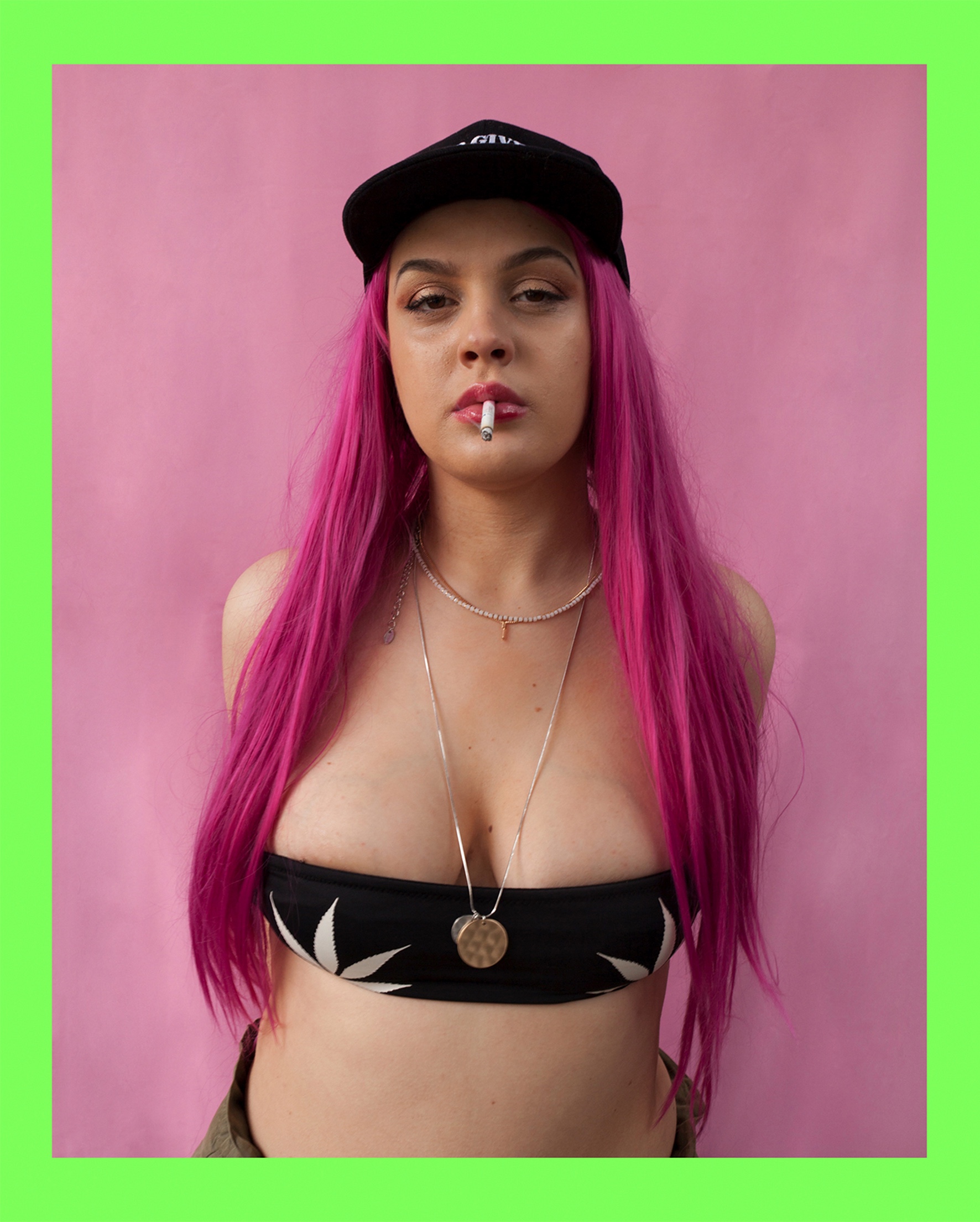
“Why do we call a person authentic? Why do we call an object authentic, and how do the two relate to each other? Societies act as if its a way of maintaining an idea of something that’s good, that’s true – but very often it’s just to maintain a power balance.”
“The communist cry for ‘necessity’ and the feminist cry for ‘naturalness’ contrast with the human desire for experimentation and self-expression. Since we’re products of our influences, what is it that makes us and the objects we are related to authentic?”
Over a period of four years, Ehrenstein travelled between Albania and her current home of Germany to try and answer these questions using documentary photography. She approached 90 women in the capital of Tirana and asked to take their portrait. “The women that I worked with were really hyper-feminine,” she says. “The interesting thing is, when I show it, a lot of people think it will be a homogenous group. But actually, the only thing the subjects had in common was their hyper-femininity.”
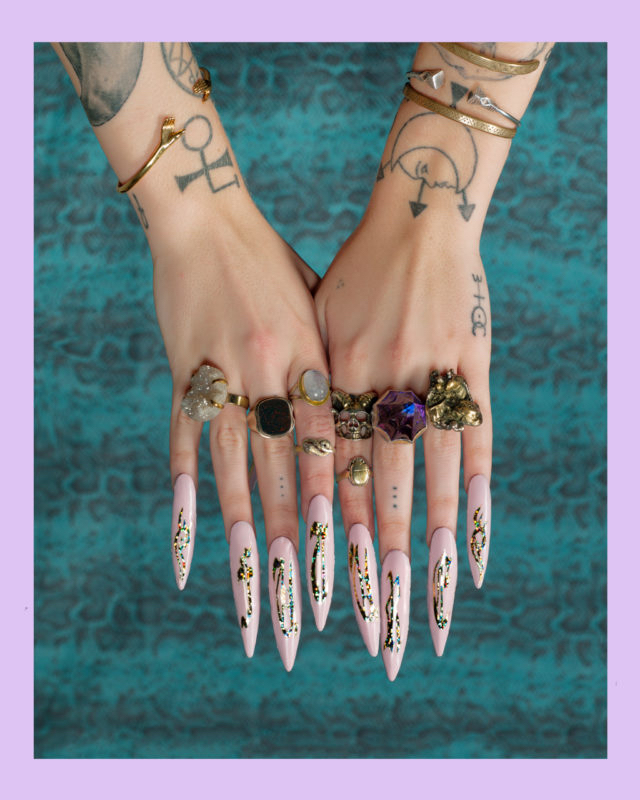
She adds that the reception for Tales of Lipstick and Virtue exhibitions has been mixed, especially in Germany. “People have asked if I’m objectifying these women because of the way I photograph them, and that’s really funny to me because it comes from a position of privilege. People can’t understand that the sexuality of another culture can be different from yours, but that it doesn’t mean that it’s bad. For example, people talk about Jamaican dancehall and say that the women involved are suppressed, because they can’t imagine that sexuality is different in other cultures.”
Ehrenstein also embraces humour with the project, mounting the images against bright and playful backgrounds.
“There are so many projects that examine Albania in this black and white, sad post-communist poverty way,” she says. “You’re not really able to have a conversation because you see the images and you’re like, ‘oh yeah life is sad’ and the conversation is closed. So I think sometimes it gives you the possibility to open up a conversation about serious issues if you have more humour and colour. And there’s something quite Albanian about it, because humour is very important in our culture.”

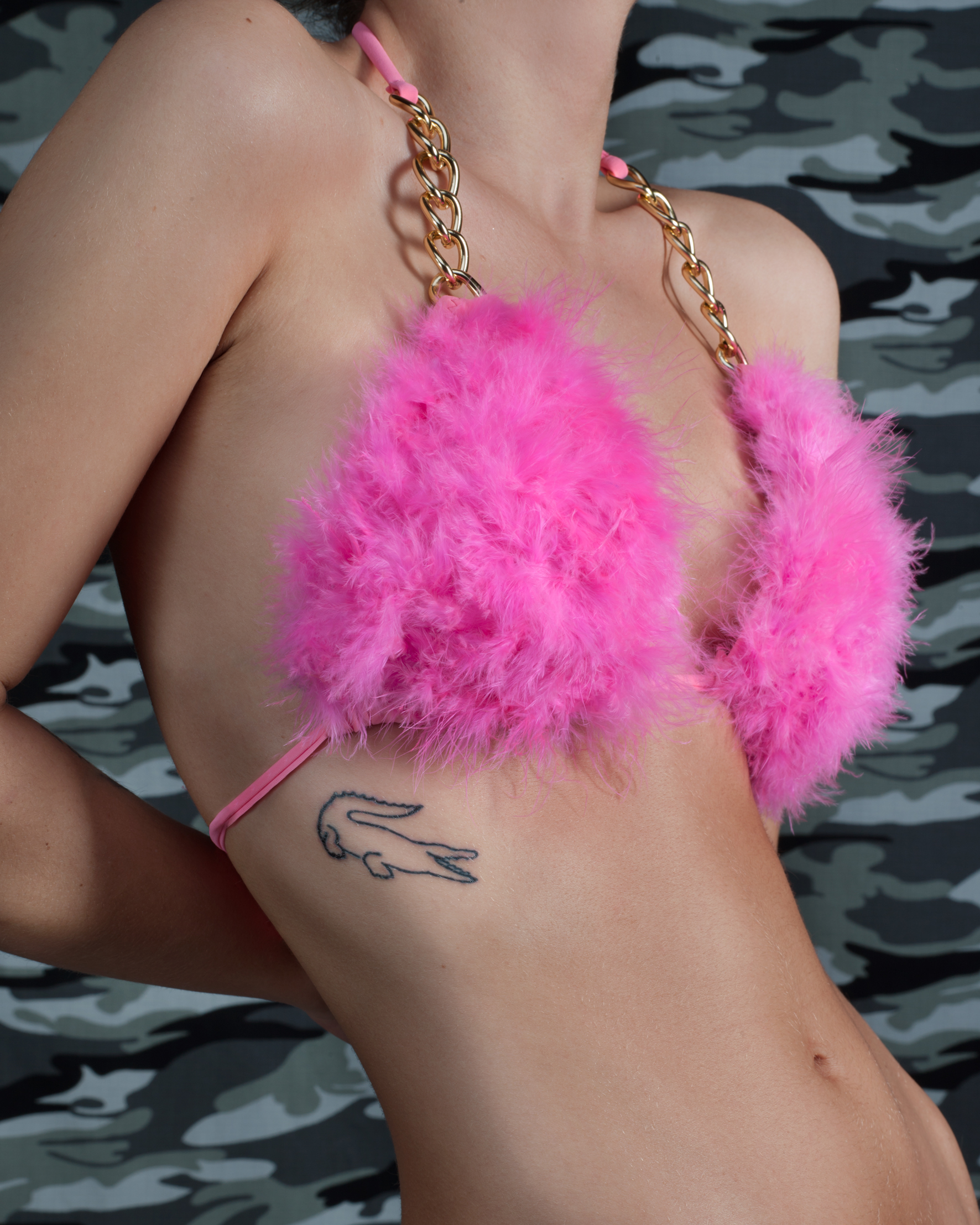

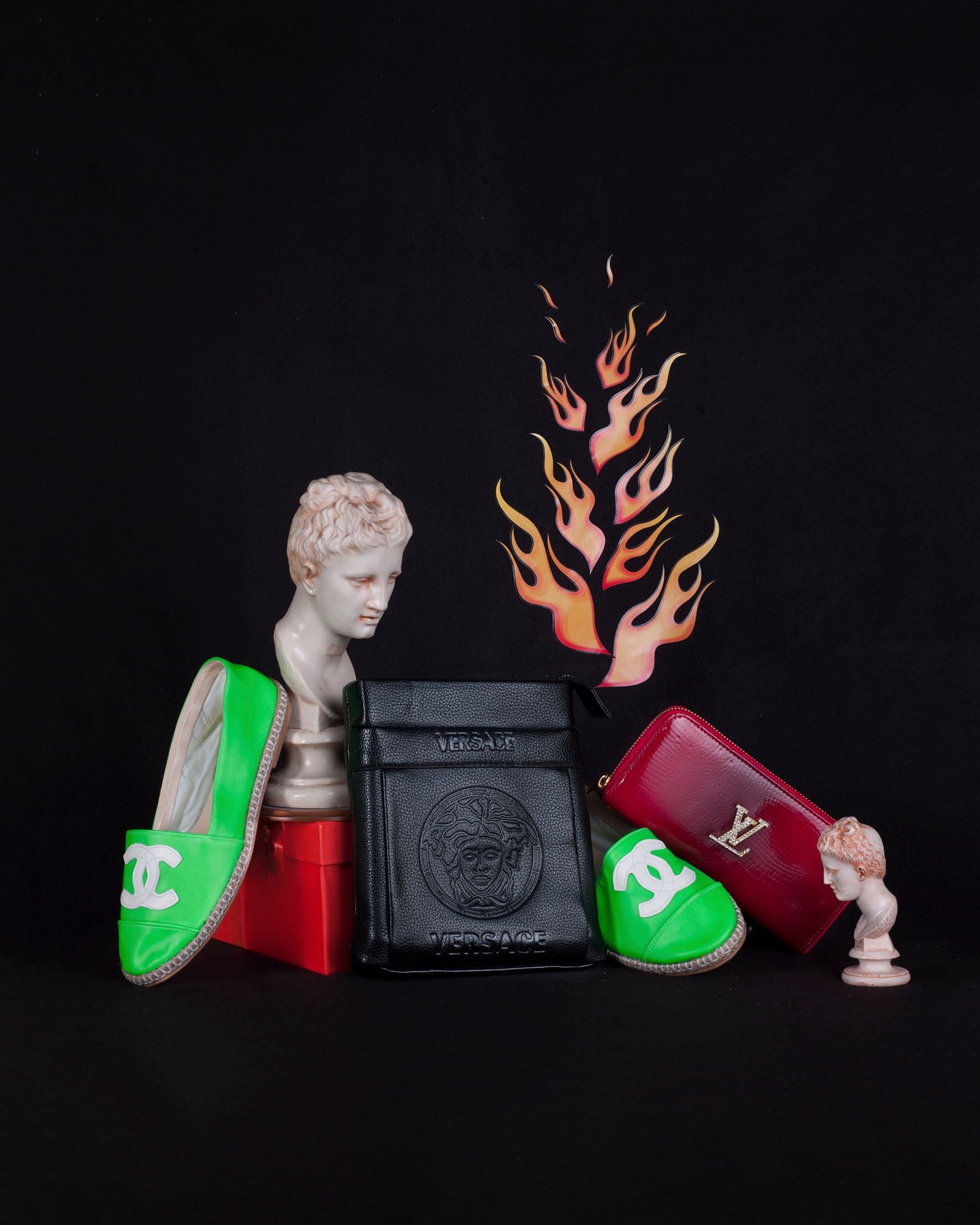
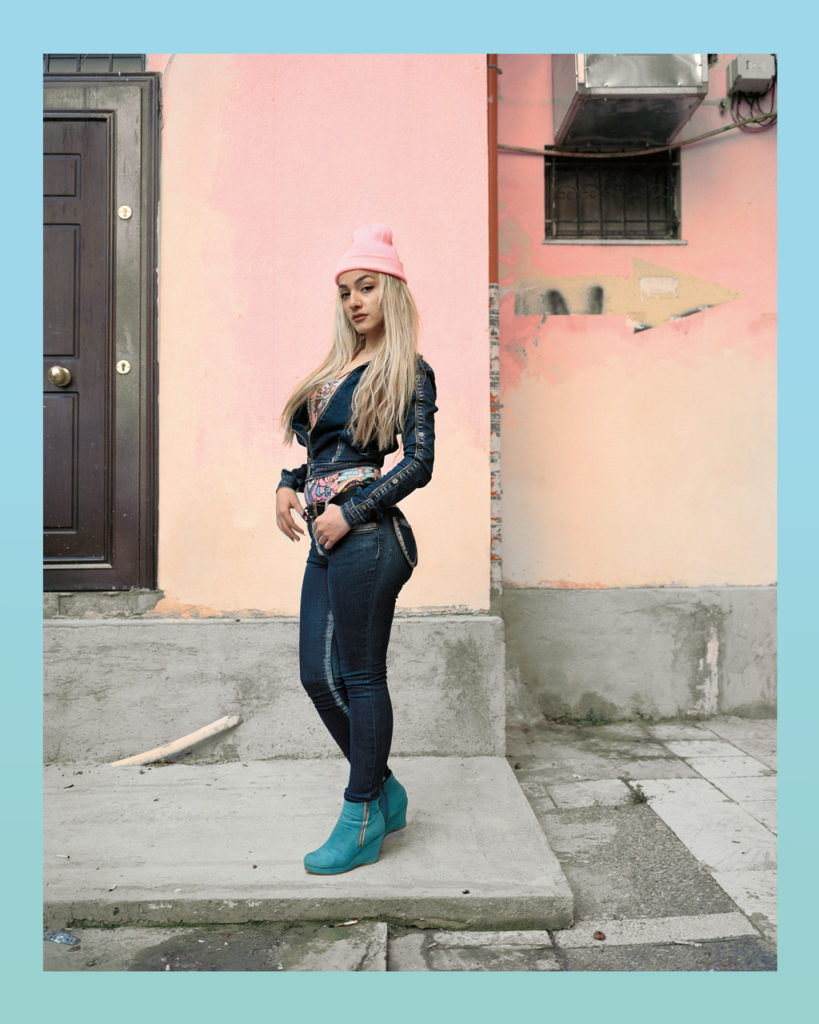
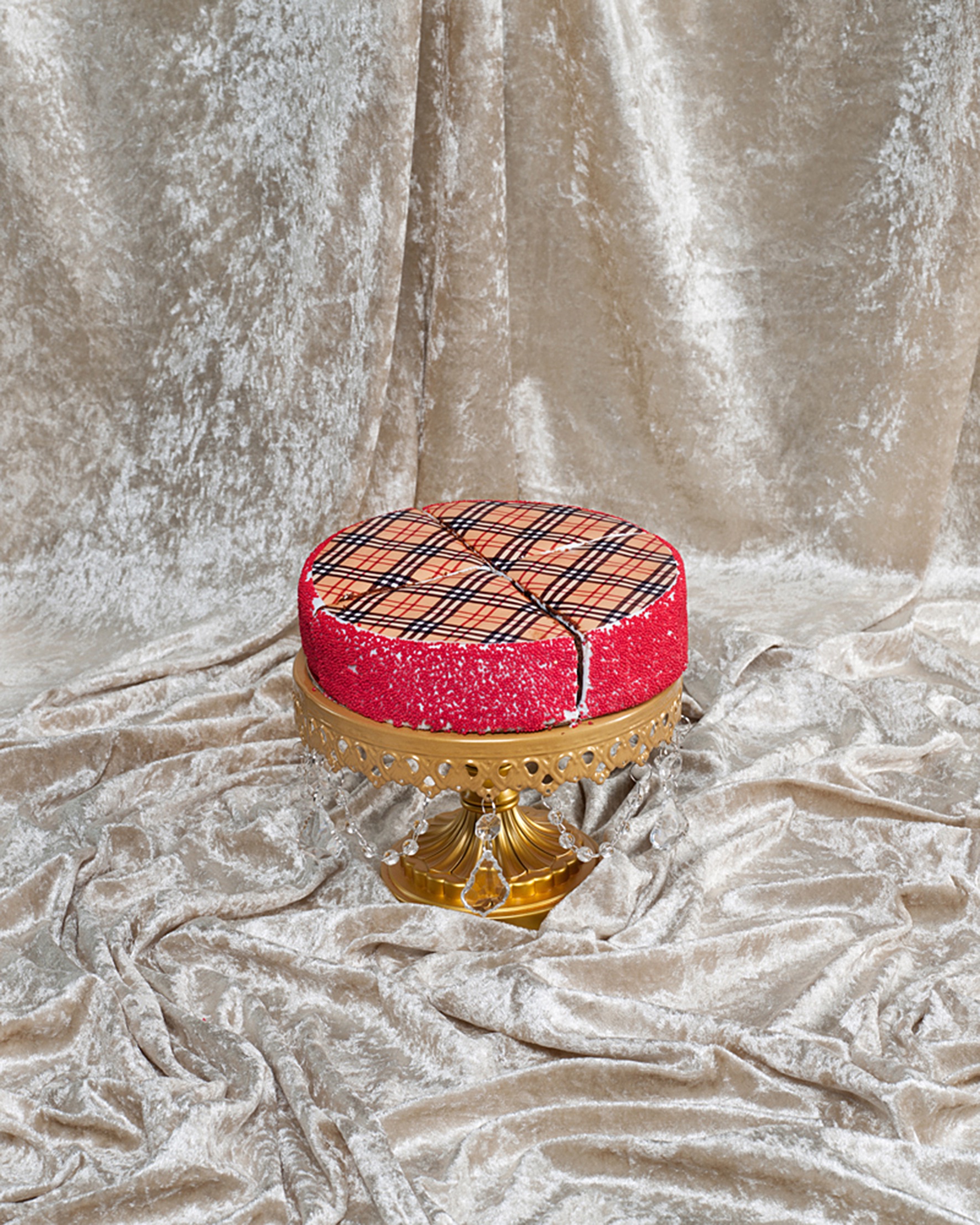
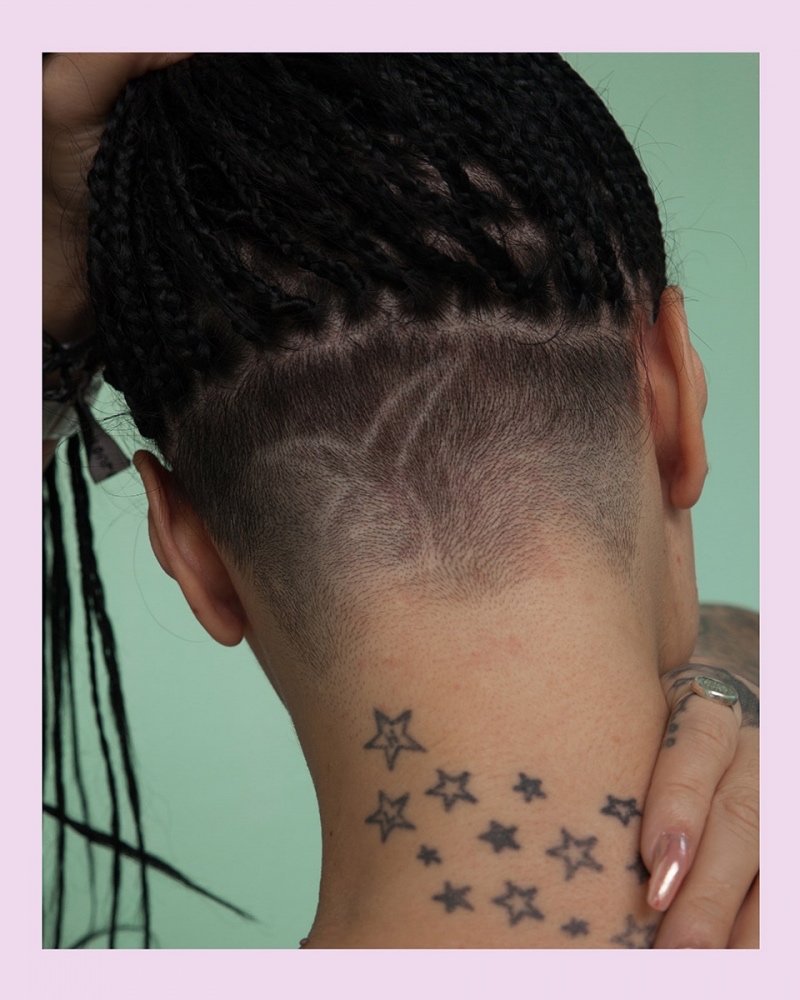
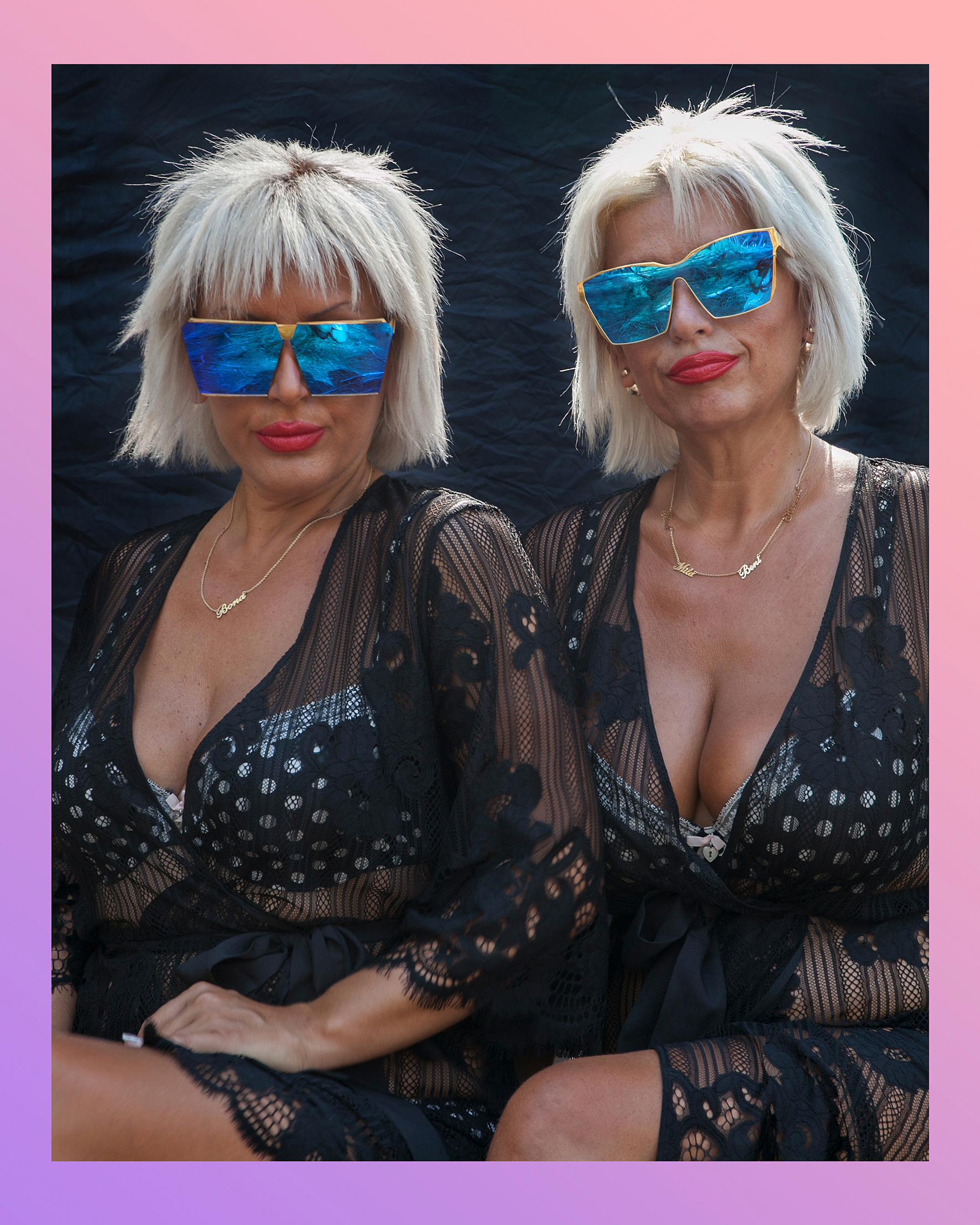
Tales of Lipstick and Virtue will be exhibited for the first time in Tirana later this year in October at Bazament.
Enjoyed this article? Like Huck on Facebook or follow us on Twitter.
You might like

The sharp rise of video game photography
Point, shoot — As the entertainment medium’s fidelity levels increase and developers build more powerful tools, a growing community of gamers are pushing the boundaries of image making in virtual worlds. Vicky Jessop meets people at the forefront of the emerging artform.

Joyous photos from the heart of the UK’s radical free festival movement
Common Grounds — The photographer has been capturing British counterculture for the past half century. A new exhibition looks at his archive sitting at the intersection of music, community and grassroots protest.

The lasting community legacy of a legendary Californian boxing gym
Moretón — Since opening in the ’80s, the Coachella Valley Boxing Club has trained multiple world champions, while providing a vital hub for local youth. In his new photobook, Darren Vargas documents its tight-knit, Chicano-led community, while also weaving a deeply personal story.

Inside the grunge golden age with Hole’s former bassist
My ’90s Rock Photographs — Melissa Auf der Maur’s new photobook is a sprawling visual memoir of her time at the heart of the US scene, from Tinker to The Smashing Pumpkins.

Introducing ‘The Chaos Isles’, a new photozine by Huck and Yushy
Normal Island — From unlicensed raves to the solstice at Stonehenge, furries to giant vegetable growers, Yushy is one of the UK’s best lensmen of its wild side. ‘The Chaos Isles’ will be sent out exclusively to Club Huck+ members.

Join Club Huck+ to get the most from Huck
Dispatches from the sharp edge of culture — Members get our print magazine, special photozines, The Huck Long Read newsletter, discounts from our friends and partners, digital versions of back issues and priority access to events.


