A photographer's psychedelic trove of countercultural magic
- Text by Niall Flynn
- Photography by The Family Acid/Massif

On a mild Milwaukee evening during the spring of 1966, 23-year-old Roger Steffens decided to try acid for the first time.
Having spent the previous week hanging out with a pair of local dealers, he and his friend Bob Watt – a beatnik poet known for his proficiency in ethical pest control (“He exterminated cockroaches by telling them to leave, and they left!”) – felt it was time they discovered what all the fuss was about. So around 9pm, in their living room, they dropped some LSD.
Roger – who’d grown up a “straight-laced” Irish Catholic kid – embarked on an odyssey of iridescent colours, shapes and vibrations. “I could see the air. Not just lazy dust motes, but the actual viscosity of the atmosphere in the room, all soupy and tactile. My whole body throbbed and tingled, my tongue grew huge in my mouth.”
The session would eventually take them out of the house and down to the shores of Lake Michigan where, as the sun rose to signal dawn, Roger had his final hallucination: hundreds of Vietnamese peasants in conical hats, calmly planting rice in the lake in front of him.
Although he couldn’t have known it at the time, this was something of a premonition. Almost exactly two years later, Roger was drafted into the army and shipped off to Saigon. It was there that the young recruit – Brooklyn-born, New Jersey-raised – purchased the Canon camera that would kickstart a new direction in life.
As part of his assigned role in the US Army’s Psychological Operations unit, Roger was given an unlimited amount of film and allowed to travel freely through the country to take photos. He served for a total of 26 months – developing “a taste for the lens” – before returning home and continuing to photograph relentlessly. “I felt I had a rather unique vantage point on America,” he remembers.

Post-service, Roger followed millions of other young Americans who rejected conventional society in the late ’60s, diving into a lifestyle that would take him across the world: from the forests of North California to the misty fields of Stonehenge.
“I was like Mercury, the messenger of the Gods, finding new material in every town and sharing it with the next ones,” says Roger, who’s now 76 but still speaks in the winding, excitable verses of a young hippie. “I was always attracted to the mavericks, innovators and disruptors. And to help remember them, I shot lots of pictures. I never really had time to make a journal, so my diary became pictorial.”
Roger never stopped shooting but, in 2013, his children – Devon and Kate – finally began scanning his collection of over 40,000 slides. Suddenly the sheer extent of that work became apparent.

“The only life they had previously was occasional slideshows for family and friends,” explains Kate, who’s 38. “It wasn’t until my brother began scanning them that we started to really look at the images and the people and the stories attached to them, to realise their importance and their beauty.”
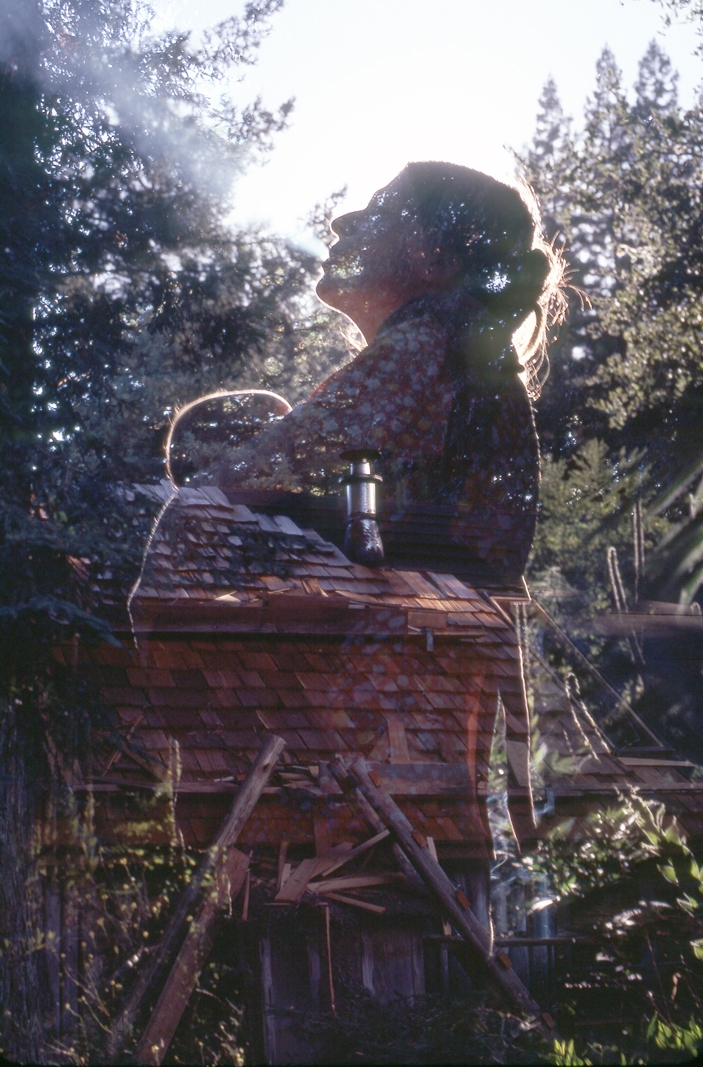
Kate decided to open an Instagram account titled The Family Acid, from which she began to curate and publish her father’s images. Initially intended as a way of sharing them with a wider network of friends and family, Roger’s archive – cosmic, strange and beautiful – has now developed its own cult following.
Given the life he has led, it shouldn’t come as a surprise. Roger dabbled in acting, poetry, broadcasting, art and music (he’s become one of the world’s leading experts on Bob Marley and the Wailers) while meeting – and photographing – an eclectic cast of bohemian characters in the process.
There are stories of getting high with gonzo war-reporter Tim Page (who Hunter S. Thompson once refused to work with on account of him being “too crazy”), turning Paul Simon onto the music of Ladysmith Black Mambazo for his Graceland project, and scoring LSD for a group of first-timers who included a nun, a priest and three Catholic brothers.
“I looked them up again in 1970 after returning from Vietnam and found that each of them had left their order – and the Church. I was proudly happy.”
Whether it’s intimate stills of “weird” family moments, hazy scenes from Roger’s time in Vietnam, or snapshots from riotous parties, each photo feels like peering down a countercultural rabbit hole.

The Instagram feed is designed to make the viewer feel as if they, too, are on a psychedelic journey. But for Roger, this was just everyday existence. He became a documentarian without really knowing it.
“I was surrounded by so many amazing people that my life automatically became my subject and that, in turn, became a chronicle of the counterculture.”
“I think dad’s photos are just as deserving of inclusion in museums as William Eggleston or Annie Leibovitz,” Kate adds. “The biggest difference between him and them is that he did not take photos for any reason except to document his life. No one was paying him. He just did it because he loved it.”

This article appears in Huck: The Flying Lotus Issue. Buy it in the Huck shop or subscribe to make sure you never miss another issue.
Follow @thefamilyacid on Instagram.
Enjoyed this article? Like Huck on Facebook or follow us on Twitter.
You might like

Jesse Glazzard’s messy portrait of queer friends, lovers and chosen family
The Sound of Dirt and Beauty — The photographer’s debut monograph explores tender, unpolished moments shaped by the people who he surrounds himself with, while offering a window into the UK’s working-class LGBTQ+ community.
Written by: Sunny Sunday

Behind the curtain at Alternative Miss World 1981
Olympia glamour — Running a subversive take on the traditional beauty pageant, the Andrew Logan organised event prioritised underground creativity and invention. Photographer David Corio went behind the scenes at its biggest edition.
Written by: Miss Rosen

New exhibition highlights British radical living over 200 years
Earthly Paradise — Taking place at the William Morris Gallery, it explores the homes and lives of artists, writers, musicians and more, as well as the conditions that allowed them to thrive.
Written by: Isaac Muk

What life on the Strait of Hormuz is really like
Southern Winds — Bandar Abbas based photographer Morteza Niknahad has been capturing the diverse communities and stories of his local region since he first picked up a camera. His new series highlights the human impact of war.
Written by: Isaac Muk

Nick Haymes’s intimate portrait of his family’s life
Chronograph — Over 25 years, the photographer documented his son’s lives as they grew into adults. The resulting photobook is an exploration of the passage of time, as well as the optimism of youth.
Written by: Miss Rosen

Kristina Rozhkova’s scatty, confronting portrait of captivity
Gut Feeling — The Russian artist’s 2024 arrest and subsequent detention opened her eye towards the omnipresent dynamics of power and control. Her new photobook is a stark exploration of being trapped.
Written by: Isaac Muk


