The enduring radicality of the UK’s last remaining leisure centres
- Text by Yewande Adeniran
- Photography by Swim Dem (courtesy of)

Against the tide — In an era of privatisation, spiking property prices and gentrification, the local swimming pools and gyms offer antidotes to inequality – accessible spaces for the good of the community. Yewande Adeniran explains why they need to be protected.
In an ever-evolving pocket of southeast London, wedged between new-build high-rises, a Pret A Manger, and the constant churn of traffic and trains, stands a two-storey glass building, Glass Mill Leisure Centre.
It’s where Lewisham does its most ordinary things: swimming lessons, rehab exercises, post-work workouts, weekend queues for the changing rooms. On any given day, it brings together school groups, retirees, commuters, and families who might otherwise never share a room – except, here, in swim caps and trainers, waiting their turn.
Inside, the smell of chlorine and the echo of splashing water offer a sensory reminder of a London that is fast disappearing. Leisure centres like Glass Mill are among the few remaining places where people from different generations, incomes and backgrounds still mix without expectation or transaction. There is no pressure to buy a coffee, no membership tier separating users, no algorithm shaping who belongs.
“These spaces exist to be more than just a gym,” says Matthew Houghton, Community Sports Manager at Glass Mill, which is operated by the charitable social enterprise GLL. “They’re social hubs, meeting points, and places where people feel they belong. Our goal isn’t just to keep centres open, but to help them thrive as genuine community assets.”
That ethos is visible in how the centre is used. Alongside swimming lessons and fitness classes, Glass Mill hosts an unpaid carers’ hub, a small community library in reception, and a late-night trans and gender-diverse swim — one of the few regular sessions of its kind in south London. Disabled users in Lewisham receive free access to swimming and gym facilities, while concessions are available for students, older adults, and people on benefits.
“We’re not a faceless gym,” Houghton adds. “We have a manned reception. Staff say hello, they say goodbye, and they know regulars by name. That human contact really matters.”
There’s a sense of ordinary but meaningful human exchange that plays out daily on the poolside. During a quiet afternoon swim, a chance conversation unfolds between a local swimmer and an Algerian grandmother who have been attending the pool weekly for years. What began as a moment of reassurance widened into a discussion about migration, independence struggles, global politics and everyday life – the kind of cross-generational, cross-cultural exchange that has become increasingly rare elsewhere in the city.
It’s a small interaction, but a telling one: Glass Mill is a place where stories are shared across age, culture and experience, where confidence is built through movement and connection.


Swimming as survival
Beyond social connection, swimming remains a vital life skill – one that is becoming increasingly inaccessible. According to Swim England, more than 500 swimming pools have closed across the UK, over half of them in the past five years.
“Learning to swim is a crucial life skill that everyone deserves access to, regardless of background,” says Sian Sedgwick of Swim England. “Leisure centres like Glass Mill are the beating heart of communities, offering gentle exercise that supports both physical and mental wellbeing, particularly for older adults and people with health conditions.”
For global majority communities, the stakes are even higher. Lola, from Wanderers of Colour – a UK-based collective advocating for marginalised people accessing outdoor and leisure spaces – explains that Black and POC communities are statistically less likely to be able to swim, increasing the risk of injury or drowning during water-related activities.
In 2022, Swim England reported that 49% of adults in ethnically diverse communities cannot swim 25m unaided, compared to 14% of adults in white communities. Since the pandemic, this gap has widened. Research conducted by Active Lives found that in England 97% of Black adults and 96% of Asian adults do not participate in swimming activities regularly, with figures standing at 82% of Black children and 79% of Asian children. Most concerning is data from the National Child Mortality Database showing that children of Black heritage in England are three and a half times more like to drown compared to white and white British children.
“When leisure centres close, it removes access to a life-saving skill,” she says. “And that disproportionately affects low-income and global majority people. If you don’t learn to swim as a child, that fear often follows you into adulthood.”
“When leisure centres close, it removes access to a life-saving skill. And that disproportionately affects low-income and global majority people. If you don’t learn to swim as a child, that fear often follows you into adulthood.” Sian Sedgwick, Swim England
The idea that people of colour “can’t swim” is less a reflection of ability than of long-standing exclusion. The Black Swimming Association’s latest Impact Report makes clear that interest is not the cause but is a direct result of limited access due to financial barriers, culturally appropriate swimwear and invitation in the space. Black and Asian adults and children not swimming regularly has impacted multiple generations who have been systematically excluded through cost, lack of provision, cultural exclusion and unsafe learning environments. In boroughs like Lewisham, where communities are diverse, the closure of local leisure centres ultimately entrench stereotypes, removing the very spaces where confidence, safety and belonging in water can be built.
That lack of access starts early. Although swimming lessons are mandated in primary schools, many schools no longer have access to nearby pools. “Even basic swimming skills can be life-saving,” Lola adds. “The idea that pools are optional rather than essential is incredibly dangerous.”
But most of all, they are sites of joy and fun. Lola describes how those early experiences shaped her confidence in the water. “I have really fond memories of learning to swim through school,” she says. “Then there were the pool parties – hiring the pool for birthdays and celebrating with your friends. It was so much fun. That confidence stayed with me, and I want other people to experience the joy that comes with swimming, not just the safety side of it.”

A National Pattern of Loss
Despite their importance to local communities, leisure centres across the UK are increasingly being plunged deeper into a crisis. In Lincoln, Blackburn, Huddersfield, Milton Keynes, Coventry and Hull, leisure centres have either closed or face imminent closure. Since 2010, 500 leisure centres have closed with 350+ currently affected by temporary / permanent shutdowns. Rising energy costs – particularly for water heating and treatment – have pushed operational expenses up by as much as 200% since the pandemic. Yet leisure centres have been excluded from major government energy support schemes.
In Swindon, the fight to save the Oasis Leisure Centre has become emblematic of the struggle. The centre closed in 2020 after Swindon Borough Council outsourced leisure services and developers sought to demolish the site for housing. “The Oasis is a cultural institution,” says the organiser of the Save Oasis campaign. “It’s where I learned to swim, where concerts were held, where people from across the region came together.”
After years of campaigning, the Oasis pool and iconic dome were granted Grade II listed status in 2021 – a rare victory – though much of the complex remains under threat. “It’s heartbreaking that community groups have to fight developers just to keep these spaces,” they add. “This is happening everywhere.”

Building confidence, building community
As access to public swimming pools becomes scarcer, new grassroots organisations are increasingly stepping in to encourage people into the water. One of these is Swim Dem, a London-based group founded in 2013 by Emily Deyn, Nathaniel Cole and Peigh Asante. Initially conceived as a social swimming collective, Swim Dem evolved into a programme focused on bringing Black and POC communities closer to the water.
“We realised we were a minority in the space,” says Peigh. “That gave us a responsibility to help people gain confidence in the water, learn to swim, and understand water safety.”
Today, Swim Dem runs weekly adult swimming lessons at the London Aquatics Centre in Stratford, targeted specifically at Black and POC swimmers. Their approach centres on water safety, confidence-building and cultural awareness, offering an environment where people can arrive with their fears, shame or inexperience and be met without judgement. While exact figures are difficult to quantify, the organisation estimates it has supported well into the thousands of people on their swimming journeys.
Swimming, in this context, becomes a tool for empowerment – not just physical, but social and psychological. For people who may have grown up hearing that “people like us don’t swim”, simply being in the people is a radical act. Confidence is built stroke by stroke but also through visibility – seeing others who look like you and sharing the water without apology.
Swim Dem’s work sits within a wider ecosystem of organisations tackling structural exclusion from swimming. The Black Swimming Association (BSA) founded in 2020, works nationally to address racial inequality in aquatics through research, advocacy and partnerships. BSA’s work has been instrumental in shifting the narrative away from harmful stereotypes, towards the real barriers – cost, access, representation and safety. Through collaboration with leisure providers including local pools like Glass Mill, schools and national governing bodies, pushing for systemic change instead of one-off programmes.
Elsewhere, Open Minds Active based in Bristol, focuses on swimming as a wellbeing and social prescribing tool. In a social climate where refugees and migrants are treated like a political talking point, their focus on women of colour, asylum seekers and refugees provides a much needed respite. Their learn-to-swim programmes create women-only, culturally sensitive spaces where participants can build water confidence at their own pace. For many of the people attending, this is the first time they have ever felt safe enough to enter a pool. Showing that the impact goes far beyond the act of swimming itself. Participants report reduced anxiety, improved mental health, and a renewed sense of autonomy.
Representation within teaching also matters. Partnerships like the one between the Royal Life Saving Society UK and Black Owned Swim School (B.O.S.S.) aim to diversify not just who learns to swim, but who teaches. Challenging the overwhelmingly white face of aquatics instruction. Seeing Black instructors poolside can be the difference between feeling like an outsider and feeling like you belong.
There are also targeted initiatives addressing gendered and cultural exclusion. Projects supporting South Asian women in the capital’s most deprived boroughs through the London Legacy Project, for example, recognise how modesty requirements, mixed-gender sessions and a lack of women-only provision have historically prevented participation. By funding tailored programmes with female instructors and appropriate swimwear options, these initiatives remove practical barriers that mainstream provision has long ignored.
Taken together, these organisations become increasingly vital as public leisure provision contracts. They do not replace leisure centres like Glass Mill, but instead rely on them. Without physical pools, without affordable access, without local facilities, even the most committed community organisers are left fighting for scraps of water time.


The last third spaces
Leisure centres remain among the few “third spaces” left on the high street – places that are neither home nor work, but essential to social life. As youth centres disappear and public infrastructure is hollowed out, their importance only grows.
For teenagers, affordable swimming sessions offer somewhere to gather safely. For carers, disabled people and trans communities, they offer dignity and visibility. For everyone else, they offer a rare chance to exist alongside others without obligation. As Peigh recalls, “Growing up, Waterfront Leisure Centre in Woolwich was my hub. Every Friday they offered a £1 swim session – it was where we went every week”.
As gentrification reshapes London borough by borough, spaces like Glass Mill stand as quiet refusals of enclosure. They remind us that community is not built through luxury developments or private gyms, but through shared water, shared space, and the simple act of showing up.
And once they’re gone, they are almost impossible to bring back. As Lola puts it: “Being able to swim and navigate water can be a matter of life and death. Sounds pretty important to me!”


Yewande Adeniran is a journalist, radio host and DJ. Follow them on Instagram.
Buy your copy of Huck 82 here.
Enjoyed this article? Follow Huck on Instagram and sign up to our newsletter for more from the cutting edge of sport, music and counterculture.
Support stories like this by becoming a member of Club Huck.
You might like

In a city of rapid gentrification, one south London estate stands firm
A Portrait of Central Hill — Social housing is under threat across the British capital. But residents of the Central Hill estate in Crystal Palace are determined to save their homes, and their community.
Written by: Alex King
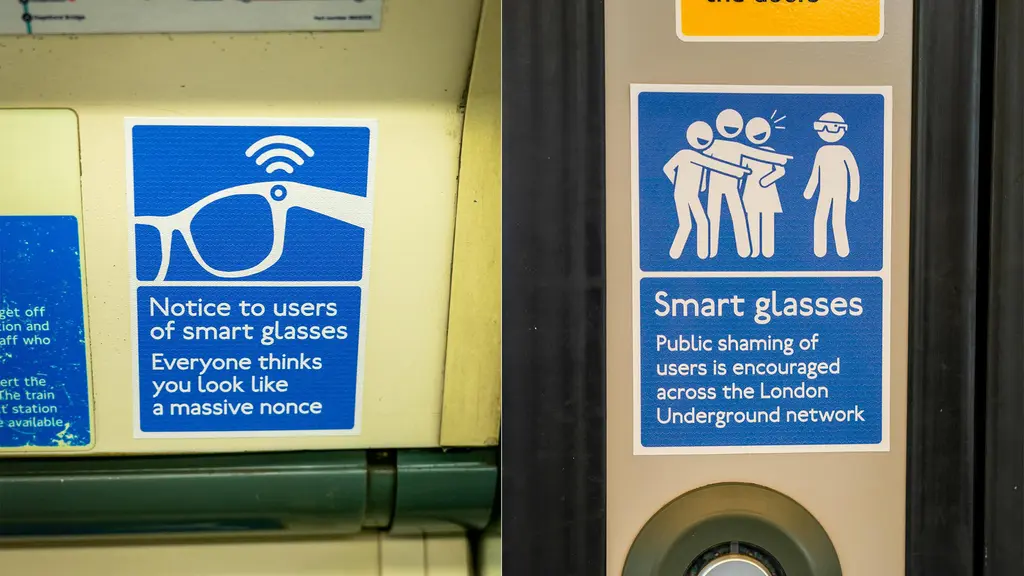
Activists slam “pervert glasses” in new guerrilla campaign
Everyone Hates Elon — Stickers have appeared on the London Underground network, criticising the wearable technology’s covert filming capabilities.
Written by: Isaac Muk

Behind the curtain at Alternative Miss World 1981
Olympia glamour — Running a subversive take on the traditional beauty pageant, the Andrew Logan organised event prioritised underground creativity and invention. Photographer David Corio went behind the scenes at its biggest edition.
Written by: Miss Rosen

Dan Lacey: “BMX is forever evolving”
Overground — Steph Pomphrey caught up with the two-wheel legend after his latest meet in east London, chatting about fatherhood, music and action sports within the outdoor industry.
Written by: Steph Pomphrey

The battle for the soul of lockpicking
Under locksport and key — In recent years, breaking locks for fun has grown from a niche hobby into an activity followed by millions of people. As it has matured, so have tensions over who sets the rules.
Written by: Jack Dennison-Thompson

New exhibition highlights British radical living over 200 years
Earthly Paradise — Taking place at the William Morris Gallery, it explores the homes and lives of artists, writers, musicians and more, as well as the conditions that allowed them to thrive.
Written by: Isaac Muk


