At the rodeo with New Mexico’s extreme bull riders
- Text by Miss Rosen
- Photography by Lili Tanner

Gallup, New Mexico, is one of the most famous small towns in the United States. Its rugged desert landscape has been immortalised in Hollywood westerns from the 1940s and 50s, and name-checked in the Bobby Troup classic, “(Hey Your Kicks on) Route 66.”
Widely known as the “Heart of Indian Country”, Gallup is located on the edge of the Navajo Nation reservation. It is home to members of the Navajo, Hopi, and Zuni tribes, who make up more than 40 per cent of the residents. Though the population is less than 25,000, the people of Gallup hold strong to their native traditions and cultural contributions to the nation.
Named the “Most Patriotic Small Town in America” by Rand McNally in 2013, the people of Gallup have preserved their cultural contributions to the nation, be it in the Navajo Code Talkers Museum or in the high-voltage rodeos held at Red Rock Park every year.
Photographer Lili Tanner happened upon the sport of bull riding by chance. Her brother-in-law had begun organising the WildThing Championship Bull Riding competition at Red Rock, and the annual event became the centrepiece of a family reunion. In 2013, Tanner began to go backstage and take photographs.
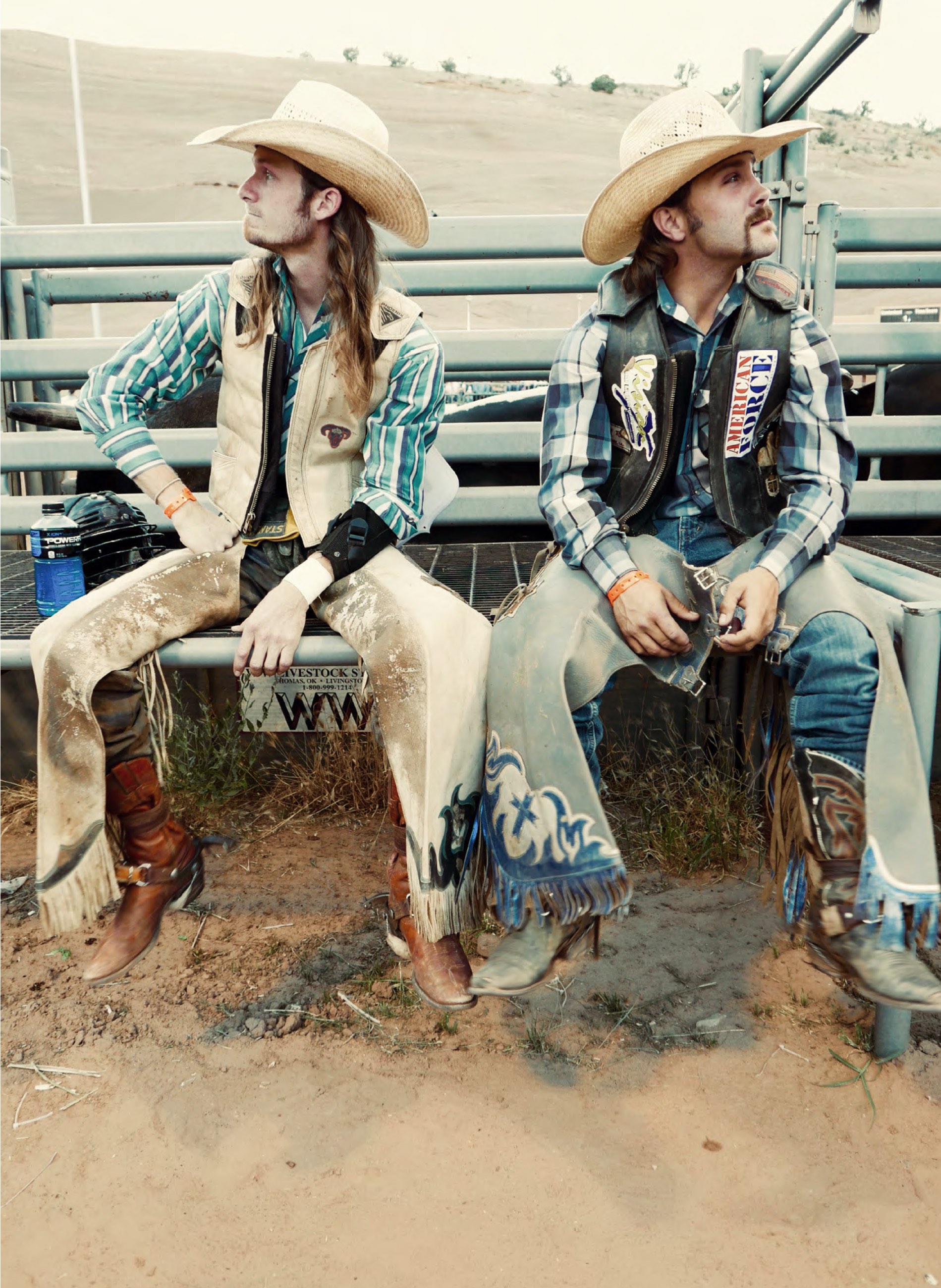
“The first year I was timid and then the next year I just went for it!” she remembers. Just published as Wild Thing (Sturm & Drang), Tanner’s photographs give us a look inside the diverse world of local cowboys on one of the biggest days of the year.
“It’s an event for the community,” she says. “I’ve always been fascinated by the camaraderie these guys have. They are happy for each other when they have a good run – but they are also fierce and competitive. It’s not the big league but it’s a livelihood and they put everything they have in it.”
Tanner says she was drawn to the riders’ distinctive style: “I like how the shirts are very flowery and pink, how it’s contrary to what we see in the West, but it’s very male. They are very proud of what they wear, a lot of them have chaps made to their specifications, and one guy makes them himself, he’s a leatherworker.”
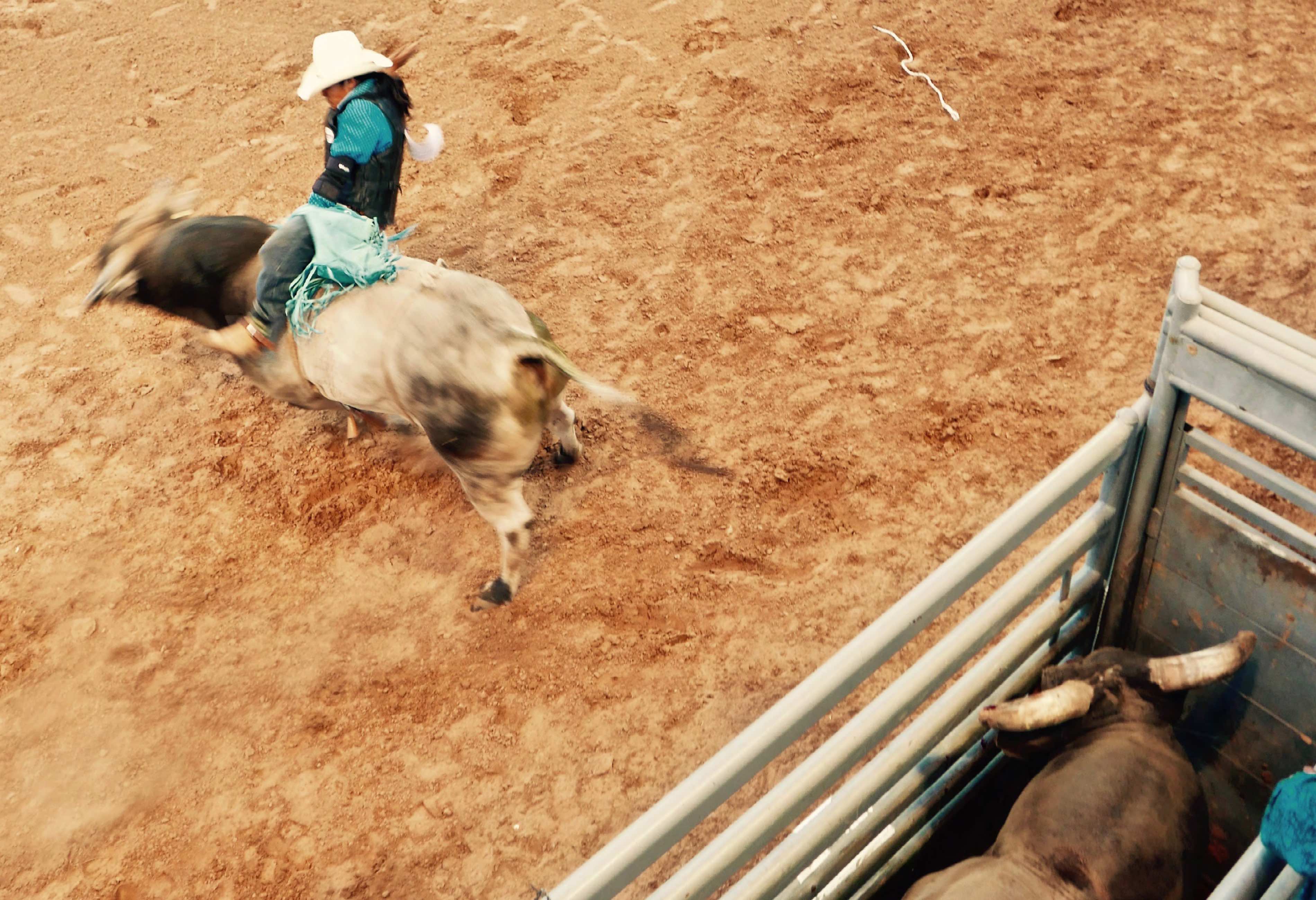
Though she often takes candid photographs when they are lost in the moment, preparing for a ride, Tanner also approaches the riders for a portrait. “When you ask to take their picture, their first inclination would be to smile broadly and do a thumbs up,” she says. “They’re nice to women that are older than them. They want to be helpful; it’s an old-time friendliness.”
“Then I have to say, ‘We aren’t doing that. Give me your ‘bad boy’. Then they laugh and are themselves without posing for me.”
Though Tanner has seen riders exit in stretchers, the men were always back on their feet, ready to ride again, inspiring the next generation of young cowboys who are watching from the stands – the “mutton busters” who get their start riding sheep during the breaks.
“They hold on for dear life,” Tanner says of the children who get their first taste of self-mastery inside the ring. “They have to be ripped off [the sheep], they don’t let go!”


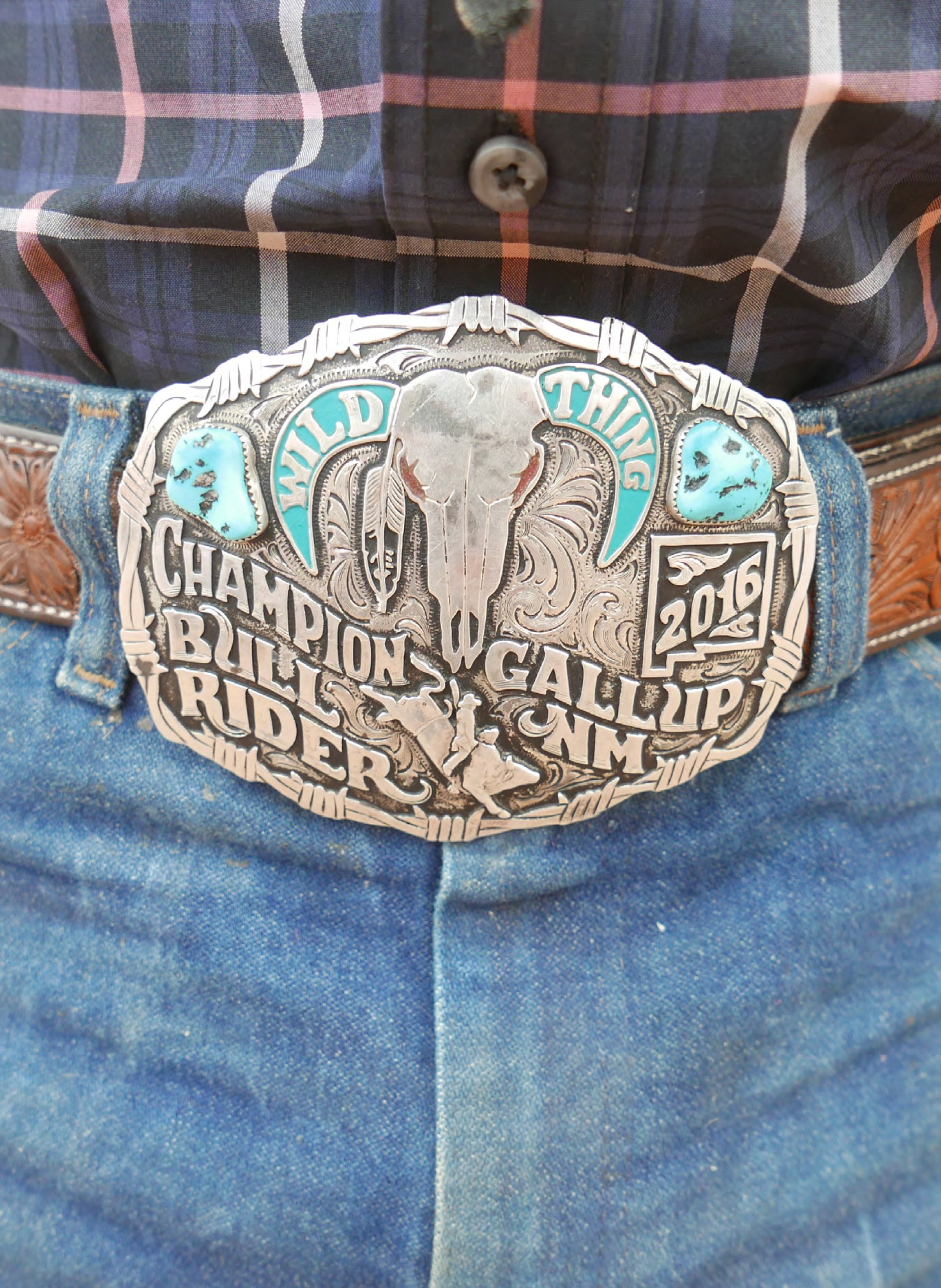
Wild Thing is available now on Sturm & Drang.
Follow Miss Rosen on Twitter.
Enjoyed this article? Like Huck on Facebook or follow us on Twitter.
You might like

Jesse Glazzard’s messy portrait of queer friends, lovers and chosen family
The Sound of Dirt and Beauty — The photographer’s debut monograph explores tender, unpolished moments shaped by the people who he surrounds himself with, while offering a window into the UK’s working-class LGBTQ+ community.
Written by: Sunny Sunday

Behind the curtain at Alternative Miss World 1981
Olympia glamour — Running a subversive take on the traditional beauty pageant, the Andrew Logan organised event prioritised underground creativity and invention. Photographer David Corio went behind the scenes at its biggest edition.
Written by: Miss Rosen

New exhibition highlights British radical living over 200 years
Earthly Paradise — Taking place at the William Morris Gallery, it explores the homes and lives of artists, writers, musicians and more, as well as the conditions that allowed them to thrive.
Written by: Isaac Muk

What life on the Strait of Hormuz is really like
Southern Winds — Bandar Abbas based photographer Morteza Niknahad has been capturing the diverse communities and stories of his local region since he first picked up a camera. His new series highlights the human impact of war.
Written by: Isaac Muk

Nick Haymes’s intimate portrait of his family’s life
Chronograph — Over 25 years, the photographer documented his son’s lives as they grew into adults. The resulting photobook is an exploration of the passage of time, as well as the optimism of youth.
Written by: Miss Rosen

Kristina Rozhkova’s scatty, confronting portrait of captivity
Gut Feeling — The Russian artist’s 2024 arrest and subsequent detention opened her eye towards the omnipresent dynamics of power and control. Her new photobook is a stark exploration of being trapped.
Written by: Isaac Muk


